Website vs Facebook Page: Which Brings More Customers for Small Businesses?
Introduction to Online Presence for Small Businesses
In the current digital age, establishing a strong online presence is vital for small businesses seeking growth and customer engagement. In the USA, many potential customers turn to the internet to research and connect with local businesses. Establishing a robust online presence not only helps increase visibility but also allows for direct interaction with customers. This raises the question: do small businesses need websites, or can a Facebook page suffice?
Both a website and a Facebook page serve different purposes in the online ecosystem. A website offers a dedicated platform where businesses can showcase their products or services, share detailed information, and brand themselves consistently. It serves as a central hub for all business-related content, including blogs, galleries, and contact information. This makes a website an essential asset for building credibility and trust with potential clients.
Conversely, a Facebook page stands out as an effective tool for immediate customer engagement. It allows businesses to interact directly with their audience, share updates, and build a community around their brand. Given Facebook’s vast user base, it can significantly enhance a small business’s exposure. However, relying solely on social media for business presence may overlook the comprehensive reach and control that a dedicated website provides.
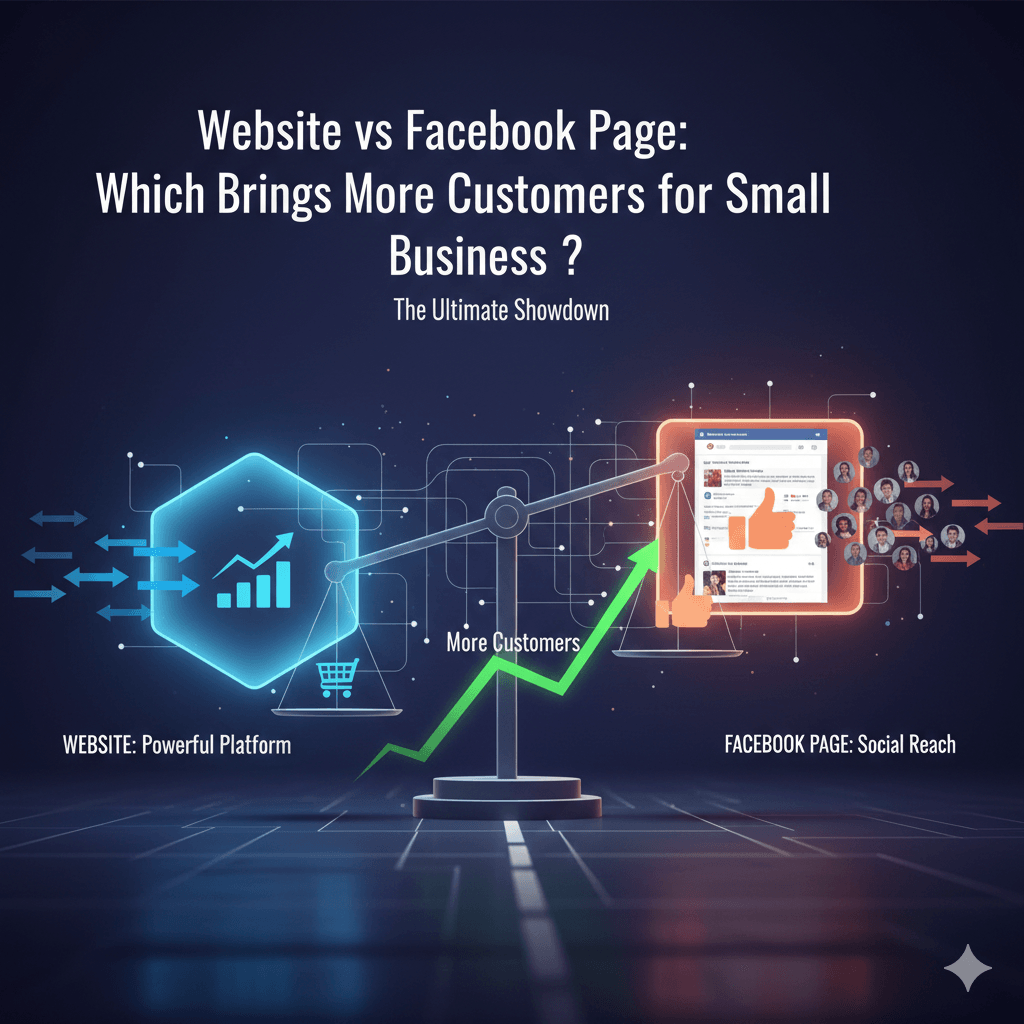
Therefore, comparing a website vs Facebook page business presents critical insights into how small businesses can effectively use these platforms to strengthen their online presence. Both tools are beneficial; however, their effectiveness depends on how well they are integrated into a larger digital marketing strategy. Small business owners must carefully evaluate their specific needs and objectives before determining the ideal combination of a website and social media to maximize customer reach.
Pros and Cons of Having a Website
In the competitive landscape of small businesses, establishing a robust online presence is vital. Owning a website provides numerous advantages. Firstly, one of the most significant benefits is the complete control over content. Unlike a Facebook page, where the platform dictates certain features, a website allows businesses to present their products and services precisely as they wish. Brand image can be effectively tailored through customized design and user-friendly navigation. For example, a local bakery can showcase its offerings in a visually appealing format, enticing customers with mouth-watering images of delectable goods.
Furthermore, having a dedicated online site enhances search engine optimization (SEO) efforts. A well-optimized website improves visibility on search engines, making it easier for potential customers to discover the business through organic searches. This is a stark contrast to relying solely on social media platforms, where visibility can be hindered by algorithm changes. A small retail store, for instance, may notice significantly increased foot traffic by ranking higher on SERPs through targeted SEO strategies.
Another compelling advantage is the ability to sell products or services directly through an online store. Websites equipped with e-commerce functionalities provide seamless transactions, allowing small businesses to generate income even when physical locations are closed. For example, a handcrafted jewelry business can effectively reach customers nationwide, maximizing sales opportunities.
However, the blog post should also address the challenges associated with having a website. The initial costs can be a hurdle for many small businesses, with expenses ranging from design to hosting services. Additionally, maintaining a website requires ongoing efforts, including regular updates and security measures, which often necessitates technical knowledge. This can be daunting for business owners unfamiliar with web management. Ultimately, while a website offers considerable benefits over a Facebook page in establishing a business online presence, these factors must be weighed against the associated costs and knowledge requirements.
Pros and Cons of Using a Facebook Page
The use of a Facebook page for business promotion has become a popular strategy for many small businesses. One of the most notable advantages is immediate access to a vast audience. With billions of active users, businesses can connect with potential customers who are already engaged with the platform. This large user base provides an opportunity for businesses to expand their reach and create a community around their brand, which is a significant factor when considering business online presence.
Another advantage is ease of use. Setting up a Facebook page is relatively straightforward, even for those with limited technical skills. Users can quickly create content, share updates, and interact with followers. Furthermore, the platform offers various tools that can facilitate marketing efforts, such as targeted advertising and insights into user engagement. This cost-effectiveness makes Facebook an attractive alternative, particularly for small businesses that may not have the budget for a full-fledged website.
However, there are also notable disadvantages to relying solely on a Facebook page. One significant drawback is the lack of customization. Unlike a dedicated website, which allows for extensive branding and design options, Facebook pages are constrained by the platform’s templates and rules. Businesses may find their brand identity diluted because of these restrictions.
Additionally, businesses are dependent on Facebook’s algorithms, which dictate content visibility. This dependency can limit a business’s organic reach, potentially requiring paid advertising to ensure posts are seen. As a result, while businesses may initially reap the benefits of Facebook’s user base, they could face challenges with engagement over time.
In some cases, businesses have experienced diminished interactions despite an increasing number of followers due to algorithm changes. These factors make the website vs Facebook page business comparison crucial to understand for sustained success and customer engagement.
Conclusion: The Case for a Professional Website
As the digital landscape continues to evolve, small businesses face critical questions about establishing their online presence. The discussion around website vs Facebook page business highlights essential distinctions in their capabilities and functionalities. While a Facebook page offers a platform for engagement and communication, it cannot replicate the comprehensive features and branding opportunities afforded by a professional website.
Our exploration of the Facebook page vs website concept has revealed that while both serve as powerful tools for marketing, a website remains a pivotal asset for small businesses. Websites are customizable, allowing for tailored content that aligns with the brand’s vision and goals. Furthermore, they enhance credibility, enabling customers to navigate a professional platform that showcases products and services beyond the limitations of social media.
It is evident that do small businesses need websites? The answer leans strongly towards yes. A well-structured website not only drives traffic but also boosts buyer trust, which is essential for converting visitors into customers. Investing in a website enhances scalability for businesses, allowing them to grow without the constraints that a Facebook page might impose.
As we conclude this analysis, it becomes apparent that while both platforms can coexist and complement one another, a dedicated website is indispensable for any small business looking to establish a serious business online presence. The potential to fully control the narrative, host a vast array of content, and engage customers on a deeper level positions a website as a cornerstone of modern business strategy. Small business owners are encouraged to invest resources wisely towards developing a professional online site that not only reflects their brand but also actively attracts and retains customers.