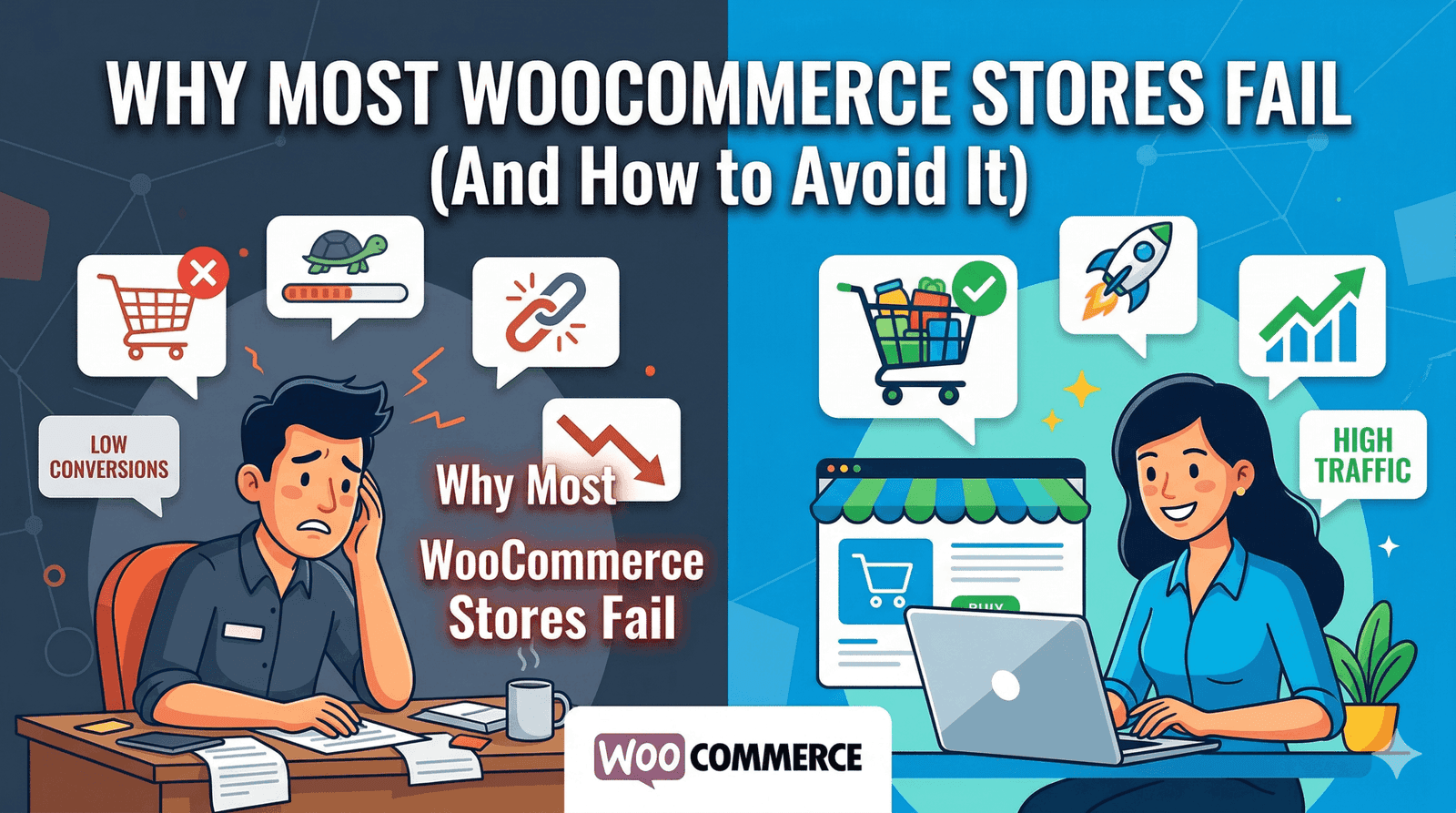
Why Most WooCommerce Stores Fail (And How to Avoid It)
Common Pitfalls of WooCommerce Stores
Many WooCommerce store owners encounter a range of challenges that can lead to their ultimate failure. Understanding these common pitfalls is crucial for any entrepreneur looking to build a successful online retail business. One of the primary mistakes is poor product selection. Oftentimes, store owners either choose products without sufficient market research or fail to update their inventory based on consumer demand. This misalignment can lead to dissatisfaction among consumers and result in dwindling sales.
Inadequate marketing strategies also pose a significant threat to the sustainability of WooCommerce stores. Many owners underestimate the importance of a comprehensive marketing plan that includes search engine optimization (SEO), social media engagement, and email marketing. Relying solely on organic traffic without a structured promotional strategy can severely limit visibility and brand growth.
High competition within the eCommerce landscape further complicates the situation. New WooCommerce stores often arise in saturated niches, making it difficult for new entrants to differentiate themselves. Failing to identify a unique selling proposition can result in being overlooked by potential customers who have numerous alternatives at their disposal. Additionally, an insufficient understanding of the target audience can lead to wasted resources on ineffective marketing and product offerings.
Many store owners neglect to conduct customer research, missing vital insights that would guide their product selection and marketing efforts. Addressing these common pitfalls—by ensuring careful product selection, implementing a robust marketing strategy, distinguishing oneself in a competitive market, and understanding the target audience—can significantly enhance the prospects of success for WooCommerce stores. By being aware of these challenges, entrepreneurs can pivot their strategies towards more effective approaches, ultimately steering their stores away from failure.
Importance of Proper Planning and Strategy
Establishing a successful WooCommerce store requires more than just setting up an online shop and adding products. One of the most crucial aspects of a successful e-commerce venture is having a comprehensive business plan and a well-thought-out marketing strategy. Without these foundational elements, many stores find themselves struggling to gain traction, leading to potential failure.
Before launching a WooCommerce store, it is imperative to conduct thorough market research. This involves understanding your target audience, analyzing competitors, and identifying current market trends. Knowledge gleaned from market research enables entrepreneurs to tailor their offerings and services, ensuring that they meet the demands and preferences of their potential customers. Furthermore, it lays the groundwork for informed decision-making throughout the lifespan of the business.
In addition to market research, financial forecasting is another essential component of proper planning. By estimating startup costs, operational expenses, and projected revenues, business owners can create a realistic budget that helps navigate the financial aspects of running an online store. Financial forecasts also assist in setting measurable goals, which can motivate the team and provide direction for the business as a whole.
Moreover, setting clear, specific goals is vital for maintaining focus and alignment within the WooCommerce store. These goals should be periodically reviewed and adjusted as needed to reflect changes in the market or business performance. Having a strategic plan not only guides the day-to-day operations but also prepares the business owner to address challenges and leverage opportunities that arise.
Ultimately, proper planning and strategy are fundamental in reducing the risk of failure for WooCommerce stores. By investing time and resources into planning, entrepreneurs can establish a solid foundation for growth, paving the way for success in the competitive online marketplace.
Optimizing Your WooCommerce Store for Success
To enhance the efficiency of your WooCommerce store and mitigate the risk of failure, it is critical to focus on optimization strategies that improve both user experience and operational performance. Prioritizing customer satisfaction begins with a streamlined user interface. Ensure that your store is easy to navigate by organizing products into well-defined categories and providing clear filters that allow users to find what they need quickly. Simplifying the checkout process can significantly reduce cart abandonment rates, so consider minimizing the number of steps required to complete a purchase.
An increasingly important factor is mobile responsiveness. With a significant portion of online shopping conducted via mobile devices, your WooCommerce store must offer a seamless experience across all platforms. This includes ensuring that images and links are easily clickable and that text is readable without excessive zooming. Utilize responsive design principles to adapt layouts for various screen sizes.
Site speed is another critical element; a slow-loading site can deter potential customers and hurt your search engine rankings. Optimize images and use caching plugins to enhance performance. Regularly testing and monitoring your website’s loading time will help identify areas for improvement, contributing to a better overall shopping experience.
Lastly, implementing effective SEO techniques is vital for directing traffic to your WooCommerce store. Use relevant keywords thoughtfully throughout your product descriptions, blogs, and meta tags. Developing high-quality content that answers potential customers’ questions can also improve your site’s visibility in search results. To enhance your store’s reputation, encourage satisfied customers to leave reviews and ratings, reinforcing social proof.
By incorporating these strategies, WooCommerce store owners can significantly increase their chances of success, resulting in higher conversion rates and overall customer satisfaction.
Continuous Improvement and Adaptation
In the ever-evolving world of e-commerce, particularly with platforms like WooCommerce, the significance of continuous improvement and adaptation cannot be overstated. As consumer habits shift and technology advances, online shop owners must remain vigilant and responsive to changes within the market. This entails not only staying informed about the latest industry trends but also being aware of evolving customer preferences. E-commerce is dynamic; thus, the ability to adapt is a key component of success.
One effective strategy for achieving this adaptability is through the collection and analysis of customer feedback. This feedback serves as a valuable resource for store owners, providing insights into what customers appreciate as well as areas that need enhancement. With WooCommerce, store owners have access to various plugins and tools that can facilitate the gathering of customer opinions. By analyzing this data, shop owners can pinpoint specific products or services that may be underperforming and take actionable steps to improve them.
Moreover, it is essential for WooCommerce store owners to invest time in education and training. Online courses, webinars, and articles can provide deeper insights into not only improving product offerings but also optimizing the overall shopping experience. Keeping abreast of technological advancements, such as new payment gateways or shipping solutions, can make a significant difference in customer retention and satisfaction.
Ultimately, the willingness to embrace change, coupled with a keen understanding of customer needs, can empower WooCommerce store owners to refine their approach continually. This proactive stance not only enhances the shopping experience but is also crucial for long-term success in a competitive e-commerce landscape.