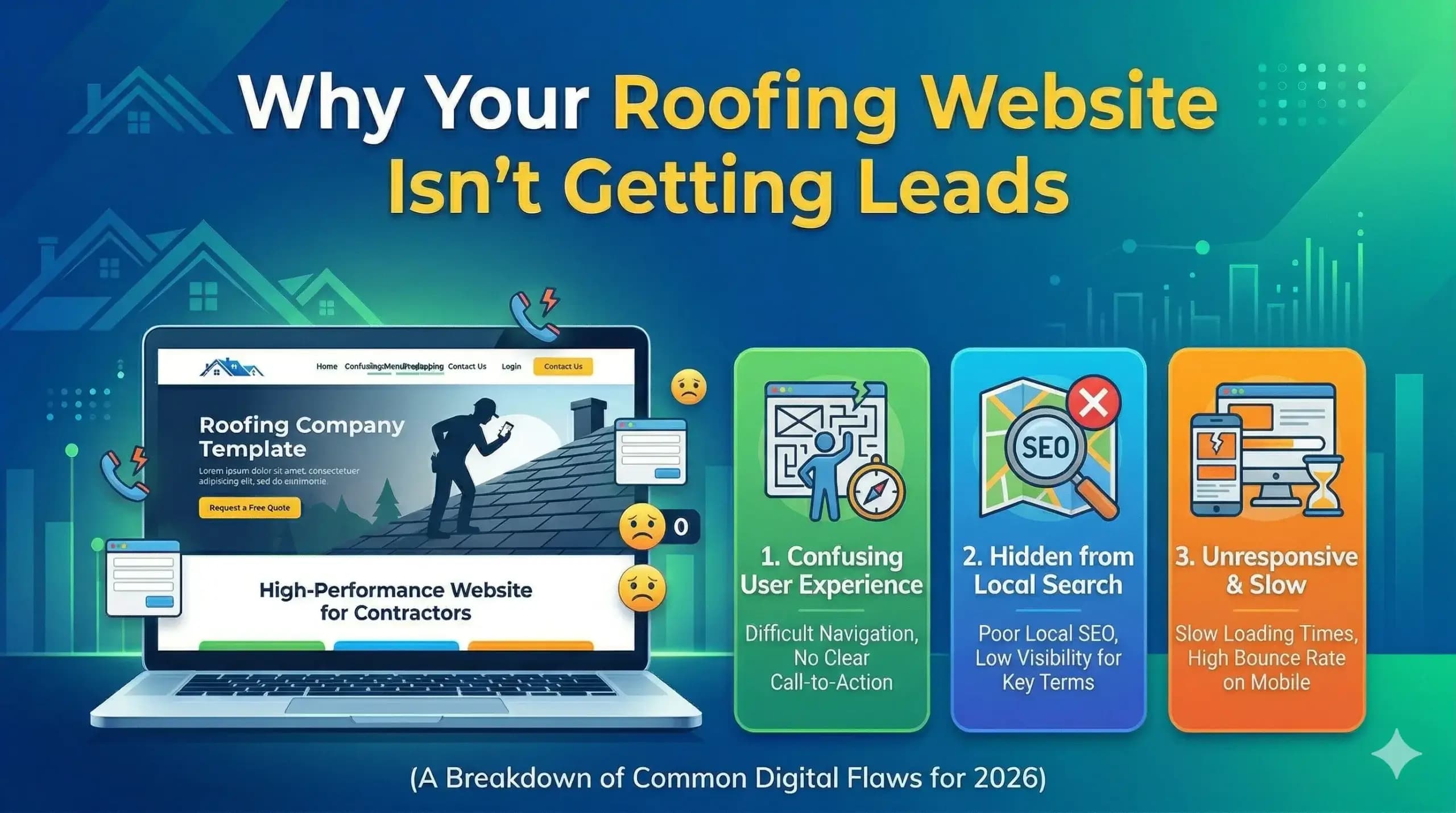
Why Your Roofing Website Isn’t Getting Leads
You’re running a solid roofing business. You do good work, your customers refer you, and you’ve been in the game long enough to know your craft. But your website? It’s sitting there doing nothing — no calls coming in, no contact forms filling up, just a digital placeholder that cost you money and delivers zero return.
Here’s what most roofing contractors get wrong: they think the problem is that not enough people are visiting their site. Usually, that’s not the issue. People are finding your site — they’re just leaving without calling. Something is breaking the connection between “I found this roofer” and “I’m going to pick up the phone.”
This post breaks down exactly why that happens and what a real roofing web design agency does to fix it — not with buzzwords, but with changes that put actual leads in your pipeline.
Your Site Loads Slowly — And That’s Already Cost You Calls This Week
Think of your website like your crew showing up to a job site. If they roll up 45 minutes late, the homeowner has already started calling your competitor. Your website works the same way.
Most roofing websites load in 5–8 seconds. The average visitor decides to stay or leave in under 3 seconds. That means a huge chunk of people who found your business — people already looking for a roofer — bounced before they ever saw your phone number or your work.
The technical reason this happens is usually oversized images, bloated page builders, or cheap shared hosting. But you don’t need to understand the technical side — you just need to know that slow sites silently kill your lead flow every single day.
At Digital Trace, every website we build is optimized for speed from the ground up. We test load times across mobile and desktop before a site ever goes live, because a fast site isn’t a “nice to have” — it’s the baseline for getting calls.
Your Site Wasn’t Built for Mobile — But That’s Where Your Customers Are
When a homeowner notices a missing shingle or a leak after a storm, they don’t walk to their desktop. They pull out their phone and search “roofing contractor near me” right then and there.
More than 60% of local service searches happen on a mobile device. If your roofing website is hard to read on a phone — tiny text, buttons that are hard to tap, menus that don’t work right — those visitors are gone in seconds. And they’re calling someone else.
This isn’t just about looks. A mobile-unfriendly site also gets penalized by Google, which means you rank lower in search results before a potential customer even has the chance to visit.
The fix is a site built mobile-first — where the phone experience is designed first, not crammed in as an afterthought. That’s the standard we hold every roofing company website to.
You’re Invisible on Google Because Your Site Doesn’t Speak Google’s Language
Here’s a frustrating truth: you can have a perfectly decent-looking website and still be invisible in search results. That’s because Google needs signals to understand what your business is, where you operate, and why it should show you to someone searching for a roofer.
Most roofing websites are missing those signals. No service pages targeting specific cities. No local keywords woven into the content. No structured data telling Google “this is a roofing contractor serving Dallas.” Without those signals, Google shrugs and shows your competitor instead.
This isn’t about tricking Google — it’s about giving search engines the clear, organized information they need to confidently recommend your business. When your site has the right foundation, showing up becomes the natural result.
💡 Pro Tip: One of the most common — and invisible — problems roofing websites have is missing location-specific service pages. If you serve five cities but your site only says “serving the surrounding area,” Google has no idea where to rank you. A page dedicated to each city you actually work in, with real content about your services there, can dramatically change who finds you and when.
Your Site Looks Like Every Other Roofer — So No One Has a Reason to Choose You
Walk through any neighborhood after a hailstorm. Every roofer is knocking doors, handing out the same business card, saying the same thing. Your website is doing the same thing digitally — stock photos of roofs, generic text about “quality workmanship” and “serving the community,” a phone number, and a contact form.
That’s not a website that earns trust. That’s a website that makes your business look identical to every competitor on the page — and when you look the same, price becomes the only differentiator. That’s a race to the bottom.
What converts visitors into callers is specificity. Real photos of your crew and your actual jobs. Reviews that mention real neighborhoods. Content that shows you understand the specific roofing challenges in your area — whether that’s hail in the Midwest, humidity in the South, or heavy snow loads in the Northeast. These details don’t just make your site look better; they make it feel like the obvious choice.
Your Contact Options Are Making It Too Hard to Reach You
Imagine a homeowner is ready to call. They’re on your site, they like what they see, and then — they can’t find your number without scrolling. Or your contact form has eight fields to fill out. Or there’s no option to request a quick quote.
That friction is silently killing conversions. Most people won’t push through it. They’ll back up and click the next result.
The best roofing contractor websites make contact frictionless:
- Phone number visible at the top of every single page — and clickable on mobile
- A simple form asking only what’s needed (name, service type, zip code, message)
- A clear call-to-action on every page, not just the contact page
- Optional text or chat options for customers who prefer not to call
Every one of these details matters. The easier you make it to reach you, the more people actually will.
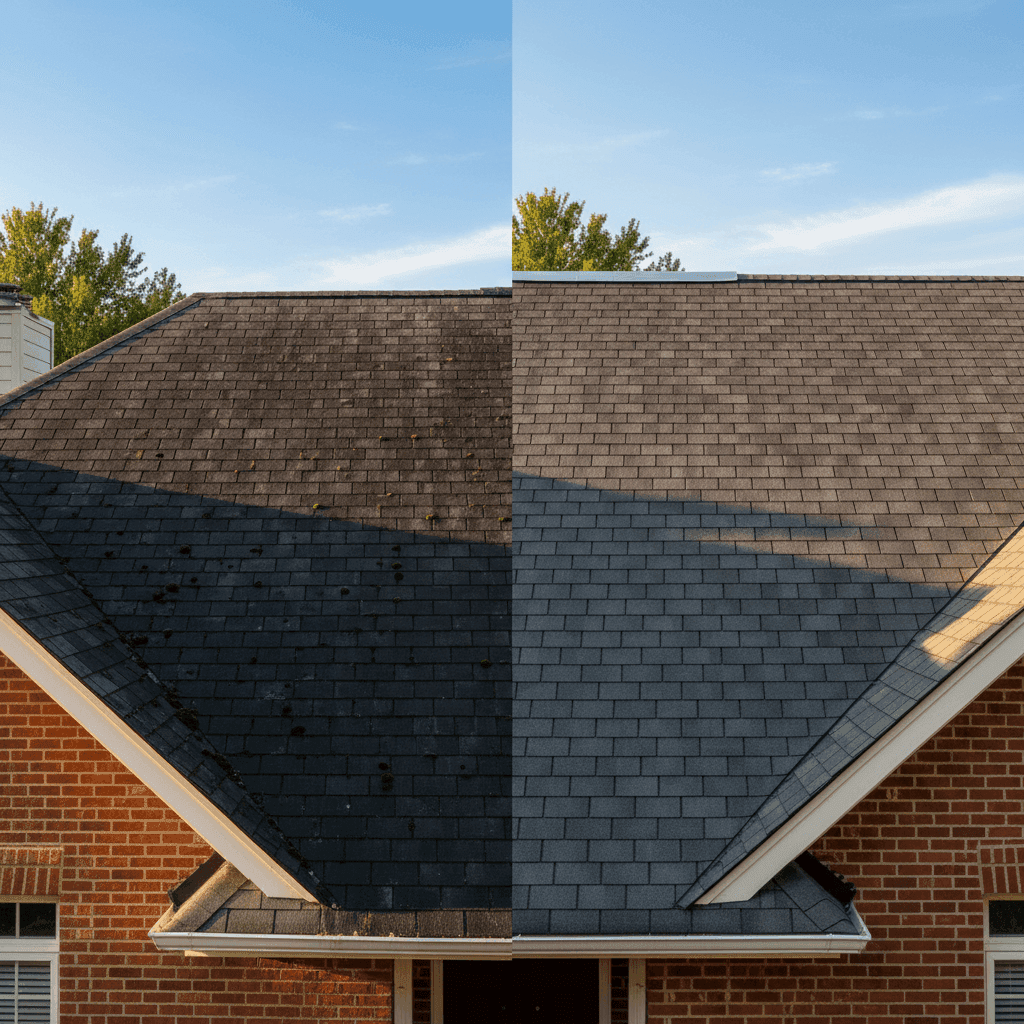
Before & After: What Changes When a Roofing Website Is Built Right
The situation: A family-owned roofing company in Ohio had been in business for 11 years. Strong reputation locally, solid Google reviews, and a website they’d paid a freelancer to build in 2019. The site looked “fine” — but the owner was getting almost no leads from it. Most new work still came through word of mouth.
The problems: The site loaded in over 7 seconds. It had no mobile-optimized layout. There were no city-specific pages — just one generic “service area” paragraph. And the phone number was buried at the bottom of the page.
What changed: Digital Trace rebuilt the site with a mobile-first design, cut load time to under 2 seconds, created individual service pages for their six target cities, and added a click-to-call button visible on every page.
The result: Within 90 days, inbound calls from the website went from near-zero to roughly 15–20 qualified calls per month. The owner reported that several callers specifically mentioned finding them “on Google” — something that had never happened before.
That’s not magic. It’s a website that was actually built to work.
Not sure whether your roofing website has any of these issues? Get a free website audit — no obligation, just a clear picture of what’s costing you leads.
Your Path to More Leads: What to Do Next
You don’t need to understand web design to take the right steps. Here’s what the process looks like when a roofing business gets serious about their website:
- Audit what you have. Find out what’s actually broken — load speed, mobile experience, missing pages, contact friction. You can’t fix what you don’t know is broken.
- Fix the foundation first. Speed and mobile experience come before anything else. If those aren’t right, nothing else works.
- Build for the right keywords. Create dedicated pages for the specific cities and services you want to rank for. Generic is invisible.
- Make contact easy. Put your number at the top. Simplify your form. Add a strong call-to-action on every page.
- Let the results guide the next step. A good roofing website isn’t a one-time project — it’s a lead-generating asset that improves over time as you track what’s working.
Frequently Asked Questions
Why am I not getting calls from my website even though I have one?
Having a website and having a working website are two different things. Most roofing sites that don’t generate calls are missing one or more of the basics: they load too slowly, they’re hard to use on a phone, or they don’t rank in Google for the searches that matter. Any one of those issues is enough to dry up leads completely.
How do I know if my roofing website is actually working?
If you’re not tracking where your calls and leads are coming from, you genuinely don’t know. A working roofing website consistently drives calls from people who found you through Google — not just from people who already knew your name. If that’s not happening, something is broken. A free website audit will show you exactly where the problem is.
How long does it take to see results from a new roofing website?
It depends on your market and how competitive local search is, but most roofing businesses start seeing meaningful improvement within 60–90 days of launching a properly built site. Some changes — like fixing load speed or adding a clickable phone number — produce faster results. Ranking improvements from new location pages take a little longer to build.
What makes a roofing website different from a regular business website?
Roofing is a local, high-ticket, trust-dependent business — and the website has to reflect that. Customers are making a significant decision about their home. They need to see real proof of your work, read reviews from people in their area, and find it easy to reach you fast. A generic business website template doesn’t do any of that well.
Do I really need a fast website if my customers are local and not tech-savvy?
Yes — more than ever. The speed requirement isn’t about tech-savvy customers. It’s about Google. Slow sites rank lower in local search results, which means fewer people even find you. And on mobile, a slow site feels broken to anyone, regardless of how tech-savvy they are.
I already paid someone to build my roofing website. Is it worth rebuilding?
Sometimes the existing site just needs targeted fixes — speed, mobile layout, contact improvements. Other times the foundation is too weak to save. The honest answer is: it depends on what’s actually wrong, which is why an audit is the right first step before spending anything.
Ready to Find Out What Your Website Is Really Costing You?
Every week your roofing website isn’t working, leads are landing on your competitor’s site instead. Not because they’re better at roofing — because their website is doing the job yours isn’t.
Digital Trace specializes in building high-converting websites for roofing businesses across the US. We don’t do cookie-cutter templates or generic agency packages. We build sites that are fast, mobile-optimized, locally targeted, and built specifically to turn visitors into callers.
The first step costs you nothing. Book your free roofing website audit and find out exactly what’s holding your site back — with a clear picture of what it would take to fix it.
No pressure. No sales pitch. Just a straight answer about what your website is doing and what it could be doing instead.