Best Roofing Web Design Companies in 2026
You’ve got a website. You’re paying for it every month. And your phone still isn’t ringing the way it should.
That’s the situation most roofing business owners find themselves in — not because they don’t have an online presence, but because their website is doing the roofing equivalent of having a beautifully wrapped bid packet… that nobody ever sees. It’s sitting there. Looking fine. Doing nothing.
Most roofing contractors assume their website “just needs more traffic.” But the real problem runs deeper. The site loads too slow. It doesn’t rank where local homeowners are actually searching. The phone number is buried. There’s no reason for a visitor to trust you in the first 10 seconds.
By the end of this guide, you’ll know exactly what separates a roofing website that generates consistent leads from one that silently bleeds revenue — and what the best roofing web design companies are doing differently in 2026.
Why Most Roofing Websites Don’t Get Calls
Here’s a hard truth: most roofing websites weren’t built to get leads. They were built to exist.
A web designer who doesn’t understand roofing will give you something that looks clean, passes the eye test, and does almost nothing for your business. The problem isn’t the look — it’s that the site doesn’t speak to the person who just had a storm roll through their neighborhood and is frantically searching for someone trustworthy to call right now.
When that homeowner lands on your site and it takes more than three seconds to load, they’re gone. When they can’t find your phone number immediately, they’re gone. When the site looks identical to every other roofing contractor in town, you’ve given them zero reason to choose you.
Every one of those moments is a lead your competitor is picking up instead.
The best roofing web design companies understand that a roofing website isn’t a digital flyer — it’s a 24/7 sales rep who needs to know how to close. If it’s not built that way from the ground up, it’s costing you money every single day.
Your Site Loads Too Slow — and You’re Bleeding Leads Because of It
Most people searching for a roofer are not patient. They’re dealing with a leak, storm damage, or a deadline from an insurance adjuster. They need answers fast.
If your website takes four, five, or six seconds to load, the majority of visitors leave before they ever see your name, your work, or your phone number. This isn’t a theory — this is how people use their phones. They tap, they wait half a second, and if nothing happens, they hit the back button.
The technical reason this happens is usually oversized images, cheap shared hosting, or a bloated website template that wasn’t built for speed. None of that is your fault — it’s what most generalist web designers deliver without thinking about it.
What Digital Trace does instead is build roofing websites on fast, lean infrastructure — compressed images, optimized code, performance-tested hosting — so that when a homeowner taps your site after a hailstorm, it loads instantly. That speed is often the difference between a call and a missed opportunity.
Google Doesn’t Know Your Business Well Enough to Show It
You might assume that because you have a website, Google knows you exist. But there’s a big difference between Google knowing you exist and Google being confident enough to show you to someone searching for a roofer in your area.
When your website is missing certain technical signals — things like location-specific service pages, structured data that tells Google what you do and where, and consistent contact information — Google treats your business like a question mark. It won’t put a question mark in front of someone who needs a roofer right now.
Think of it this way: Google is like a cautious homeowner’s neighbor giving referrals. If they don’t know your name, what you do, your service area, and that you’re legit, they’re not going to recommend you. They’re going to recommend the contractor whose reputation they’re confident in.
A strong roofing website design agency fixes this by building pages that are structured specifically for local search — making it easy for Google to understand exactly what you offer, where you serve, and why you’re trustworthy. That’s what gets you visible when it counts.
Visitors Arrive — and Leave Without Calling
Getting someone to your website is only half the battle. The other half is what happens when they get there.
Most roofing websites share the same fatal flaw: they make the homeowner work too hard. The phone number is in the footer. There’s no clear “free estimate” button above the fold. The homepage talks about the company’s history instead of speaking directly to the visitor’s problem. There’s no social proof — no reviews, no photos of real local jobs, no reason to trust you over the next guy.
A homeowner looking for a roofer is already stressed. Your website’s job is to make the decision feel easy and safe. That means:
- Phone number visible immediately on every page
- A clear, prominent call-to-action (free estimate, free inspection)
- Photos of real work — not stock images of people shaking hands
- Reviews and trust signals front and center
- A simple contact form that takes 30 seconds to fill out
When websites built for roofing businesses are designed with conversion in mind — not just aesthetics — the difference in calls per month is dramatic.
💡 Pro Tip
The #1 mistake roofing contractors make with their website: using their business name as the headline.
If someone lands on your homepage and the first thing they read is “Johnson Roofing LLC — Serving the Tri-State Area Since 2004,” you’ve already lost them.
They don’t care about your name yet. They care about their problem. Swap that headline for something that speaks directly to them: “Fast, Reliable Roof Repairs for [City] Homeowners — Free Estimates, No Pressure.”
That single change — leading with the customer’s need instead of your company bio — can meaningfully increase the number of people who stick around long enough to call. Technically, this is called conversion-optimized copy. Practically, it’s just knowing who you’re talking to.
What a Real Roofing Website Transformation Looks Like
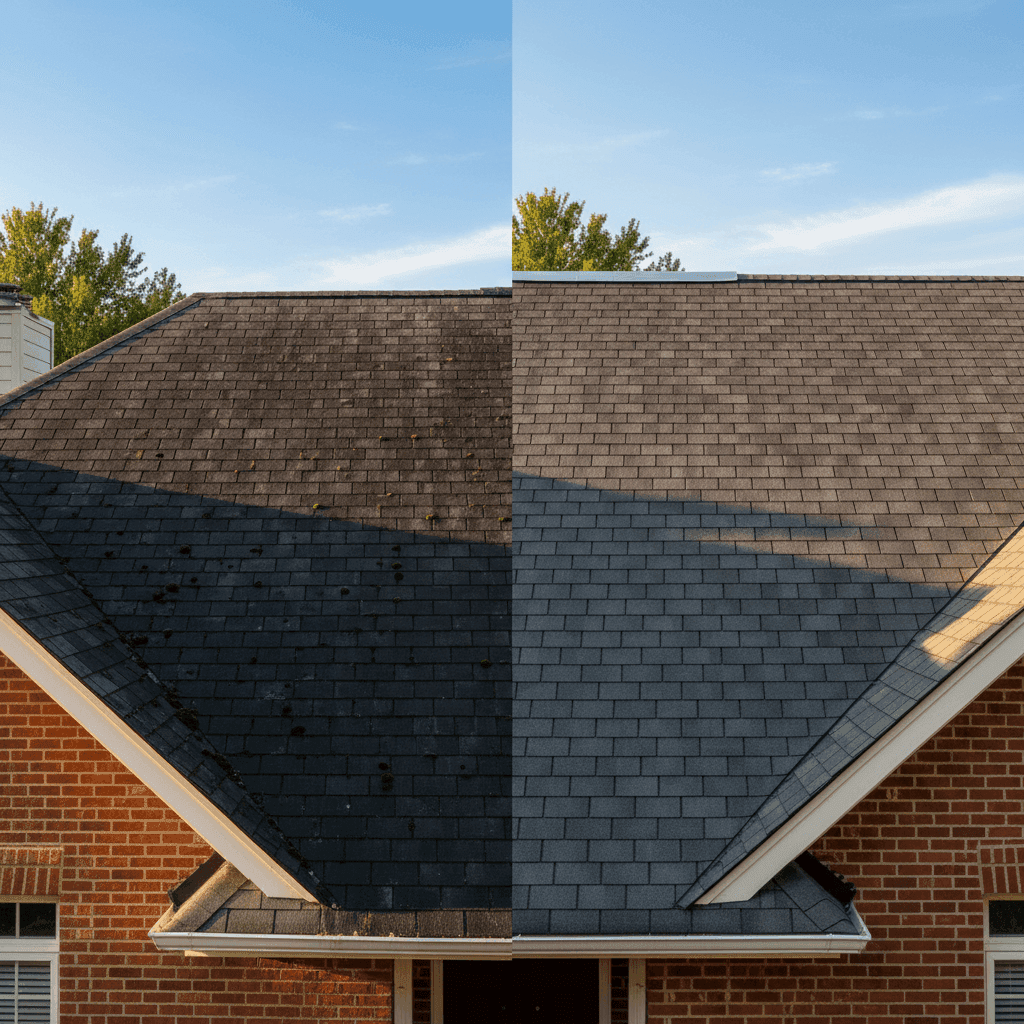
Before: A roofing contractor in the Dallas–Fort Worth area had a website built by a local print shop a few years back. It looked dated, loaded slowly on mobile, and had no individual pages for their service areas. They were getting traffic from people searching nearby but losing them immediately — the site took over five seconds to load on a phone, the homepage had no clear call-to-action, and Google was ranking them on page two or three for most local searches. They were spending money on ads but seeing minimal return because the site wasn’t converting the clicks.
After: After a full rebuild focused on speed, local SEO structure, and conversion design — including fast mobile load times, dedicated city-specific service pages, a prominent “Free Roof Inspection” button, and real job photos — results shifted within 60 days. Organic rankings moved to page one for key local terms. The bounce rate dropped by more than half. Calls from the website more than doubled compared to the same period the prior year. The owner reinvested what had been going to ads into additional service area pages — each one a new channel for inbound leads.
Not sure if your roofing website has these issues? Get a free website audit — no obligation, just a clear picture of what’s costing you leads.
Your Path to More Roofing Leads Online
Getting your website to work for you doesn’t require a technical background. Here’s what the process actually looks like:
- Audit what you have. Before changing anything, understand what’s broken. Speed, rankings, contact flow, mobile experience — these are the four things that matter most. A good audit tells you exactly where leads are slipping through the cracks.
- Fix the foundation first. Speed and mobile experience aren’t optional extras — they’re baseline requirements in 2026. A slow site on mobile is an invisible sign that says “go elsewhere.”
- Build for local search. Generic pages don’t rank locally. You need service pages that are specific to your area, structured so Google understands exactly where you work and what you do.
- Make it easy to say yes. Every page should have one clear next step — call, request an inspection, fill out a form. Remove every obstacle between a visitor’s interest and their action.
- Track what’s working. A website is not a one-time project. Knowing which pages drive calls, where visitors drop off, and what’s converting lets you keep improving over time.
Digital Trace handles all of this for roofing businesses across the US — from the initial audit through to a site that’s actively bringing in leads.
Frequently Asked Questions
Why am I not getting calls from my website even though I have traffic?
Traffic without conversion is like handing out flyers with your phone number missing. If your website loads slowly, buries your call-to-action, or doesn’t immediately build trust, visitors leave before they ever contact you. The issue is almost always the site’s structure and speed — not the number of visitors.
How do I know if my roofing website is actually working?
If you can’t answer “how many calls came from my website last month,” your site isn’t working — or at least you have no way to know if it is. A working roofing website has trackable calls, visible rankings for local search terms, and a conversion rate you can measure. Get a free audit and we’ll show you exactly where yours stands.
How long does it take to see results from a new roofing website?
In most cases, technical improvements — speed, mobile experience, contact flow — produce changes in lead volume within the first 30 to 60 days. SEO results from new or restructured pages typically build over 60 to 90 days as Google re-crawls and re-ranks your content. The businesses that see the fastest results are usually the ones where the old site had the most obvious problems to fix.
What makes a roofing website different from a regular business website?
Roofing customers are usually searching under stress and on a short timeline — storm damage, leaks, insurance deadlines. A roofing website has to load fast, build trust immediately, and make it effortless to call or request an inspection. It also needs to rank for hyper-local searches, not just broad terms. A general business website template doesn’t account for any of that.
Do I really need a fast website if my customers are local and mostly come from referrals?
Referrals are valuable — but even referred customers look you up online before they call. If your site loads slowly or looks outdated on a phone, it creates doubt right at the moment they’re deciding whether to trust you. Speed and mobile performance are table stakes now, not bonuses. And for every customer who finds you through referral, there are others in your service area searching for a roofer right now who have no idea you exist.
How much does a roofing website redesign cost, and is it worth it?
Costs vary depending on the scope of work, but the better question is: what is your current website costing you in missed leads every month? If your site is generating two or three calls per month when it should be generating fifteen, the math on a professional rebuild pays for itself quickly. A free audit is the best starting point — it shows you what’s actually happening before you commit to anything.
Stop Leaving Money on the Table — Get a Free Audit
Your roofing website should be your hardest-working employee — out there 24 hours a day, finding homeowners who need your services and making it easy for them to call.
Right now, there’s a good chance it has hidden problems that are quietly costing you leads every single week. Slow load times. Missing local signals. A contact flow that’s losing people at the last step. These are fixable — but only once you know they’re there.
Book your free website audit and get a clear, no-jargon breakdown of exactly what’s working, what isn’t, and what it would take to turn your site into a consistent source of roofing leads. No pressure, no obligation — just the information you need to make a smart decision for your business.