Logistics Company Website SEO: How to Rank #1 When Shippers Search for Carriers in Your Area
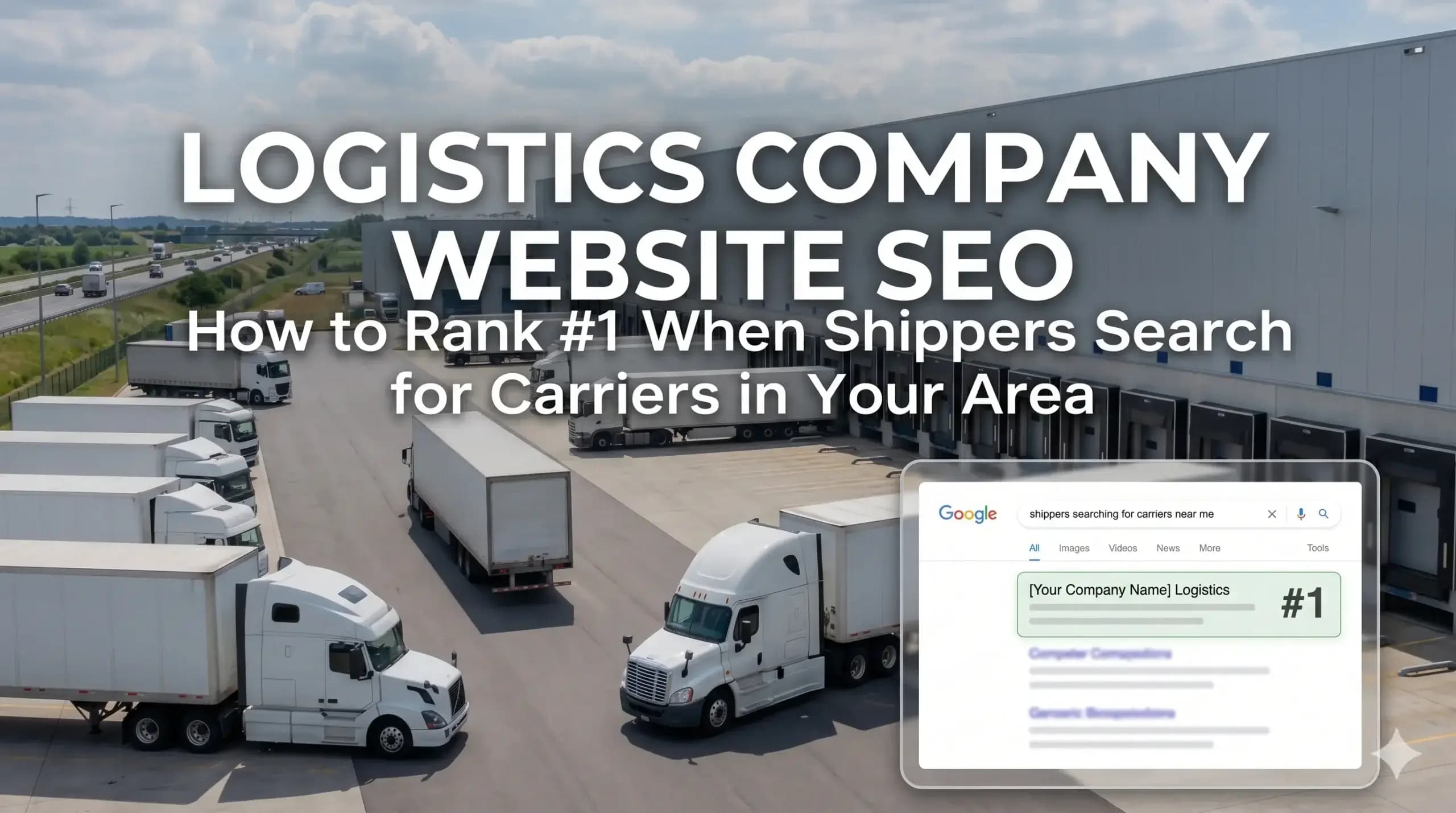
You’ve built a real business. You’ve got trucks on the road, drivers you trust, and routes you run every week. But when a shipper in your area goes to Google and types “freight carrier near me” or “local trucking company,” your name isn’t showing up — and someone else is getting that call.
That’s not a marketing problem. It’s a website problem — and it’s more fixable than you think.
Most logistics business owners assume they’re not ranking because they “need more SEO.” What’s actually happening is more specific: their website is missing the signals Google needs to trust it, and it’s missing the experience that makes a shipper want to pick up the phone. The good news is that once you know what’s broken, fixing it produces measurable results — more calls, more quote requests, more contracts.
This article walks you through exactly what’s costing you visibility and leads, and what a properly built logistics company website design actually looks like.
Your Website Is Like a Truck with No Markings Running a Route Nobody Knows About
Think about it this way: if your truck had no company name, no DOT number, and no contact info on the side, shippers couldn’t identify you on the road — and dispatchers couldn’t vouch for you. Your website works the same way.
Google is the dispatcher. It needs to know who you are, where you operate, what you haul, and whether you’re a credible carrier before it sends business your way. A generic, poorly structured site gives Google almost none of that information — so Google sends shippers to someone else.
The fix isn’t just “add more content.” It’s about building your site so it speaks Google’s language while speaking your customer’s language at the same time.
Why Shippers Can’t Find You (Even When You’re Right in Their Area)
Your Site Doesn’t Tell Google Where You Actually Operate
Most logistics websites have a Contact page with a city and state. That’s not enough. Google needs to see your service areas, your lanes, and your location tied to your business in multiple places — your homepage, your service pages, your footer, and in structured data that Google reads in the background.
When that information is missing or scattered, Google can’t confidently show your business to shippers in your area. You may be the best carrier in three states, but if your site doesn’t make that clear, you’re invisible.
The fix: Your site needs dedicated service area content, consistent NAP (name, address, phone) data, and what’s called “local schema markup” — a few lines of code that tell Google exactly what you do and where. How Digital Trace builds logistics websites includes all of this from day one.
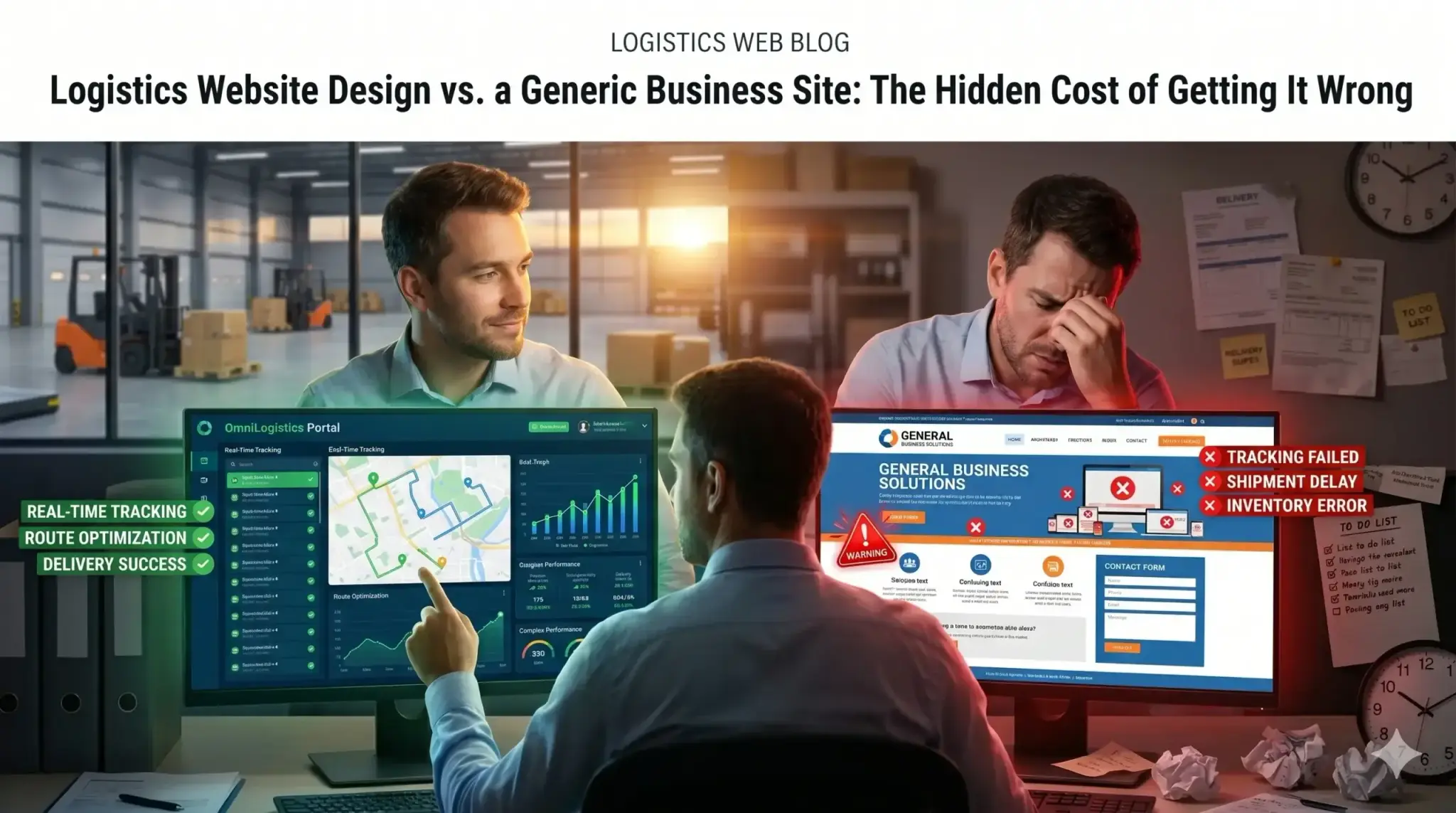
Your Homepage Talks About You — Not What the Shipper Needs
Walk through your current homepage and count how many times it says “we” versus how many times it addresses the shipper’s actual problem. Most logistics sites lead with company history, fleet size, or mission statements. Shippers don’t care about your founding year. They want to know: Can you move my freight reliably, on time, to the right place?
When your site doesn’t answer that question in the first five seconds, the shipper hits the back button — and goes to your competitor.
The fix: Lead with what you solve, not who you are. Your homepage should immediately communicate your lanes, your reliability, and how to get a quote. Keep the “about us” story — but put it after the value.
Your Website Loads Too Slowly to Compete
Most shippers searching for carriers are on the go — a phone call away from making a decision. If your website takes more than three seconds to load on a mobile device, a significant portion of visitors will leave before they ever see your phone number.
Slow load times don’t just cost you visitors. Google actively penalizes slow sites in search rankings. So you’re losing on two fronts: fewer people find you, and the ones who do leave before calling.
The fix: Image compression, proper hosting, and technical cleanup can dramatically improve load times. It’s not glamorous work — but it’s often the single fastest way to improve both rankings and conversions.
The Hidden Problem: Google Doesn’t Know Enough to Trust Your Site
Missing Signals That Tell Google You’re Legitimate
Google ranks businesses it trusts. Trust, in Google’s world, comes from signals: reviews, citations, backlinks from relevant sources, consistent business information across the web, and a website that’s technically sound.
Logistics businesses often have strong reputations offline but weak digital footprints. If your business isn’t listed consistently on freight directories, trucking associations, and local business profiles — or if your website has broken links, duplicate content, or outdated pages — Google sees you as a lower-confidence result.
That means shippers searching in your exact service area see your competitors first, even if you’ve been in business longer and have a better track record.
Your Competitors Have Done the Work — You Can Catch Up
Here’s something worth knowing: in most local logistics markets, the top-ranked carriers aren’t necessarily the biggest or the best. They’re the ones whose websites are built correctly. That means a mid-sized regional carrier with a well-structured, fast, keyword-relevant site will consistently outrank a large operation with a neglected website.
This is actually good news. You don’t need a massive marketing budget. You need a site that’s built right.
💡 Pro Tip
The most common mistake logistics companies make: using one generic page for every service.
If you offer LTL freight, FTL loads, and regional delivery, each of those should have its own dedicated page — not a single “Services” page that mentions all three in a paragraph. Google needs specific pages to rank for specific searches. A shipper searching “LTL freight carrier Ohio” won’t find you if that keyword only appears once buried on a general services page. Build out individual pages for each service and each primary service area. It’s one of the fastest ways to expand your ranking footprint.
Real-World Example: What Changes When a Logistics Site Is Built Right
Before: A regional flatbed carrier based in the Midwest had been in business for 11 years. They had a website built around 2018 that hadn’t been updated since. It loaded slowly, had no service area pages, and ranked on page 4 for their primary search terms. The owner was getting most new business through referrals and a few broker relationships — but wanted to grow direct shipper relationships. He figured the website “was fine” since it had all his contact info.
After: A full rebuild was done with proper service area pages for each state they operated in, individual pages for flatbed and step-deck loads, fast mobile load times, and a homepage that led with shipper pain points rather than company history. Within four months, the site was ranking on page 1 for six target searches in their primary lanes. Direct quote requests through the website went from near zero to a consistent 8–12 per month. One of those turned into a dedicated lane contract worth over $180,000 annually.
The site didn’t change the business. It made the business findable.
Not sure if your logistics website has these issues? Get a free website audit — no obligation, just a clear picture of what’s costing you leads.
Your Path to More Leads: 5 Steps to a Logistics Website That Actually Works
- Audit what you have. Before changing anything, understand what’s broken. A proper audit looks at load speed, keyword rankings, content gaps, and technical errors — and prioritizes what will move the needle fastest.
- Build service area and service-specific pages. Each lane you run and each service you offer deserves its own page with specific, relevant content. This is how you get found for searches that are actually worth money.
- Clean up your business listings. Make sure your name, address, and phone number are identical across Google Business Profile, freight directories, and your website. Inconsistencies hurt rankings more than most people realize.
- Make it fast and mobile-ready. Most of your potential customers are checking their phones between loads. Your site needs to load in under three seconds and be easy to navigate on a small screen.
- Add clear calls to action. Every page should make it obvious what the shipper should do next — call you, request a quote, or fill out a form. Don’t make them hunt for your contact information.
Frequently Asked Questions
Why am I not getting calls from my website even though it looks decent?
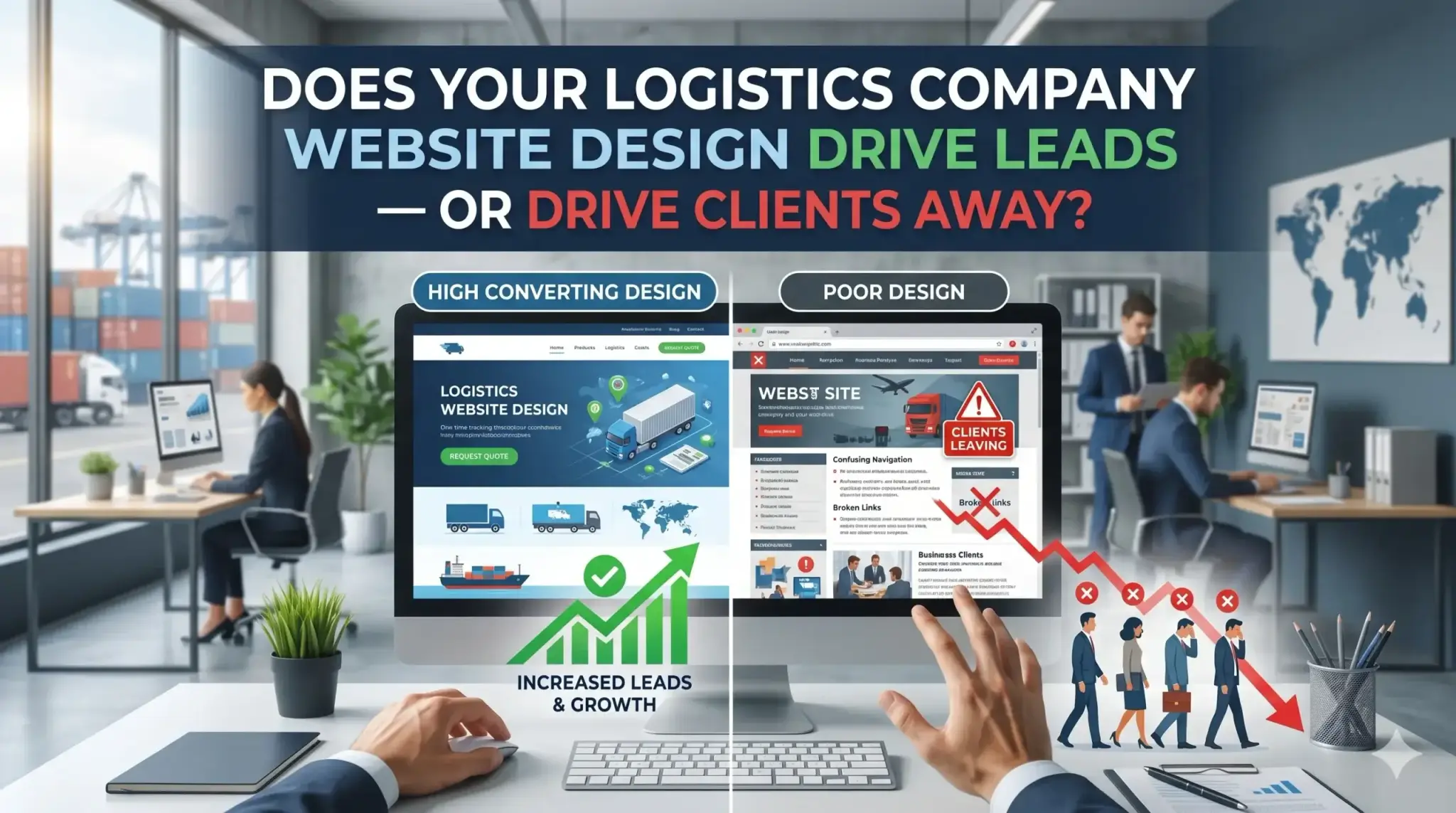
Looking good and performing well are two different things. A site can have professional photos and a clean layout but still fail to rank because it’s missing the technical signals Google needs — proper page structure, service area content, schema markup, and page speed. If shippers can’t find your site in search, it doesn’t matter how good it looks.
How do I actually know if my logistics website is working?
The clearest sign is whether you’re getting inbound quote requests or calls from people who found you online. If all your new business comes from referrals or brokers, your website isn’t working as a lead source. A proper audit will show you exactly where visitors are dropping off and what searches you’re missing. Start with a free website audit here.
How long does it take to see results from a rebuilt logistics website?
Most logistics businesses start seeing ranking improvements within 60 to 90 days of a properly built site going live. Conversions — actual calls and quote requests — often improve faster than that, because a better site converts the traffic you already have. Full ranking momentum typically builds over four to six months as Google indexes and validates the new content.
What makes a logistics website different from a regular business website?
The structure, the content, and the intent behind every page are different. A logistics site needs to speak to shippers’ specific concerns — reliability, coverage area, load types, insurance, and response time. It also needs to be structured around the lanes and services you actually run, not generic “we move stuff” messaging. Generic web designers don’t know how shippers think. That’s why websites built for logistics businesses perform better than off-the-shelf designs.
Do I really need a fast website if most of my customers are local businesses?
Yes — especially if they’re local. Local searches happen on mobile devices all the time, often mid-route or between pickups. If your site takes five seconds to load on a phone, most visitors will leave and call whoever loads faster. Speed also directly affects your Google rankings, which determines whether local shippers find you at all.
I’ve been burned by marketing agencies before. How is this different?
That’s fair — and it’s the right question to ask. The difference is accountability and specificity. A website audit gives you concrete, documented findings before you commit to anything. You’ll see exactly what’s broken and what it’s costing you. There’s no guesswork, no vague promises about “increasing your digital presence.” If the numbers don’t support moving forward, you’ll know that too.
Stop Losing Business to a Website That Isn’t Working for You
Every week your site sits in its current state, shippers in your service area are finding your competitors and signing contracts you should have won. The freight is moving — it’s just not moving through you.
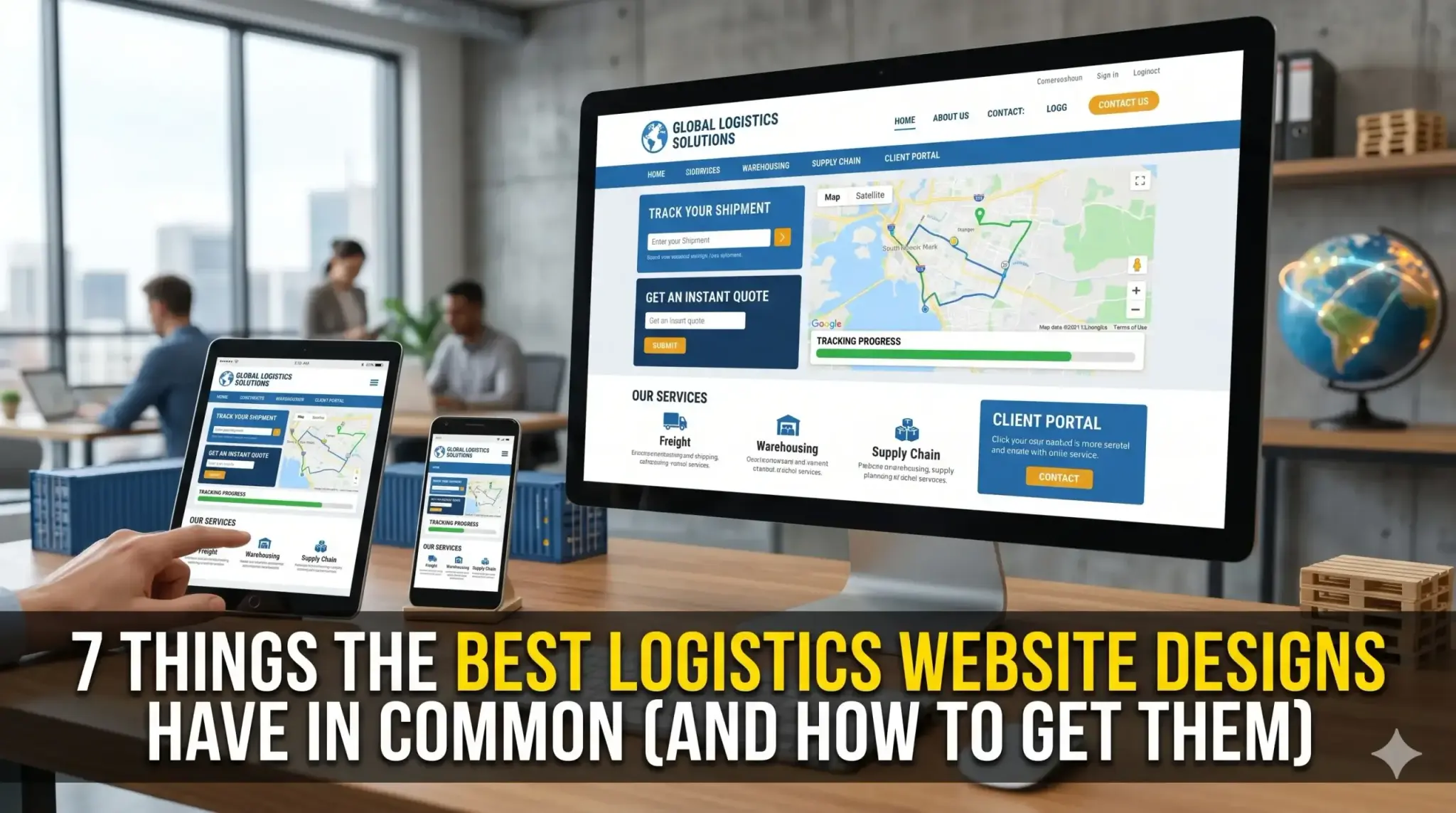
A proper logistics company website design doesn’t just look better. It ranks higher, loads faster, and converts more of the shippers who are already searching for what you offer.
Get your free website audit — we’ll show you exactly where your site is losing you leads, with no obligation and no sales pressure. Just a clear, specific picture of what’s costing you business, and what it would take to fix it.