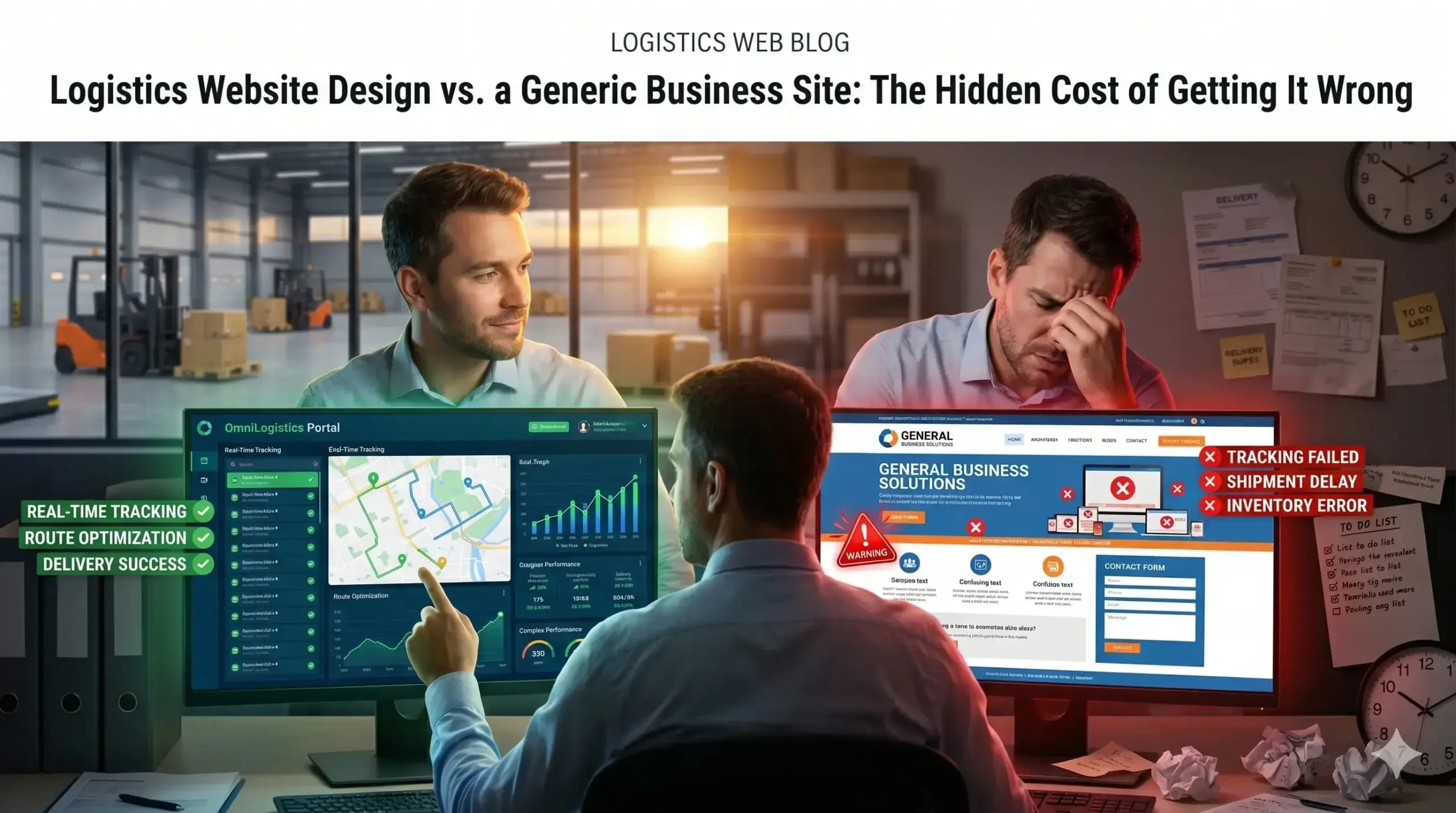
Logistics Website Design vs. a Generic Business Site: The Hidden Cost of Getting It Wrong
You paid for a website. Maybe a few thousand dollars, maybe more. It looks decent, loads okay, and has your phone number on it. So why isn’t it bringing in new business?
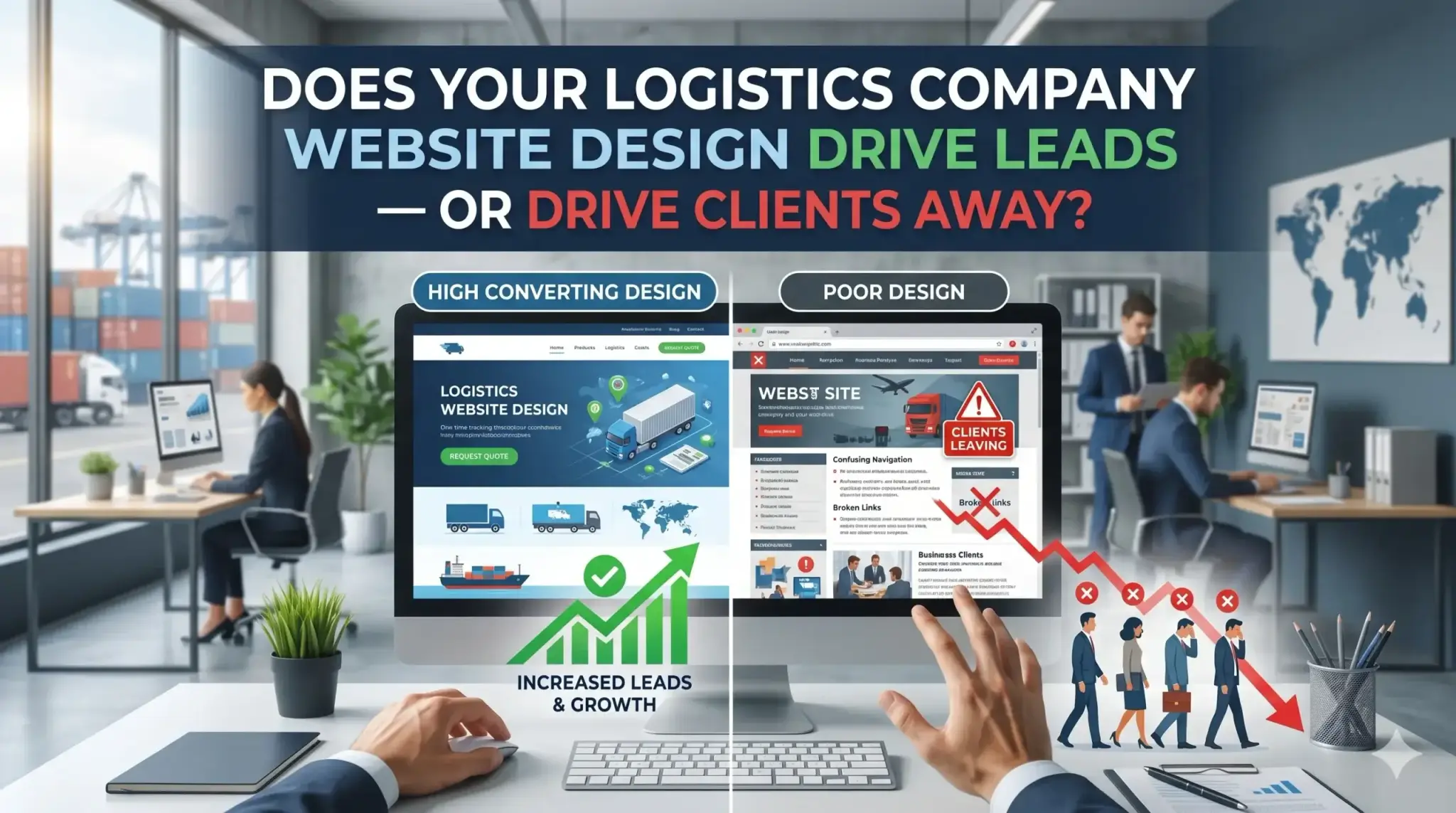
Most logistics business owners assume their website “just needs more traffic.” But traffic isn’t the problem. The problem is that a generic website — the kind built for any business in any industry — is quietly costing you customers every single day. And you’d never know it from looking at the site.
There’s a significant difference between a website that sits there and one that actively works to bring you freight contracts, fleet clients, and logistics partnerships. By the end of this article, you’ll know exactly what that difference looks like — and how to tell which one you have.
Your Website Looks Professional, But Shippers Are Still Calling Your Competitor
Here’s the frustrating reality: a logistics business can have a clean, modern-looking website and still rank nowhere near the top when a shipper searches “freight carrier [city]” or “third-party logistics provider near me.”
Generic websites aren’t built around how buyers in the logistics space actually search. A manufacturer looking for a reliable carrier isn’t typing “business services.” They’re searching specific terms — lane coverage, freight types, capacity availability. If your site doesn’t speak that language, Google won’t show it to the right people.
The technical reason is straightforward: Google ranks pages based on relevance to specific search intent. A logistics company website design built around your actual services, service areas, and freight specialties signals relevance in a way a one-size-fits-all template never will.
What this costs you: Every week your site sits invisible in search results is another week your competitor picks up the RFQ you never heard about.
A Slow Website Is Like a Truck That Won’t Start — Nobody Waits Around
Picture this: a procurement manager needs a carrier quote before end of day. They click your website link, and it takes six seconds to load. They’re gone before your logo even appears.
Page speed isn’t a nice-to-have. It’s the first impression. Studies consistently show that most users abandon a website if it doesn’t load within three seconds — and in logistics, where decisions are time-sensitive, that window is even shorter.
Generic websites built on bloated templates are loaded with unnecessary code, unoptimized images, and third-party scripts that slow everything down. A purpose-built logistics company website design is engineered lean from the start — fast on desktop, fast on mobile, fast for the dispatcher checking your site from a truck stop.
What this costs you: Slow load times mean fewer people ever see your services, your credibility, or your contact form. You’re losing leads before a single word is read.
Google Doesn’t Know Enough About Your Logistics Business to Rank It
Think of Google as a freight broker. It needs enough information to match the right carrier (your website) to the right shipper (the person searching). If your site doesn’t clearly communicate what freight you handle, where you operate, and who you serve — Google hedges its bets and shows someone else instead.
The technical side of this is called structured data and on-page signals. It’s how Google reads your site to understand: Is this a full truckload carrier or an LTL broker? Do they service the Midwest? Do they handle temperature-controlled freight?
A generic business template doesn’t provide those answers. A logistics website built by Digital Trace is structured so that Google can confidently match your business to the people actively searching for your specific capabilities.
What this costs you: Without clear signals, your site competes against thousands of irrelevant results instead of ranking where it should — directly in front of shippers and fleet managers looking for exactly what you offer.
💡 Pro Tip: One of the most common mistakes logistics companies make is listing their services in vague, broad terms like “transportation solutions” or “supply chain management.” These phrases mean everything and nothing. Your website should name your actual freight types, lanes, and equipment — dry van, reefer, flatbed, LTL, FTL, intermodal. The more specific your language, the more Google trusts that you’re the right answer for specific searches. This applies to your page titles, service descriptions, and even your image labels.
Visitors Land on Your Site and Leave Without Calling — Here’s Why
Getting someone to your site is only half the job. Once they arrive, your website has about 10 seconds to convince them to stay, trust you, and take action.
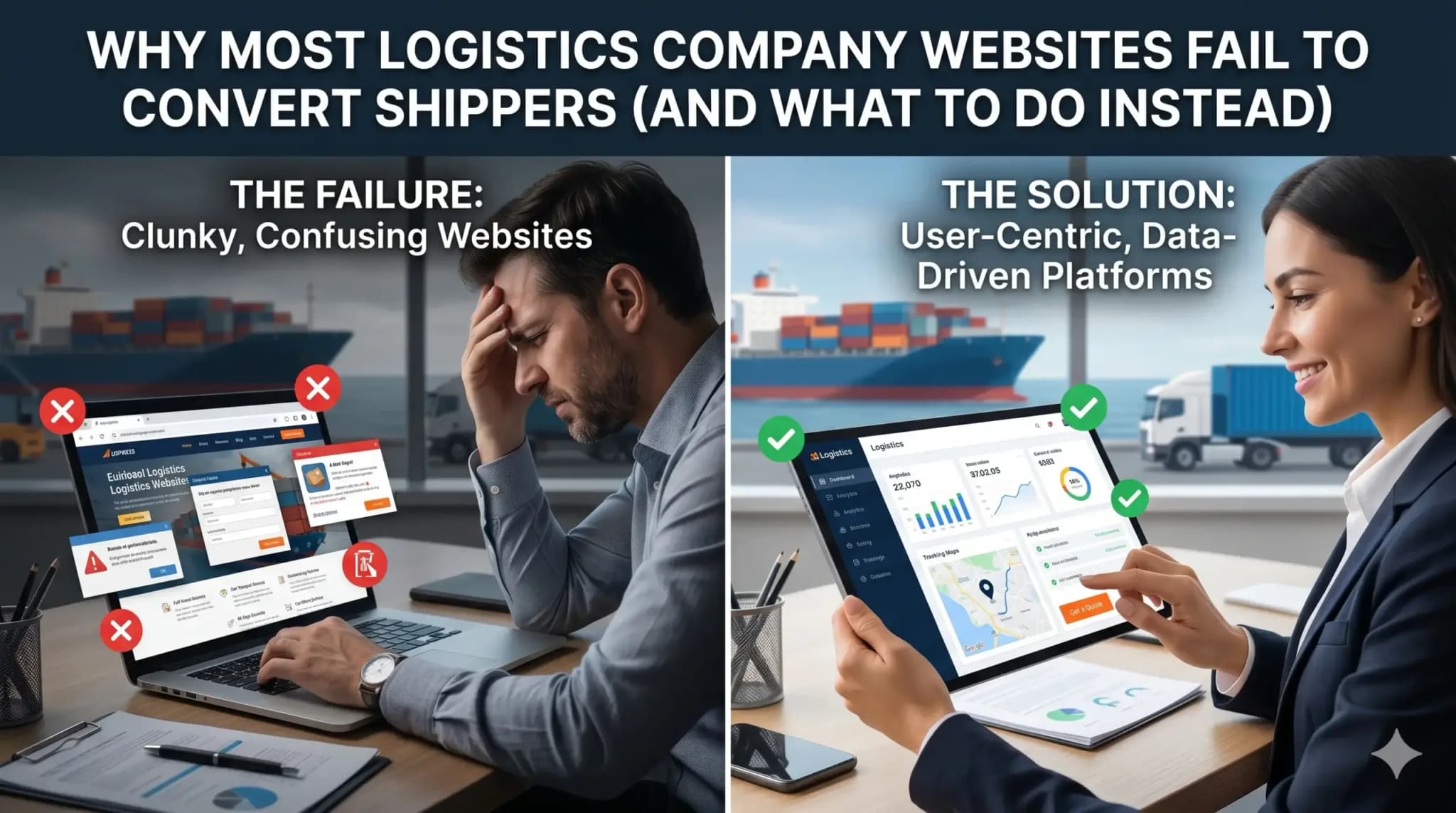
Generic websites fail this test constantly. They’re designed to look good in a portfolio screenshot — not to move a skeptical logistics buyer toward picking up the phone. They bury the contact information, lead with company history instead of customer problems, and offer no clear reason to choose you over the carrier down the road.
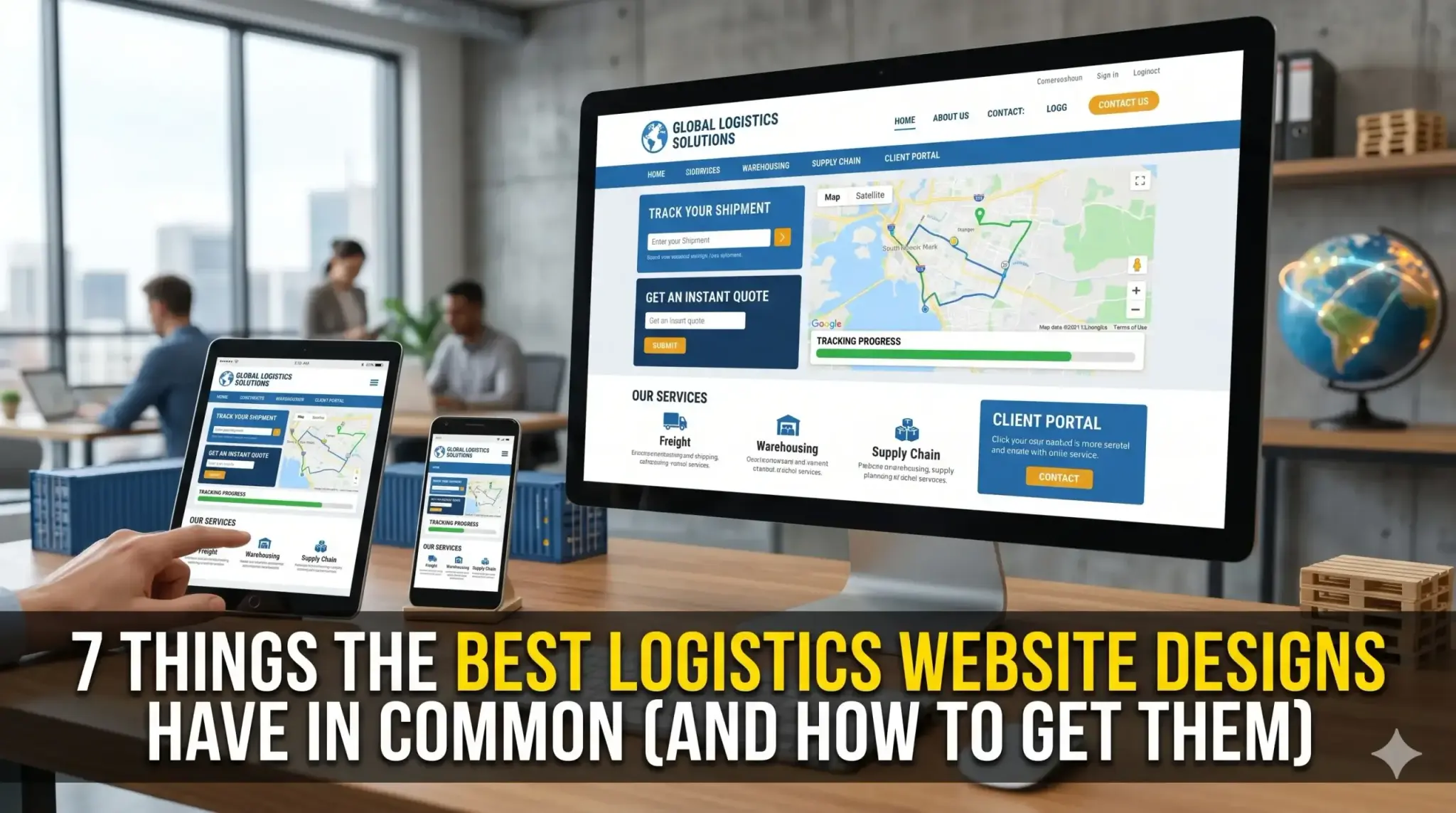
A high-converting logistics website does three things immediately:
- States clearly who you serve and what you handle (not “we provide transportation solutions” — but “FTL and LTL carrier serving the Southeast, specializing in automotive and industrial freight”)
- Shows proof fast — real lanes, real equipment, real capacity, real testimonials from actual clients
- Makes it frictionless to act — a visible phone number, a simple quote request form, a clear next step
What this costs you: A visitor who lands on your site and leaves without calling is a real opportunity lost. Multiply that by dozens of visitors per month, and you’re watching revenue walk out a door you didn’t know was open.
What Happens When a Logistics Website Actually Does Its Job: A Real Scenario
Consider a mid-sized regional carrier operating out of the Midwest — 18 trucks, solid reputation with existing clients, but struggling to land new accounts outside of referrals. Their website was five years old, built by a general web agency, and hadn’t been touched since. It ranked for their company name and nothing else.
Before: Their site averaged around 200 monthly visitors, almost entirely existing contacts. Inbound leads from the website: near zero. Every new client came through a sales call or word of mouth.
After rebuilding with a logistics-focused approach: The new site was structured around their actual freight specialties (refrigerated and flatbed), their primary lanes (IL to TX, OH to GA), and their target customers (food manufacturers and building suppliers). Load times dropped from 7 seconds to under 2. Local and regional search terms started ranking within 90 days.
Within six months: monthly organic visitors grew to over 900, inbound quote requests averaged 8–12 per month, and they closed three new contract accounts worth over $280,000 in annual revenue — none of which came from outbound sales activity.
The site didn’t just look better. It worked.
Not sure if your logistics website has these same problems? Get a free website audit — no obligation, just a clear picture of what’s costing you leads.
Your Path to More Leads from Your Logistics Website
If you want your website to actually generate business, here’s what that path looks like:
- Audit what you have. Understand your current traffic, rankings, and load speed before changing anything. You need a baseline to measure against.
- Get specific about who you serve. Your website should name your freight types, lanes, equipment, and ideal customer — not offer vague descriptions that fit everyone and attract no one.
- Fix your speed. If your site takes more than 3 seconds to load on a phone, you’re losing leads before the page even appears. This is fixable.
- Build for the buyer’s journey. The first page a shipper sees should answer: Can you handle my freight? Where do you operate? Why should I trust you? How do I contact you? In that order.
- Track what’s working. A logistics website that’s actually performing will show you increasing organic traffic, lower bounce rates, and real inbound inquiries. If you can’t measure it, you can’t improve it.
Digital Trace handles all of this — from the technical foundation to the content strategy — specifically for logistics businesses. No guesswork, no generic templates.
Frequently Asked Questions
Why am I not getting any calls from my website?
The most common reasons are that your site isn’t ranking for the searches your customers actually use, or it’s ranking but not convincing visitors to act. A site can look polished and still fail on both counts. A quick audit usually reveals the exact gap within minutes — you can get one here for free.
How do I know if my logistics website is actually working?
If you can’t tell where your inbound leads come from, that’s your answer. A working logistics website drives measurable organic traffic, produces inbound quote requests, and ranks for freight and carrier searches in your service area — not just your company name.
What makes a logistics website different from a regular business website?
Logistics buyers search differently, evaluate differently, and decide differently than retail consumers. They need to see lane coverage, freight types, equipment lists, and capacity information — not a homepage hero image and a vague tagline. A logistics-specific website is built around that buying process from the ground up.
How long does it take to see results from a new website?
Most logistics businesses start seeing meaningful movement in organic traffic within 60–90 days of launching a properly built, optimized site. Significant ranking gains and consistent inbound leads typically follow within four to six months. The timeline depends on your market, competition, and how targeted the build is.
Do I really need a fast website if my clients aren’t looking for carriers on their phone?
Yes — because Google uses mobile performance to rank your site for everyone, including desktop users. A slow mobile site tanks your search rankings across the board, which means shippers searching on their desktop still may never find you. Speed is a ranking factor, not just a user experience issue.
I’ve worked with web agencies before and didn’t see results. Why would this be different?
Most general agencies build websites that look great in a presentation and produce no business results. The difference is industry focus. Digital Trace builds specifically for logistics companies — the content strategy, the technical setup, and the conversion structure are all built around how freight buyers actually search, evaluate, and decide.
Stop Letting Your Website Cost You Freight Contracts
Every week a logistics business runs on a generic, underperforming website is another week of inbound leads going to a competitor with a better-built site. The good news: the problems are fixable, and they’re usually faster to address than most business owners expect.
Digital Trace specializes in logistics company website design — websites that rank, load fast, speak the language of your buyers, and convert visitors into quote requests and new accounts.
Book your free website audit today — we’ll show you exactly what your current site is costing you and what it would take to fix it. No pitch, no pressure. Just a clear, honest look at where you stand.