Auto Repair Website Design That Actually Converts Visitors Into Clients
You’ve got a website. You paid someone to build it — maybe a few years ago, maybe recently. But the phone isn’t ringing the way it should. Customers walk in saying they “found you on Google,” but you’re not sure how, and you’re definitely not sure if it’s working.
Here’s the uncomfortable truth most auto repair shop owners don’t hear: having a website and having a website that works are two completely different things. Thousands of automotive businesses across the US are sitting on digital dead weight — pages that look fine but quietly bleed leads every single day.
This isn’t about chasing trends or spending more money on ads. It’s about understanding why the visitors you’re already getting don’t pick up the phone — and fixing it. By the end of this post, you’ll know exactly what’s breaking your site and what a real automotive website design solution looks like.
Why Your Shop Shows Up — But Nobody Calls
Picture this: someone’s check engine light comes on during their commute. They pull over, grab their phone, and search “auto repair near me.” Your shop appears in the results. They tap your link.
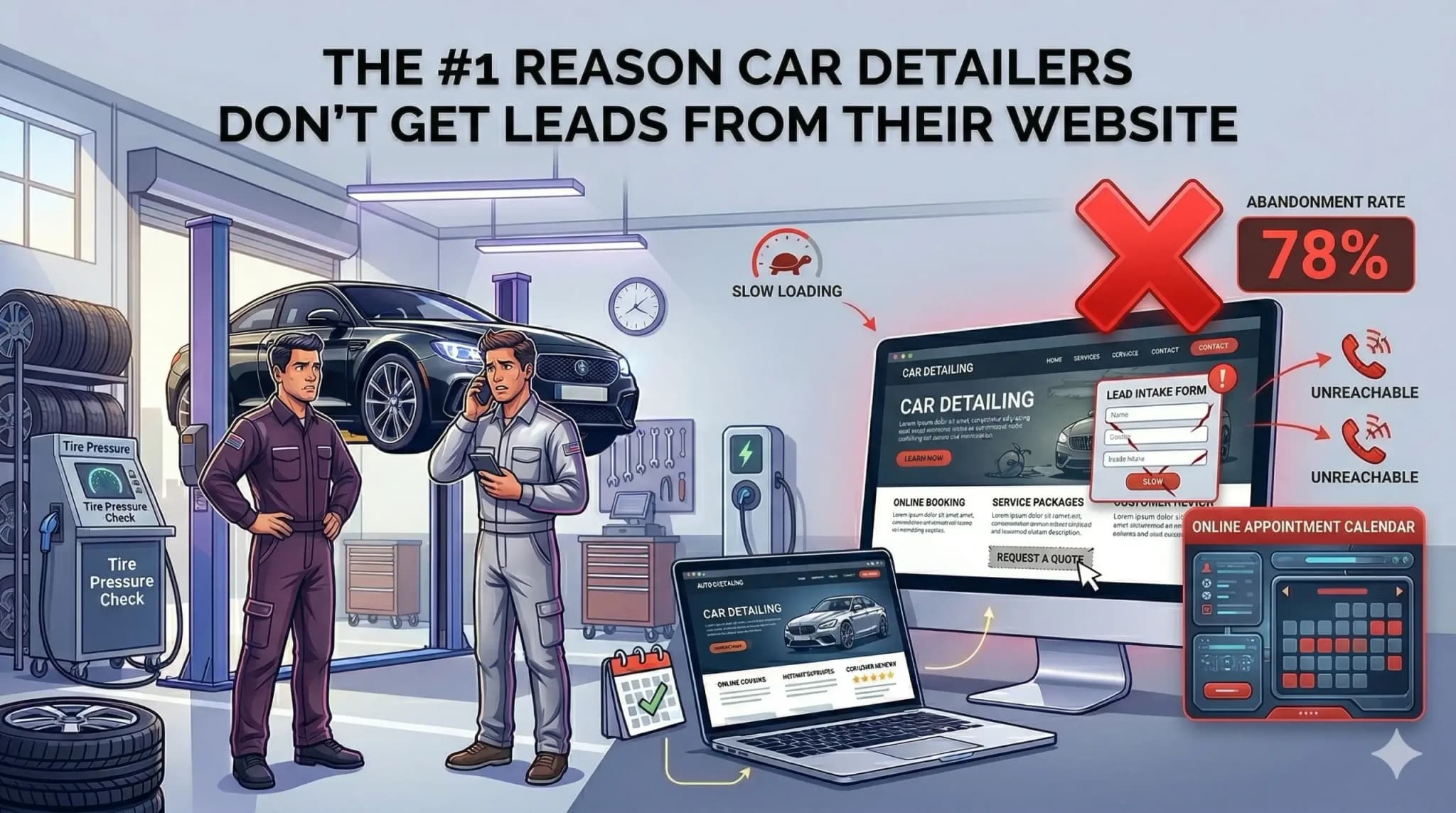
And then… nothing happens fast enough. The page crawls. The layout looks wrong on their phone. They can’t find your phone number in the first five seconds. So they hit the back button and call your competitor instead.
This happens dozens of times a week at most auto shops — and the owner never knows.
The technical reason is almost always a combination of slow load time and poor mobile layout. Over 70% of local service searches happen on a smartphone. If your site isn’t built from the ground up for mobile users, you’re handing those leads to whoever is.
What Digital Trace does differently: Every site built for automotive businesses is mobile-first by design — meaning your phone number is front and center, your services are easy to find, and the page loads before the customer loses patience.
Your Website Is Sending the Wrong First Impression
Think of your website like the front lot of your shop. If cars are parked haphazardly, the signage is faded, and there’s no clear indication of what you do or who you serve — customers drive past. Online, visitors make the same split-second judgment.
Most automotive websites make three costly first-impression mistakes:
- No clear headline — visitors can’t immediately tell what you fix, where you’re located, or why they should choose you
- Buried contact info — the phone number is in the footer, not at the top where someone can tap it instantly
- Generic stock photos — images of smiling mechanics in perfect lighting don’t build trust; photos of your actual shop and team do
The result? Visitors bounce within seconds. They came looking for confidence and left because nothing on the page said we’re the right shop for you.
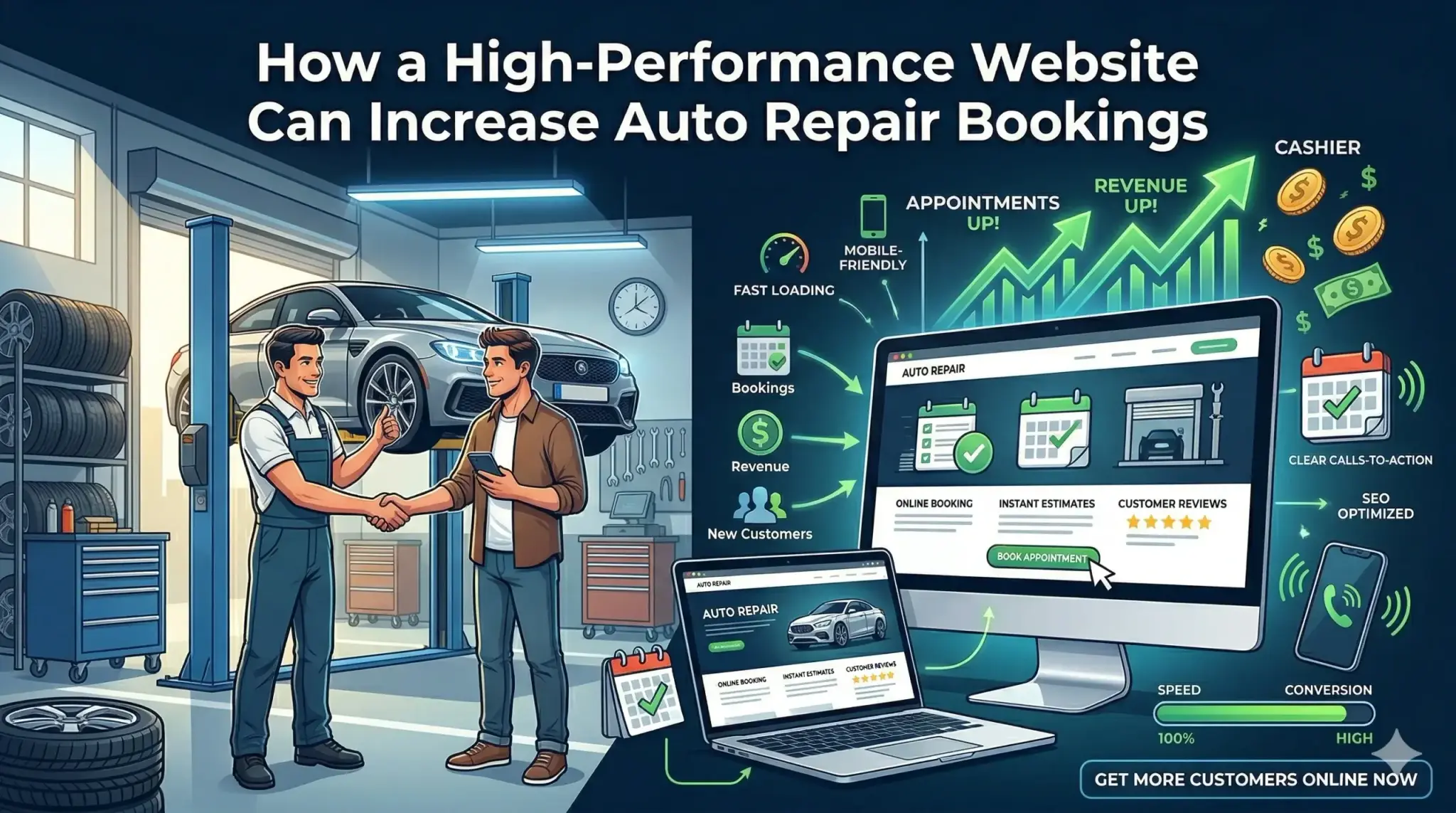
A well-designed automotive website leads with trust signals immediately: your location, your specialties, real customer reviews, and a phone number that’s impossible to miss.
Google Doesn’t Know Enough About Your Shop to Show It
You might be doing everything right inside your shop and still losing to a competitor who’s nowhere near as good — just because their website is set up better for Google.
Here’s why: Google needs specific signals to decide which businesses to surface when someone searches nearby. Things like your service area, your exact services, how your business is described, and whether your name, address, and phone number match across every listing online. When these signals are missing or inconsistent, Google gets cautious. It shows businesses it’s more confident about instead.
This is often called local SEO — but ignore the term. What it really means is: Google doesn’t know enough about your shop to trust showing it to customers. And there’s a straightforward fix.
A proper automotive website design includes what’s called structured data — basically a clear, behind-the-scenes label that tells Google exactly what your business is, what you do, and where you do it. Without it, you’re invisible to the very customers who are actively searching.
💡 Pro Tip: One of the most common — and most fixable — problems for auto repair shops is inconsistent business information across the web. If your address on your website says “St.” but Google Maps says “Street,” that small mismatch sends a signal of uncertainty to search engines. Audit every place your business is listed and make sure the name, address, and phone number are identical everywhere.
The “Fast Enough” Problem That’s Costing You Leads
Most auto shop owners assume their site loads fine because it works on their own phone — usually over Wi-Fi, to a site their browser has already cached.
Your customers aren’t in that situation. They’re on LTE in a parking lot, on an older Android phone, trying to get information right now.
Studies consistently show that if a page takes more than 3 seconds to load, more than half of mobile visitors leave — without ever seeing your phone number, your reviews, or your services. You paid for the website. You might even be paying for ads to drive traffic to it. And that traffic is evaporating before the page finishes loading.
The culprits are usually:
- Oversized images that weren’t compressed for web
- Outdated website platforms that load slowly by default
- Unnecessary plugins and scripts running in the background
Speed isn’t a luxury feature — it’s the difference between a lead and a missed call.
The Before/After: What a Real Fix Looks Like
Business: Eastside Auto & Tire — a four-bay independent auto repair shop in Columbus, Ohio. Family-owned, 14 years in business, solid reputation in the area.
The problem: Their site was built in 2018 by a local freelancer. It looked decent on desktop, but on mobile it was nearly unusable — text was tiny, the phone number wasn’t clickable, and the page took over 6 seconds to load on an average connection. They were getting traffic from Google but almost no calls from it. Walk-ins came from word of mouth. The website was effectively invisible.
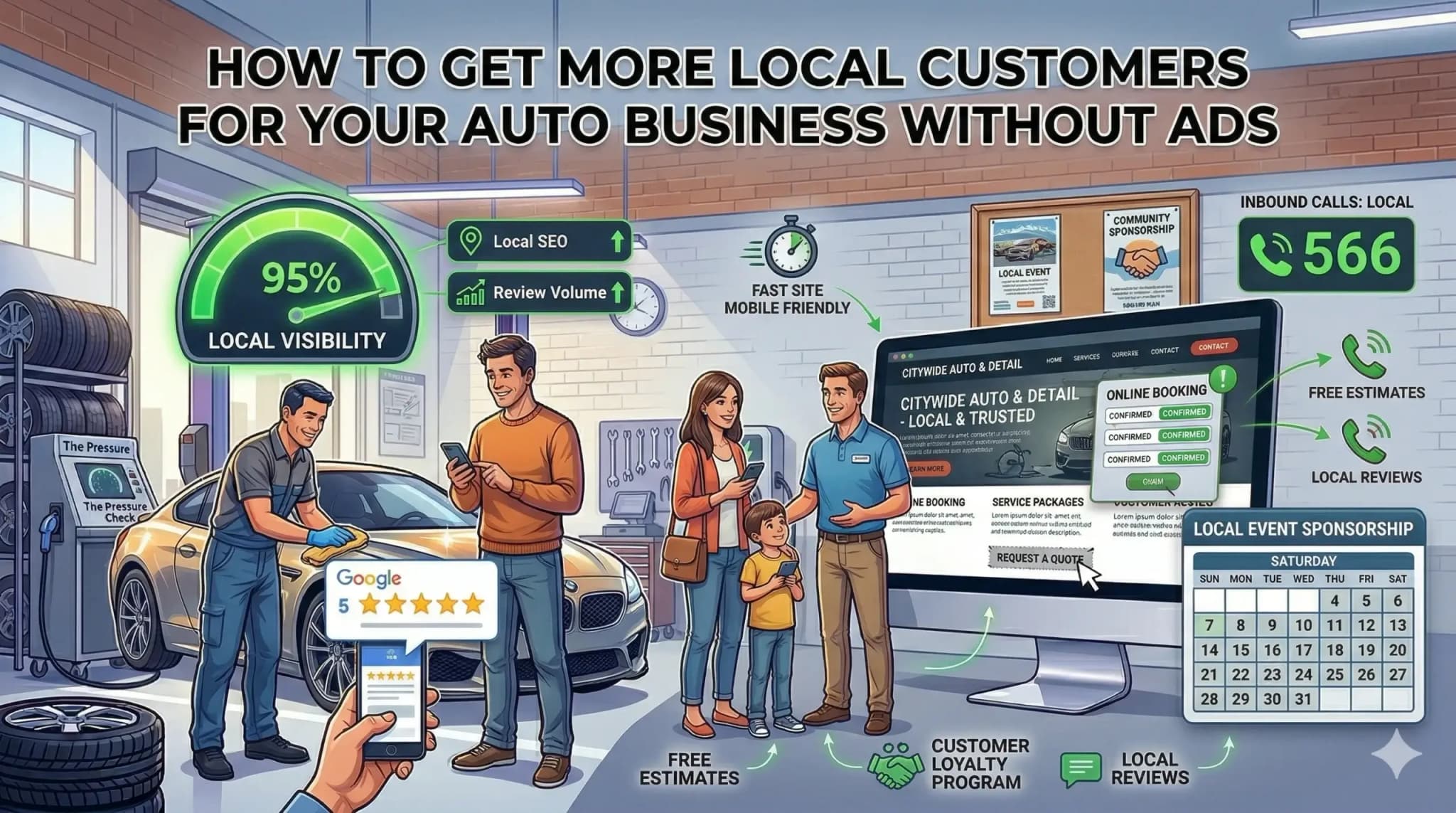
What changed: A full rebuild using an automotive website design approach — mobile-first layout, click-to-call button above the fold, compressed images, fast hosting, local SEO structure, and real photos of the shop and team.
The result: Within 60 days, inbound calls from the website increased by roughly 3x. Their Google Business profile clicks doubled. Two new fleet clients — who found them through search — now account for a significant portion of monthly revenue. The owner’s exact words: “We thought our website was fine. Turns out it was the thing holding us back.”
Not sure if your site has these same issues? Get a free website audit — no obligation, just a clear picture of what’s costing you leads.
Your Path to More Leads: What the Fix Actually Looks Like
Getting your website to actually work for your shop isn’t complicated — but it does require doing the right things in the right order.
- Audit what’s broken first. Before changing anything, understand where leads are dropping off. Is it load speed? Mobile layout? Missing contact info? Each problem has a different fix.
- Make your phone number impossible to miss. Every page, at the top, clickable on mobile. This single change can move the needle immediately.
- Build for mobile, not desktop. Your customers are on their phones. Your website needs to be built for that reality from the ground up.
- Tell Google who you are. Add structured data, keep your business info consistent everywhere online, and make sure your site clearly describes your specific services and location.
- Use real photos and real proof. Authentic images of your shop, your team, and customer reviews convert better than anything a stock photo library offers.
- Track what’s actually working. Know how many people call from your website, which pages they visit, and where they leave. Guessing isn’t a strategy.
FAQ: What Auto Shop Owners Actually Ask Before Redesigning Their Site
Why am I not getting calls from my website even though I have one?
Having a website doesn’t automatically mean it’s working. The most common culprits are slow load times, a layout that doesn’t work well on mobile, and a missing or hard-to-find phone number. If visitors can’t find how to contact you within a few seconds on their phone, they leave. A website audit will tell you exactly where you’re losing them.
How do I know if my automotive website is actually doing anything?
If you can’t answer “how many people called us from the website this month,” your site isn’t set up to be measured. A properly configured site tracks calls, form submissions, and traffic sources — so you know what’s working and what’s wasted. Get a free audit to see where your site currently stands.
How long does it take to see results after a website redesign?
For most auto repair shops, improvements in lead volume from organic search typically start showing within 60–90 days. Changes like a mobile-friendly layout and a click-to-call button can produce results much faster — sometimes within the first few weeks — because they directly improve what visitors see the moment they land.
What makes an automotive website different from a regular business website?
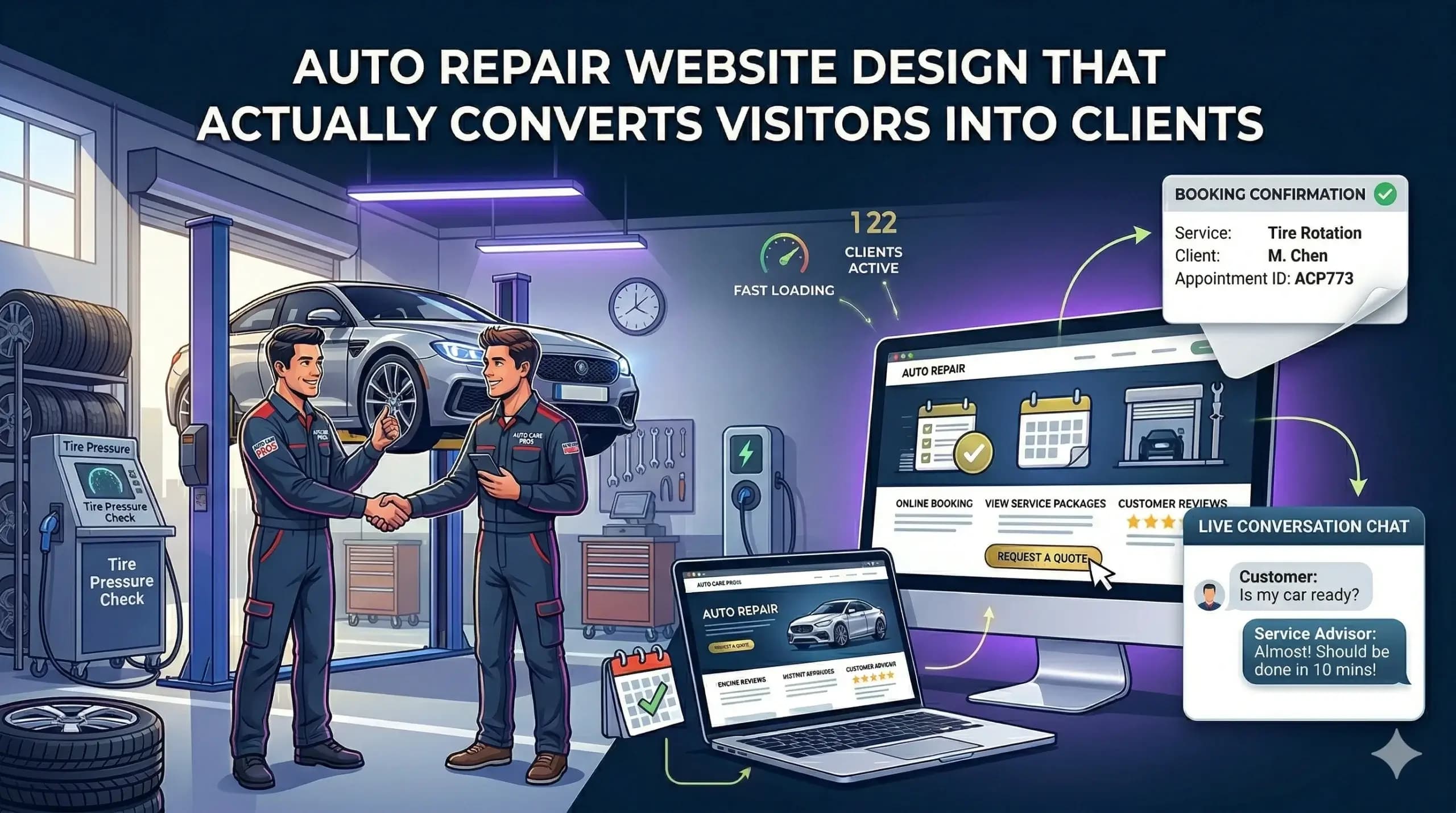
Auto repair customers are often in a stressful situation — something broke unexpectedly, and they need help fast. A site built for that reality prioritizes speed, trust, and action: clear services, real credentials, customer reviews, and a phone number that’s always one tap away. A generic website template doesn’t account for any of that.
Do I really need a fast website if most of my customers are local?
Yes — especially if they’re local. Local customers searching on their phones expect instant results. A slow site doesn’t just frustrate them; it signals that your business might not be up to date. Google also ranks faster sites higher in local search results, which means a slow site is actively pushing you down in the list.
I’ve hired web agencies before and didn’t see results. Why would this be different?
That’s a fair concern. The difference is whether the agency understands what an auto repair customer actually needs when they land on your site — and whether they measure results in leads and calls, not just traffic and clicks. Before committing to anything, ask to see their work with automotive businesses specifically, and ask how they track whether the site is actually driving revenue.
Ready to See What Your Website Is Actually Costing You?
Most auto repair shop owners are surprised when they see a real audit of their site — not because the problems are complicated, but because they’re fixable. Load speed. Mobile layout. A phone number buried where nobody finds it. Structured data missing entirely. Small things that add up to real lost revenue every single week.
Digital Trace specializes in building websites for automotive businesses that do one thing above everything else: convert visitors into customers. No fluff. No generic templates. Just a fast, professional site that works as hard as you do.
No cost. No commitment. Just a clear look at what’s working, what’s broken, and what it would take to start turning your website traffic into booked appointments.