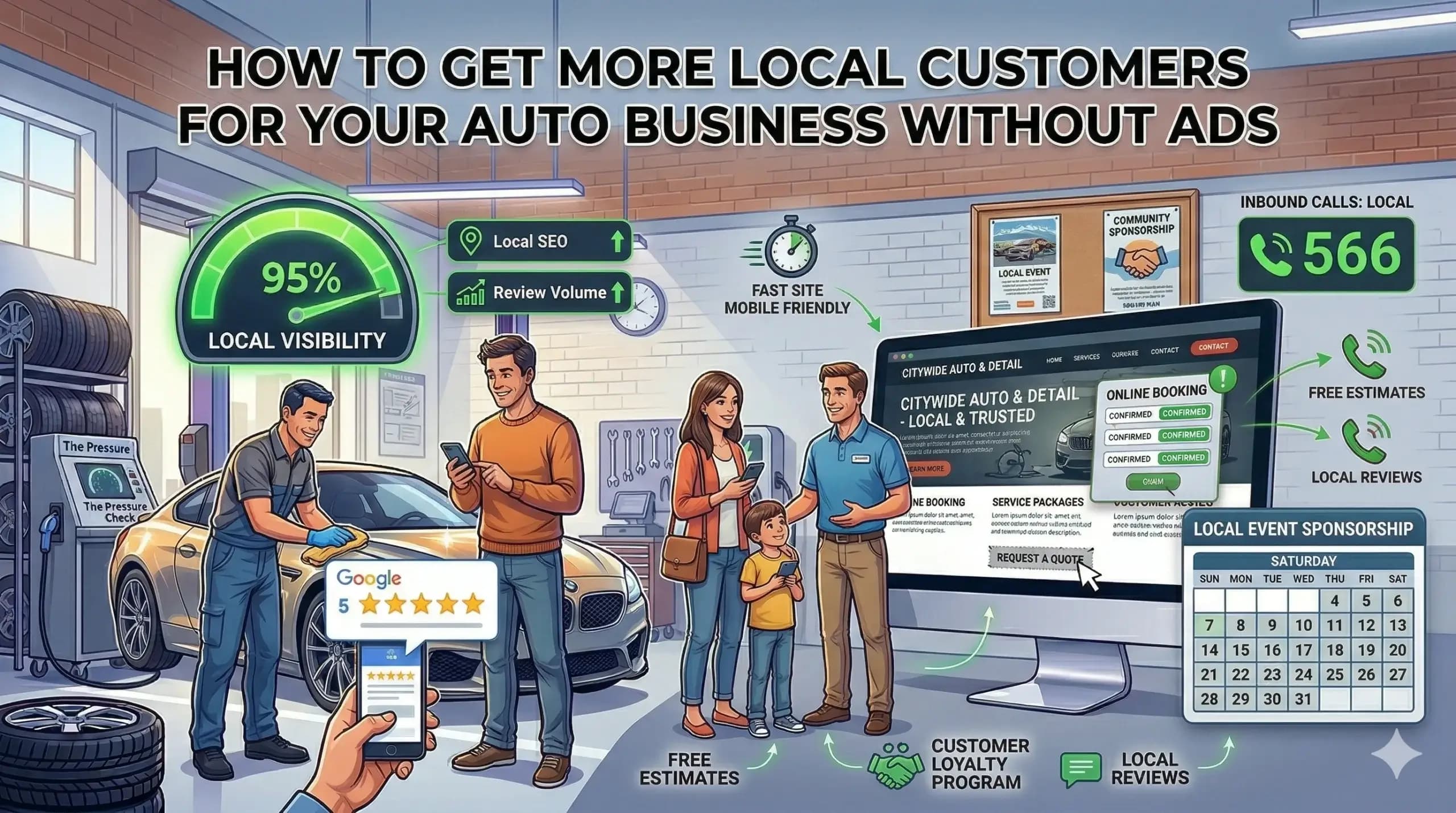
How to Get More Local Customers for Your Auto Business Without Ads
You’re running a solid auto business. You’ve got the skills, the crew, and the reputation. But your phone isn’t ringing the way it should — and when you look at your website, it looks fine to you.
That’s the problem.
Most auto business owners assume their website is just a place to park their address and phone number. Something to point people to. But right now, your website is either actively winning you customers — or quietly sending them to your competitor down the street. There’s very little middle ground.
The good news: you don’t need to spend a dollar on ads to fix this. What you need is a website that’s been built to do one job — convert local searchers into paying customers. That’s exactly what smart automotive website design is designed to do.
By the end of this article, you’ll know exactly where your website is losing you business and what to do about it.
Your Competitor Is Showing Up. You’re Not. Here’s Why.
Picture this: someone’s car just broke down two miles from your shop. They pull out their phone and search “auto repair near me.” Your competitor’s name pops up first. Yours doesn’t appear until page two — or not at all.
It’s not that Google doesn’t know about you. It’s that Google doesn’t trust your website enough to show it prominently.
When your site loads slowly, has thin content, or lacks the right technical signals, Google treats it like a business that might not be worth recommending. It’s like a mechanic whose bay is dark, the sign is faded, and the door looks locked — even if the lights are on inside. Customers keep driving.
What Digital Trace does differently: every automotive website design project starts with a full technical audit to find exactly why Google isn’t ranking your site — and fixes it from the ground up.
The 3-Second Problem (And Why It’s Costing You Real Money)
Here’s something most auto shop owners don’t realize: the majority of people searching for local auto services are on their phones, often in a stressful moment — their car just made a noise, the check engine light came on, or they need an oil change before a road trip.
They will not wait for a slow website.
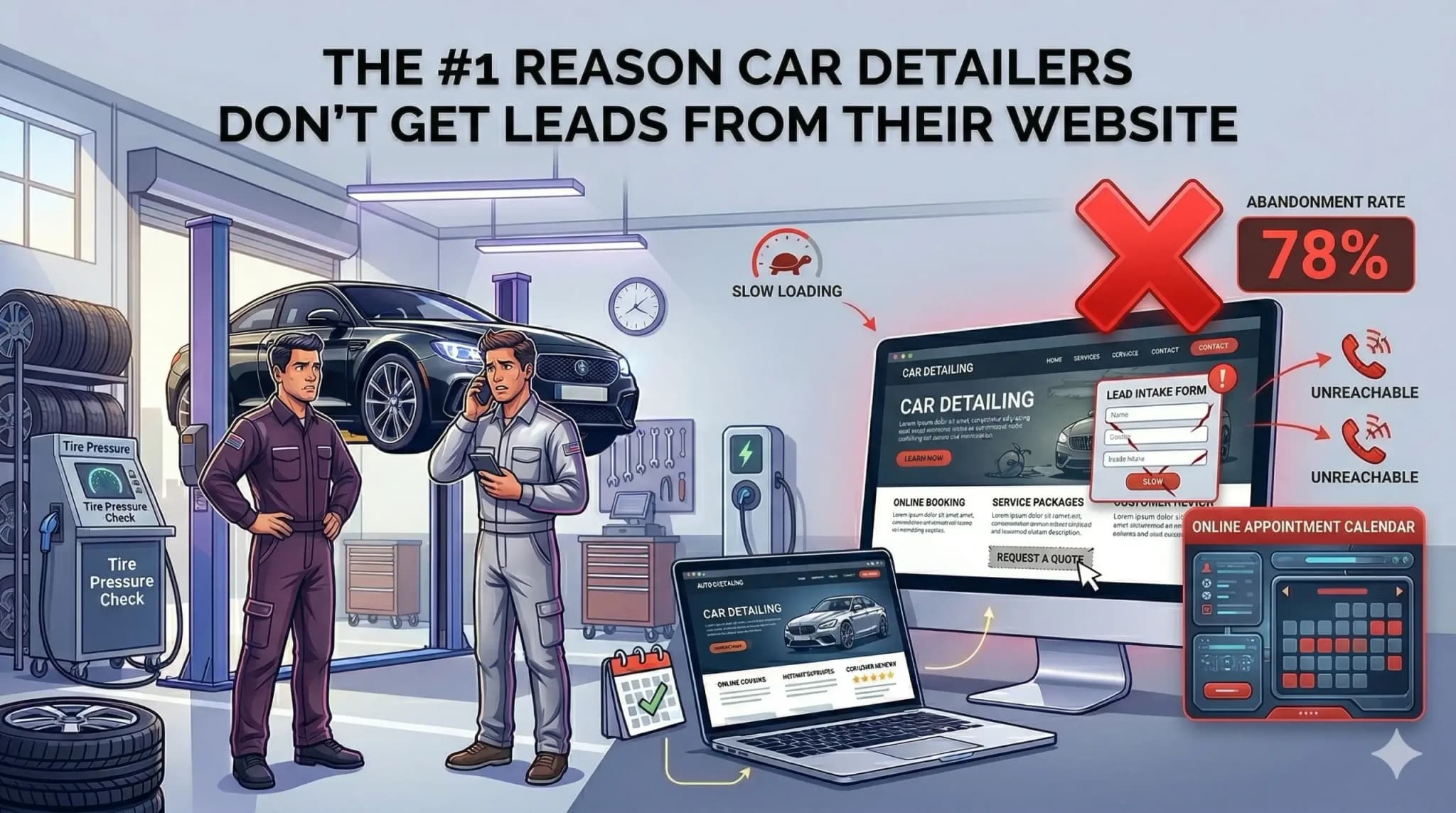
If your site takes more than three seconds to load, a large portion of those visitors will hit the back button before your phone number even appears on their screen. They don’t call you. They call someone else.
This isn’t a traffic problem. It’s a speed problem — and it’s entirely fixable.
What to look for:
- Images that haven’t been compressed or optimized
- Old, bloated website themes that weren’t built for performance
- Hosting plans that were cheap for a reason
- Too many plugins slowing everything down
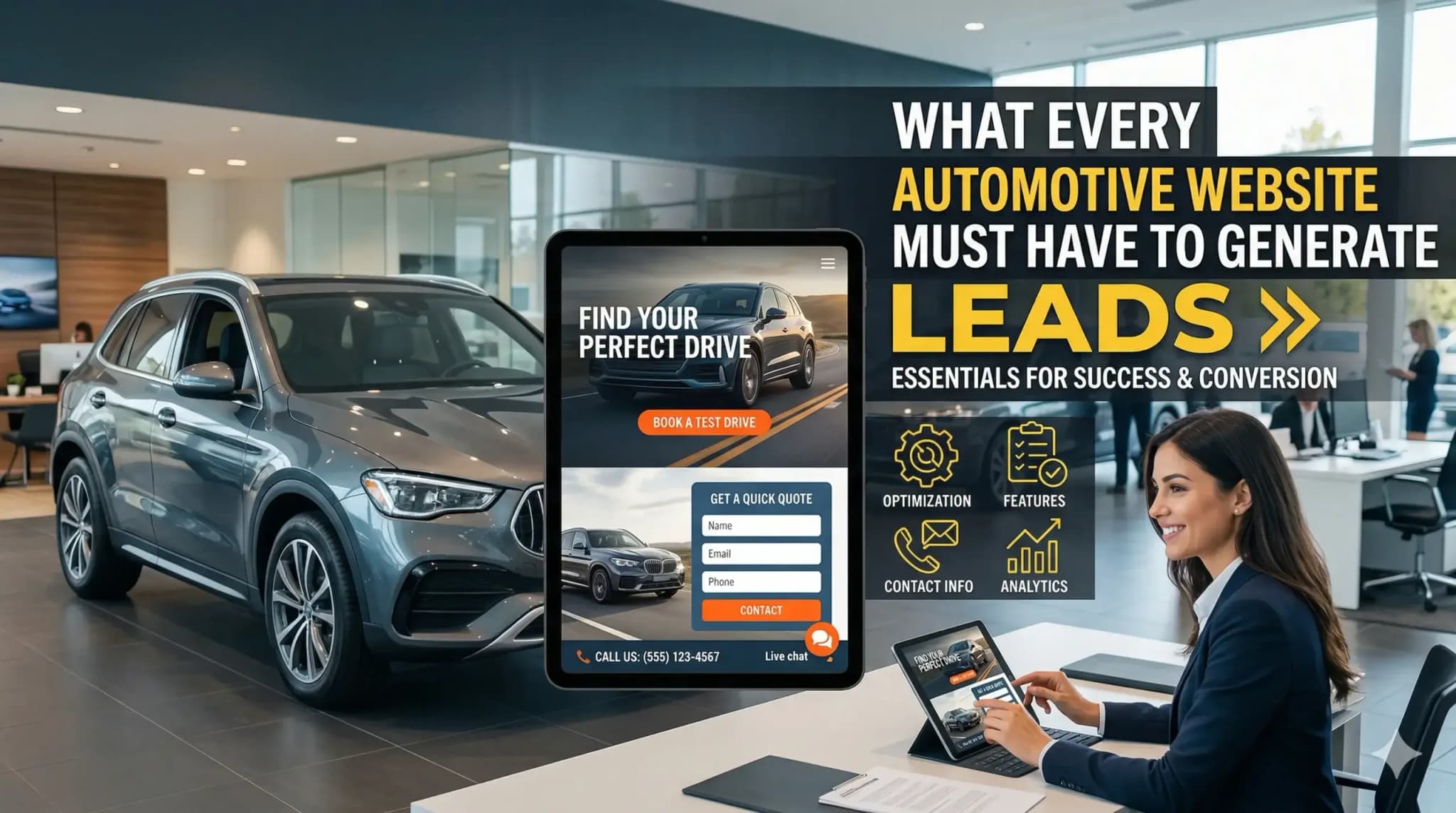
A properly built automotive website loads fast on a 4G connection, shows your phone number and services above the fold, and gives someone a reason to call within the first few seconds of landing.
💡 Pro Tip: Google Can’t Read a Confusing Website
Here’s one of the most common issues we see on auto business websites: Google genuinely doesn’t know what your business does, where you’re located, or what services you offer — because the website never told it clearly.
This isn’t about writing more content. It’s about a behind-the-scenes technical fix called structured data (sometimes called schema markup). Think of it like filling out a detailed form that tells Google: “We’re a full-service auto repair shop in [City], we do brake jobs, oil changes, and transmission work, and here’s our phone number.”
Without it, Google has to guess — and when Google guesses, it often plays it safe by not ranking your site at all.
The fix takes a few hours for a developer. The benefit can be showing up in local search results with your hours, reviews, and services displayed right on the results page.
Why Most Auto Websites Don’t Convert (Even When They Rank)
Getting someone to your site is only half the battle. Once they land, your website has about 8 seconds to give them a reason to call you instead of going back to Google.
Most automotive websites fail here in the same ways:
- No clear headline — visitors don’t immediately know what you do, where you are, or why you’re the right choice
- Phone number buried — it’s in the footer, or you have to click “Contact” to find it
- No social proof above the fold — reviews, ratings, and trust signals are hidden or missing entirely
- Generic copy — “We provide quality automotive services” tells no one anything
- No clear next step — what do you want them to do? Call? Book online? Request a quote?
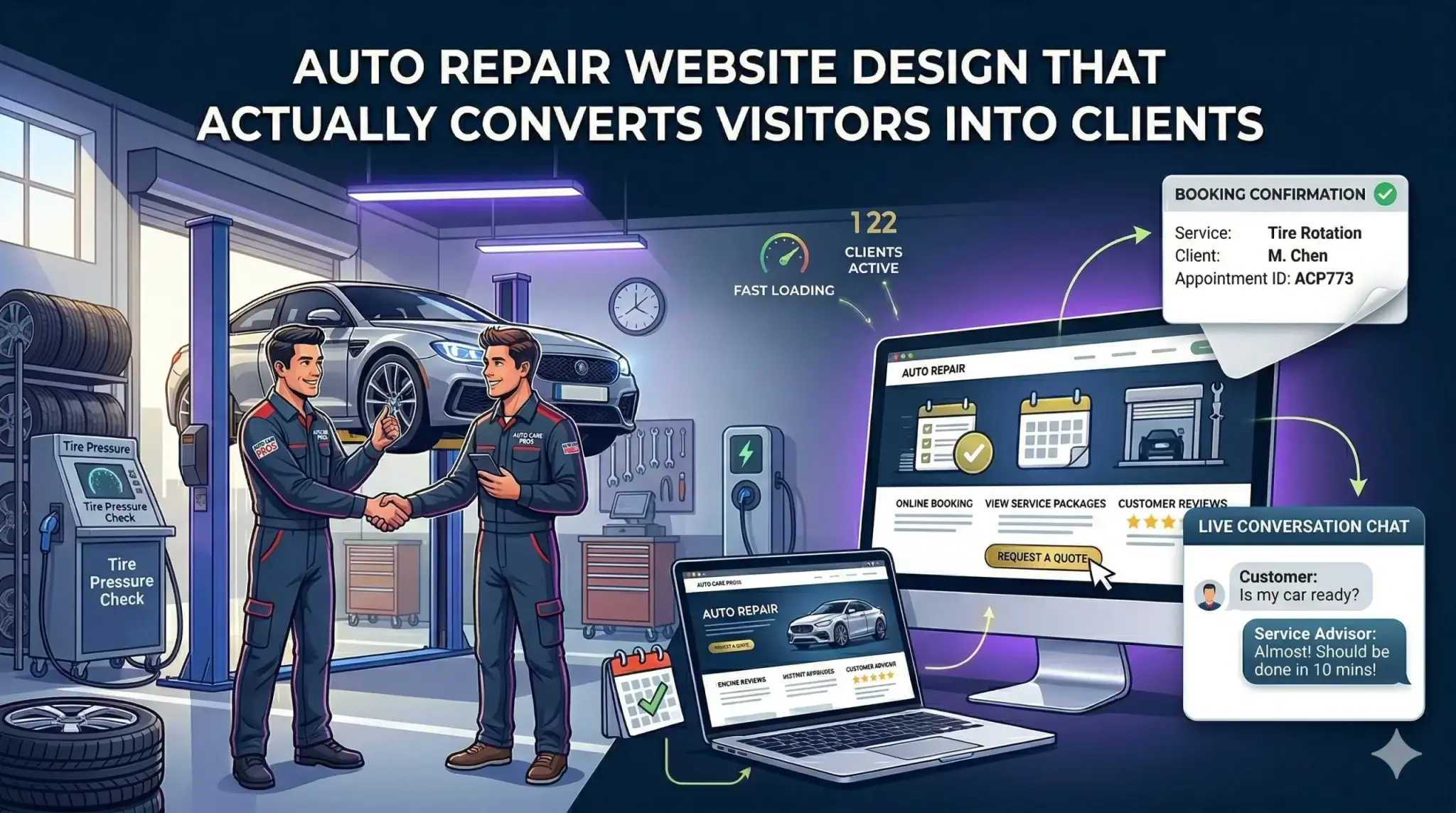
Your website should work like your best salesperson — one who greets every visitor, answers their questions upfront, shows them proof you’re trustworthy, and makes it obvious what to do next.
What a Real Automotive Website Audit Revealed
A real-world scenario from our work:
A family-owned transmission repair shop in the Midwest had been in business for over 20 years. Strong reputation, loyal customers, word-of-mouth referrals. But over three years, they’d noticed new customer calls dropping off — even as the neighborhood grew.
Their website had been built by a nephew years earlier. It looked decent enough on a desktop. But on mobile, the text was tiny, the phone number wasn’t clickable, and the site took nearly 8 seconds to load on a phone.
After a full rebuild with proper mobile optimization, page speed improvements, and local SEO structure:
- Mobile load time dropped from 8.1 seconds to under 2 seconds
- The shop started appearing in the Google local map pack for targeted local searches
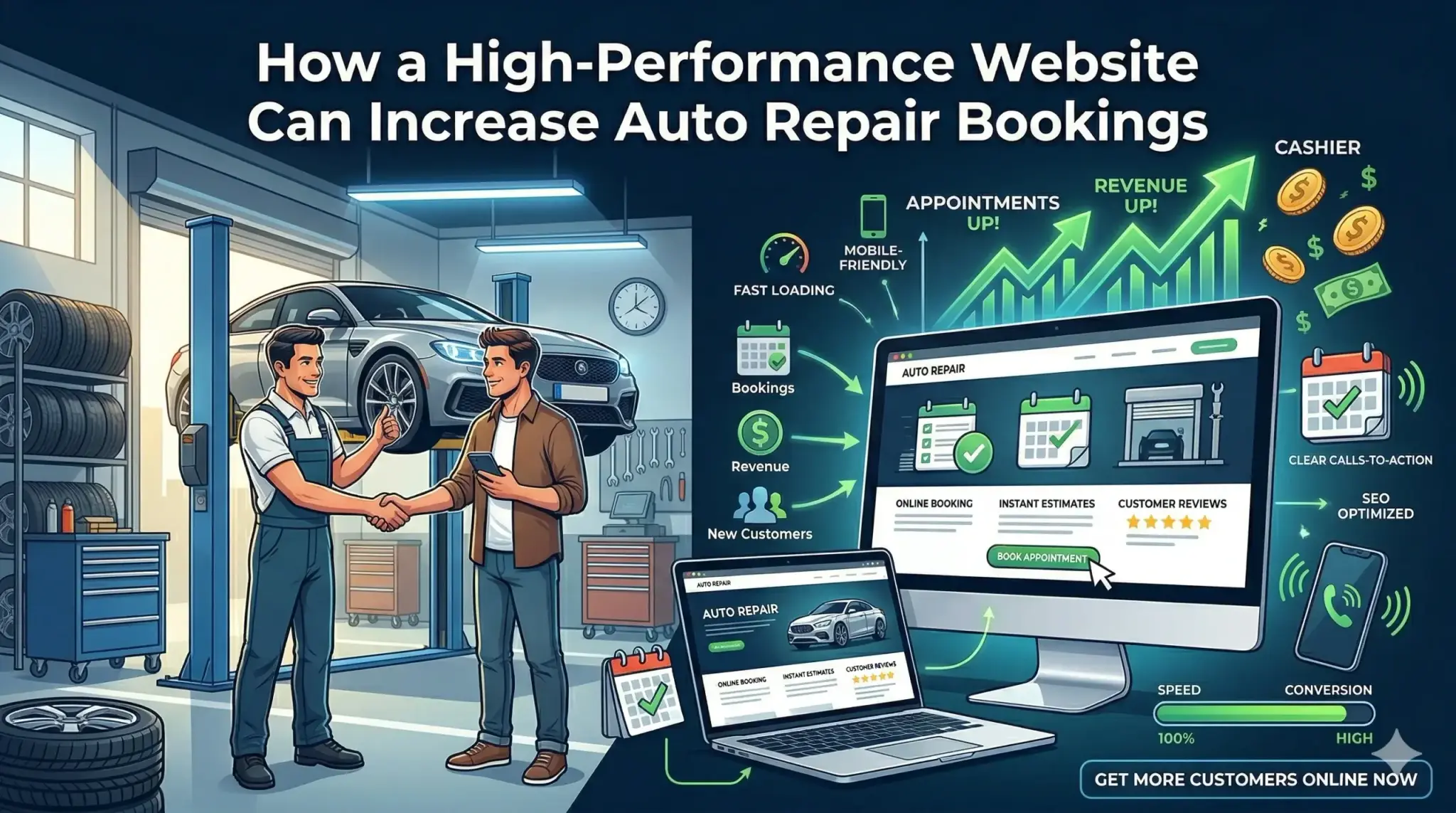
- Inbound calls from new customers increased significantly within 90 days — without a single dollar spent on ads
The shop didn’t change what they do. They just stopped losing people who were already looking for them.
Not sure if your website has the same issues? Get a free website audit — no obligation, just a clear picture of what’s costing you leads.
What Makes an Automotive Website Different From a Generic Business Site
A website built for a law firm or a restaurant isn’t built for an auto business. The customer behavior is different. The search intent is different. The trust signals are different.
Someone looking for an auto shop is often in reactive mode — their car needs something, they need it soon, and they need to know you can handle it. That means your website needs to:
Lead with service specificity. Don’t just say “auto repair.” List the services clearly — brakes, diagnostics, transmission, AC service, tires. People search for specific problems, not general categories.
Show local credibility fast. Your city or service area should be visible immediately. A generic website with no location signals tells Google (and your visitors) nothing about where you work.
Make booking or calling frictionless. One tap to call on mobile. No forms with ten fields. No waiting. The easier you make it to reach you, the more people will.
Display real reviews prominently. Auto service is a trust-heavy purchase. Showing Google or Facebook reviews near the top of the page — not hidden in a footer carousel — changes how quickly visitors decide to call.
Your Path to More Leads (Without Spending on Ads)
You don’t need a massive marketing budget to get more local customers. You need a website that’s been built to earn them. Here’s the straightforward path:
Step 1: Find out what’s broken. Start with a professional website audit. You need to know your actual load speed on mobile, whether Google is indexing you correctly, and where visitors are dropping off.
Step 2: Fix your mobile experience. More than half of local searches happen on phones. If your site isn’t fast and easy to use on a phone, you’re losing the majority of potential callers before they ever reach out.
Step 3: Nail your local SEO basics. Your business name, address, and phone number need to be consistent across your website, Google Business Profile, and any directories you’re listed on. Inconsistencies quietly hurt your rankings.
Step 4: Build trust signals into the design. Reviews, certifications, photos of your actual shop and team — these belong near the top of your homepage, not buried in a tab.
Step 5: Make it embarrassingly easy to contact you. Your phone number should be at the top of every page. On mobile, it should be tappable. Add a simple “Book a Service” or “Get a Quote” button that leads somewhere real.
Frequently Asked Questions
Why am I not getting calls from my website?
The most common reasons are slow load speed, a poor mobile experience, or missing local SEO signals that help Google connect your site to nearby searchers. Visitors may be landing on your site but leaving before they see your contact info. A website audit will show you exactly where the drop-off is happening.
How do I know if my automotive website is actually working?
If you’re not tracking where your phone calls and form submissions are coming from, you have no way to know. A properly set up automotive website includes basic analytics and call tracking so you can see, in plain numbers, how many leads your site generates each month.
How long does it take to see results from a new website?
Most businesses see measurable improvement in local search visibility within 60 to 90 days of launching a properly optimized site. Speed and mobile improvements tend to show results faster. Organic SEO gains build over time, but they compound — meaning they keep working without ongoing ad spend.
What makes an automotive website different from a regular business website?
Auto customers search differently. They’re often in urgent or near-urgent situations, searching on mobile, and making quick trust decisions. An automotive website needs fast mobile load times, service-specific pages, prominent reviews, and clear calls-to-action — all designed around how a car owner actually searches and decides. A generic website template doesn’t account for any of that.
Do I really need a fast website if my customers are mostly local?
Yes — especially because they’re local. Local searchers are almost always on their phones, often in the moment of need. Google also uses page speed as a ranking factor for local search results. A slow site doesn’t just frustrate visitors — it actively pushes you down in rankings compared to competitors whose sites load quickly.
How do I know if Digital Trace is the right fit for my shop?
Start with a free website audit. You’ll get a clear, honest picture of what’s working on your site, what’s costing you leads, and what a better version of your website would look like — no pressure, no commitment required.
Stop Losing Customers Who Are Already Looking for You
Every week your website underperforms, someone in your area searches for exactly what you offer — and finds your competitor instead.
You’ve already done the hard part: building a real business with real expertise. The website should be the easy part. It should work for you around the clock, turning searches into calls and calls into customers.
Digital Trace builds websites specifically for automotive businesses — fast, optimized for local search, and designed to convert visitors into paying customers without relying on ads.
Find out what your website is costing you — get a free audit today.
No sales pitch. No obligation. Just a clear, honest look at your site and a straight answer on what to fix.