How TruGreen and Top Lawn Care Companies Use Their Websites to Dominate Local Markets
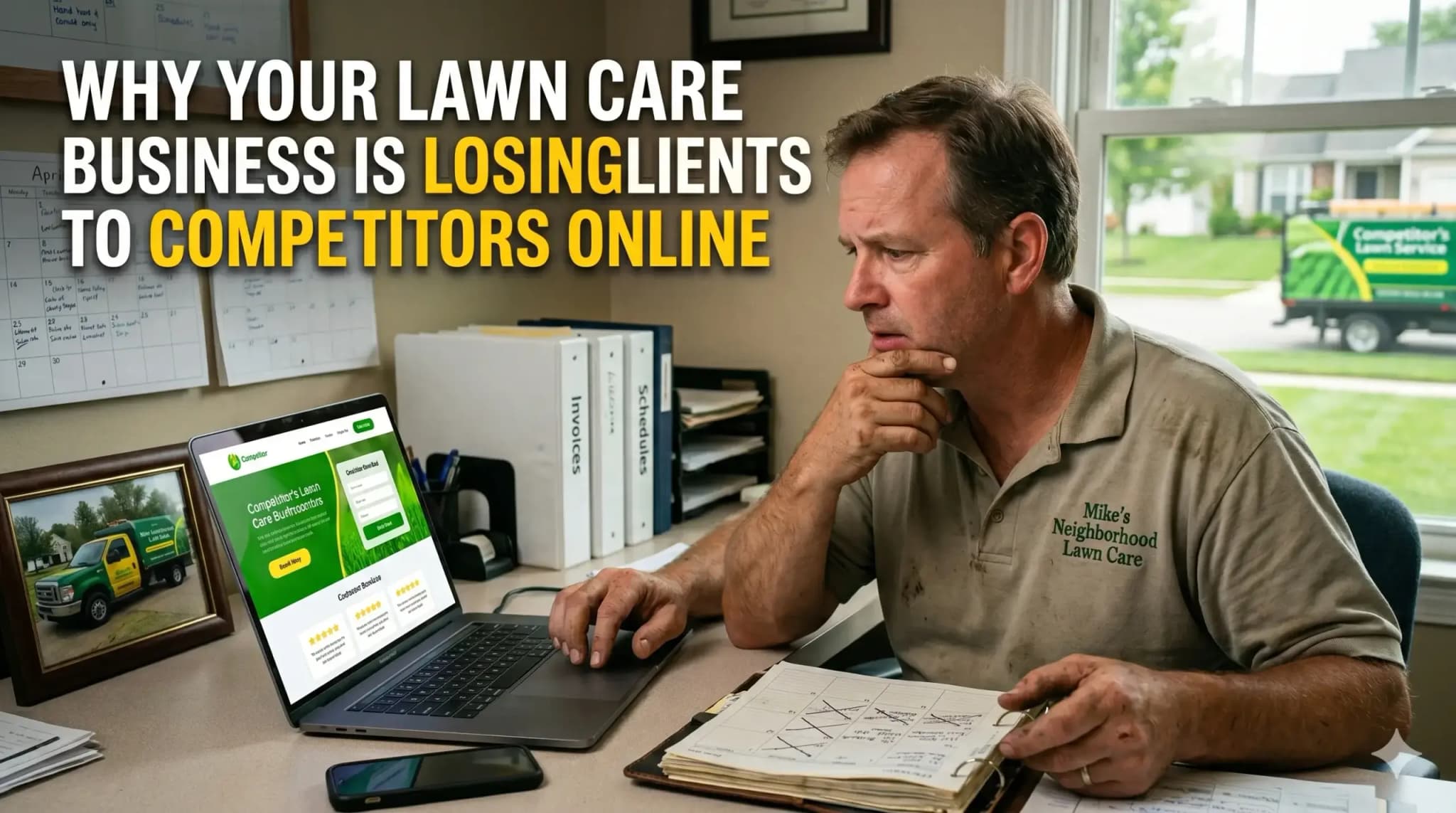
You mow a perfect lawn, show up on time, and do better work than the guy down the street. But when a homeowner nearby searches for lawn care and hits “call,” they’re calling him — not you.
The difference isn’t skill. It’s not even price. It’s the website.
Most lawn care business owners assume a website is just a place to put their phone number. But TruGreen, Sunday, and the fast-growing regional operators in your market treat their websites like a sales machine running 24/7 — one that qualifies leads, builds trust before the first call, and converts visitors into booked jobs while you’re out in the field.
This post breaks down exactly what separates the websites that generate steady work from the ones that sit there doing nothing — and what you can do to close that gap.
Your Website Is Like Your Equipment — If It’s Broken, Nothing Gets Done
Think about it this way: you wouldn’t show up to a job with a mower that stalls every 30 seconds. Your clients would notice, and they’d call someone else next time.
A slow, outdated, or confusing website does the same damage — except you never see it happening. Visitors land on your site, it takes too long to load, or they can’t figure out what you offer or where you serve, and they leave without ever calling.
Most people decide whether to stay on a website within the first few seconds. If your site doesn’t load fast and clearly answer “do you serve my area?” and “what do I do next?” — they’re gone.
The fix isn’t a flashy redesign. It’s making sure your site loads fast, shows up in the right searches, and makes it dead-simple to request a quote.
Why Your Competitor’s Phone Is Ringing and Yours Isn’t
Here’s something most lawn care owners don’t realize: Google doesn’t just rank websites — it ranks websites that look trustworthy and useful to local customers.
When someone searches “lawn care near me” or “lawn mowing service in [your city],” Google is deciding which business to show at the top. It factors in things like:
- Whether your site clearly lists the areas you serve
- Whether you have real customer reviews (and whether they’re connected to your site)
- Whether your site loads properly on a phone
- Whether your business information is consistent across the web
If your site is missing any of these, Google plays it safe and shows your competitor instead. It’s not personal — it’s just that their website gave Google more confidence.
The lawn care companies dominating local markets have all of these dialed in. And the good news is, most of them aren’t hard to fix.
What the Best Lawn Care Websites Actually Do Differently
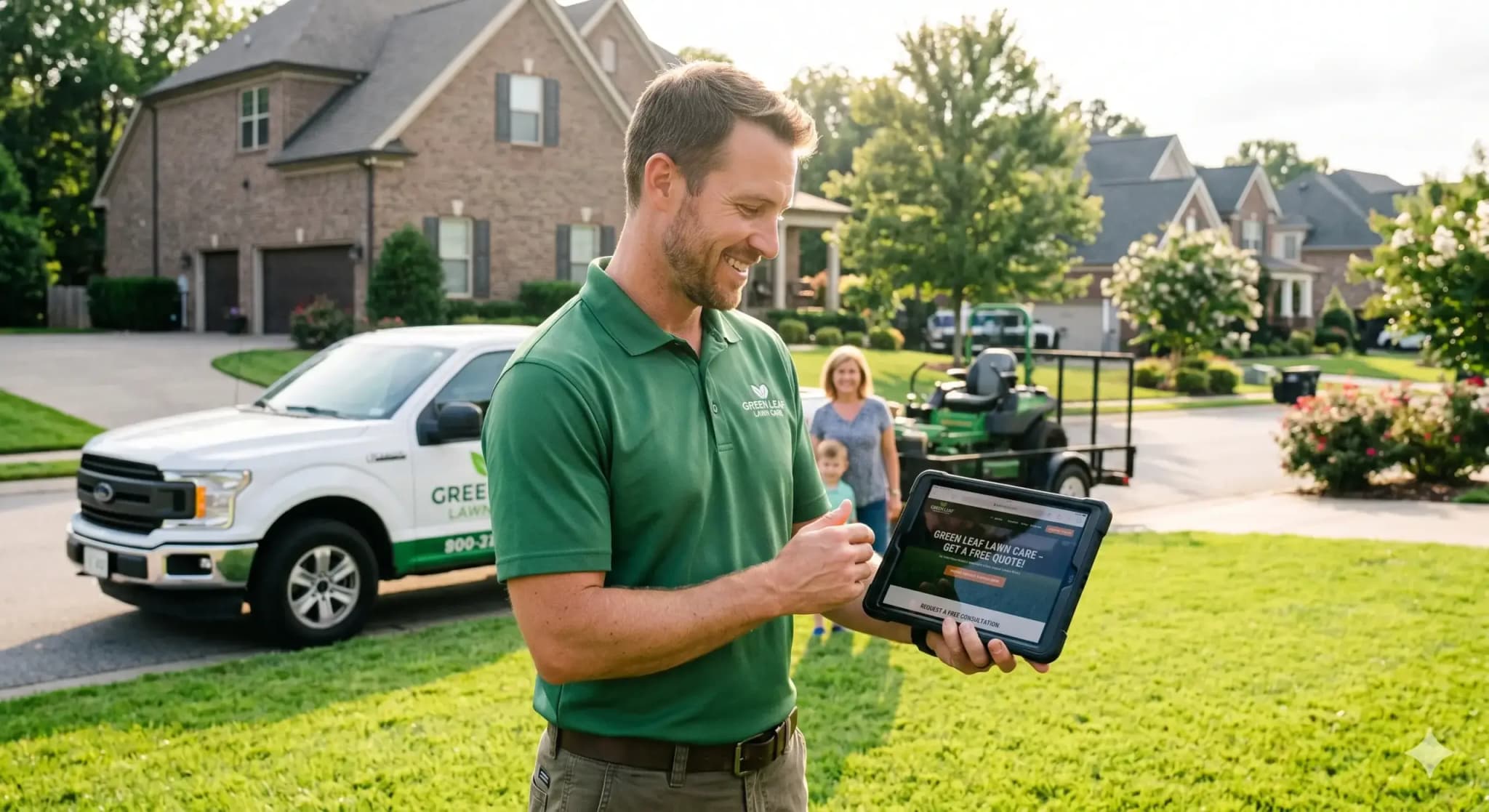
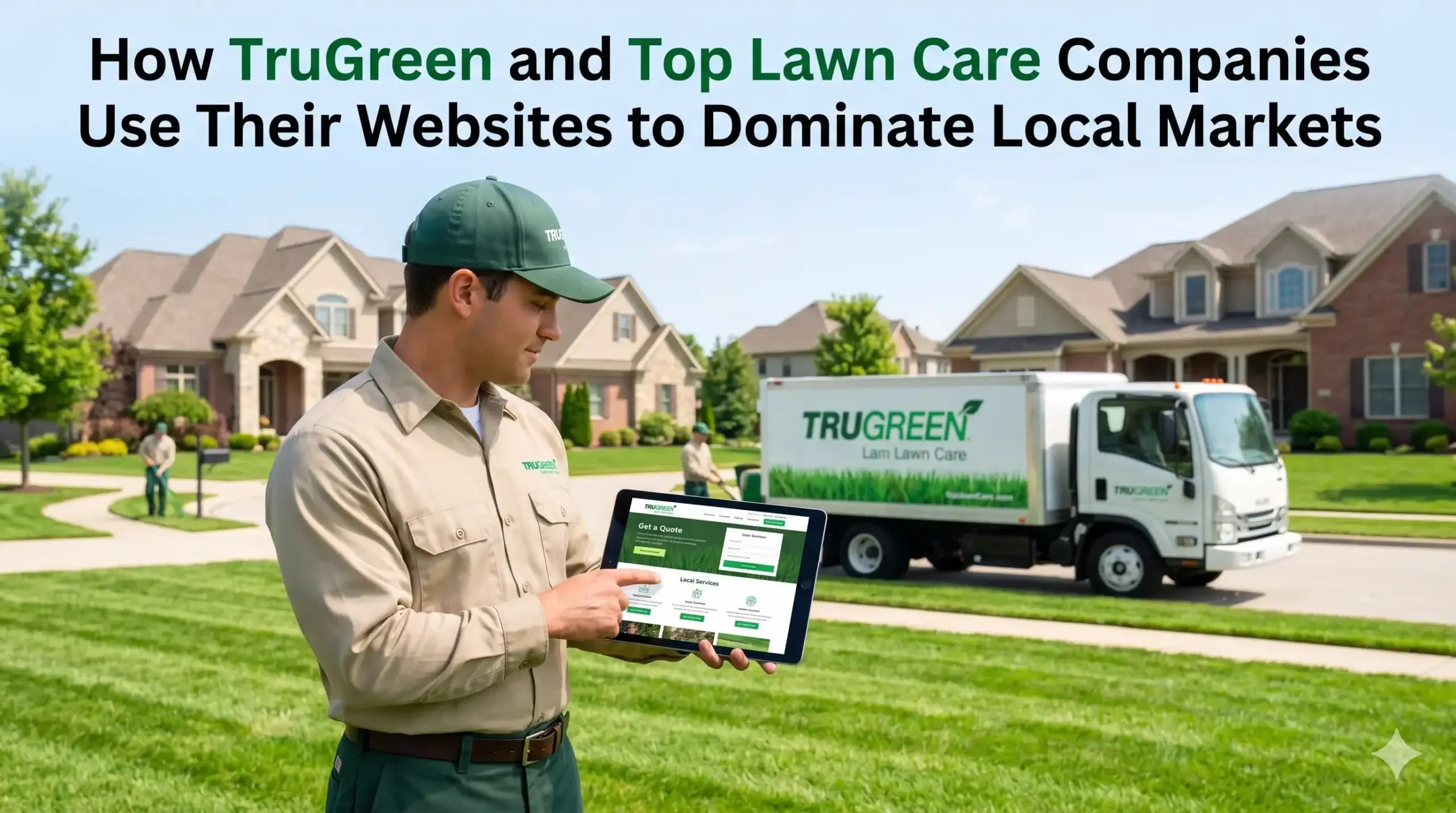
Spend five minutes on TruGreen’s website or a top regional lawn care operator’s site and you’ll notice something: everything is built to get you to take action.
The best lawn care company websites share a few things in common:
- They load in under 3 seconds — especially on mobile, where most local searches happen
- They lead with a clear offer — not a wall of text about the company’s history
- They make it easy to get a quote — one click, visible immediately, without scrolling
- They answer the questions customers actually have — service areas, what’s included, pricing ranges
- They show proof — reviews, photos of real work, before/after results
Compare that to the typical small lawn care website: a logo at the top, a stock photo of grass, a paragraph about “passion for lawn care,” and a phone number buried at the bottom. That site loses business every single day.
The Hidden Problem: Google Doesn’t Know Enough About Your Business
This one trips up a lot of lawn care owners. You’ve got a website, you’ve got a Google Business Profile — shouldn’t that be enough?
Not quite. Google looks for specific signals to decide how confident it is putting your business in front of a customer. One of the biggest is something called structured data — basically, a set of details about your business baked into your website code that tells Google exactly what you do, where you do it, and how customers can reach you.
Without it, Google has to guess. And when Google guesses, it’s more conservative about showing your business.
Think of it like this: if a new customer asked a mutual friend about your business, you’d want that friend to be able to say “They do lawn mowing and fertilization, they cover the west side of town, they’re licensed and insured, and you can book online.” That’s what structured data does for Google.
Most small lawn care websites are missing this entirely. It’s one of the first things Digital Trace fixes when building websites for lawn care businesses.
💡 Pro Tip: Your Homepage Is Not Your Sales Page — But It Should Work Like One
A common mistake: lawn care businesses put everything on the homepage — services, about us, service areas, testimonials, contact form — all on one page with no clear direction for the visitor.
The fix is simpler than it sounds. Every page on your site should have one primary job. Your homepage’s job is to get the visitor to take the next step — whether that’s requesting a quote, calling, or learning about a specific service. Remove the clutter, lead with your strongest offer, and make the call-to-action impossible to miss. One clear page with one goal converts far better than a cluttered page trying to do everything at once.
Real-World Results: What Happens When a Lawn Care Website Actually Works
Before: A residential lawn care operator based in the Midwest had been in business for six years, building steady work through referrals and door hangers. Their website was built by a friend — it looked okay but hadn’t been touched in four years. It wasn’t showing up on Google for any local searches, loaded slowly on phones, and had no way for visitors to request a quote online. Most new customers still found them by word of mouth.
After: After a full website overhaul — faster loading, mobile-first design, local SEO structure, a clear service area page, and an easy online quote form — the results came in within 90 days. Organic search traffic jumped significantly. More importantly, the number of quote requests coming in through the website went from near zero to 15–20 per month, without spending a dollar more on ads. The owner stopped relying entirely on referrals and started building a predictable pipeline of new customers.
The difference wasn’t magic. It was a website that finally did its job.
Not sure if your lawn care website has these issues? Get a free website audit — no obligation, just a clear picture of what’s costing you leads.
Your Path to More Leads: What to Fix First
You don’t need to overhaul everything at once. Most lawn care websites have a few core problems that, once fixed, make a noticeable difference quickly. Here’s where to focus:
1. Make sure your site loads fast on a phone. Most of your potential customers will find you on their phone. If your site takes more than 3 seconds to load, a large chunk of them are already gone.
2. Add a real, easy-to-find quote request form. “Call us” is not enough. Many customers want to request a quote without having to talk to anyone first. Give them that option and you’ll capture leads you’re currently losing.
3. Create a clear service area page. Google needs to know exactly where you work. A page that lists your service cities and neighborhoods — written in plain language — helps Google send the right local customers to your site.
4. Get your Google Business Profile connected and consistent. Your name, address, and phone number should match exactly between your website and your Google Business Profile. Inconsistencies quietly hurt your local rankings.
5. Show proof that you’re good. Real photos of your work, actual customer reviews, and a before/after image or two do more to build trust than any amount of copywriting. Make sure they’re front and center.
Frequently Asked Questions
Why am I not getting calls from my website?
The most common reasons: your site isn’t showing up in local searches, it loads too slowly on phones, or it doesn’t make it obvious what to do next. Most lawn care websites have at least two of these three problems. A quick audit will tell you which ones are hurting you most.
How do I know if my lawn care website is actually working?
If your site is working, you should be able to point to real leads — calls, contact form submissions, or quote requests — that came directly from it. If you can’t, it’s not working. A properly set-up website with basic tracking will show you exactly where visitors are coming from and what they’re doing when they arrive.
How long does it take to see results from a new website?
For local SEO, most lawn care businesses start seeing meaningful movement within 60–90 days of launching an optimized site. Some improvements — like fixing your page speed or adding a quote form — can produce results almost immediately. The key is not waiting. Every month with a broken website is another month of missed leads.
What makes a lawn care website different from a regular business website?
Lawn care is hyper-local, seasonal, and highly competitive in most markets. A website built for your industry needs to rank for the specific neighborhoods and cities you serve, speak to the specific concerns homeowners have (consistency, licensing, damage liability), and make it easy to schedule or request a quote fast. Generic website templates built for “any business” miss all of that. Websites built specifically for lawn care businesses are structured around how lawn care customers actually search and decide.
Do I really need a fast website if my customers are local?
Yes — especially because they’re local. Local customers searching on their phones are often comparison-shopping two or three businesses at once. A slow site gets closed and the next one gets the call. Google also factors page speed into local rankings, so a slow site hurts you twice: fewer visitors find it, and more of the ones who do leave before they contact you.
How do I know if Digital Trace is right for my lawn care business?
The fastest way to find out is to get a free website audit. There’s no pitch, no pressure — just an honest look at what your current site is doing well and where it’s costing you leads. If we can help, we’ll tell you how. If we can’t, we’ll tell you that too.
Stop Leaving Jobs on the Table
TruGreen didn’t dominate local markets by accident, and it wasn’t just their marketing budget. It was a website built to work — fast, clear, and set up to show up when local customers are searching.
The lawn care businesses growing fastest right now all have one thing in common: their website is doing the selling while they’re out doing the work.
If you’ve been running your business on referrals and word of mouth, you already know how to do the job. The only missing piece is a website that brings the customers to you.
Get your free website audit today — no cost, no obligation. Find out exactly what’s costing you leads, and what it would take to fix it.