How to Get More Lawn Care Clients With a Professional Website
You show up on time. Your cuts are clean. Your customers love you. But your phone isn’t ringing the way it should — and you’re not sure why.
Here’s what most lawn care business owners don’t realize: the problem usually isn’t your service. It’s your website. Or more accurately, it’s what your website isn’t doing. A weak site doesn’t just sit there doing nothing — it’s actively sending potential customers to your competitors, every single day.
This isn’t about having a “pretty” website. It’s about having one that works like your best salesperson — answering questions, building trust, and making it effortless for someone to call or book while they’re still thinking about their lawn.
By the end of this article, you’ll know exactly what separates a lawn care website that gets leads from one that bleeds them — and what you can do about it.
Your Website Loads Slowly — And Customers Are Already Gone
Picture this: someone finishes mowing their lawn for the last time before they give up and hire someone. They pull out their phone, search for a lawn care company, and click your link. They wait. And wait. And then they hit the back button and call your competitor.
Most people will leave a website if it takes more than three seconds to load. On a phone, with average mobile internet, that happens more than you’d think — especially if your site is loaded with large images, old code, or a cheap hosting plan.
The business cost is real. That person who bounced? They found someone else. And they probably left a Google review for that someone else, not you.
A fast-loading site requires optimized images, clean code, and reliable hosting — things that don’t happen by accident. When Digital Trace builds websites for lawn care businesses, speed is baked into the foundation, not bolted on as an afterthought.
Google Doesn’t Know Enough About Your Business to Show It
You might have a website. But if Google isn’t sure who you are, where you operate, and what you do, it won’t recommend you — plain and simple.
Think of it like this: Google is like the world’s most cautious referee. Before it blows the whistle and sends a customer your way, it needs to be confident you’re the right call. If your site is missing key signals — your service area, your services listed clearly, your business name and address consistent across the web — Google hedges its bets and picks someone else.
The fix involves a combination of local SEO basics: making sure your Google Business Profile is complete and connected to your site, having separate pages for each service you offer (lawn mowing, fertilization, aeration, etc.), and adding structured data that tells Google exactly what kind of business you run and where. None of this is rocket science, but it has to be done right.
Your Site Looks Fine to You — But Confuses Everyone Else
You know your business inside and out. So when you look at your website, you fill in the gaps automatically. Visitors don’t have that luxury.
If someone lands on your site and can’t answer three questions within five seconds — What do you do? Where do you do it? How do I contact you? — they leave. Not because they’re impatient. Because they’re busy, they have options, and you didn’t make it easy enough.
The best lawn care websites pass what we call the “driveway test”: a homeowner pulls up the site from their car, in under a minute, while their kid is yelling in the backseat — and they still know how to reach you and why you’re worth calling. That means:
- Your phone number is at the top of every page
- Your service area is stated clearly (not buried in the footer)
- There’s a simple, obvious way to request a quote or book a call
- Your services are listed in plain language, not industry shorthand
If your site doesn’t pass the driveway test right now, it’s costing you leads.
You’re Invisible on Mobile — Where 70% of Your Customers Are Looking
When a homeowner notices their grass is getting out of hand, they don’t sit down at a desktop computer. They grab their phone. If your site isn’t built to work perfectly on mobile — easy to read, fast to load, with a phone number that’s one tap to call — you’ve already lost them.
A mobile-friendly site isn’t just about making things “fit” on a small screen. It means buttons that are big enough to tap, text that doesn’t require zooming, and a layout that makes the important stuff obvious without scrolling three times.
Google also ranks mobile performance separately. A site that’s clunky on phones gets penalized in mobile search results — meaning fewer people even find you in the first place.
💡 Pro Tip: One of the most common mistakes lawn care businesses make is using a generic website template with stock photos of lawns that look nothing like their actual work. Visitors notice this — even if they can’t explain why it feels “off.” Real photos of your team, your equipment, and lawns you’ve actually serviced build more trust than any stock library. Even a few decent smartphone photos make a significant difference in how professional and credible your site feels.
Your Competitors Are Showing Up — Here’s Why
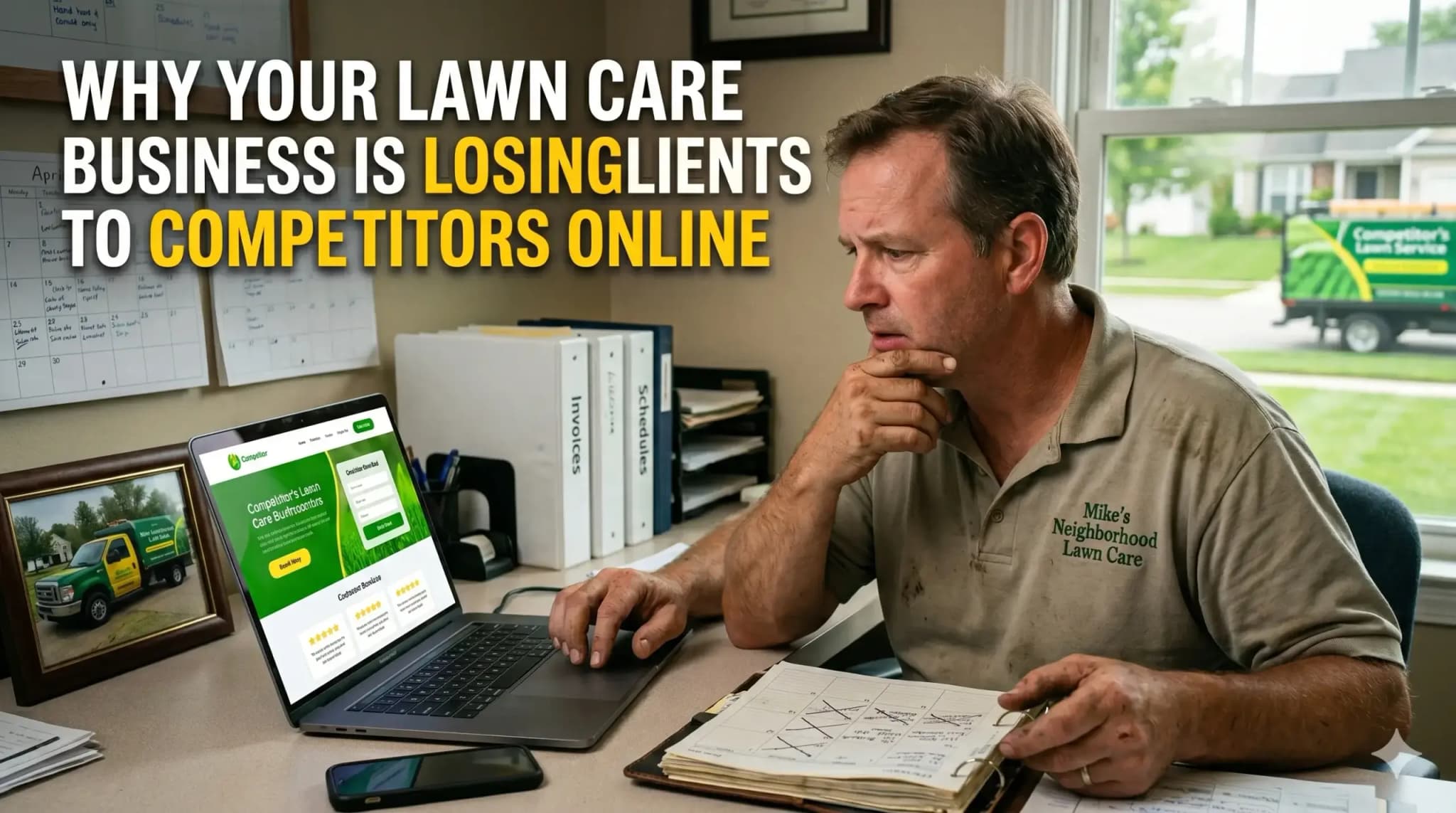
You’ve probably searched for your own business and noticed a competitor ranking above you, even though you know you do better work. It’s frustrating. But it’s usually not random.
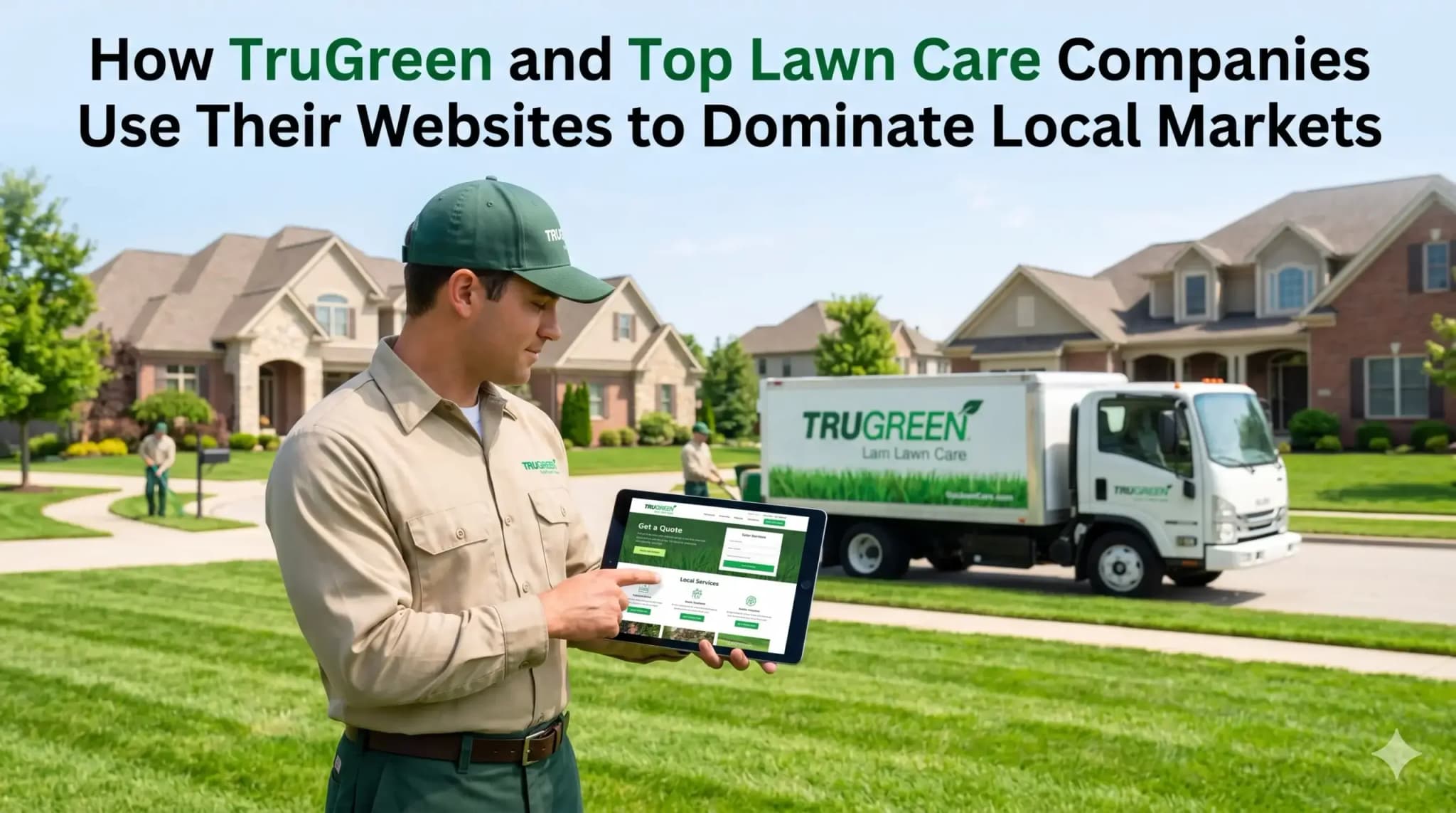
The lawn care companies that dominate local search results have typically invested in a few things: a well-structured website with pages for each service, consistent reviews on Google, content that answers the questions people are actually asking (“how often should I fertilize my lawn in Georgia?”), and a site that Google trusts because it’s been built with search in mind from the start.
This is the difference between a website that was built to look good for a business owner and a website that was built to attract customers. The lawn care website design work Digital Trace does is focused entirely on the second category — because that’s the one that pays.
Before & After: What a Better Website Actually Changes
The Scenario: A three-person lawn care operation in suburban Ohio — let’s call them Greenway Lawn Services. They’d been in business for six years, mostly running on word-of-mouth and a few yard signs. Their website was built by a family friend years ago, ran on slow shared hosting, and hadn’t been touched since. It had no Google Business Profile connection, no service-specific pages, and wasn’t usable on mobile.
The Problem: Despite being well-reviewed by existing customers, they were invisible in local search. When someone in their area searched “lawn mowing service near me,” they didn’t appear. Meanwhile, a newer competitor with a better-built site was ranking in the top three results.
What Changed: The site was rebuilt from scratch with mobile performance as the priority. Individual pages were created for each service — mowing, dethatching, fertilization, and seasonal cleanups. The Google Business Profile was properly connected and optimized. Real photos of their crew and their work replaced the stock images. A simple quote request form replaced a generic contact page.
The Result: Within three months, Greenway was appearing in the local map pack for their top three service keywords. Quote requests through the website went from near-zero to roughly 15–20 per month. By the following spring (their peak season), they’d added a fourth crew member to handle the volume.
Not sure if your lawn care website has these issues? Get a free website audit — no obligation, just a clear picture of what’s costing you leads.
Your Path to More Leads: What to Do Next
Getting your website working properly doesn’t have to be complicated. Here’s what the process looks like:
- Find out what’s broken first. Before spending money on anything, get a clear picture of what your current site is actually doing. A proper audit will show you your load speed, how you appear in local search, what’s missing, and what’s working.
- Fix the foundation. Speed, mobile performance, and basic local SEO signals need to be right before anything else matters. These aren’t optional extras — they’re table stakes.
- Make it easy to contact you. Every page should have your phone number visible, a clear call-to-action, and a simple way to request a quote. Remove any friction between “interested visitor” and “customer who called.”
- Build out your service pages. Each service you offer deserves its own page — not just a bullet point on a list. This helps Google, and it helps potential clients understand exactly what you do.
- Add proof. Real photos, genuine Google reviews pulled onto your site, and a simple before/after gallery do more for conversion than any fancy design element.
Frequently Asked Questions
Why am I not getting calls from my website?
The most common reasons are: the site loads too slowly and people leave, it’s hard to navigate on a phone, or your business simply isn’t showing up in local search results because Google doesn’t have enough signals to recommend you. Often it’s a combination of all three. A website audit is the fastest way to identify which problem is biggest for your specific site.
How do I know if my lawn care website is actually working?
If you can’t remember the last time a new customer said “I found you online,” your site probably isn’t working. Beyond that, you’d look at traffic (how many people visit), contact form submissions, and click-to-call events. If you want a quick answer without setting up analytics, request a free audit here and get a clear breakdown of what your site is and isn’t doing.
How long does it take to see results from a new website?
A rebuilt site that’s properly optimized for local SEO typically starts showing movement in search rankings within 4–8 weeks. You may see faster results if you’re in a less competitive market. The contact form conversions and usability improvements often show results even sooner — sometimes within days of launch — because visitors simply have a better experience and are more likely to reach out.
What makes a lawn care website different from a regular business website?
Lawn care is a local, seasonal, and highly visual business — and a good site should reflect all three. That means strong local SEO targeting your specific service area (not just the whole state), seasonal messaging that adjusts to what homeowners actually need right now, and real photography that shows your actual work. Generic business website templates aren’t built with any of that in mind, which is why they tend to underperform for service-based trades.
Do I really need a fast website if my customers are mostly local?
Yes — especially because they’re local. Local customers are searching on their phones, often outside, often in a hurry. A slow site on mobile isn’t just annoying; Google actually uses mobile load speed as a ranking factor for local search results. If your site is slow, you’re being ranked lower in the results your customers are actually using. Speed matters more for local businesses, not less.
I’ve worked with agencies before and it didn’t help. Why would this be different?
That’s a fair concern. The agencies that don’t deliver are usually either too focused on generic tactics that don’t move the needle for service businesses, or they lock clients into long contracts without real accountability. The starting point here is a free, no-obligation audit — you get to see exactly what’s wrong before deciding anything. There’s no pitch, no pressure, and no contract to sign just to understand where you stand.
Ready to See What Your Website Is Actually Costing You?
Every week your site underperforms is another week of calls that go to someone else — someone who showed up on Google, looked credible, and made it easy to reach out.
A free website audit from Digital Trace will show you exactly where your lawn care website is losing leads, how your local search presence stacks up against competitors in your area, and what the path forward looks like — with no jargon, no pressure, and no obligation.
Book your free website audit now and find out what’s been quietly costing your lawn care business new clients.