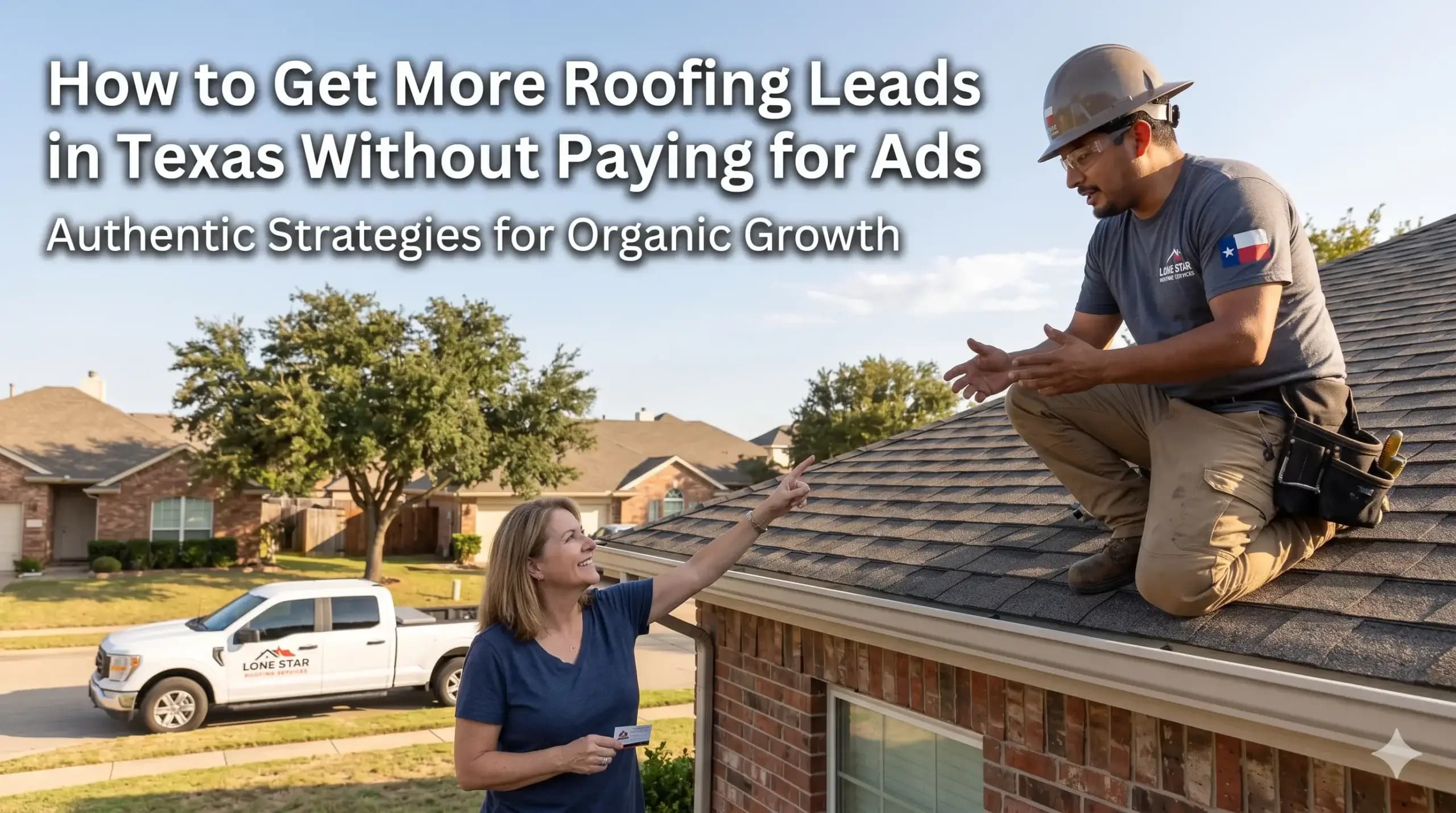
How to Get More Roofing Leads in Texas Without Paying for Ads
You built a real roofing business — crews, trucks, insurance, reviews. But when a homeowner in your area types “roofing company near me” into Google, your competitor shows up and you don’t. Or worse: they land on your site, look around for five seconds, and call someone else.
That’s not a budget problem. That’s a website problem.
Most Texas roofing contractors assume they need to run Google Ads to compete online. And yes — ads can work. But they stop the second you stop paying. What actually builds a consistent pipeline is a website that does the selling for you: one that loads fast, shows up in search, and turns visitors into calls.
This guide breaks down exactly why your site might be quietly costing you jobs — and what a properly built roofing website design in Texas actually looks like when it’s working.
Why Your Phone Isn’t Ringing (Even When People Find You)
Picture this: a homeowner in Round Rock spots storm damage on a Saturday. They grab their phone and search “roof repair Round Rock TX.” Your site comes up on page one — great. They click it. The page takes seven seconds to load. They hit the back button and call your competitor.
You never knew that lead existed.
This happens dozens of times a month for most roofing businesses. The problem isn’t visibility — it’s speed and first impressions.
Here’s the plain-English version of what’s happening:
- Most people decide whether to stay on a site within 3 seconds of clicking
- If your site loads slowly on a phone (and most homeowners are searching on their phones), they’re gone
- Google also penalizes slow sites in rankings — so the same issue hurts both your conversions and your position in search results
Digital Trace builds roofing contractor websites that load in under 2 seconds on mobile. Not because it sounds impressive — because that’s what keeps a lead from leaving before they ever see your phone number.
Your Website Looks Like Every Other Roofer’s — And That’s a Problem
Walk down any street with three competing roofing companies in the same market. Their websites look identical: a stock photo of a roof, a phone number in the header, a list of services, and a contact form nobody fills out.
When everything looks the same, homeowners default to price — or whoever calls back first.
A roofing website needs to do one job: make a stranger trust you enough to call. That means showing real photos of your work, real reviews from real neighborhoods, and clear answers to the questions every homeowner is thinking:
- Are you licensed and insured in Texas?
- Do you work with insurance claims?
- How fast can you get out here?
- Have you done roofs like mine?
What most roofing sites get wrong: They talk about themselves. What they should do is talk to the homeowner — in plain language, answering the exact concerns that make someone hesitate before calling.
The best roofing websites are built around conversion, not aesthetics. Every element — from the headline to the button color — is designed to move a visitor toward picking up the phone.
Google Doesn’t Know Enough About Your Business to Show It
Here’s something most roofing business owners never hear: Google isn’t just reading your website. It’s making a judgment call about whether your business is trustworthy enough to recommend.
If your site is missing the right signals — things like your service area, business category, customer reviews, and structured data — Google quietly deprioritizes you, even for searches in your own backyard.
What this means in real terms:
- A homeowner in Pflugerville searches “roofing company Pflugerville TX”
- Your competitor, who serves the same area, has a site that clearly tells Google: “We’re a licensed roofing company serving Pflugerville, Round Rock, and Cedar Park”
- Google shows them. Not you. Even if your work is better.
This isn’t complicated to fix — but it requires knowing what signals Google is actually looking for. It’s not just keywords stuffed into a page. It’s how your site is structured, how fast it loads, how many quality sites link to it, and whether your Google Business Profile matches your website.
Roofing SEO isn’t a separate thing you layer on later. It’s baked into how the site is built from day one.
💡 Pro Tip: Your Contact Form Might Be Killing Your Lead Rate
Most roofing websites put a generic “Contact Us” form at the bottom of the page and call it a day. The problem? Homeowners with storm damage or an active leak don’t want to fill out a form and wait. They want to call — right now.
If your phone number isn’t visible above the fold on mobile (meaning, without scrolling), you’re losing calls every single day. The fix is simple: make your number large, tappable, and front-and-center on every page. Add a click-to-call button. Then keep the form for less urgent inquiries. One small change can meaningfully increase the number of calls you get from the traffic you already have.
The Hidden Cost of a Website That “Works Fine”
A lot of roofing contractors say their website “works fine” — meaning it’s live, it has their phone number, and it doesn’t crash. That’s a very low bar.
Here’s a more useful question: how many leads did your website generate last month?
If the answer is vague, or you’re not sure, that’s the problem. A website that “works fine” but generates no leads isn’t a marketing asset — it’s a digital business card that nobody’s reading.
Think of it this way: a truck that starts every morning “works fine” too. But if it can’t carry a full crew, has no ladder rack, and the AC breaks down in August, it’s costing you money even when it runs.
Your website is the same. It needs to do actual work — pulling in search traffic, building trust, and moving homeowners from “just browsing” to “calling right now.”
Before & After: What Happens When a Roofing Website Actually Works
The situation: A family-owned roofing company in the Dallas-Fort Worth area had been in business for 11 years. Solid reviews, experienced crews, competitive pricing. Their website had been built by a cousin around 2018 — it had pictures, a phone number, and a short “About Us” page.
They were running $1,200/month in Google Ads to stay competitive. The leads came in, but margins were thin. When they paused the ads for a month, the phone nearly went silent.
What changed: Digital Trace rebuilt their site from scratch with roofing-specific design — fast load times, mobile-first layout, service area pages for each of their core suburbs, a clear trust section showing licenses and reviews, and proper SEO structure so Google understood exactly who they were and where they worked.
The result: Within four months, their organic search traffic tripled. They were generating 20–30 inbound leads per month without ads — from homeowners in neighborhoods they’d served for years but never appeared for in search. They still run ads occasionally for surge periods, but they no longer depend on them to keep the pipeline full.
Not sure if your roofing website has these issues? Get a free website audit — no obligation, just a clear picture of what’s costing you leads.
Your Path to More Leads: What Actually Needs to Happen
Getting consistent organic leads from your roofing website isn’t magic. It’s a sequence of things that all need to be in place at once. Here’s what that looks like:
- Start with speed. Your site needs to load in under 3 seconds on a phone. If it doesn’t, everything else is undermined.
- Make it easy to call. Your phone number should be visible and tappable on every page, especially on mobile. Don’t make anyone hunt for it.
- Tell Google where you work. Create pages (or at minimum, clear content) for every city and suburb you serve. Generic service area descriptions don’t cut it.
- Show social proof in the right places. Real reviews — not buried on a testimonials page, but visible near the top of your homepage and service pages — reduce hesitation and build trust fast.
- Fix the foundation. Make sure Google can read, understand, and trust your site. This means proper structure, accurate business information, and content that matches what homeowners in your area are actually searching for.
None of these steps are optional. A site that does four out of five will still underperform. That’s why a proper audit matters before rebuilding anything — you need to know which pieces are missing and which are actively working against you.
FAQ: What Texas Roofers Ask Before Working With a Web Agency
Why am I not getting calls from my website even though I have one?
Having a website and having a website that generates leads are two completely different things. Most roofing websites aren’t built to rank in local search or convert visitors into callers — they’re built to exist. If your site isn’t fast, mobile-friendly, and structured so Google understands your service area, it won’t show up when the people who need you are searching.
How do I know if my roofing website is actually working?
Ask yourself: do you know how many people visited your site last month, and how many of them called you? If you can’t answer that, you have no way to tell if your site is working. A properly set up site should have call tracking and analytics so you can see exactly where leads are coming from and what’s not converting.
How long does it take to see results from a new roofing website?
Realistically, 3–6 months to see meaningful organic results — though some improvements (like fixing mobile speed and adding a clear call to action) can start moving the needle within weeks. The timeline depends on how competitive your local market is and how optimized the new site is from day one.
What makes a roofing website different from a generic business website?
A roofing-specific website is built around how homeowners actually shop for contractors — which means urgency (storm damage, active leaks), trust signals (license numbers, insurance proof, local reviews), and service area clarity. A generic website template doesn’t account for any of that. It’s the difference between a work truck and a passenger car — both have four wheels, but only one does the job.
Do I really need a fast website if my customers are local?
Especially if your customers are local. Most homeowners search for roofing help on their phones — often right after noticing damage. If your site takes more than 3 seconds to load on mobile, most of them leave before they ever see your number. Google also uses site speed as a ranking factor, so a slow site hurts your visibility and your conversion rate at the same time.
How do I know if my current site has these problems without paying anyone?
Request a free audit from Digital Trace — there’s no cost and no commitment. You’ll get a clear breakdown of what’s working, what’s missing, and what’s likely costing you leads right now. Most roofing business owners walk away knowing exactly what to fix, whether or not they hire us.
Stop Leaving Leads on the Table
Every month your website sits underperforming is a month of roofing jobs going to a competitor — sometimes one with a smaller crew, fewer reviews, and less experience than you.
The good news: most of these problems are fixable. And once they’re fixed, the leads keep coming without you running an ad or posting on social media.
Digital Trace specializes in web design for roofing companies across Texas — sites built specifically to rank in local search, load fast on mobile, and turn visitors into calls. No guesswork, no generic templates, no results you can’t measure.
Ready to see exactly what your site is missing?
Get your free roofing website audit — no cost, no pressure, just a straight answer about what’s costing you leads and what it would take to fix it.