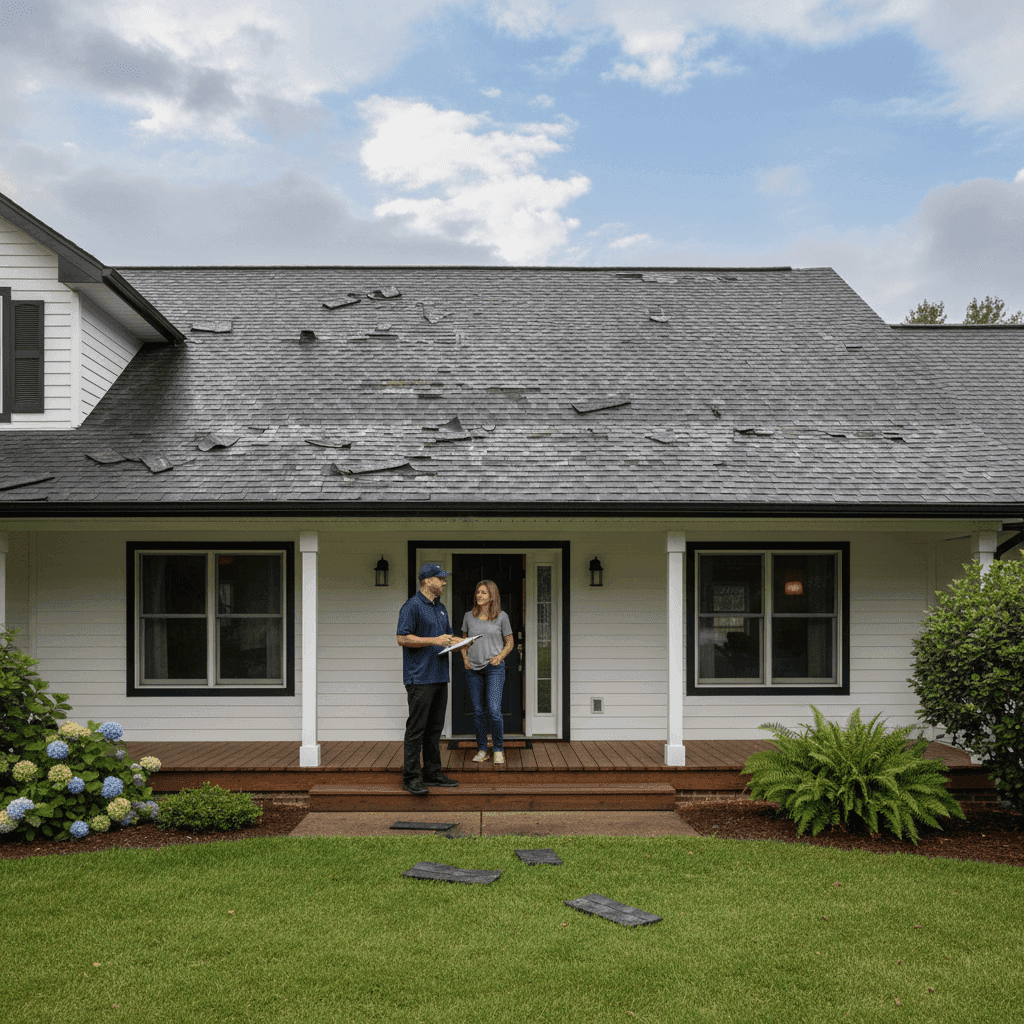
The Roofing Website Design Process: What to Expect
The roofing website design process runs in six phases — discovery, copywriting, design, build, SEO and AIO setup, then launch — and typically takes 3 to 8 weeks depending on whether the site is template-based or fully custom. Knowing each phase up front keeps your build on schedule and on budget.
Here is what a vague, open-ended build actually costs you. Every week your new site isn’t live is a week of storm-season searches landing on a competitor instead of your phone. A roofer who starts a “quick” website in March and still isn’t live when the first hail line rolls through has already missed the busiest calls of the year. Google’s own research found that the median load time for bounced mobile sessions was about 2.5 seconds slower than for sessions that stayed — and that 40% of consumers leave a page that takes longer than three seconds to load. A build that drags on, or launches slow and unfinished, bleeds jobs before you ever see them.
What the roofing website design process actually is
A roofing website design process is the step-by-step sequence a team follows to take you from “I need a site that books jobs” to a live, lead-capturing website. It is not the same as generic web design. A good roofing build is engineered around how homeowners actually hire a roofer: an emergency search after a storm, a slow insurance-restoration decision over weeks, a careful comparison of three contractors before anyone picks up the phone.
That means the process has to account for things a template shop never asks about — your service radius, whether you do insurance restoration or retail, your GAF or Owens Corning certifications, how fast you can get to a job, and where your crews canvass after a storm. The phases below are what separate a site that quietly collects dust from one that turns a “roofer near me” search into a booked estimate.
The roofing website design process, phase by phase
Most professional builds move through the same six phases. The time ranges assume a focused team and a client who responds quickly — the single biggest cause of delay is waiting on the roofer, not the designer.
| Phase | What happens | Typical time |
|---|---|---|
| 1. Discovery & strategy | Goals, service area, competitors, target keywords and AI-answer topics, sitemap and page plan | 3–5 days |
| 2. Copywriting | Service pages, city pages, and trust content written for homeowners and search — not filler | 1–2 weeks |
| 3. Design & UX | Mobile-first layouts, clear lead paths, call buttons, and a visual identity that signals a real company | 1–2 weeks |
| 4. Build & integrations | Development, forms, call tracking, CRM or booking hookup, and an AI chat or sales agent if you use one | 1–2 weeks |
| 5. SEO & AIO setup | Schema markup, page-speed tuning, Google Business Profile alignment, and optimization for AI answers | 3–5 days |
| 6. Launch & QA | Cross-device testing, redirects, analytics and tracking checks, then go-live | 2–4 days |
Notice that two of the six phases — copywriting and SEO/AIO setup — have nothing to do with how the site looks. That is deliberate. A beautiful site with thin copy and no schema is the roofing equivalent of a wrapped truck with no engine. If you want the full breakdown of what belongs in each deliverable, see what’s included in roofing web design services.
How long does a roofing website take to build?
Timeline depends almost entirely on one choice: template, semi-custom, or fully custom. Here is the honest range for each, and who each one actually fits.
| Build type | Typical timeline | Best for |
|---|---|---|
| Template / DIY builder | 1–2 weeks | Brand-new roofers on the tightest budget who need something live fast |
| Semi-custom (template, customized) | 3–5 weeks | Established roofers who want a professional, on-brand site without a full custom budget |
| Fully custom, conversion-built | 6–10 weeks | Roofers investing in a long-term lead engine with SEO and AIO built in from day one |
Faster is not automatically better. A two-week template site can go live before peak season, but it usually caps how many leads you can ever capture because the copy, speed, and search foundation are generic. A fully custom build takes longer because it is doing more: unique city pages, real lead paths, and a technical base that ranks. Most contractors land in the semi-custom range, and you can compare what each tier costs on our website design pricing page.
If you’d rather skip the guesswork, our custom roofing website design team maps your full timeline before a single page is built, so you know your launch date up front.
What you need to provide to keep it on schedule
The fastest builds happen when the roofer has their materials ready on day one. Have these gathered before discovery and you can shave a week off the whole process:
- Real job photos — before-and-after shots, tear-off and installation, drone or EagleView imagery. Stock photos kill trust.
- Your service area — every city and county you cover, and which ones you want to rank for first.
- Licenses and certifications — state license numbers, GAF or Owens Corning status, insurance, BBB.
- Reviews and references — links to your Google, Facebook, and Angi profiles so real reviews can be pulled in.
- Services and specialties — retail vs. insurance restoration, residential vs. commercial, repair vs. full replacement by the square.
Green flags and red flags in a design process
You can judge a roofing web design team by how they run the process, not by their portfolio alone. Use this checklist on your next sales call.
Green flags — a process built to book jobs:
- They ask about your service area, storm patterns, and insurance work before talking about colors.
- They give you a written phase plan with a launch date.
- Copywriting and SEO are included phases, not upsells bolted on later.
- They build mobile-first and show you page-speed targets in seconds.
- You own your domain, content, and site after launch.
Red flags — a process that produces a brochure:
- No discovery call — they jump straight to a template pick.
- “SEO” is a vague line item with no deliverables attached.
- They can’t tell you who writes the copy (often it’s you, last minute).
- The contract locks your site to their platform so you can’t leave.
- No plan for what happens after launch.
What happens after the site launches
Launch day is the start line, not the finish. A roofing site is a living asset: Google changes, AI answers shift, plugins need updates, and your rankings need feeding with fresh content and reviews. Budget for ongoing roofing website maintenance and SEO from the start, or the site you paid to build slowly slides back down the results. The best processes hand you off to a care plan on day one so momentum never stalls.
Frequently asked questions
How long does the roofing website design process take?
Most roofing websites take 3 to 8 weeks. A template build can be live in 1 to 2 weeks, a semi-custom site runs 3 to 5 weeks, and a fully custom, conversion-built site takes 6 to 10 weeks. The biggest delay is usually the roofer’s response time, not the design team’s — gather your photos and details up front to stay on schedule.
What do I need to give the designer to get started?
Real job photos, your full service area, license and certification details, links to your review profiles, and a clear list of services — retail versus insurance restoration, repair versus replacement. Having these ready on day one is the single fastest way to keep the build moving and avoid the back-and-forth that stretches a 4-week project into 8.
How much does the roofing website design process cost?
Roofing websites typically range from a few hundred dollars for a basic template to $15,000 or more for a fully custom, conversion-built site, with most established roofers landing in the mid-range. Price tracks the work in the copywriting, design, and SEO phases. See a full breakdown of how much a roofing website costs.
Do I have to write the website content myself?
With a full-service team, no. Copywriting is one of the six phases, and the content is written for both homeowners and search engines. If a provider expects you to supply all the copy, expect delays and weaker rankings — writing service and city pages is a skill, and it’s where most DIY builds stall out for months.
Can I keep my rankings if I’m redesigning an existing site?
Yes, if the process includes a migration plan. A careful redesign maps old URLs to new ones with redirects, preserves your best-performing content, and keeps your Google Business Profile aligned. Skip that step and you can lose rankings overnight. Any team you hire should treat protecting existing traffic as part of the launch phase, not an afterthought.
Your next step
The roofing website design process isn’t complicated once you can see the six phases — but running it on a site that’s already live, slow, or invisible in AI search is a different problem. Start with a free website audit. We’ll show you exactly where your current site leaks jobs: your mobile conversion path, your real page-speed score in seconds, and whether you show up when homeowners ask ChatGPT or Google AI for a roofer in your city. Request your free roofing website audit and we’ll map the fix.