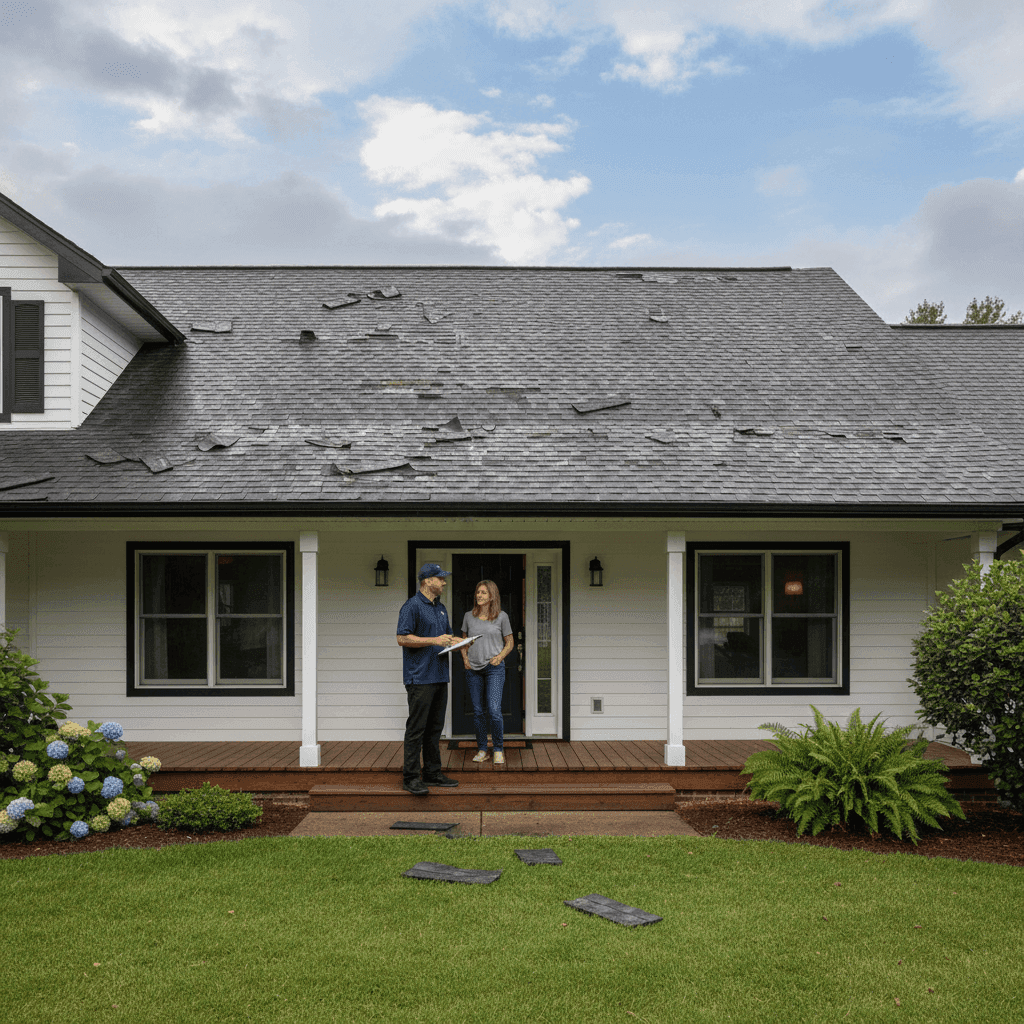
Minnesota Roofing Website Design That Books Jobs
Minnesota roofing website design means building a fast, mobile-first site that turns Twin Cities hail-storm traffic into booked inspections. It has to prove your license and insurance-restoration credibility, load in under three seconds, and capture the lead instantly — because most Minnesota roofing leads arrive from a phone in the days after a storm.
Every big hail event across the metro sends thousands of homeowners to Google and ChatGPT within hours, all searching for a roofer who can get on the roof this week. If your site crawls on a phone, buries your number, or reads like a 2015 brochure, those homeowners book the next company on the list. Do the math on one month: lose three insurance-restoration roofs at a $14,000 average and that is roughly $500,000 in signed work a year walking to a competitor with a faster site.
Why a Minnesota roofing website isn’t like any other
Minnesota sits in the worst of the upper-Midwest hail belt. The Twin Cities metro gets hammered by severe hail and straight-line wind most summers, and a single storm can put an entire suburb into claims at once. That changes what your website has to do.
Most of your real work is insurance restoration, not cash retail. The homeowner isn’t price-shopping a $400 repair — they’re filing a claim on a full tear-off and re-roof and deciding, in the first ten seconds on your site, whether you look like a company an adjuster will take seriously. Your season is short, too. Between frost, snow load, and a install window that really runs spring through late fall, you can’t afford a slow month because your site didn’t convert the storm.
A generic template built for a florist doesn’t speak to any of this. A Minnesota roofing site has to look like it belongs on a metro roof after a hailstorm and move a claim-stage homeowner to call today.
What Minnesota’s insurance rules change about your site
Minnesota regulates storm-chasing harder than most states, and your website has to stay on the right side of it. Under Minnesota Statute §325E.66, a residential contractor paid out of insurance proceeds may not advertise or promise to pay — directly or indirectly — any part of a homeowner’s deductible as an inducement to sign. That “we’ll waive your deductible” headline you see out-of-state chasers run? It’s illegal here, and it flags your business.
So your site can’t lean on the deductible gimmick. It has to win on credibility instead:
- Show your state license. Minnesota requires a Department of Labor and Industry residential roofer license at the company level. Put the license number in your footer and on your about page — homeowners and adjusters check.
- Lead with insurance-restoration proof. GAF or Owens Corning certification, your bond and liability coverage, EagleView measurements, and a clear “we handle the claim with your adjuster” explainer.
- Educate, don’t pressure. A short “how a Minnesota hail claim works” page earns trust that a pushy door-knocker never will — and it’s exactly the content AI search engines quote.
Get this right and your website does what a storm-chaser’s yard sign can’t: it makes a skeptical, claim-stage homeowner trust you before you’ve even answered the phone.
Want to see how your current site stacks up on these? Our roofing website design team can walk your pages against this list in a few minutes.
What actually converts storm traffic into booked inspections
After a storm, the homeowner is on a phone, outside, with spotty signal, scrolling fast. Three things decide whether they call you.
Speed
Every extra second your site takes to load gives that homeowner another chance to hit back and dial the next roofer. Aim for a mobile load under 3 seconds. Most template and page-builder roofing sites load in 6–10 seconds on a phone on cellular — that gap is leads.
A phone number and form above the fold
Click-to-call in the header, a quote form that asks for four fields, not twelve, and a visible “free inspection” offer. If a homeowner has to scroll or pinch to find how to reach you, you’ve lost them.
Trust in the first screen
Review stars, your license and certifications, a real local phone number, and a photo of your crew on a Minnesota roof — not stock art. Storm-season homeowners have been burned by chasers; the site that looks established and local wins the call. It’s worth studying what the best roofing websites do to earn that trust fast.
Custom build vs template vs DIY builder: what each really costs
Here’s the honest trade-off between the three ways a Minnesota roofer gets a website. Prices are typical 2026 ranges, not quotes — for the full national breakdown, see our guide to what a roofing website costs.
| Option | Typical cost | Mobile speed | Ranks & AI visibility | Best for |
|---|---|---|---|---|
| DIY builder (Wix, Squarespace) | $200–$500/yr | Slow on mobile | Weak — hard to rank locally | A brand-new roofer testing the waters |
| Template / local designer | $500–$3,000 once | Mixed | Basic on-page, little AIO | Owners who need “a site” but not leads yet |
| Custom agency build | $4,000–$12,000+ | Fast, built for mobile | Built to rank and to be cited by AI | Established Minnesota roofers who want booked jobs |
The DIY builder looks cheap until you count the storm you didn’t convert. A custom build costs more up front but is engineered around the one thing that pays you back: turning hail-season traffic into inspections. If you’re weighing the choice, we break down custom vs template roofing sites in detail. See how build tiers map to monthly return on our pricing and plans page.
The Minnesota roofing website checklist
Run your current site against this. If you can’t check off six of eight, your website is costing you storm-season jobs.
- ☐ Loads in under 3 seconds on a phone, on cellular, not just office Wi-Fi
- ☐ Click-to-call and a short quote form visible without scrolling
- ☐ DLI license number and GAF/Owens Corning certification shown on the page
- ☐ A plain-English “how a Minnesota hail claim works” page
- ☐ Real photos of your crew and completed metro roofs — no stock images
- ☐ City or service-area pages for the suburbs you actually work
- ☐ Google Business Profile and reviews wired into the site
- ☐ Schema markup so Google and AI search can read and quote your pages
Ranking across the Twin Cities and greater Minnesota
A fast site that nobody finds still doesn’t ring the phone. To win Minneapolis, St. Paul, and the suburbs — plus Rochester, Duluth, and St. Cloud — you need location-specific pages, not one “service area” list dumping every city into a paragraph.
That means a real page for each market you serve, a Google Business Profile tuned for “roofer near me,” and content structured so Google’s AI Overviews and ChatGPT cite you when a homeowner asks which roofer to call after a storm. Pairing the build with roofing SEO and AIO is what turns a good-looking site into a lead pipeline that compounds between storms.
Frequently asked questions
How much does a roofing website cost in Minnesota?
A DIY builder runs $200–$500 a year, a template or local designer $500–$3,000 once, and a custom agency build $4,000–$12,000 or more. The right number depends on whether you need a site that simply exists or one engineered to convert hail-season traffic into booked insurance-restoration jobs.
Can my roofing website say we’ll pay your deductible?
No. Minnesota Statute §325E.66 prohibits a residential contractor paid from insurance proceeds from advertising or promising to pay any part of a homeowner’s deductible as an inducement. Keep that language off your site entirely and win on credibility — license, certifications, and reviews — instead.
Why does website speed matter so much for roofers?
Storm-season homeowners search on a phone, outside, on cellular. Every extra second of load time gives them another chance to hit back and call the next roofer on the list. A sub-3-second mobile site keeps more of that traffic on the page long enough to call you.
Do I need separate pages for each city I serve?
Yes. One page listing twenty suburbs ranks for none of them. A dedicated page for each market — built with real local detail, not a find-and-replace of the city name — is how you show up when a homeowner in that suburb searches for a roofer.
How long does a custom roofing website take to build?
A custom Minnesota roofing site typically takes 3–6 weeks, depending on how many service-area and content pages you need. The smart move is to build before storm season, not during it, so the site is ranking and converting when the hail hits.
Build a Minnesota roofing site that books jobs
Your crews are sharp and your work holds up through every Minnesota winter. Your website should work just as hard. If it’s slow, hard to reach on a phone, or invisible when homeowners ask AI who to call, you’re handing storm-season jobs to the next roofer.
Start with a free website audit. We’ll show you exactly where your site leaks leads: your mobile conversion path, your page-speed score, and whether you show up in AI answers for your Minnesota city — so you know what’s costing you jobs before the next storm rolls through.