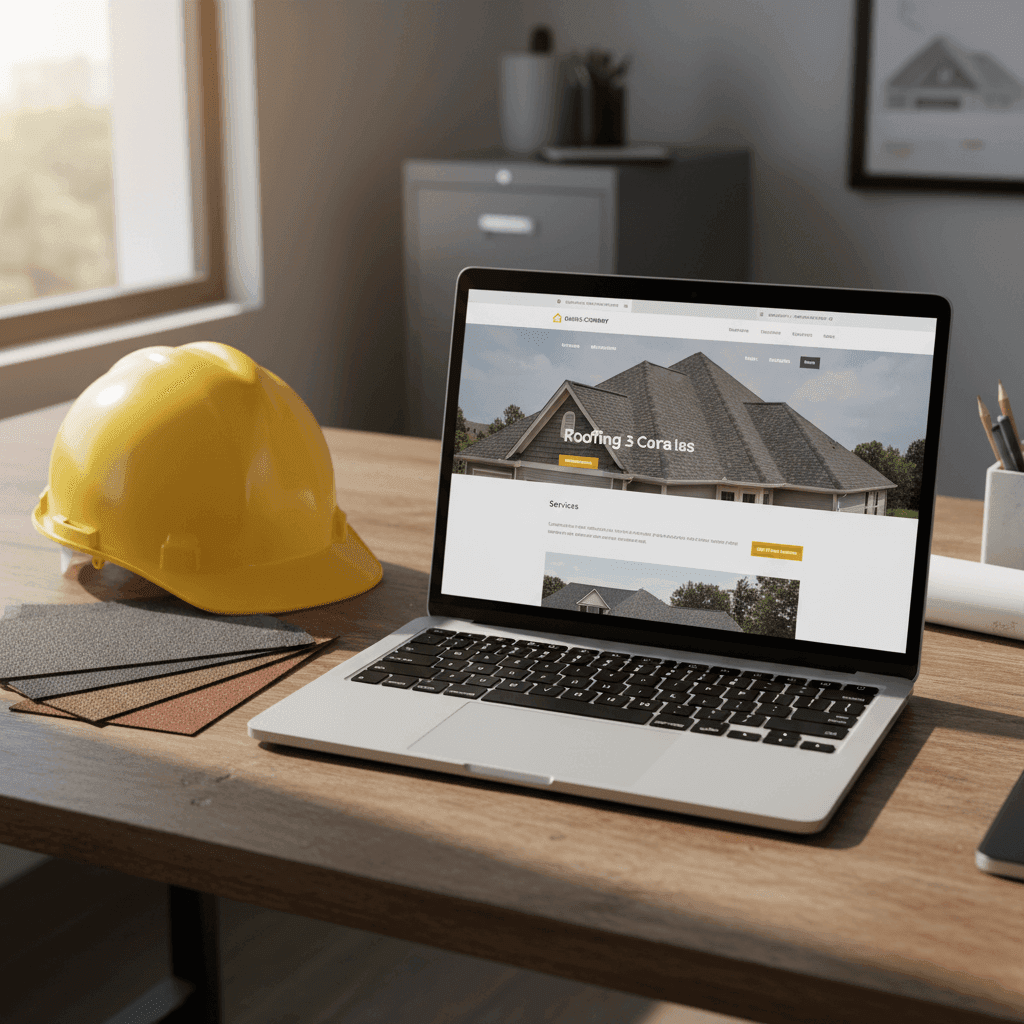
Best Roofing Websites in 2026 (And Why They Convert)
The best roofing websites in 2026 convert because they load in under three seconds, put a phone number and instant-quote form above the fold, prove trust with real reviews and manufacturer certifications, and give every service and city its own page. Design that books jobs beats design that just looks good.
Here’s what a weak roofing website costs you. A homeowner searches “roof replacement near me” the morning after a hailstorm, lands on your site, waits four seconds for it to load, can’t find your phone number fast enough, and calls the next roofer on the list. That’s a $12,000–$18,000 tear-off and replacement gone — and you never even knew the lead existed. Multiply it by the dozen searches your name shows up for during a single storm week, and the site you “already have” is quietly the most expensive thing in your business.
What the Best Roofing Websites Have in Common
Look at any high-performing roofing contractor site — from national players like Tecta America and Baker Roofing to regional shops like Bone Dry Roofing and Able Roofing — and the same seven elements show up every time. The gap between a site that converts at 8% and one at 1% rarely comes down to how pretty it is. It’s whether these boxes are checked.
| Element | Most roofing websites | The best roofing websites |
|---|---|---|
| Load speed | 5–8 seconds on mobile | Under 3 seconds |
| Above the fold | A stock photo and a logo | Phone number, instant-quote form, and one clear promise |
| Proof | “Family owned since 1998” | Live review counts, star ratings, GAF/Owens Corning certification |
| Service pages | One “Services” page listing everything | A dedicated page for repair, replacement, storm, and metal |
| Local pages | One city in the footer | A page for every city and suburb they serve |
| Financing | Not mentioned | Monthly payment options shown early |
| Mobile CTA | Buried at the bottom | Tap-to-call sticky bar on every screen |
Our breakdown of the anatomy of a high-converting roofing company website walks through each of these zones in order.
The Hero Section: Phone, Quote, and a Reason to Trust You
The top of your homepage decides most of the outcome. A homeowner gives you roughly five seconds before they stay or hit back. The best roofing websites use that space for three things and nothing else: how to reach you, how to get a number, and one reason you’re the safe choice.
Built to Last Roofing leads with “Available 24/7 in Texas” and a five-field inspection form. A&E Brothers Roofing puts “Instant Roof Quote. No Waiting” front and center with a visible 4.9-star Google rating. Phoenix Roofing & Repair keeps the phone number and quote form fixed on screen while you scroll. Same pattern every time: remove every reason to leave before the homeowner takes one action.
What to put above the fold
- A tap-to-call phone number — the single most-clicked element on a roofing site on mobile.
- A short quote or inspection form — five fields or fewer. Every extra field costs you submissions.
- One trust line — a star rating, a review count, or a certification, not a vague slogan.
If your hero is a slideshow of stock roofs under a “Welcome to our website” headline, that’s not a hero — that’s a wall.
Proof That Turns Skeptics Into Booked Jobs
Roofing is a high-trust, five-figure purchase, and homeowners know storm chasers are working the same neighborhood. Proof is how the best roofing websites close that gap before the phone ever rings.
The numbers back it up: according to BrightLocal’s 2025 Local Consumer Review Survey, 89% of consumers used Google to find reviews for local businesses in 2025, and only 4% never read reviews at all. If your reviews aren’t visible on your own site, you’re making that homeowner leave to go find them — and they may not come back.
The strongest sites stack proof instead of stating it. Able Roofing shows 40+ years, 500,000+ installs, and 1,000+ five-star reviews. Bone Dry Roofing puts “118,000 homes served” and 12,000+ reviews right in the header. Five Star Roofing displays its GAF, Firestone, Google Guaranteed, and A+ BBB badges together. These are the owners’ own displayed claims — and displaying them beats hiding them.
Add these, in roughly this order of impact:
- Real review counts and star ratings, pulled live from Google where possible.
- Manufacturer certifications — GAF Master Elite, Owens Corning Platinum. They signal you’re vetted, not a magnet-truck operator.
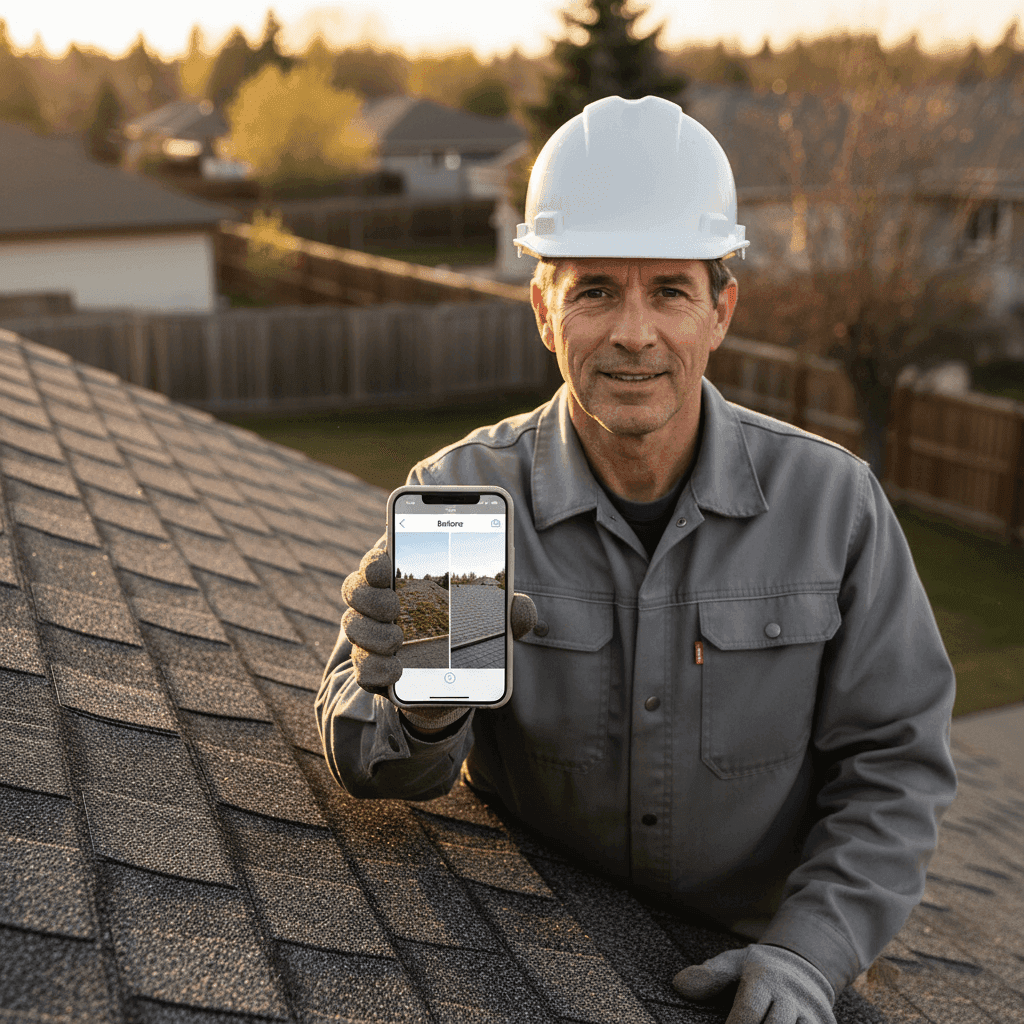
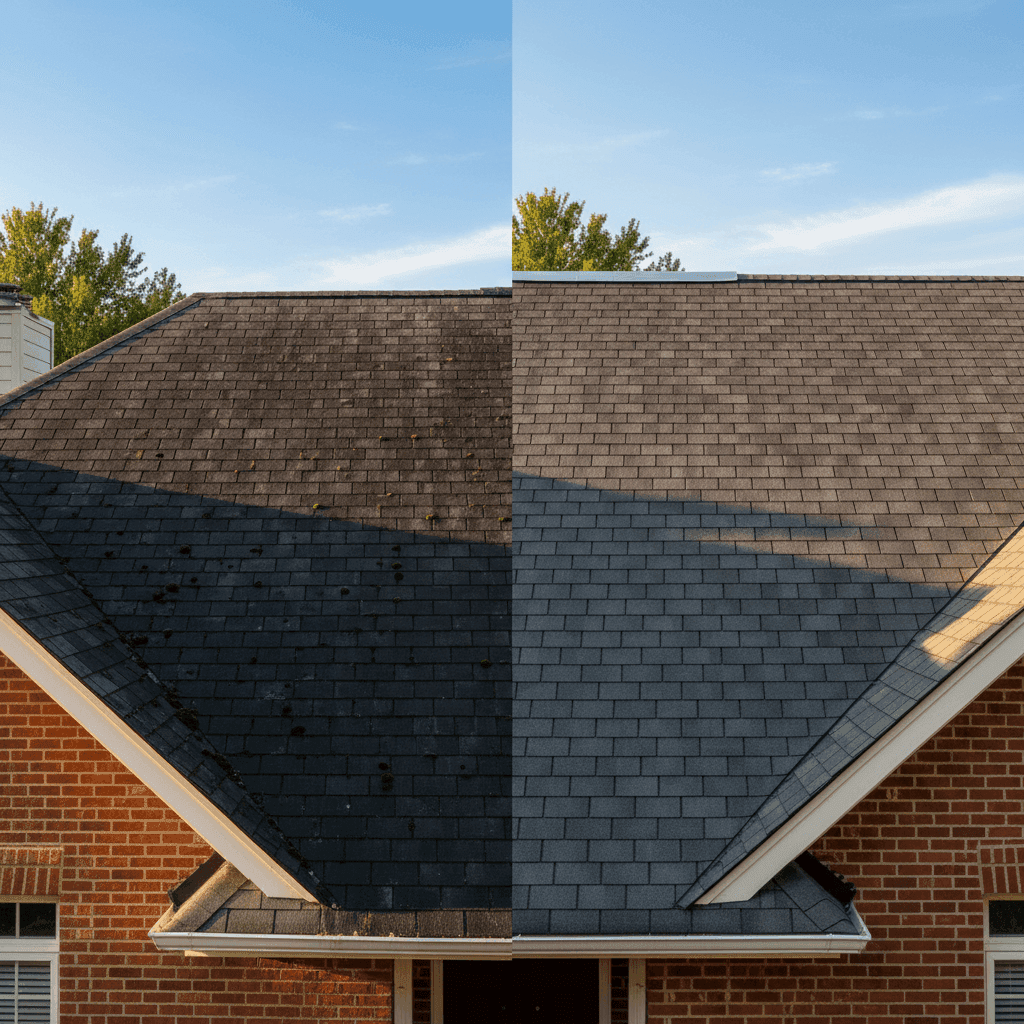
- Before-and-after galleries of real tear-offs and replacements, not stock photography.
- Insurance and financing language — “we handle the claim” and “as low as $X/month” both lower the barrier to calling.
Not sure how much trust your current site is actually building? A free audit will show you exactly where a homeowner hesitates — get your roofing website reviewed.
Speed and Mobile: Where Most Roofing Sites Lose the Job
More than half of roofing searches happen on a phone, often in a driveway looking at storm damage. A site that takes six seconds to load on mobile data has already lost — every extra second gives the visitor another chance to hit back and call the next roofer on the list.
The best roofing websites load in under three seconds, size their tap targets for a thumb, and keep a call button on screen at all times. If your site runs on a bloated template stuffed with sliders and unused plugins, speed is usually the first thing bleeding leads. We break down the exact fixes in our guide to raising your roofing website conversion rate.
Structure That Ranks: A Page for Every Service and City
A homepage alone doesn’t rank. The roofing websites that dominate local search are built like a map of what they do and where they do it — a separate page for roof repair, roof replacement, storm and insurance restoration, and metal roofing, plus a page for each city and suburb in the service area.
Baker Roofing splits residential and commercial cleanly and lists specific service locations. Phoenix Roofing & Repair optimizes at the city level so it shows up for a specific suburb. This structure is what lets Google and AI answer engines like ChatGPT understand exactly who to show you for — and it’s the backbone of any real roofing SEO program. Not sure which pages you’re missing? Start with what pages a roofing website needs to rank.
Custom Build vs Template: Why the Best Roofing Websites Are Built, Not Bought
You can spot a template roofing site in seconds — the same hero, the same three service icons, the same “Why Choose Us” grid you’ve seen on twenty other contractors. Templates get you online cheap, but they cap your speed, structure, and ability to add the things that actually convert.
The best-performing sites are custom-built around the way a roofer actually sells. Power runs a “Project Pulse” web app that lets homeowners track their job in real time — the kind of feature a template can’t touch. That’s the ceiling difference: a template can look fine, but a custom roofing website design is built to book jobs, load fast, rank, and grow with you. For a full breakdown of what each tier actually costs and includes, see our website pricing and plans.
The 12-Point Roofing Website Checklist
Pull up your own site on your phone and score it — one point for each item you can honestly check off. Anything under 9 is costing you jobs right now.
- Loads fully in under 3 seconds on mobile data
- Phone number is tap-to-call and visible without scrolling
- A quote or inspection form sits above the fold (5 fields or fewer)
- Real Google star rating and review count are shown on the homepage
- GAF, Owens Corning, or other manufacturer certifications are displayed
- Before-and-after photos of your own jobs, not stock images
- Financing or monthly-payment options are mentioned early
- Insurance and storm-restoration help is called out clearly
- A separate page exists for each core service (repair, replacement, storm, metal)
- A dedicated page exists for each city or suburb you serve
- A sticky call button follows the user on mobile
- The site appears when you search your service in Google and in AI answers
Most roofing owners score between 4 and 6 the first time — and every one of these is fixable.
Frequently Asked Questions
What makes a roofing website convert?
A roofing website converts when it removes friction and builds trust fast. That means loading in under three seconds, showing a tap-to-call number and a short quote form above the fold, displaying real reviews and manufacturer certifications, and giving every service and city its own page. Looks matter far less than whether a homeowner can act in five seconds.
How much does a high-converting roofing website cost?
It depends on whether you buy a template or commission a custom build. Templates start cheap but cap your speed, structure, and lead volume. A custom roofing site built to rank and convert is an investment that pays back in booked jobs, not a one-time expense. Our pricing page breaks the tiers down so you can match spend to the results you need.
Are website templates good enough for roofers?
Templates get you online quickly and cheaply, and for a brand-new solo operator that can be a starting point. But they usually load slower, look identical to competitors, and can’t support the service pages, city pages, and custom features that book jobs at scale. Most growing roofing companies outgrow a template within a year.
How many pages should a roofing website have?
More than most roofers think. Beyond the homepage, you want a dedicated page for each core service — repair, replacement, storm and insurance restoration, metal — plus a separate page for every city and suburb you serve. That structure is what lets Google and AI search engines match you to specific local searches instead of burying you.
Do online reviews really affect roofing leads?
Heavily. BrightLocal’s 2025 survey found 89% of consumers used Google to find reviews for local businesses. For a five-figure purchase like a new roof, homeowners check ratings before they call. Displaying your real Google reviews and star rating directly on your site keeps that trust-building moment on your page instead of sending them elsewhere.
Turn Your Website Into Your Best Salesperson
The best roofing websites aren’t lucky — they’re built deliberately on the same handful of decisions: speed, a clear hero, stacked proof, real structure. Miss even a few and storm-season leads slip to competitors every week.
Want to know exactly where yours stands? Get a free website audit and we’ll show you three specific things: whether your mobile conversion path actually leads to a call, how fast your pages load against the under-three-second bar, and whether your company shows up in AI answers and Google for your city. Request your free roofing website audit and we’ll send back a clear, prioritized list of what to fix first.