Roofing Social Media Marketing That Books Jobs
Roofing social media marketing is posting proof of your work — before-and-after shots, storm-response clips, and crew photos — on Facebook and Instagram so local homeowners see, trust, and remember you before they need a roof. Done right, it feeds your website and your phone, not just your follower count.
Right now a homeowner two streets from a tear-off you just finished is scrolling Facebook and seeing a competitor’s fresh job photos — not yours. A single roof replacement is $8,000–$15,000 in work. Stay invisible on the feed and you hand those jobs to whoever showed up in the neighborhood’s attention first.
Social media is where your next roof job is already looking
Homeowners don’t wait until a shingle is on the lawn to start forming opinions about who’s good. They watch the neighborhood feed for months — the storm that rolled through, the crew that was on three roofs down the block, the company whose work keeps showing up.
It’s not a small audience. BrightLocal found that 30% of consumers use Facebook to find local business information at least weekly. For roofing, that number matters even more right after a storm, when half a ZIP code is suddenly looking for the same thing at the same time.
Here’s the mechanism that books jobs: a homeowner who has seen your before-and-after photos for six months doesn’t shop three estimates when their roof finally fails. They call the roofer they already trust. Social media is how you become that roofer before the storm, not during the scramble.
The platforms that actually book roofing jobs
You don’t need to be on everything. You need to be consistent on the two or three places local homeowners actually look. Here’s how the main platforms stack up for a single-market roofing contractor.
| Platform | Best for | Content that works | Effort | Lead potential |
|---|---|---|---|---|
| Reaching homeowners 35+ and local neighborhood groups | Before/after photos, storm alerts, reviews, job updates | Low | High | |
| Showing craftsmanship and recruiting younger crew | Reels, drone shots, time-lapse tear-offs, finished-roof stills | Medium | Medium | |
| Google Business Profile | Catching high-intent searchers in the map pack | Job photos, offers, Q&A, review replies | Low | Very high |
| YouTube | Educating homeowners and ranking in search | Repair explainers, insurance-claim walkthroughs, inspections | High | Medium |
| TikTok | Reach and brand awareness in some markets | Short satisfying tear-off and cleanup clips | Medium | Low–Medium |
For most roofers, the winning stack is Facebook plus Google Business Profile, with Instagram as a bonus if you already shoot photos on the job. Your Google Business Profile isn’t technically “social,” but it’s where social proof turns into booked estimates, so treat it like your most important feed.
What to post: content that books jobs, not likes
The mistake is treating social like a billboard — “Call us for all your roofing needs!” Nobody shares that. Post proof instead. Five kinds of content do almost all the work.
Before-and-after photos
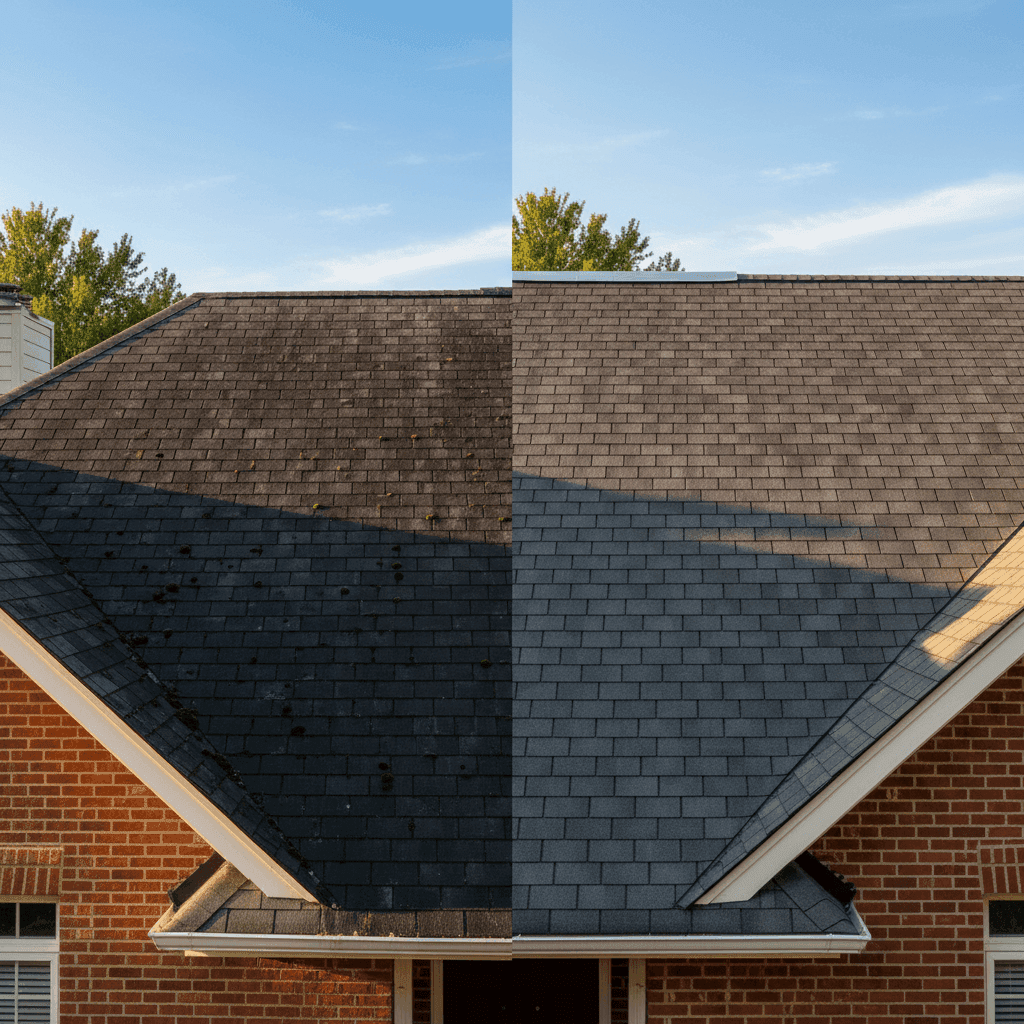
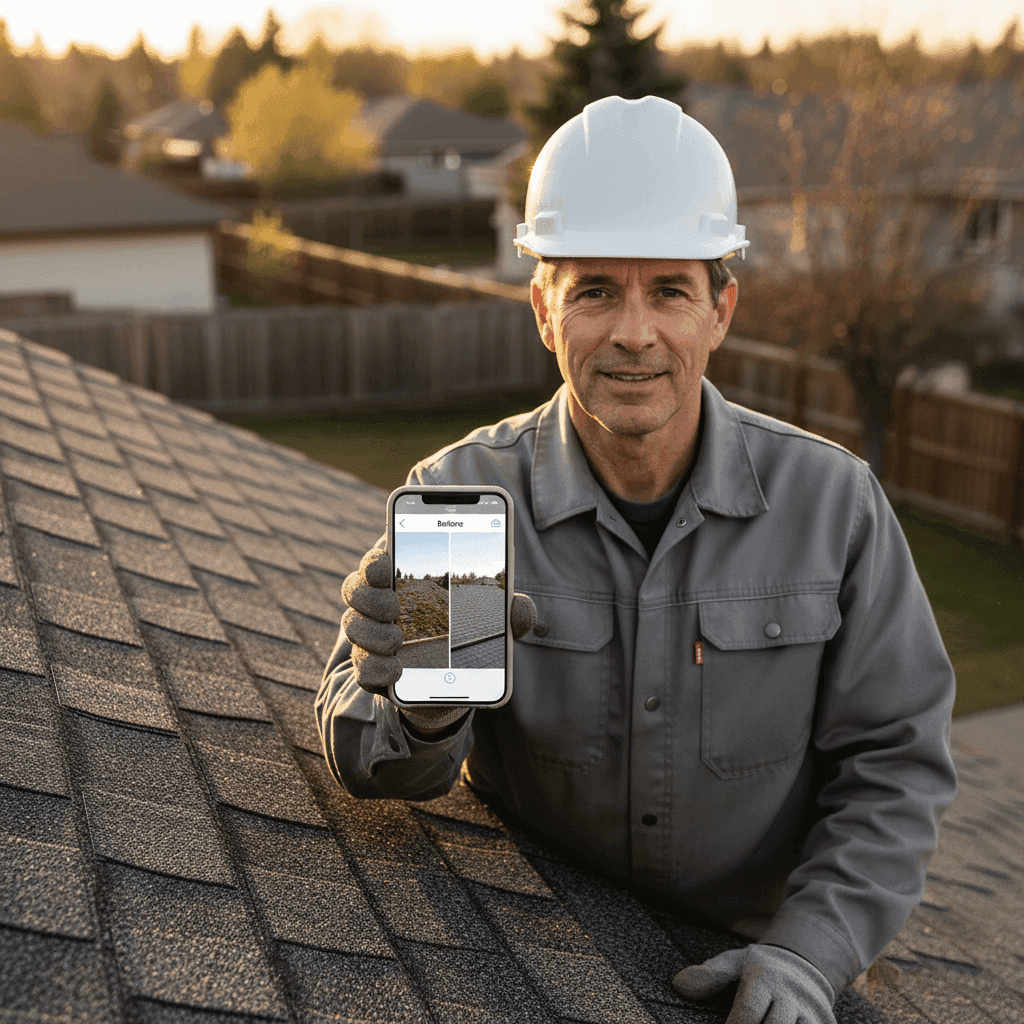
The single highest-performing roofing post there is. Shoot the sagging, moss-covered, storm-torn roof before you touch it, then the clean new install after cleanup. Same angle, both shots. This is the content that makes a stranger trust you, so build the habit into every job — here’s exactly how to shoot before-and-after photos that book jobs.
Storm-response posts
When a hail or wind event hits your market, post that day. A quick “We’re booking free inspections in [town] after last night’s storm” post, with a photo of real damage, catches homeowners in the exact moment they’re worried. This is where roofers out-book storm chasers who have no local presence.
Time-lapse and drone clips
A 20-second time-lapse of a tear-off and re-deck, or a drone pass over a finished roof, stops the scroll. Short video outperforms stills on reach, and it doubles as fuel for roofing video marketing across every channel you run.
Crew and credibility
Photos of your actual crew, your wrapped trucks, your GAF or Owens Corning certification, an EagleView measurement on a laptop — these say “real local company,” not fly-by-night. Homeowners are terrified of getting burned by a storm chaser. Show them you’re not one.
Reviews and homeowner wins
Screenshot a five-star review and pair it with the finished-roof photo from that job. It’s the most persuasive post you can make — it feeds the same trust loop as actively asking past customers for more reviews after every completed job.
The 5-post week you can run from the truck
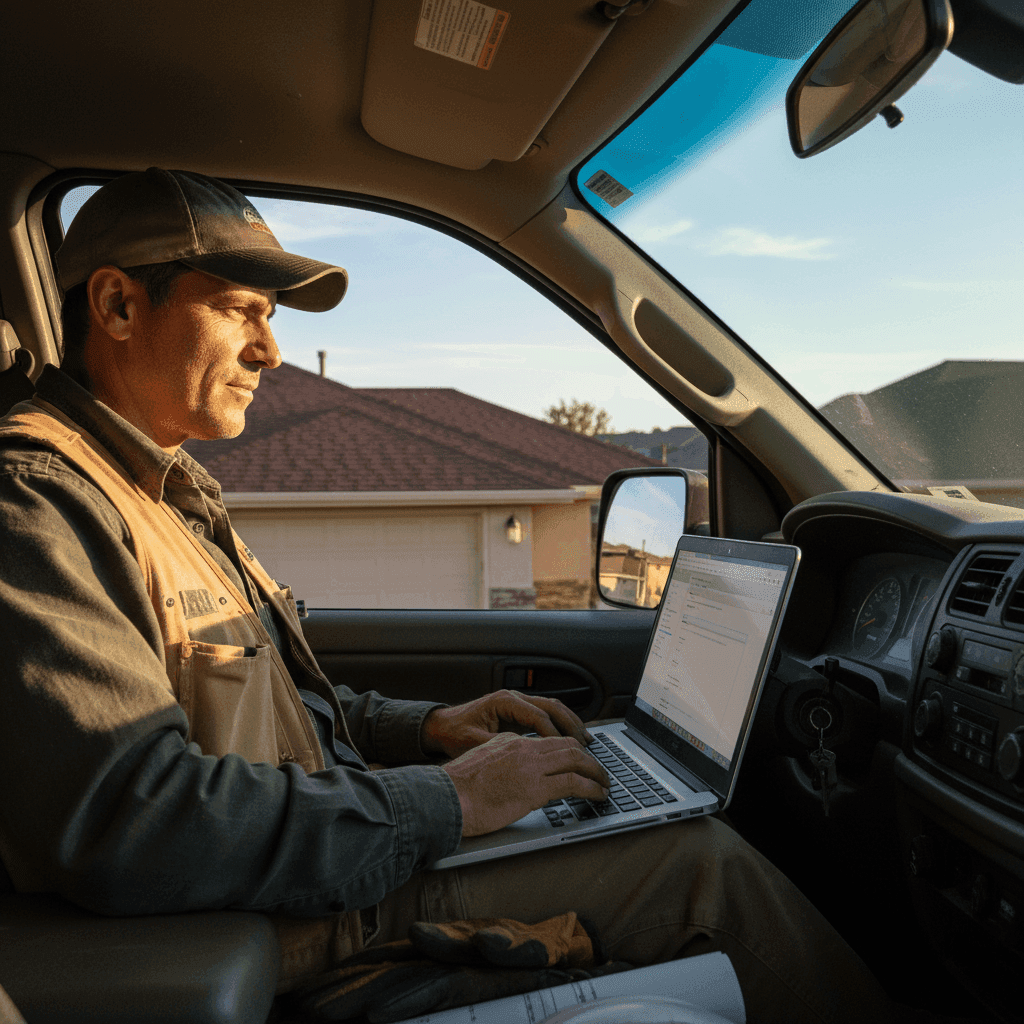
Consistency beats production value. You don’t need a videographer — you need a repeatable rhythm you can do from your phone between jobs. Here’s a week that takes about 20 minutes total.
- Monday — Proof: One before-and-after from last week’s job, same angle both shots.
- Wednesday — Process: A 15–30 second clip of a tear-off, re-deck, or drone pass.
- Friday — People: A crew photo, a certification, or a wrapped-truck shot with one line about the job.
- Weekend — Proof of trust: A screenshot review paired with the finished roof from that customer.
- As it happens — Storm response: The day weather hits, post damage photos and your free-inspection offer.
Take the photos while you’re already on the roof. The “square” you just finished, the flashing you replaced, the valley you tore off — snap two shots before you pack up and the week’s content is already in your pocket.
Want the attention your posts create to actually turn into booked jobs? Digital Trace builds custom roofing websites wired to capture every click from your feed — get a free quote.
Where social media hits a ceiling
Here’s the part most “post more on social” advice skips: a feed can earn attention, but it’s a terrible place to close a job. A homeowner who sees your storm post and taps your profile hits a wall if the next step isn’t obvious. No fast way to call, no form, no proof they’re in the right place — and the moment passes.
Social is rented ground, too. The algorithm decides who sees you, the platform can throttle your reach overnight, and you don’t own the audience. Your website and your search rankings are the assets you actually own. The smartest play is to use social to create demand and then send it somewhere built to convert.
That’s why posting works best when it points to a roofing website built to book jobs and is backed by roofing SEO that catches the homeowner the day they finally search “roof replacement near me.” Social warms them up; your site and your rankings close them.
How to tell if your posting is actually working
Likes are not leads. Track the handful of numbers that tie social to revenue instead.
Ask every new caller “how did you hear about us?” and write it down — it’s the cheapest attribution you have. Put a trackable link or a dedicated phone number in your profile so clicks and calls from social are counted separately. Watch which posts drove profile visits and website clicks, not just reactions. And measure the thing that matters: booked inspections and signed jobs that trace back to a post. If before-and-after photos and storm posts drive the calls — and they almost always do — do more of those and drop the rest.
Roofing social media marketing FAQ
Which social media platform is best for roofing companies?
For most single-market roofers, Facebook plus a well-run Google Business Profile does the heavy lifting. Facebook reaches homeowners 35 and up and the local neighborhood groups where storm recommendations spread, while your Google Business Profile catches people actively searching. Add Instagram only if you already shoot photos and video on the job.
How often should a roofing company post on social media?
About three to five times a week is plenty, as long as it’s consistent. A simple rhythm — a before-and-after, a short process clip, a crew or review post, plus storm-response posts the day weather hits — keeps you visible without turning into a full-time job. Consistency matters far more than polish or volume.
Does social media actually get roofers leads?
Indirectly, and powerfully. Social rarely produces a form fill on the spot; what it does is build trust so you’re the roofer homeowners already recognize when their roof fails. It works best pointed at a website and Google Business Profile built to convert that attention into booked estimates.
Should I pay for Facebook ads or post for free first?
Build a consistent free posting habit first so your profile looks like a real, active local company — ads sending traffic to a dead profile waste money. Once you’re posting proof regularly and your website captures leads, boosting storm-response posts and before-and-afters to your local area can extend reach cheaply.
Who should handle roofing social media — me or an agency?
You, or someone on your crew, should take the photos and videos — nobody can fake being on your roofs. The posting rhythm, the website it points to, and turning that attention into tracked leads is where an agency earns its keep. The content is yours; the system that converts it doesn’t have to be.
Turn scrolls into signed jobs
Your crew produces share-worthy proof every single day — a clean tear-off, a drone shot of a finished roof, a relieved homeowner after a storm. Posting it consistently is how you become the name your market already trusts before they need you.
If you’d rather the attention didn’t leak the moment someone taps your profile, Digital Trace can make sure your posts point to a roofing website and search presence built to book jobs. Request a free quote and we’ll show you where your social traffic is slipping away — and what it takes to catch it.