Roofing Website Trust Signals That Win More Jobs
A homeowner who just got hit with a $15,000 roof estimate is looking for a reason to say no. Roofing website trust signals — licenses, real reviews, warranties, and proof you’ve done the work before — are what talk them out of it. Skip them and even a fast, good-looking site will lose leads to a competitor who simply looks more credible.
This isn’t about stuffing your homepage with badges. It’s about placing the right proof, in the right spots, at the exact moments a visitor is deciding whether to trust you with their roof.
Why Trust Signals Make or Break Your Roofing Website
Roofing is a high-stakes, high-dollar purchase most homeowners make once every 15-20 years. They don’t know how to judge workmanship, so they judge you on proxies instead: how professional your site looks, whether other homeowners vouch for you, and whether you can back up your promises in writing.
Without visible trust signals, visitors assume the worst-case scenario — that you’re unlicensed, uninsured, or unreliable — and they bounce to a competitor’s site instead. That’s traffic you paid for through SEO or your Google Business Profile, wasted at the last step.
The 7 Trust Signals Every Roofing Website Needs
1. License, Insurance, and Bonding Info
State your license number, insurance carrier, and bonding status somewhere visible — ideally the header, footer, and about page. This single detail filters out the “is this a real company?” objection instantly, and in many states it’s required by law to disclose it in advertising.
2. Manufacturer Certifications
Badges like GAF Master Elite, Owens Corning Preferred, or CertainTeed SELECT ShingleMaster tell homeowners you meet a manufacturer’s installation standard — and they usually mean a stronger warranty. Display the actual badge graphics, not just text mentioning the certification.
3. Recent, Real Customer Reviews
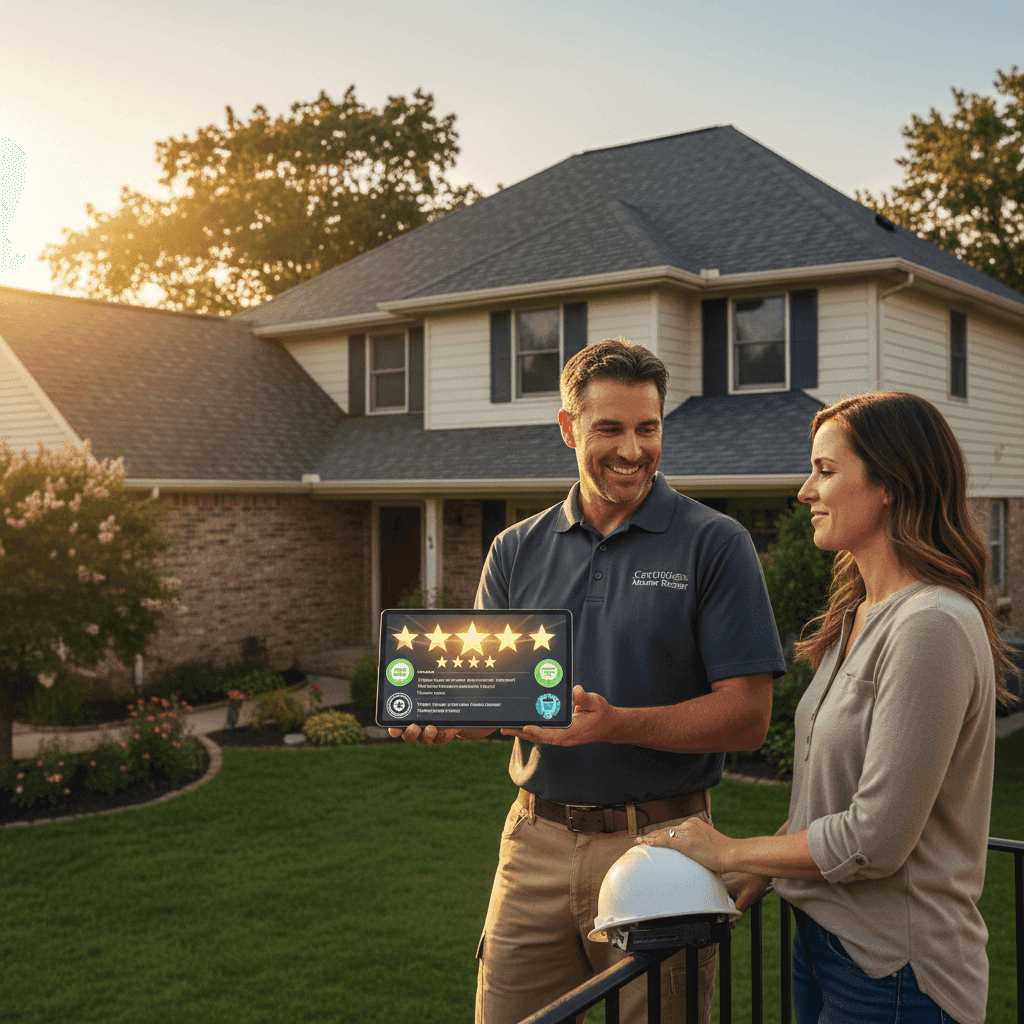
A star rating alone isn’t enough. Pull in recent Google reviews with the reviewer’s name, neighborhood or city, and the actual job they had done. Specificity is what makes a review believable — “great work” reads as fake, “replaced our storm-damaged roof in one day, cleaned up every nail” reads as real.
4. Before/After Project Photos
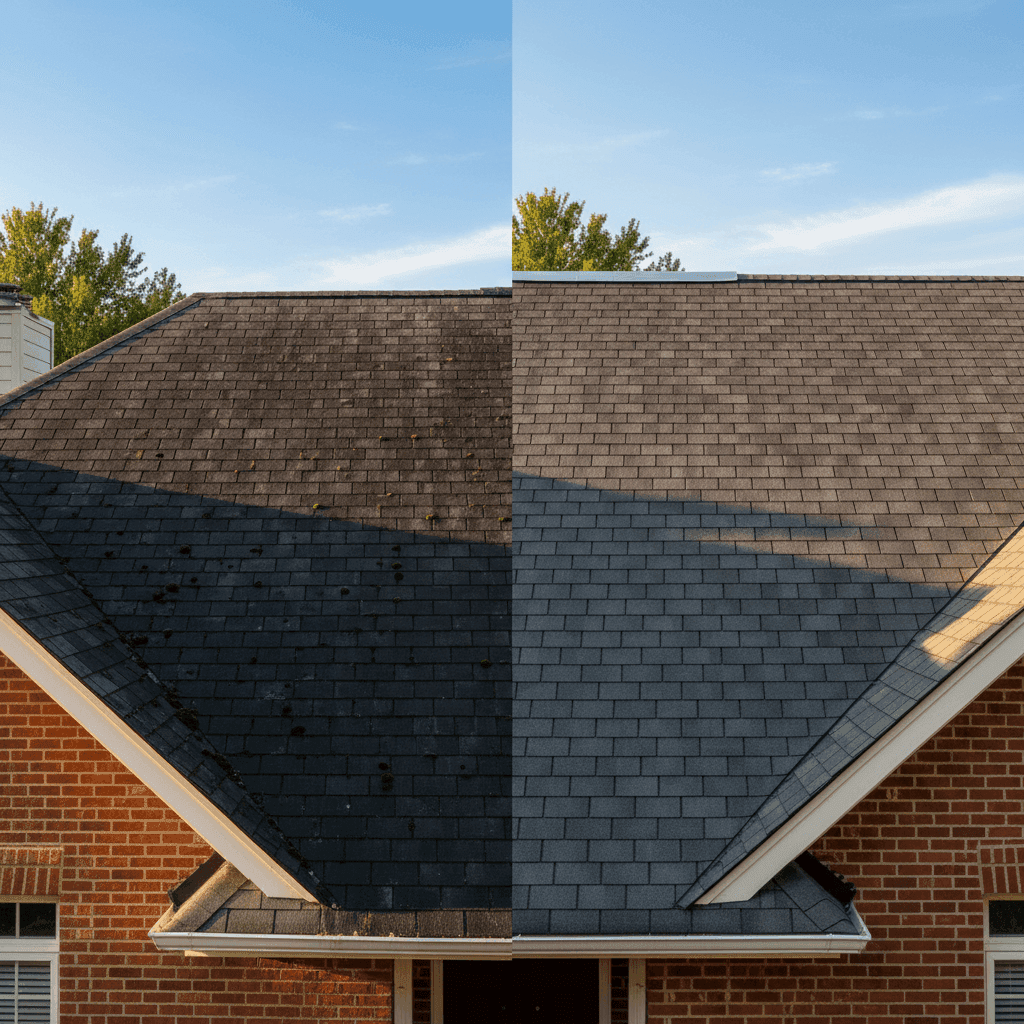
Nothing proves quality work like photos of the actual work. Build a gallery organized by roof type or material, and caption each set with the city or neighborhood — this doubles as local SEO content.
5. Written Warranties and Guarantees
Spell out your workmanship warranty in plain language near your pricing or estimate request sections. “5-year workmanship guarantee, no fine print” removes far more hesitation than a vague “we stand behind our work.”
6. Local Proof Points
Years in business, number of local roofs completed, BBB accreditation, or association memberships (NRCA, state contractor associations) all signal that you’re an established, findable business — not a storm-chasing crew that’ll be gone next season.
7. Real People, Not Stock Photos
A photo of your actual crew, trucks, and owner does more for credibility than any polished stock image. Homeowners are letting people onto their roof and into their home — they want to know who’s showing up.
Where to Place Trust Signals for Maximum Impact
- Above the fold on the homepage: license/insurance line, star rating, and a certification badge or two — the fastest objections, answered first.
- Next to every quote or contact form: a warranty line or review snippet right beside the button reduces form abandonment.
- On service pages: before/after photos and reviews specific to that service (roof replacement, repair, storm damage) rather than generic testimonials.
- In the footer, on every page: licensing, insurance, and certification badges as a constant, low-friction reassurance.
If your site already gets decent traffic but few calls, trust signals are one of several fixes worth checking — see our full breakdown of roofing website conversion rate fixes for the rest.
Common Mistakes That Undermine Trust
- Outdated reviews: testimonials from 2019 suggest you haven’t done good work lately, even if that’s untrue.
- Badge images with no context: a certification logo with no explanation of what it means loses most of its value.
- Burying credentials on an “About Us” page nobody visits: put proof where decisions are made, not where it’s hardest to find.
- Fake or generic stock imagery: homeowners can usually spot stock photos, and it works against you.
Trust in reviews specifically is well-documented: BrightLocal’s Local Consumer Review Survey consistently finds that the large majority of consumers read reviews before choosing a local business, and recency matters as much as the star rating itself.
FAQ: Roofing Website Trust Signals
What are the most important trust signals for a roofing website?
License and insurance details, recent Google reviews, manufacturer certifications, and a clear written warranty. Those four alone address the objections most homeowners have before requesting a quote.
How many reviews should I show on my homepage?
Three to five recent, specific reviews outperform a long wall of generic ones. Rotate them periodically and always show the total review count and average rating alongside them.
Do trust signals actually improve SEO, or just conversions?
Both. Reviews and business information feed local search ranking signals, and pages with genuine local content (like captioned project photos) tend to earn more relevant organic traffic.
Should I include pricing near my trust signals?
You don’t need exact pricing, but pairing a warranty or guarantee statement near your quote request form measurably reduces hesitation at the moment someone is deciding to reach out.
What’s the fastest trust signal to add this week?
Your license and insurance line in the header or footer. It takes minutes to add and directly answers the first question serious homeowners ask.
Get a Roofing Website Built to Earn Trust
Digital Trace builds roofing websites with credibility built into the structure — not bolted on as an afterthought. If your current site isn’t converting traffic into booked jobs, get in touch with our team and we’ll show you exactly where trust is leaking out of your funnel.