How to Get More Landscaping Clients With a Professional Website
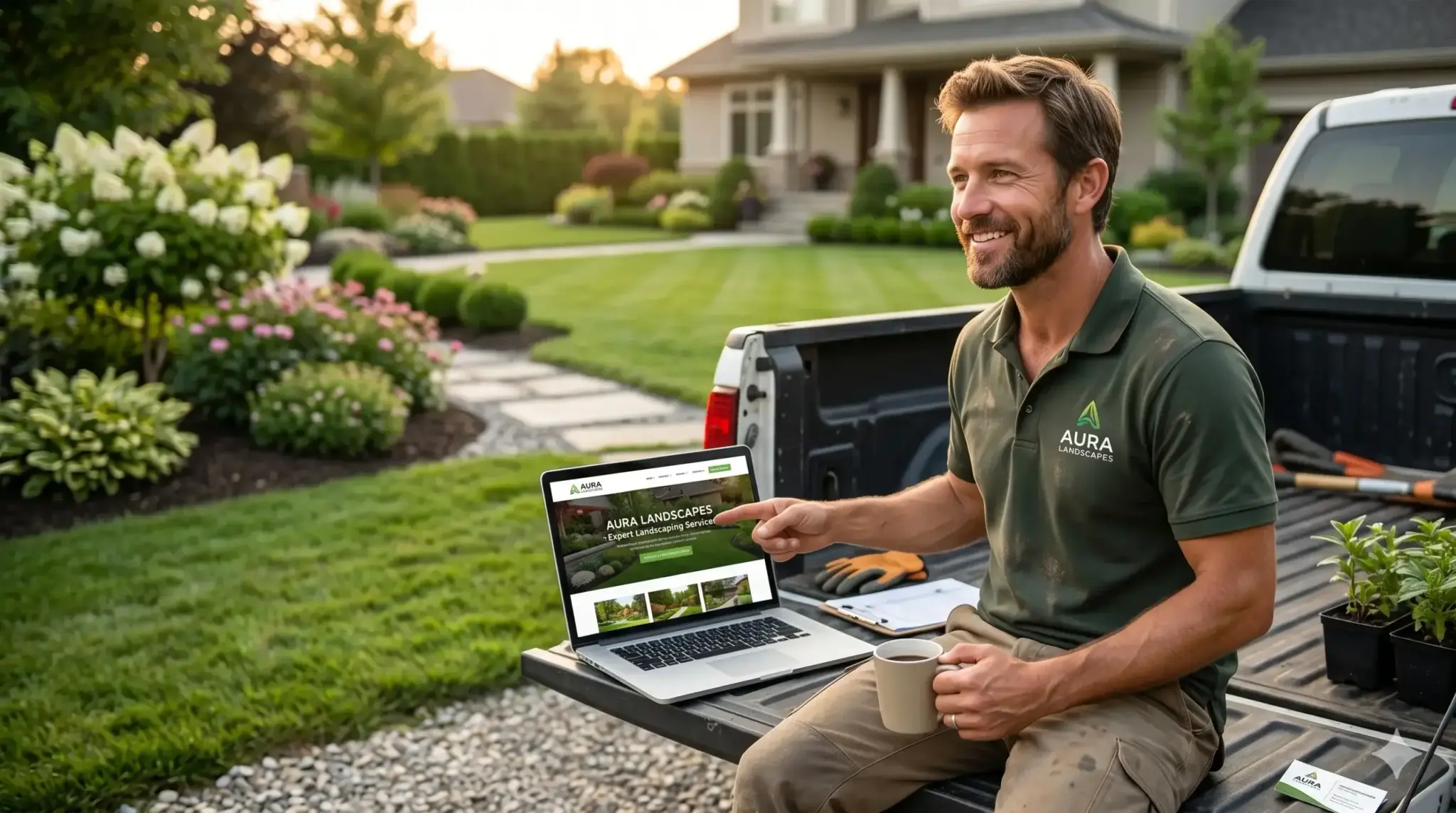
You do great work. Your lawns look immaculate, your crews show up on time, and your past clients are happy. So why is your phone not ringing from your website?
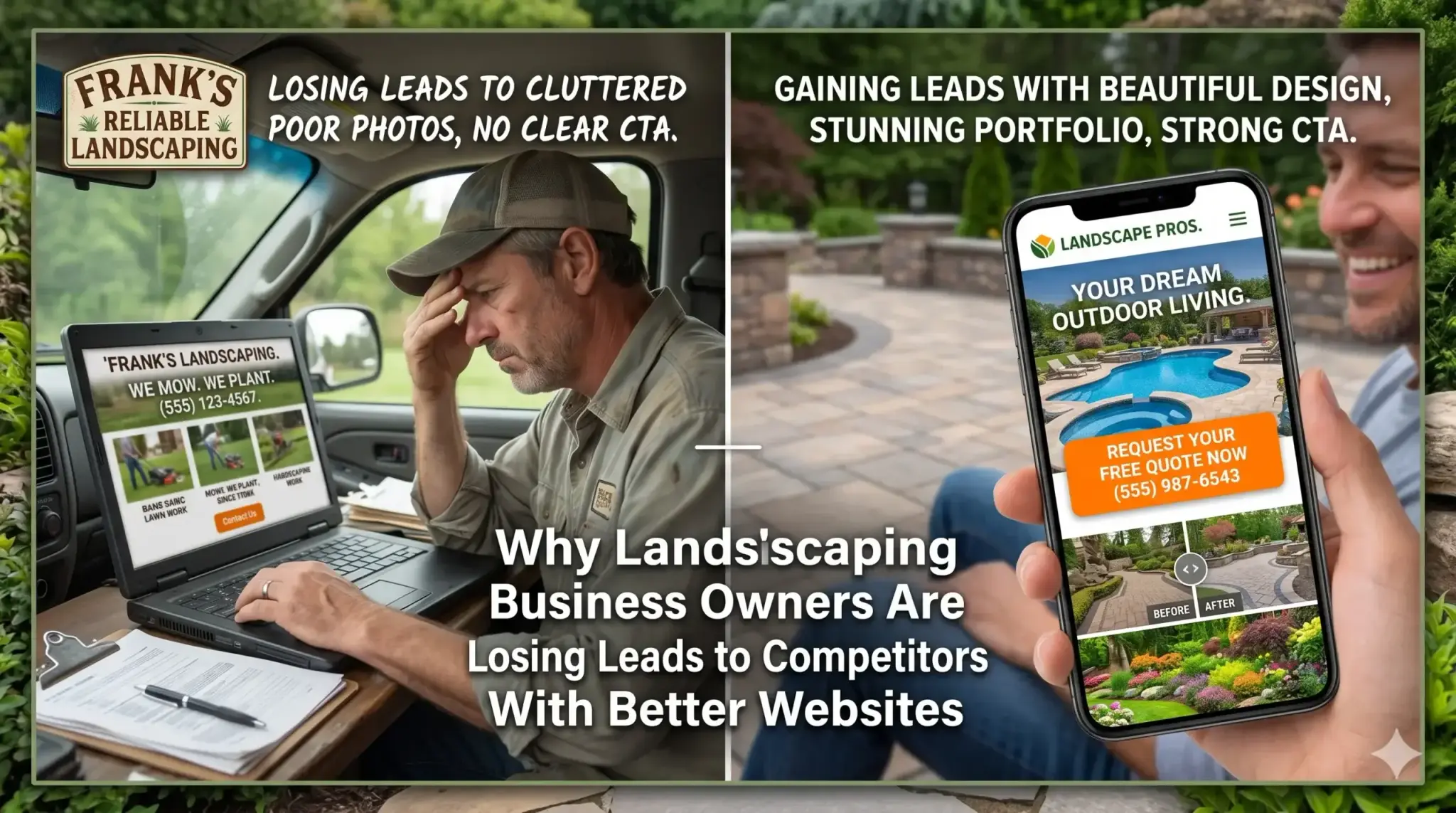
Most landscaping business owners assume they just need “more traffic.” But traffic isn’t the problem. The problem is that most landscaping websites — even decent-looking ones — are quietly leaking leads every single day. Visitors land on the site, can’t find what they need fast enough, and call your competitor instead.
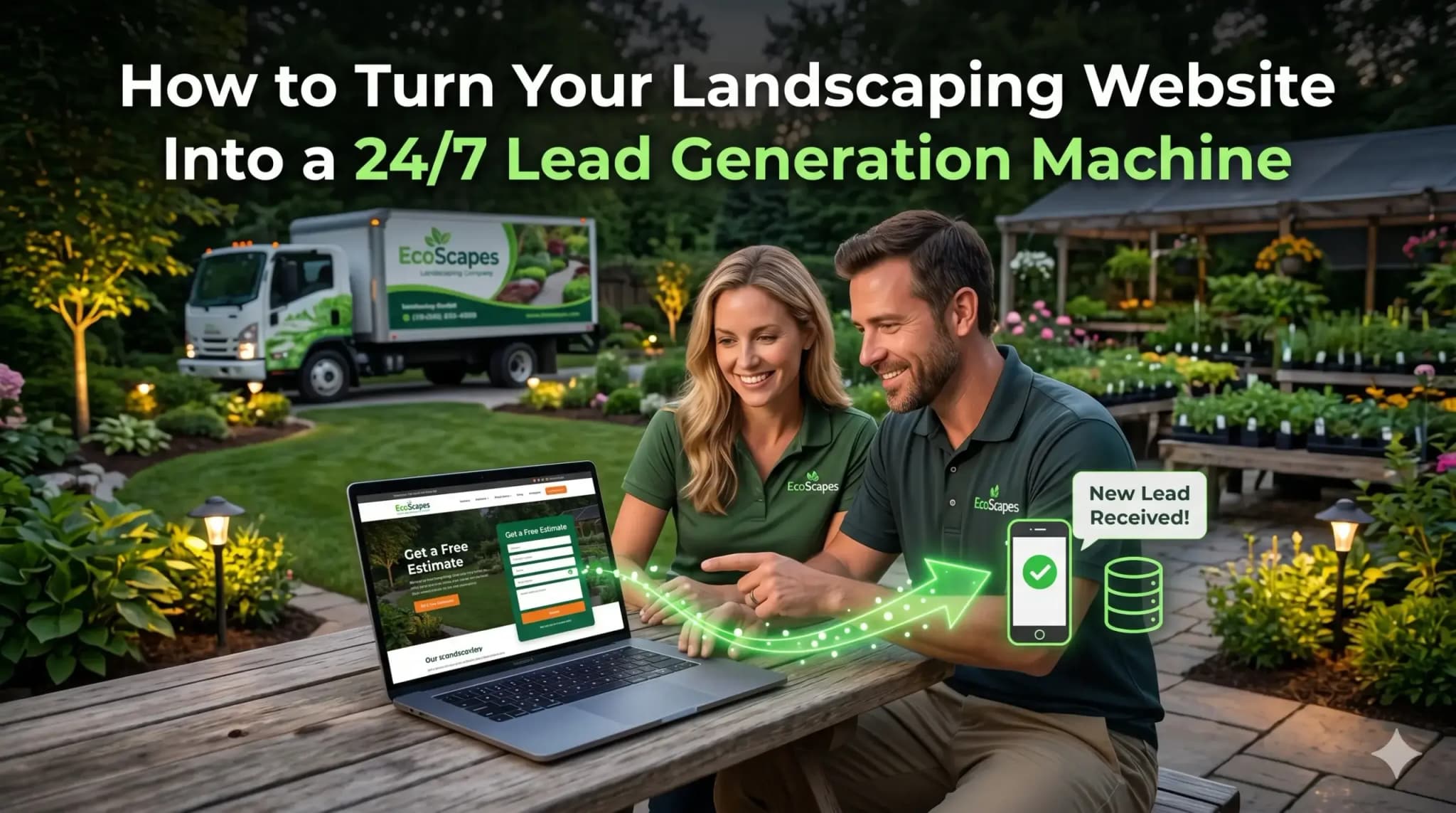
This guide breaks down exactly why that happens, what a high-performing landscaping website design actually looks like, and what you can do right now to start turning your website into a lead machine.
Why Your Website Looks Fine But Doesn’t Convert
Think of your website like a front yard you maintain for a client. If it looks messy, people drive past. But even a clean lawn can have problems hiding underneath — dead roots, poor drainage, patchy spots that get worse every season.
A website can look decent on the surface and still have serious problems underneath. Slow load speeds, confusing navigation, missing trust signals — these kill your conversion rate silently.
Here’s what’s actually happening:
- A potential customer searches “landscaping company near me” or “lawn care [city]”
- They click your site and it takes more than 3 seconds to load
- They’ve already hit the back button before your homepage even appears
That’s not a traffic problem. That’s a website performance problem — and it’s fixable.
The 5 Reasons Your Landscaping Website Isn’t Bringing in Calls
1. Your Site Loads Too Slowly
Most landscaping websites are loaded with large, uncompressed photos of past projects — which makes sense visually, but kills your load time. Research consistently shows that most mobile users abandon a site within 3 seconds if it hasn’t loaded.
The technical fix involves compressing images, using faster hosting, and improving your site’s “core web vitals” — but what that means in plain English is: your potential client gives up before they even see your phone number.
At Digital Trace, every landscaping site is optimized for speed from the ground up — not patched after the fact.
2. Visitors Can’t Find What They Need in 5 Seconds
When someone lands on your site, they’re trying to answer three questions immediately:
- Do you serve my area?
- Do you do the service I need?
- How do I contact you?
If those answers aren’t obvious in the first five seconds, they leave. Most landscaping websites bury service areas in the footer, hide services behind dropdown menus, and put the contact form three scrolls down the page.
Your site’s job is to make those three answers impossible to miss — not to win a design award.
3. Your Site Doesn’t Look Credible on a Phone
More than half of local service searches happen on a mobile device. If your site looks awkward, oversized, or requires pinch-zooming on a phone, visitors assume your business is the same way — unprofessional.
A mobile-first landscaping website ensures that a homeowner standing in their backyard can find your number, read your services, and hit “call” in under 10 seconds.
4. Google Doesn’t Know Enough About You to Show Your Business
Google ranks local businesses based on trust signals — and your website plays a major role in building that trust. If your site doesn’t clearly state your service areas, describe your specific services, and use the right behind-the-scenes markup, Google will show your competitor instead.
It’s not that Google dislikes you. It just doesn’t have enough information to be confident recommending you. There’s a straightforward fix — but most landscaping websites don’t have it in place.
5. There’s No Clear Next Step for the Visitor
This one is underestimated. Many landscaping websites have a contact form buried on a separate page, no prominent phone number, and nothing that tells the visitor why they should act now.
High-performing landscaping websites make the next step obvious: a click-to-call button visible on every page, a clear offer (free estimate, free consultation), and a simple form that takes less than 60 seconds to fill out.
💡 Pro Tip: Your Google Business Profile and Website Must Match
A common mistake landscaping owners make: the name, address, and phone number on their website don’t exactly match what’s listed on their Google Business Profile. Even small differences — like “LLC” on one and not the other — confuse Google’s algorithm and hurt your local rankings. Audit both right now and make sure they’re identical, including punctuation.
What a High-Converting Landscaping Website Actually Looks Like
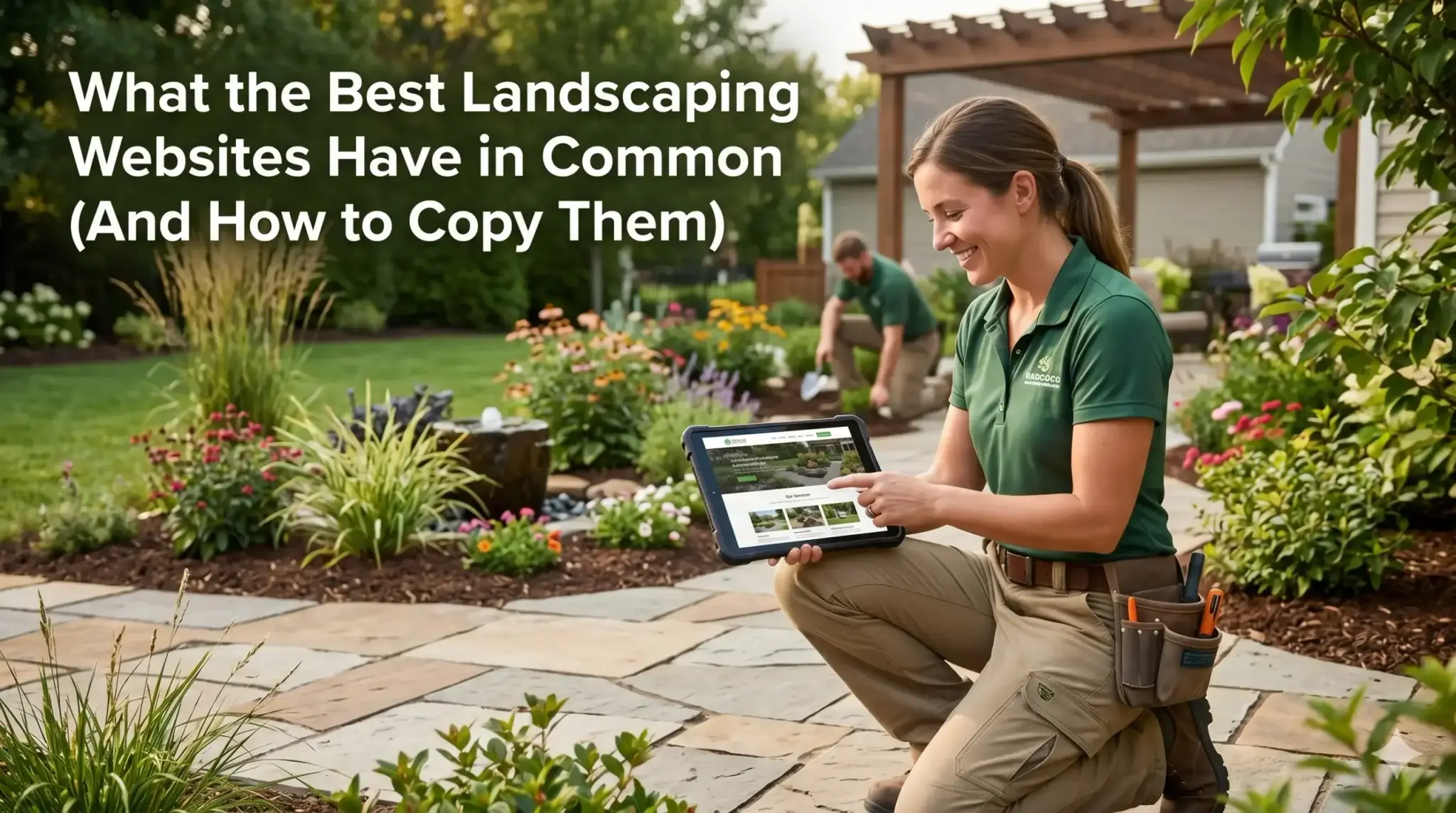
A great landscaping website isn’t just pretty — it’s built to work. Here’s what separates the sites that bring in regular leads from the ones that sit there doing nothing:
Above the fold (the first thing visitors see without scrolling):
- Your city/service area prominently stated
- A headline that speaks to what the customer wants (“Beautiful Lawns, Done Right — Serving [City] Since [Year]”)
- A click-to-call button and a “Get a Free Estimate” button
Services page:
- Each service on its own dedicated page — not all lumped together
- Written for how customers search, not how you think about your business (“spring lawn cleanup” not just “maintenance”)
- Before/after photos with context
Trust signals throughout:
- Real reviews pulled from Google or embedded from Yelp
- Years in business, number of clients served, licenses/insurance
- Named, local — not generic stock photos
Speed and mobile performance:
- Loads in under 2 seconds on a mobile connection
- Click-to-call works with one tap, no copying numbers
Real Results: What Changes When the Website Actually Works
Before: A residential landscaping company in the Midwest had a five-year-old website. It looked fine on a desktop but loaded in over 6 seconds on mobile and had no clear call-to-action. Their contact form was three pages deep. They were spending money on Google ads but converting under 1% of visitors.
After: A rebuilt site — optimized for speed, restructured for mobile, with a click-to-call button above the fold, individual service pages, and proper local SEO markup. Load time dropped to under 2 seconds. The contact form was moved to the homepage. Within 90 days, their form submissions tripled and their phone was ringing from organic search for the first time in years.
The lesson: Their service didn’t change. Their prices didn’t change. The website did — and the phone followed.
Not sure if your landscaping website has these issues? Get a free website audit — no obligation, just a clear picture of what’s costing you leads.
Your Path to More Leads: 5 Steps That Actually Work
You don’t need to understand code or marketing jargon to get this right. Here’s what the path forward looks like:
- Audit what’s broken first. Before changing anything, find out where visitors are dropping off and why. This is what a professional audit reveals — the hidden problems costing you leads every month.
- Fix your speed and mobile experience. If your site takes more than 3 seconds to load on a phone, that’s the first thing to address. This one fix alone can meaningfully improve the number of people who stay and call.
- Make the next step impossible to miss. Add a click-to-call button to every page. Put a “Get a Free Estimate” CTA above the fold. Make your phone number visible without scrolling.
- Build out your service pages. Each service you offer — lawn maintenance, landscape design, irrigation, hardscaping — deserves its own page. This is how Google matches your site to the specific searches your customers are typing.
- Let the results tell the story. Real photos, real reviews, real service areas. Generic websites blend in. Specific, local websites build trust and convert.
FAQ: Real Questions From Landscaping Business Owners
Why am I not getting calls from my website?
The most common reasons: your site loads too slowly and people leave before they see your number, there’s no clear call-to-action telling visitors what to do next, or your site isn’t showing up in local searches because Google doesn’t have enough trust signals to rank you. A website audit can pinpoint exactly which of these is the problem for your specific site.
How do I know if my landscaping website is actually working?
If your website were working, you’d know — because the phone would ring from people who found you on Google. If that’s not happening, your site isn’t working. Beyond gut-feel, look at your Google Search Console data: are people seeing your site in results? Are they clicking? If impressions are low, you have a visibility problem. If clicks are low, you have a relevance problem. If clicks are high but calls are low, you have a conversion problem. A free audit can show you exactly where the breakdown is.
How long does it take to see results from a new website?
Most landscaping businesses start seeing improvement in lead volume within 60–90 days of launching a properly built site. Speed and conversion improvements can show results faster — sometimes within weeks. Local SEO improvements build over a few months as Google indexes and trusts the new site.
What makes a landscaping website different from a regular business website?
Local service businesses like landscaping have very specific needs: hyperlocal SEO (ranking in your city, not nationally), click-to-call functionality for on-the-go homeowners, visual proof of work through photo galleries, and trust signals like licenses and insurance. A generic template doesn’t account for any of these. A landscaping-specific design is built around how homeowners actually search for and hire a lawn care company.
Do I really need a fast website if my customers are local?
Especially if your customers are local. Most homeowners searching for a landscaping company are on their phone, in their car, or standing in their backyard. They’re not patient. A slow, clunky site signals a slow, clunky business — even if that couldn’t be further from the truth. Speed is a trust signal, not just a technical metric.
What does a new landscaping website actually cost?
The better question is: what’s your current website costing you? If your site brings in zero calls per month and you’re running any kind of ad spend on top of it, you’re paying for traffic that disappears. A properly built landscaping website is an investment that compounds — every month, more leads, without increasing ad spend. Pricing varies by scope, but the right conversation starts with understanding what’s broken first.
Ready to Find Out What Your Website Is Costing You?
Most landscaping business owners are surprised by what an audit reveals — not because the problems are complicated, but because they’ve been quietly bleeding leads for months without knowing it.
Digital Trace builds websites specifically for landscaping businesses across the US — built for speed, built to rank locally, and built to turn visitors into calls. No fluff, no bloated retainers, no guesswork.
Book your free website audit today — we’ll show you exactly what’s costing you leads and what it would take to fix it. No obligation. No pressure. Just a straight answer.