Mechanic Website Design: Should You Build It Yourself or Hire a Pro?
You’ve got a solid reputation in your area. Customers who find you love you. Word of mouth keeps the bays busy — most days. But you’ve heard you should have a website, maybe you even built one on Wix or Squarespace a couple years back, and yet… your phone doesn’t ring from it. Not really.
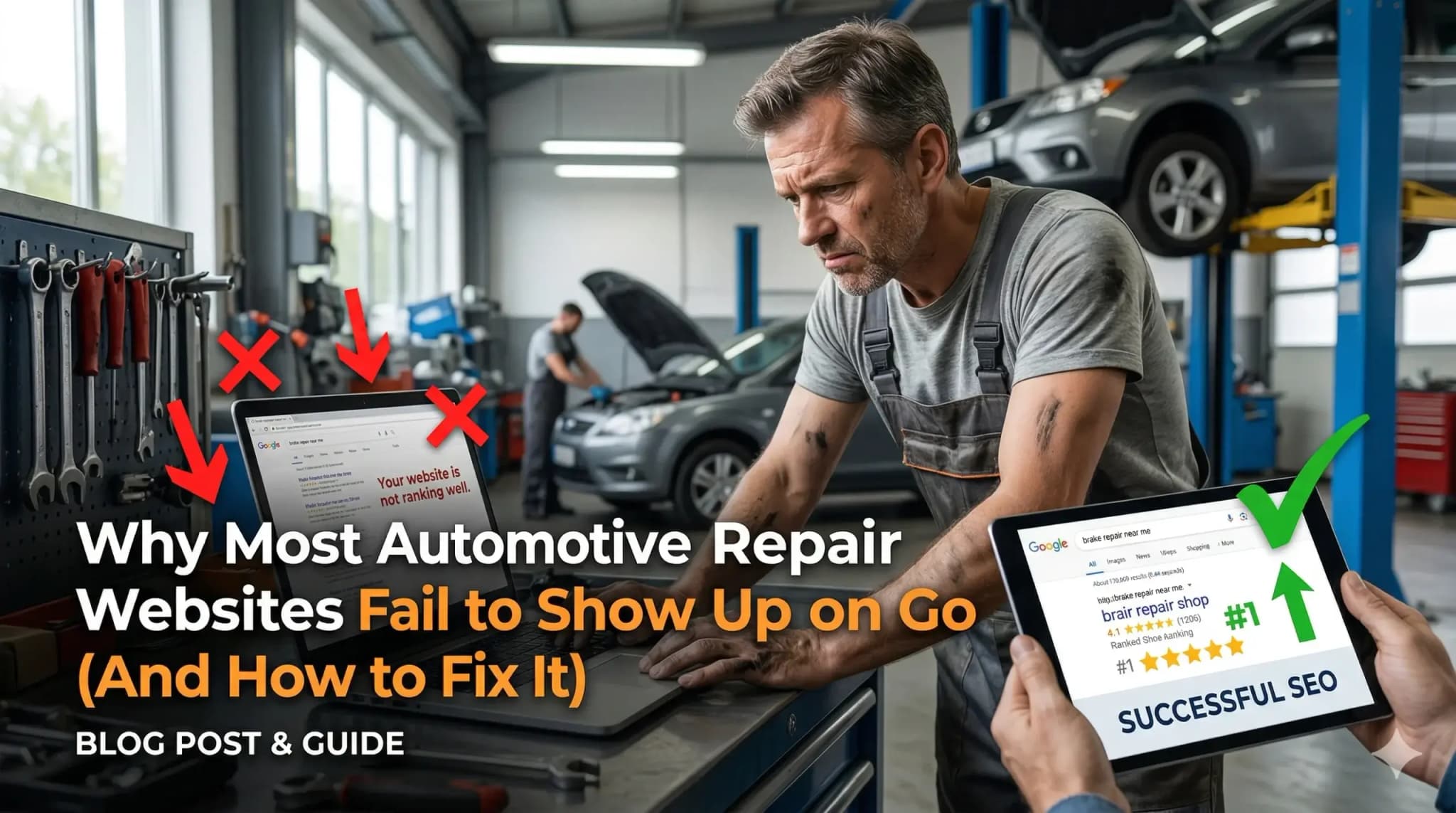
Here’s the thing most auto repair shops don’t realize: having a website and having a website that actually brings in customers are two completely different things. A lot of shops are sitting on digital storefronts that look fine on the surface but are quietly leaking leads every single day — and the owner has no idea.
This article breaks down exactly what separates a site that works from one that just exists, whether you should build it yourself or hire someone who knows auto repair marketing, and what to look for so you’re not wasting another month without results.
Your Website Is Like Your Shop’s Front Lot — First Impressions Are Everything
When a driver pulls onto your street for the first time, they’re already making a judgment call. Is this place legit? Does it look like they know what they’re doing? Do I feel comfortable leaving my car here?
Your website does the exact same job — except the judgment happens in about three seconds, before anyone even picks up the phone.
If your site loads slowly, looks cluttered on a phone screen, or doesn’t immediately answer “where are you, what do you fix, and how do I call you?” — that potential customer is already hitting the back button. They’re not going to dig around. They’re going to call the next shop on the list.
The brutal part? You’ll never know they were there.
Why DIY Websites Fall Short for Auto Repair Shops
Template builders like Wix, Squarespace, and GoDaddy make it easy to get something online. And for a lot of business types, something is fine. But auto repair is a local search game — meaning your customers are searching things like “oil change near me” or “brake repair [city name]” right now, on their phone, often from the side of the road.
To show up for those searches, your site needs more than a nice logo and a photo of your shop. It needs to be built in a way that Google understands — and that takes specific, intentional choices that most DIY builders don’t make automatically.
Here’s where most self-built auto repair sites quietly fail:
- They load too slowly on mobile. Most auto repair customers are searching on their phones. If your site takes more than three seconds to load, a large portion of those visitors leave before they ever see your phone number. Google also ranks faster sites higher, so slow = invisible.
- Google can’t tell exactly what you do or where you are. There’s a behind-the-scenes way of labeling your business information so search engines can read it clearly — called structured data. Without it, Google isn’t confident enough to show your shop in the results that matter most, like the map pack.
- Your pages aren’t targeting the right searches. A generic homepage with “Welcome to Mike’s Auto Repair” isn’t going to rank for “transmission repair in [city]” or “check engine light diagnosis near me.” You need pages that speak directly to what people are actually searching.
- No clear call to action. If a visitor has to hunt for your phone number or figure out how to book an appointment, they won’t. The path from landing on your site to calling your shop needs to be obvious and immediate.
The Real Cost of a Website That Doesn’t Convert
Think about what one new customer is worth to your shop. An average repair ticket — let’s say $400. If a customer comes back twice a year and sends one referral over their lifetime, that’s potentially thousands of dollars in revenue from a single relationship.
Now think about how many people visit your website each month and leave without calling. Even if it’s just five or ten people a week, that adds up fast. Over a year, a website that converts at 1% instead of 5% could mean the difference between a slow month and a packed schedule.
A website that doesn’t work isn’t free. It’s just costing you in a way that doesn’t show up on an invoice.
💡 Pro Tip
The #1 mistake auto repair shops make with their website: They build it once and never touch it again.
Google rewards websites that are actively maintained — updated content, new service pages, consistent business information. A site that hasn’t been touched in two years sends a quiet signal that says “this business might not be active.” Meanwhile, your competitor who added a “brake service” page three months ago is showing up above you in search.
The fix isn’t complicated — but it has to be intentional. New service pages, location-specific content, and regular updates signal to Google that your shop is the real deal.
What the Best Auto Repair Websites Actually Do Differently
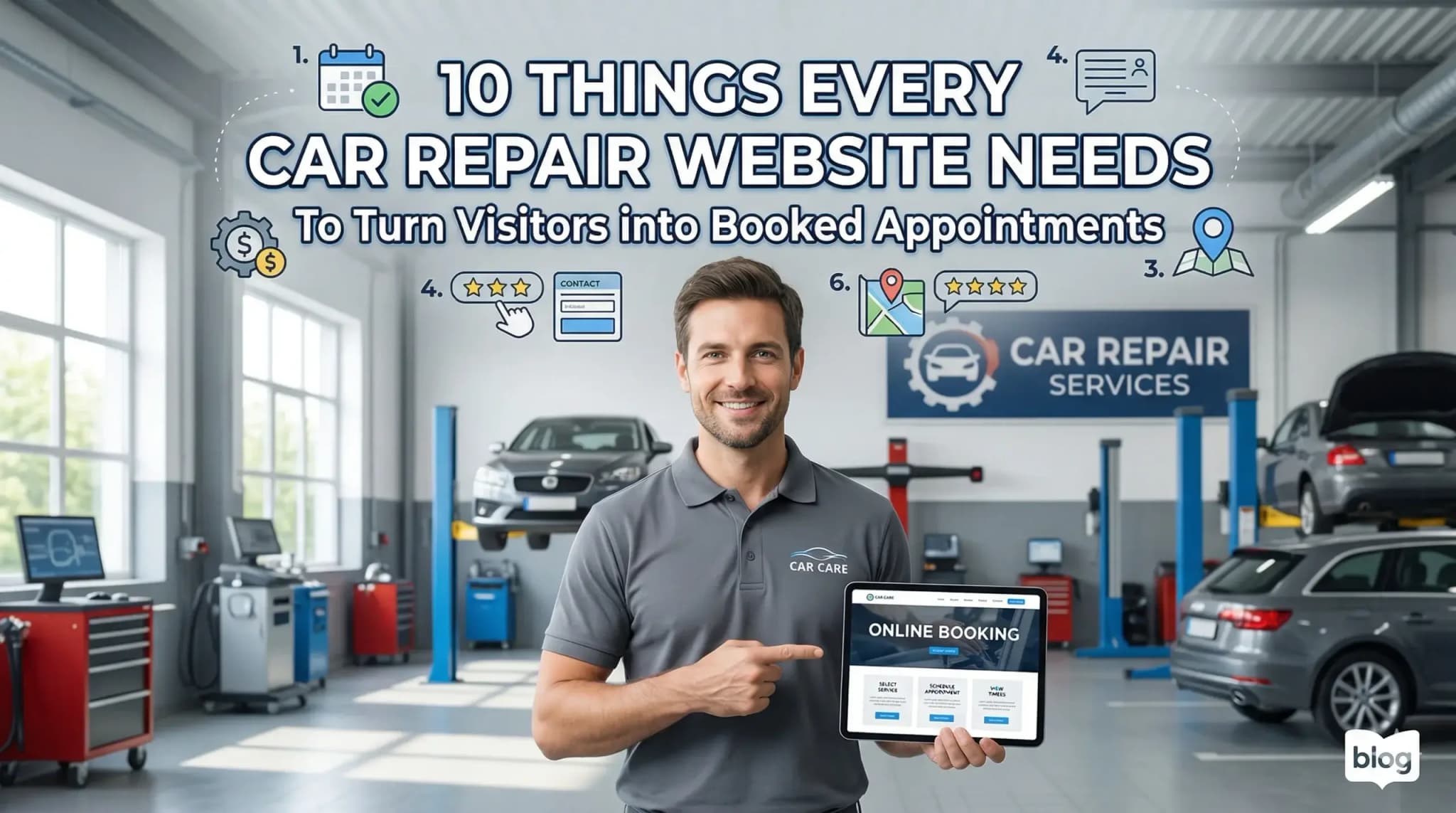
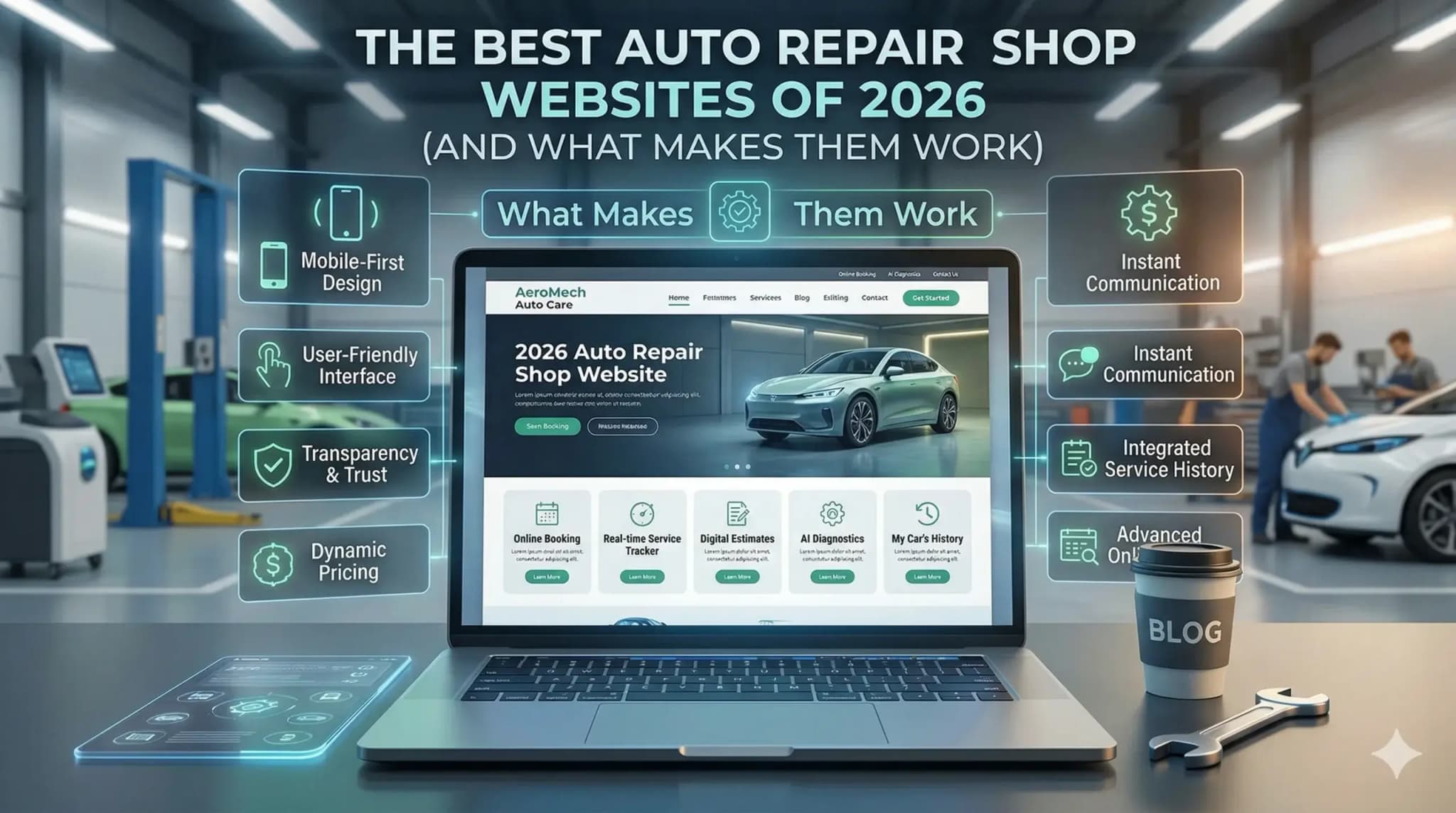
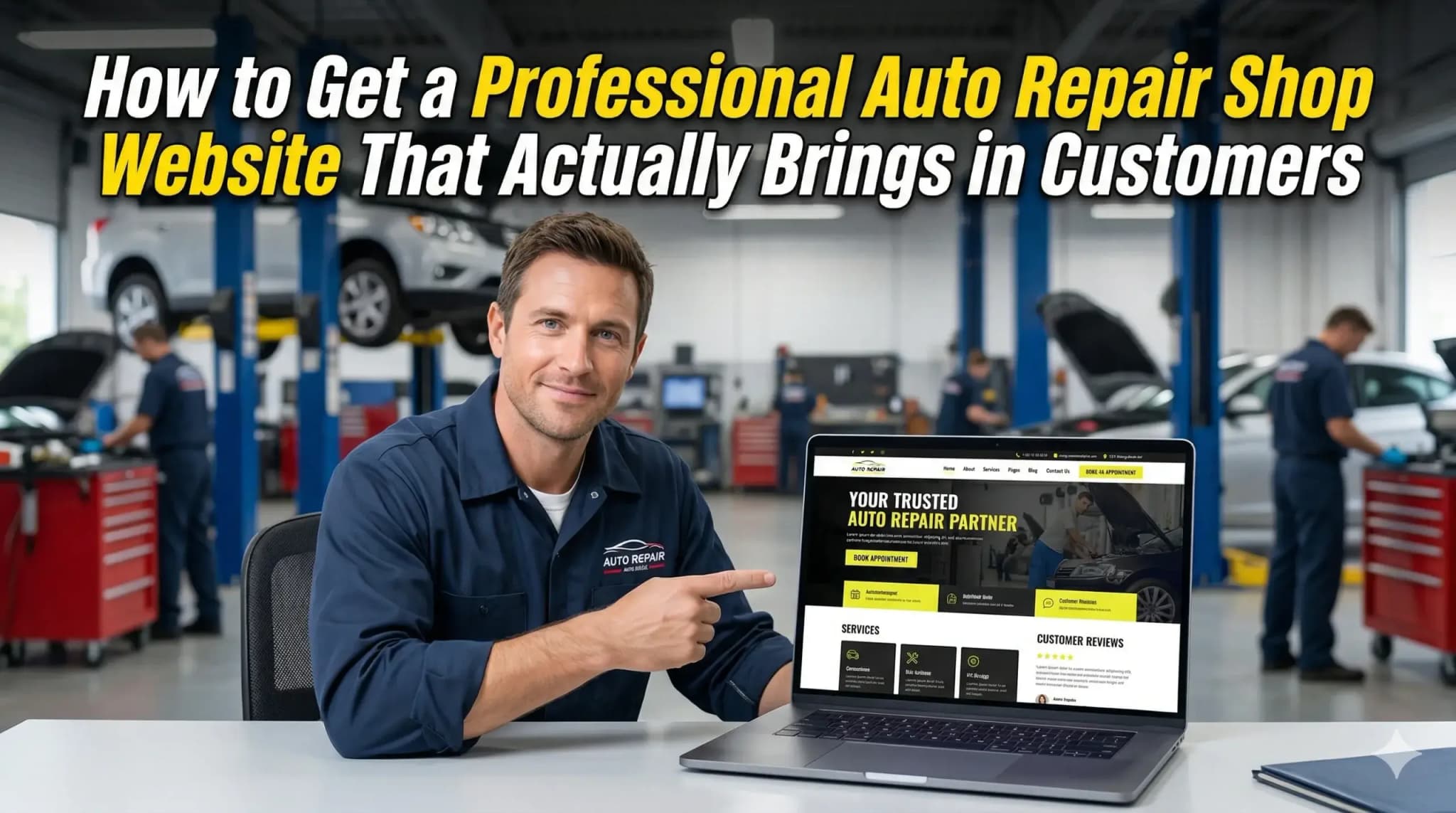
The best auto repair websites aren’t just pretty — they’re built around one goal: getting the phone to ring. Here’s what separates a high-performing mechanic website from one that’s just taking up space online.
They make the phone number impossible to miss. On every page. At the top. On mobile, it’s a tap-to-call button. No hunting, no scrolling.
They speak to specific services. Instead of one generic “services” page, they have individual pages for oil changes, brake repair, transmission work, AC service — whatever the shop specializes in. Each page targets the exact phrase a customer would search.
They build trust before the customer calls. Real reviews, real photos of the shop and team, clear information about certifications. A customer who’s never been to your shop is making a trust decision. The site’s job is to earn it.
They load fast — everywhere. Especially on phones with slower connections. Speed isn’t a technical nicety, it’s a business requirement.
They show up in the local map pack. This is the box with three local businesses that shows up near the top of Google search results. Getting there requires a combination of your Google Business Profile, website signals, and consistent information across the web — all working together.
Before & After: What a Real Fix Looks Like
Consider a shop like Garcia’s Auto Care — a two-bay independent shop in suburban Ohio. They had a website built by a family friend about four years ago. It looked decent, but the phone rarely rang from it. Most of their business was word-of-mouth and returning customers.
When they had their site audited, three major problems surfaced immediately: the site wasn’t showing up in Google’s map results at all, the pages loaded in over six seconds on mobile (well above the threshold where most users leave), and there were no service-specific pages — just one generic list buried halfway down the homepage.
After rebuilding the site with proper local SEO structure, faster hosting, individual service pages, and a cleaned-up Google Business Profile, the shop started appearing in the top three local results for searches like “oil change [city]” and “brake repair near me.” Within 90 days, they were fielding several new inbound calls per week from people who had never heard of them before — customers who found them directly through search.
The shop didn’t change its pricing or services. The work was the same. The only thing that changed was making sure the right people could actually find them.
Not sure if your auto repair website has these issues? Get a free website audit — no obligation, just a clear picture of what’s costing you leads.
Your Path to More Leads: What the Process Actually Looks Like
If you’re ready to stop guessing and start getting results, here’s what a smart path forward looks like:
- Find out what’s actually broken. Before spending money on anything, get an honest look at your current site — speed, local visibility, content gaps, and conversion issues. You can’t fix what you don’t know is broken.
- Get the technical foundation right. Fast loading, mobile-friendly design, and proper local business signals aren’t optional anymore — they’re the baseline Google expects before it shows your site to anyone.
- Build pages around what your customers are searching. Every service you offer, every city or suburb you serve — these should have their own dedicated page. Think of each one as another door someone can walk through to find your shop.
- Make it easy to contact you. Phone number at the top, a simple booking or contact form, clear hours and directions. Every step between “visitor” and “customer” needs to be frictionless.
- Keep it current. Add a new page, update your hours for the holidays, share a seasonal maintenance tip. Consistency signals credibility — to both Google and potential customers.
Frequently Asked Questions
Why am I not getting calls from my website even though I have one?
Having a website and having a website that ranks are two different things. If Google isn’t confident in what your shop does, where you’re located, or how fast and mobile-friendly your site is, it won’t show your site to people searching for auto repair nearby. A free audit can pinpoint exactly why — start here.
How do I know if my auto repair website is actually working?
If you can’t tell you how many visitors your site gets each month, where they came from, and how many called or contacted you — your site isn’t working. A functioning auto repair website has tracking set up and shows measurable results: phone calls, form submissions, direction requests.
How long does it take to see results from a new website?
Most shops start seeing measurable improvement in local search visibility within 60–90 days of launching a properly built site. Significant results in competitive markets can take four to six months. Realistic timelines depend on your local competition and how much of a head start they have.
What makes an auto repair website different from a regular business website?
Auto repair is a local, high-trust, mobile-first business. Your customers are often searching from their car, in a stressful situation, and they need to make a fast decision. Your site needs to load instantly, clearly communicate trust signals (reviews, certifications, experience), and make calling as easy as one tap. Generic website templates aren’t built with any of that in mind.
Do I really need a fast website if most of my customers are local?
Yes — especially because they’re local. Local customers search on their phones, often on the go, sometimes with a spotty connection. Google’s own data consistently shows that most mobile users abandon a page that takes more than a few seconds to load. Speed directly affects whether your site even appears in search results in the first place.
Can I just improve my current site, or do I need to start from scratch?
It depends on what you’re working with. Some sites can be improved with targeted fixes — better page structure, faster hosting, added content. Others have foundational problems that make it more efficient to rebuild properly from the start. The only way to know is a proper audit of what you currently have. See what your site is doing (or not doing).
Stop Leaving Leads on the Table
Every week your website isn’t performing, real customers in your area are finding your competitors instead of you. They’re not choosing those shops because the service is better — they’re choosing them because those shops showed up when it mattered.
Websites built for auto repair businesses aren’t complicated, but they are specific. The difference between a site that generates calls and one that just sits there is a set of intentional, industry-aware decisions — from how pages are built, to how fast they load, to how clearly Google can understand your business.
If you want to know exactly what’s holding your current site back — no guesswork, no generic report — get your free website audit today. There’s no cost, no commitment, and no jargon. Just a clear look at what’s costing your shop leads every day, and what it would take to fix it.
Ready to see what your site is really doing? Book your free audit →