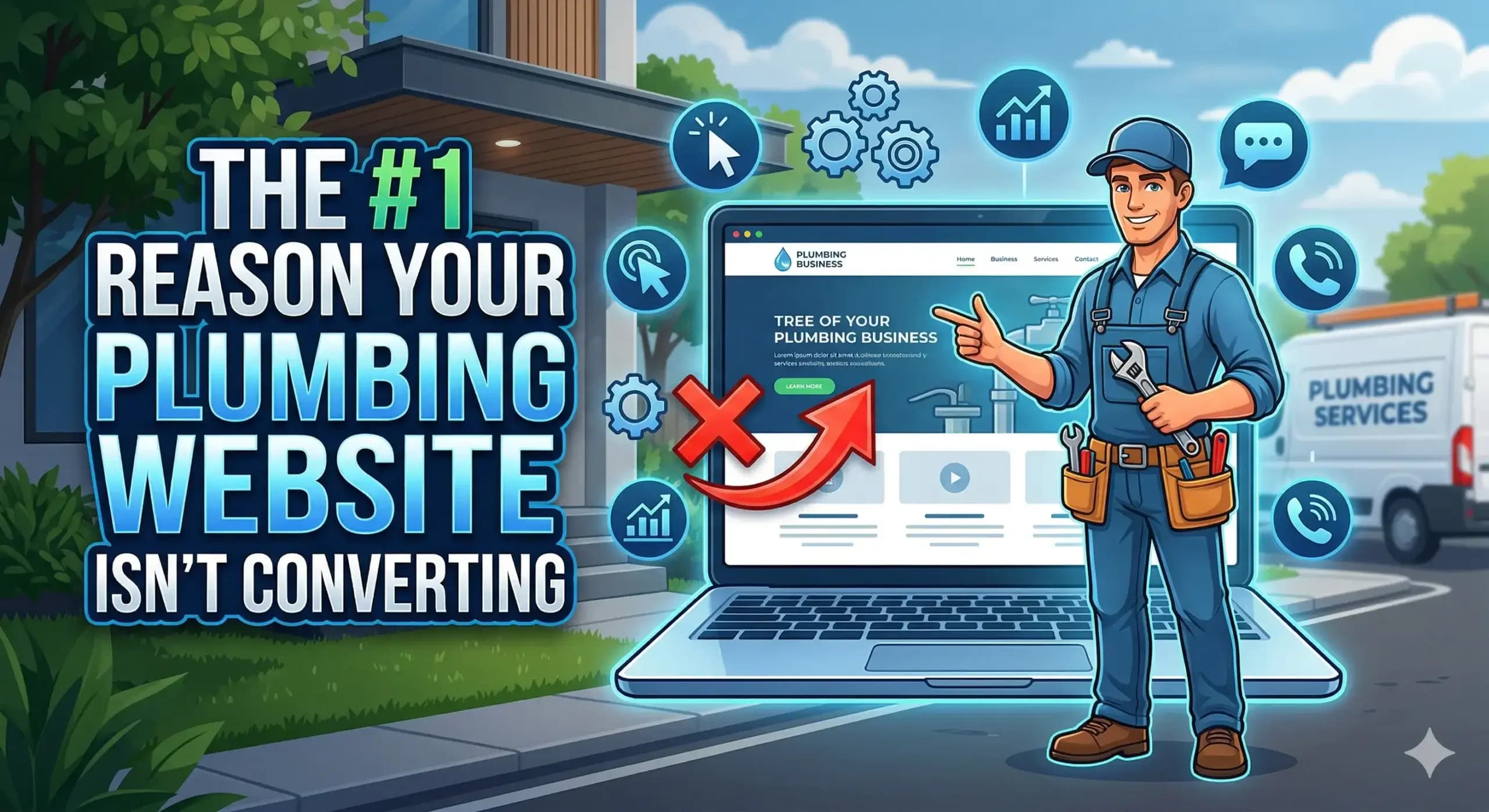
The #1 Reason Your Plumbing Website Isn’t Converting
You have a website. Maybe you paid someone decent money to build it a few years back. It looks fine. But the phone isn’t ringing the way it should — and you’re not sure why.
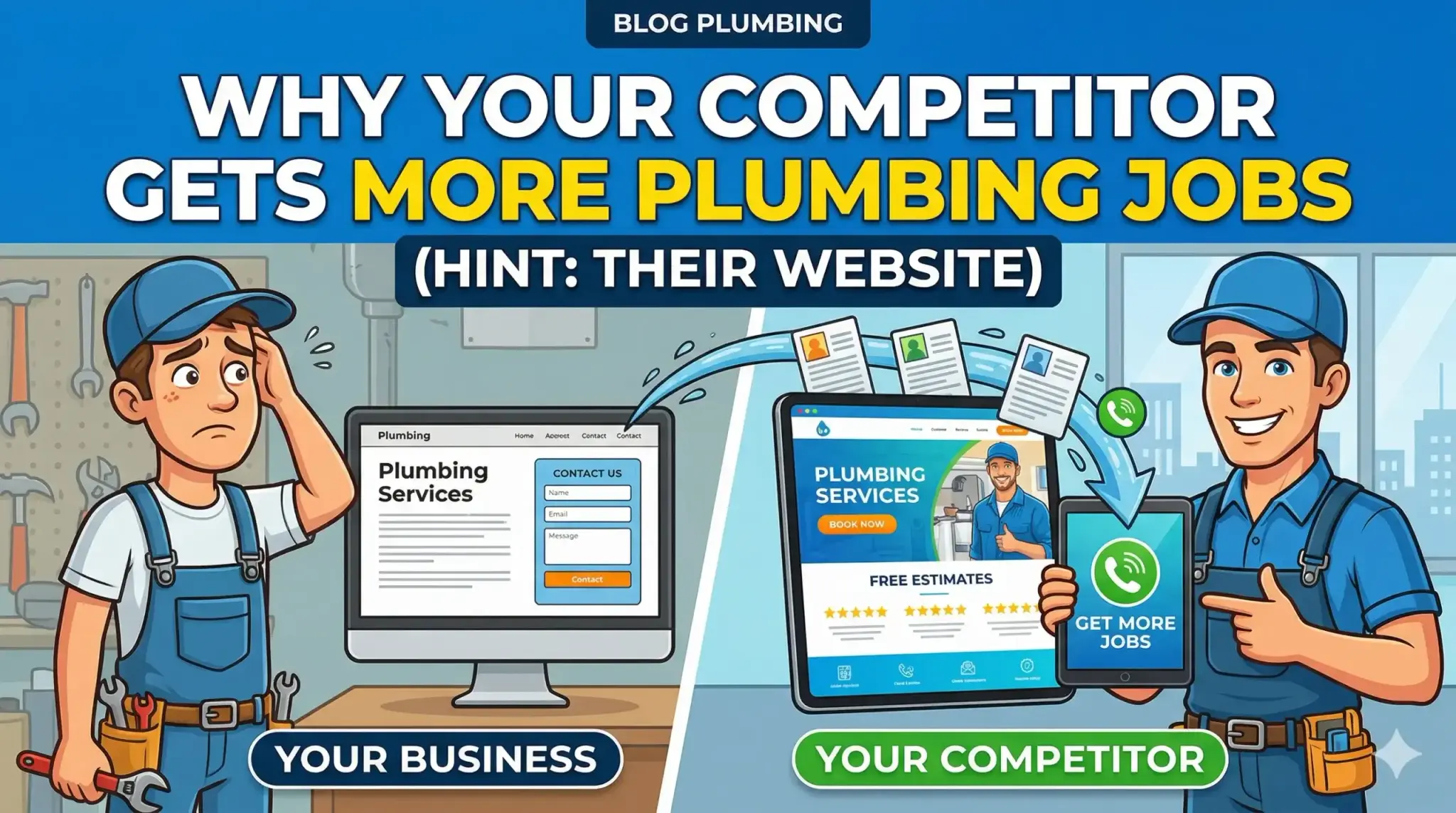
Most plumbing business owners assume the problem is traffic. “I just need more people to find me.” So they chase SEO tips or run a few Google ads, get a bump in visitors, and… still not enough calls. The traffic wasn’t the problem. The website was.
Here’s the truth: most plumbing websites are built to look good in a portfolio screenshot — not to convert a stressed homeowner who’s standing in two inches of water at 9 PM on a Tuesday. Those are two very different design goals, and the gap between them is where your leads are disappearing.
By the end of this post, you’ll know exactly what’s killing your conversions and what a plumbing website built to actually generate calls looks like.
Your Website Loads Slowly — And Visitors Are Gone Before They See Your Number
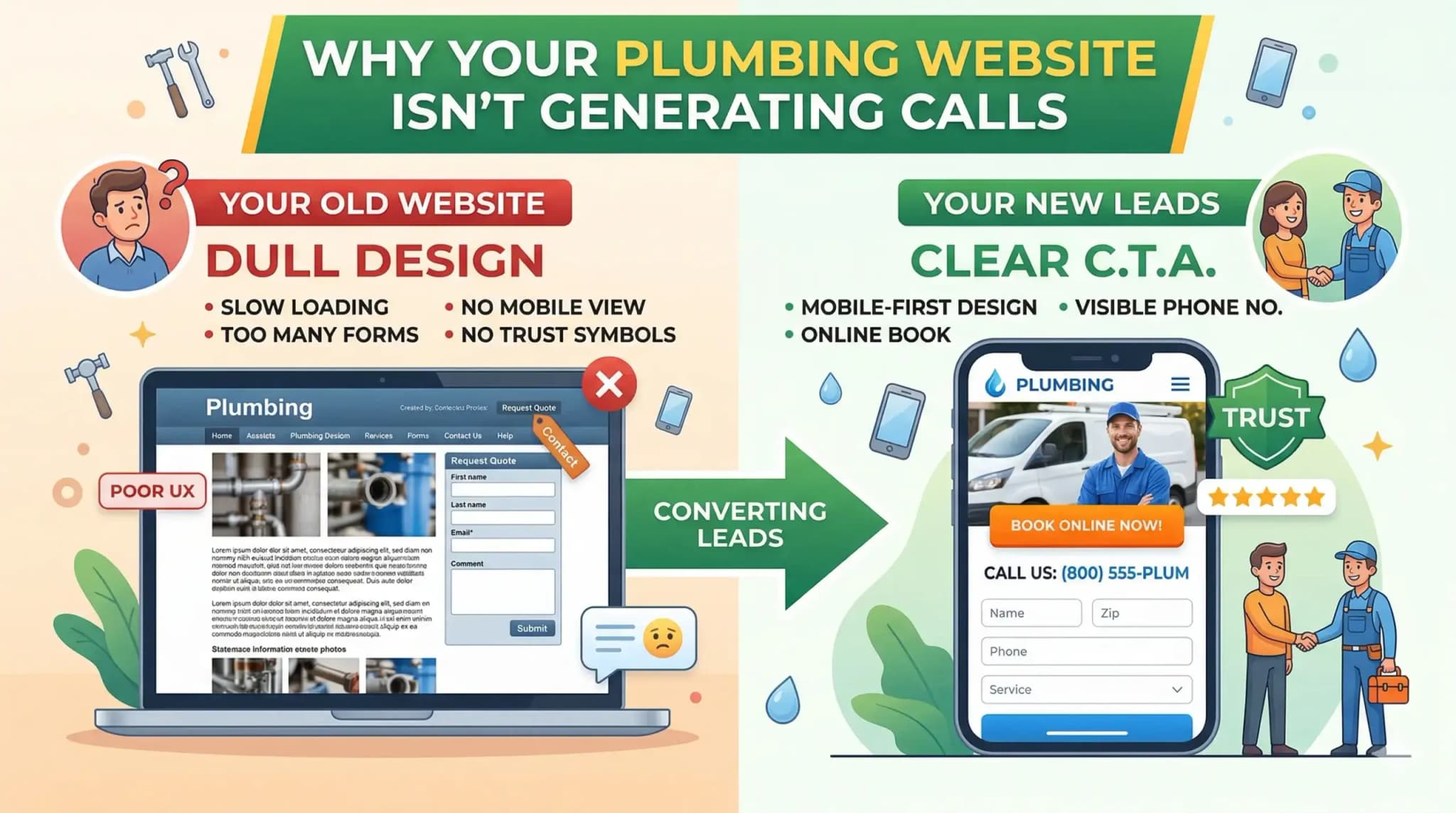
Picture this: a homeowner Googles “emergency plumber near me.” Your site comes up. They click it. They wait. And wait. Three seconds pass, nothing loads — so they hit the back button and call your competitor instead.
That’s not a hypothetical. It’s happening to plumbing websites across the country every single day.
Most visitors expect a page to load in under 2–3 seconds. When it doesn’t, they leave — and they don’t come back. A slow site doesn’t just lose one visitor. It bleeds leads constantly, invisibly, without a single indication in your call log.
The technical reason is usually oversized images, cheap hosting, or a bloated website theme that was never optimized for speed. None of that is obvious from looking at the site — but it’s costing you real money.
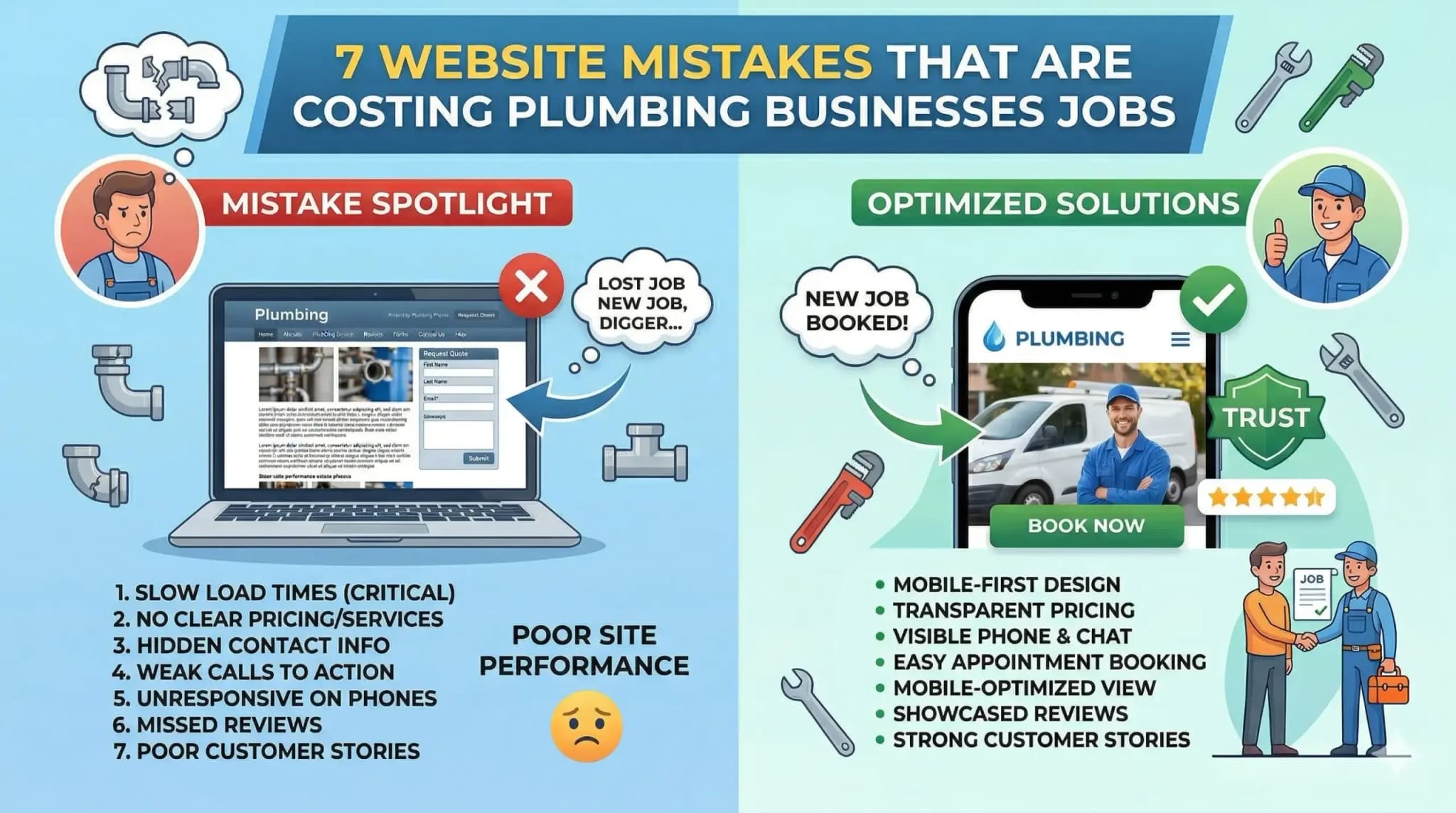
What Digital Trace does instead: Every website we build for plumbing companies is engineered to load fast on mobile and desktop — because we know that your customer is usually on their phone, frustrated, and needs help right now. A half-second faster load time isn’t a tech upgrade. It’s more calls.
Your Call-to-Action Is Buried — Or Doesn’t Exist At All
Think of your website like a job site walkthrough. If a homeowner walks in and can’t immediately find the foreman — the person in charge, the one who can help them — they’re going to feel lost and leave. Your website works the same way. If someone lands on your homepage and has to scroll, search, or figure out how to contact you, most of them won’t bother.
The average plumbing customer visits your site with one goal: figure out if you can help them and how to reach you. If that answer isn’t obvious in the first 5 seconds, you’ve already lost them.
Here’s what’s typically missing or broken:
- No phone number visible in the top header on mobile
- CTA buttons buried below the fold (below the first screen they see)
- Generic buttons that say “Learn More” instead of “Call Now” or “Get a Free Quote”
- No sense of urgency for emergency services
The fix: Your phone number should be front and center on every single page — clickable on mobile. Your primary CTA button needs to be above the fold, and it needs to tell people exactly what happens when they click it.
💡 Pro Tip: Your Homepage Headline Is Probably About You — Not Your Customer
Most plumbing websites open with something like: “Smith Plumbing — Serving the Greater Metro Area Since 1998.”
That’s not a headline. That’s a business card. Your visitor doesn’t care about your founding date. They care about one thing: Can you fix my problem, and can you do it fast?
Try leading with something like: “Emergency Plumbing Repairs — We Answer 24/7” or “Burst Pipe? We’ll Be There in 60 Minutes.” That’s what converts. The technical term is “benefit-led copy,” but the plain English version is: lead with what’s in it for them, not what’s in it for you. Change your headline, and you may see more calls within days — no redesign required.
Google Doesn’t Know Enough About Your Business to Show It Confidently
You might be showing up in search results — but not in the right ones, and not with the information that makes someone choose you. When Google isn’t sure what your business does, who it serves, or where it operates, it hedges. That means lower rankings, no map pack placement, and no star ratings showing in search results.
The reason this happens: your site is missing structured data — a simple layer of code that tells Google exactly what your business is, what services you offer, where you operate, and how to reach you. Think of it like filling out your contractor’s license paperwork. Without it, Google treats you like an unlicensed operator.
Fixing this doesn’t require a full redesign. But it does require someone who knows what they’re doing, because mistakes in that code can actively hurt your rankings.
Your Website Doesn’t Build Trust Fast Enough
A homeowner letting a stranger into their house to work on their pipes is a big deal. They’re not just looking for the cheapest option — they’re looking for someone they can trust, quickly. Your website has about 5 seconds to establish that trust.
Most plumbing websites fail here because they:
- Have no real photos (stock images of wrenches don’t build trust)
- Have no reviews visible on the homepage
- Don’t clearly list their license number, service area, or years in business
- Have no clear “About” section with a real face and story
When someone can’t tell within seconds who you are and why you’re trustworthy, they leave. Not because they don’t want to hire you — because your website didn’t give them a reason to stay.
What works: Real photos of your team on the job. A Google review widget showing recent 5-star ratings. A simple trust bar with your license number, years in business, and response time guarantee. These don’t take long to add — and they can dramatically change how visitors respond.
A Real-World Example: What Happens When You Fix the Right Things
Before: A residential plumbing company in the Midwest had a website built a few years ago. It looked clean. They were getting around 400 visitors a month from Google. But they averaged only 3–5 calls a week from the site — and most of those were price shoppers, not ready-to-book customers.
Their problems were textbook: a 6-second load time on mobile, no phone number visible without scrolling, a homepage headline that led with their company name, and zero reviews on the site.
After: The site was rebuilt with speed as the top priority — load time dropped to under 2 seconds. The phone number was pinned to the top of every page. The homepage headline was rewritten to speak directly to emergency situations. A review feed pulled live from Google, showing 47 reviews averaging 4.8 stars.
Result: Within 90 days, inbound calls from the website went from 3–5 per week to 14–18 per week. Booked jobs increased by over 60%. The owner described it as “the best thing I’ve done for the business in five years.”
None of those changes were magic. They were just done right.
Not sure if your plumbing website has these issues? Get a free website audit — no obligation, just a clear picture of what’s costing you leads.
Your Path to More Calls: 5 Steps That Actually Move the Needle
You don’t need to overhaul everything at once. Start here:
Step 1: Test your site speed. Type your URL into Google’s PageSpeed Insights (free tool). If your mobile score is below 70, that’s priority one.
Step 2: Check your phone number on mobile. Pull up your homepage on your phone. Is your number visible without scrolling? Is it clickable? If not, fix that this week.
Step 3: Rewrite your homepage headline. Lead with what you do and who you help — not your company name. Think: “Fast, Reliable Plumbing Repairs — Same-Day Service Available.”
Step 4: Add real photos and reviews. If your site uses stock images, swap at least the hero image for a real photo of your team or your work. Add a Google reviews widget if you don’t have one.
Step 5: Get a professional audit. Some issues — like missing structured data, broken mobile layouts, or technical SEO gaps — aren’t visible to the naked eye. A proper audit finds them fast.
Frequently Asked Questions
Why am I not getting calls even though people are visiting my site?
Traffic without calls almost always points to a conversion problem, not a visibility problem. Your visitors are finding you — but something on the site is stopping them from picking up the phone. The most common culprits are slow load speed, a buried phone number, and a homepage that doesn’t clearly explain what you do and who you serve.
How do I know if my plumbing website is actually working for me?
If you can’t answer “how many calls came from my website last month,” your site isn’t being tracked properly. Every plumbing website should have call tracking, Google Analytics, and Google Search Console set up — so you know exactly what’s working and what isn’t. Without that data, you’re flying blind.
What makes a plumbing website different from a regular business website?
Plumbing customers are often in a stressful, urgent situation when they search. They’re not browsing — they’re deciding in seconds. A plumbing website needs to communicate trust, urgency, and availability faster than almost any other type of business site. Design decisions that work fine for a retail store or consultant will quietly kill conversions for a plumber.
Do I really need a fast website if my customers are local?
Yes — especially because they’re local. Local customers are almost always searching on their phone, often in a rush. Google also uses page speed as a ranking factor, meaning a slow site doesn’t just lose visitors who find you — it stops you from ranking in the first place. Speed isn’t optional; it’s the baseline.
How long does it take to see results after improving my website?
For on-site changes like speed, CTA placement, and trust signals, you can see a difference in call volume within 30–60 days. SEO-related improvements typically take 3–6 months to reflect in rankings. The clients who see results fastest are the ones who fix the conversion problems and the technical problems at the same time — not one or the other.
How do I know what’s actually wrong with my site without guessing?
That’s exactly what a free audit tells you. Book a free website audit here — we’ll look at your site’s speed, mobile experience, conversion setup, and local SEO, and give you a plain-English breakdown of what’s costing you leads and what to fix first. No technical jargon, no pressure.
Ready to Find Out What Your Website Is Costing You?
Every week your plumbing website stays broken is another week of calls going to your competitors — and you’ll never see those on your phone log. They’re just gone.
The good news: most of these problems are fixable. And once they’re fixed, your site starts working for you around the clock — taking calls while you’re on a job, booking leads while you’re asleep.
Get your free plumbing website audit →
There’s no cost, no obligation, and no tech speak. Just a clear, honest look at what’s working, what isn’t, and what to do about it — tailored to your plumbing business.