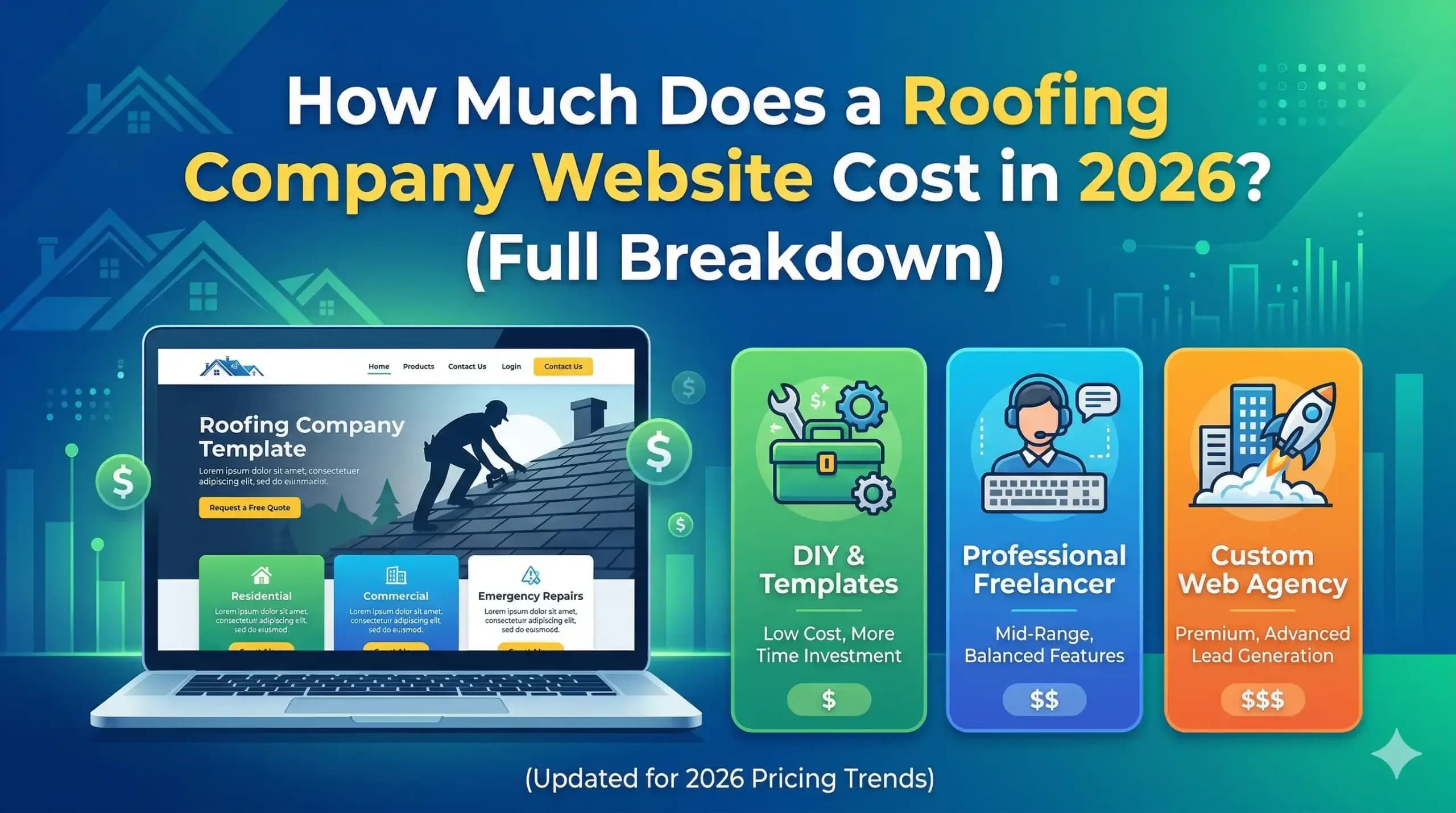
How Much Does a Roofing Company Website Cost in 2026? (Full Breakdown)
You spent real money on a website. Maybe a few thousand dollars a couple of years ago, maybe more recently. And yet — the phone isn’t ringing the way it should. You check your site, it looks fine to you, so you assume the problem is somewhere else.
Here’s the truth most roofing business owners don’t hear until it’s costing them: a website that looks decent is not the same as a website that gets you jobs. For a roofing company, where the average ticket runs $8,000 to $25,000, even one missed lead per month adds up fast.
This guide breaks down exactly what a roofing company website costs in 2026 — not just in dollars, but in what you get (or don’t get) for that money. By the end, you’ll know what separates a site that sits there from a site that actually brings in work.
Why Most Roofing Websites Cost Money Twice
The first cost is obvious — what you pay to build it. The second cost is invisible — the leads that walk away because the site wasn’t built to convert them.
Think of it like a truck wrap. You pay once for the vinyl. But if the phone number is too small to read from the road, or the design is cluttered and nobody knows what service you offer in three seconds, you’ve paid for something that isn’t working. A roofing website is the same: what it costs to build matters a lot less than whether it’s built to do the job.
Most roofing owners end up with a site that was cheap to launch and expensive to keep — because every month it’s online without converting visitors is a month of lost estimates.
What You’re Actually Paying For: The Real Cost Breakdown
Here’s an honest look at what roofing website projects cost in 2026, and more importantly, what you get at each level.
Budget Tier: $500 – $2,500
At this range, you’re typically getting a templated build — a generic design that wasn’t made for the roofing industry. It might have your logo and some photos, but it won’t be structured to answer the specific questions a homeowner in your market types into Google before they call someone.
These sites often load slowly on mobile (and most of your customers find you on their phones, not a desktop). They’re missing the trust signals — licensing info, local service areas, photo galleries of real work — that make a homeowner pick up the phone instead of hitting the back button.
The hidden cost: If your site converts 1 in 100 visitors instead of 3 in 100, and you get 200 visits a month, that’s 4 estimates per month you’re losing before you even bid.
Mid-Range: $2,500 – $6,000
This is where most roofing companies land after their first bad experience. You get a more custom design, usually from a generalist web designer or small agency. The site looks better. It might even have some SEO basics in place.
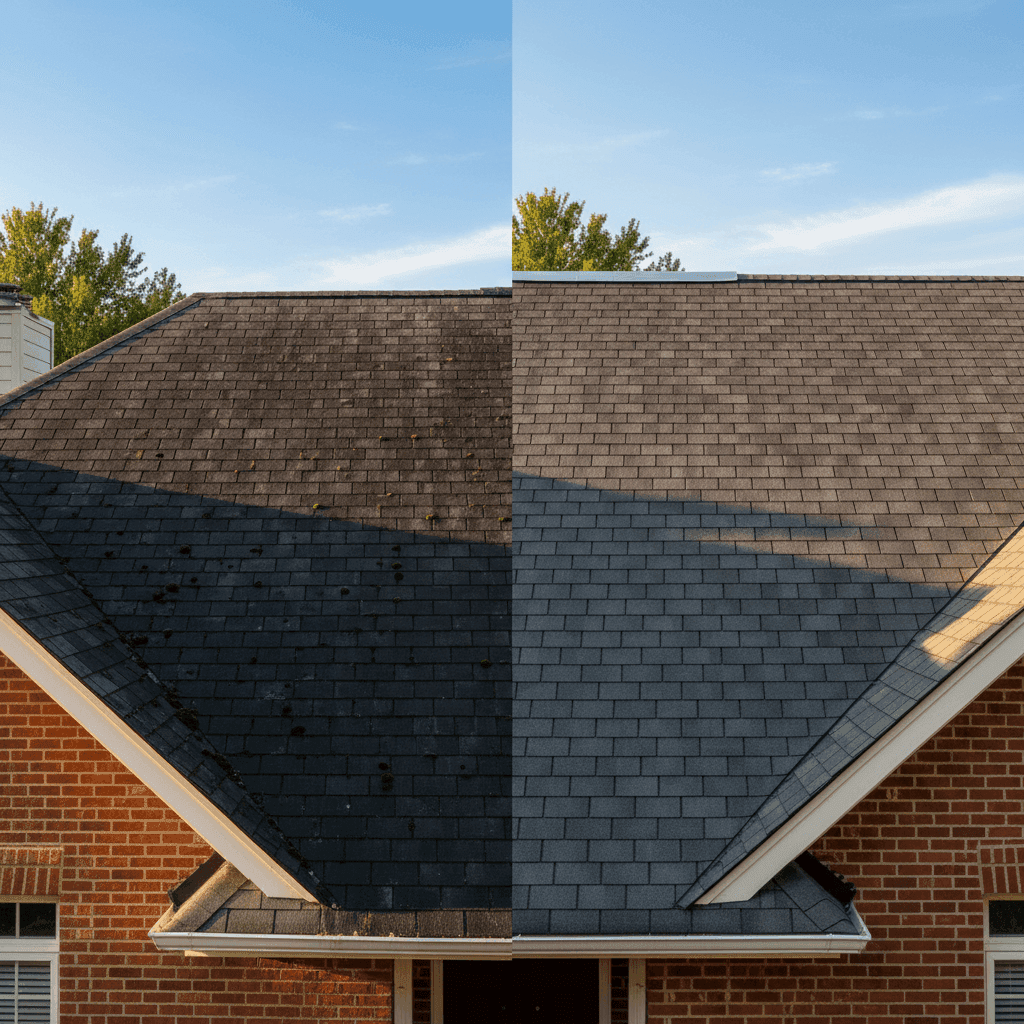
The gap here is industry specificity. A generalist builds websites. A roofing web design company builds websites that understand your buyer’s decision process — storm damage urgency, insurance claim guidance, local trust signals, before/after galleries, and service-area pages that show up in the towns where you actually work.
Professional Tier: $6,000 – $15,000+
At this level, you’re investing in a site built around your actual business goals: more booked estimates, more phone calls, more form submissions. This includes custom design, conversion strategy, technical performance, and local SEO structure baked in from day one.
For most roofing companies doing $500K or more in annual revenue, this range represents a fraction of one job — and a site built right can generate that return in the first month.
What Makes a Roofing Website Actually Work (vs. Just Look Good)
A roofing website has a specific job: turn a curious homeowner into a booked estimate. Every element should serve that goal. Most don’t.
Speed — Because Homeowners Don’t Wait
If your site takes more than three seconds to load on a phone, the majority of visitors leave before they ever see your phone number. Not because they weren’t interested — because they ran out of patience. This is especially brutal after a storm, when a homeowner is trying to find someone fast.
A professionally built roofing website loads in under two seconds on mobile. That’s not a luxury — it’s the baseline for competing in your market today.
Local Signals — Because Google Has to Know Where You Work
If you serve ten different towns but your website only mentions your business name and a general phone number, Google doesn’t have enough information to show your site when someone searches “roofing contractor near me” in those towns. There’s a straightforward fix: properly structured service-area pages and behind-the-scenes signals that tell Google exactly where you operate and what you do.
Roofing companies who add these see measurable increases in calls from neighborhoods they’ve been servicing for years — just never ranking for.
Trust — Because Nobody Calls a Roofer They Don’t Trust
Homeowners handing over $10,000–$20,000 for a new roof need to believe you’re the right company. Your website either builds that confidence quickly or it doesn’t. The elements that matter most:
- Real photos of your team and completed jobs (not stock images)
- Visible license numbers and insurance info
- Genuine customer reviews, not just a Google rating badge
- A clear, local phone number above the fold — not buried at the bottom
💡 Pro Tip: Your “Contact” Page Is Probably Killing Conversions
Most roofing websites bury their contact form on a separate page and leave it at that. But your visitor is often a homeowner who’s stressed about damage, comparing three roofers at once, and deciding in under a minute.
The fix: put a click-to-call button and a short, friction-free form (“Get a Free Estimate”) on every page — especially your homepage and service pages. When someone’s already decided they want a quote, don’t make them hunt for how to ask for one. This single change has helped roofing companies see significant jumps in inbound calls without changing anything else about their site.
Real-World Example: How One Roofing Company Turned Their Site Around
Consider a roofing company operating in a mid-sized Midwest market — 12 years in business, strong reputation, decent word-of-mouth. Their website had been up for four years and looked fine on a desktop. On mobile, it was a different story: slow to load, no click-to-call, and a service page that listed everything they did in one long paragraph.
They were getting around 400 monthly visitors and booking maybe 6–8 estimates from the web each month.
After a full rebuild focused on roofing-specific conversion structure — fast mobile loading, service-area pages for 14 zip codes, a visible call button on every page, before/after galleries, and proper local signals — their inbound web leads climbed to 22–28 per month within 90 days. Same market, same reputation, same ad spend. The website finally did the job it was supposed to do.
Not sure if your roofing website has these issues? Get a free website audit — no obligation, just a clear picture of what’s costing you leads.
Your Path to More Leads: What to Do Next
You don’t need to overhaul everything at once. Here’s where to start:
- Test your site on your phone — load it fresh on mobile data (not WiFi). If it’s slow or the phone number isn’t immediately visible, that’s costing you calls right now.
- Check your service pages — do you have a separate page for each service you offer (roof replacement, storm damage, gutters, commercial roofing)? If everything is on one page, Google can’t send the right visitors to the right content.
- Count your trust signals — open your homepage and count the number of things that tell a stranger you’re a legitimate, local, experienced company. If you can count fewer than five, there’s work to do.
- Review your local footprint — search “[your service] + [town you work in]” and see where you appear. If competitors show up and you don’t, your site isn’t sending the right local signals.
- Talk to a roofing web design specialist — not a generalist agency. A team that builds websites specifically for roofing businesses will know what converts in your industry and what doesn’t.
FAQ: Questions Roofing Owners Actually Ask Before Hiring a Web Agency
Why am I not getting calls from my website even though I’m getting traffic?
Traffic and conversions are two different things. If visitors are landing on your site and not calling, the site isn’t giving them a fast, clear reason to reach out — no prominent phone number, no compelling reason to choose you over the next roofer, or a design that feels untrustworthy on mobile. Traffic without conversion is just a number.
How do I know if my roofing website is actually working?
Look at one metric: how many calls or form submissions did you receive last month that came from your website? If you don’t know the answer, your site isn’t set up to track it — and that’s the first problem to fix. A properly built site tells you exactly where every lead came from.
How long does it take to see results from a new website?
For conversion improvements — more calls, more form fills — many roofing companies see results within the first 30–60 days, because the changes happen immediately. For search ranking improvements, expect 60–120 days for meaningful movement, depending on your market and how competitive your area is.
What makes a roofing website different from a regular business website?
Roofing buyers are often anxious (they’ve just had storm damage), making a large financial decision, and comparing multiple options simultaneously. A roofing website needs to build trust fast, answer insurance and pricing questions before the visitor asks them, and make requesting an estimate as easy as tapping a button. A generic business website template doesn’t account for any of that.
Do I really need a fast website if my customers are mostly local?
Especially if your customers are local. Most people searching for a roofer after a storm or noticing damage do it on their phone while standing in their driveway. If your site takes five seconds to load, they’ve already moved on to the next result. Speed matters more for mobile-first, local searches than almost any other type.
How do I know if a web agency actually understands roofing — or is just saying they do?
Ask them: what’s on a roofing service page that converts, versus one that doesn’t? What local SEO signals matter for a contractor serving multiple zip codes? If they can’t answer specifically, they’re a generalist. Get a free website audit from Digital Trace and see what a team that knows roofing actually looks at.
Ready to See What Your Website Is Really Costing You?
Most roofing websites are losing leads every single day — not because the owner isn’t good at their trade, but because the site was never built to do the job.
A free website audit from Digital Trace gives you a clear picture of exactly where your site is falling short: what’s slowing it down, what’s driving visitors away, and what’s stopping Google from sending you more of the customers who are already searching for what you do.
There’s no pitch, no contract, no obligation — just a direct, honest look at your site from a team that builds websites specifically for roofing companies.