How Much Does Construction Website Design Cost in 2026? (Honest Breakdown)
You’ve probably Googled your own company name at some point and felt that quiet frustration — a competitor you know does worse work than you shows up at the top, and your site is either buried or looks like it was built in 2014. You’re getting referrals, but the phone isn’t ringing from people who don’t already know you. And when someone does visit your site, they leave without calling.
That’s not a coincidence. That’s a website doing its job poorly.
This guide breaks down exactly what web design for a construction company costs in 2026, why the price varies so much, and — more importantly — what separates a site that generates leads from one that just sits there looking like a digital brochure.
Why Most Construction Websites Don’t Bring in Work
Think of your website like a job site foreman. If he doesn’t know the plan, can’t communicate with the crew, and gives visitors no direction — nothing gets done. That’s most construction websites in a nutshell.
The problem isn’t always that the site looks bad. It’s that it’s not built to convert. No clear service areas, no strong call to action above the fold, no reason for a homeowner or project manager to pick up the phone over the next result they see.
Here’s what that costs you in real terms:
- A visitor lands on your site from Google
- They don’t immediately see what you do, where you work, or how to contact you
- They hit the back button and call your competitor instead
That’s a lost lead you never knew you had. It happens dozens of times a month on sites that look “fine.”
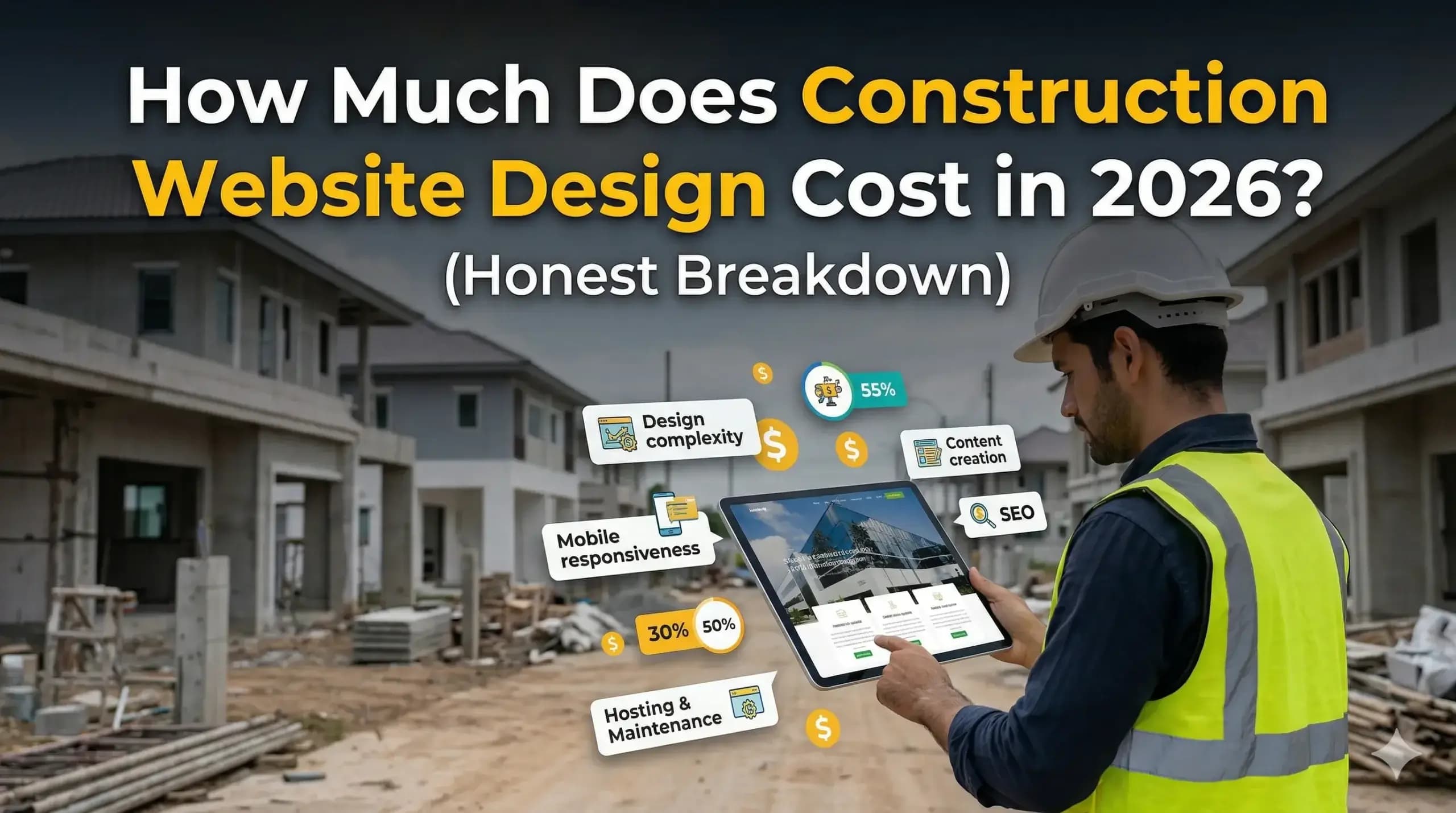
What Construction Website Design Actually Costs in 2026
Prices range widely — and for good reason. Here’s an honest breakdown by tier.
Tier 1: Budget Options ($500–$2,500)
This is the territory of template builders, Fiverr freelancers, and “my nephew does websites.” You’ll get something that technically exists online, but it won’t be built for your industry, your market, or lead generation.
Common issues at this tier:
- No local SEO foundation (Google won’t know where you operate)
- Slow load times on mobile (where most of your visitors are coming from)
- Generic copy that could apply to any contractor in the country
- No conversion strategy — just pages of information with no clear next step
If you’re a solo operator just starting out, this might bridge a gap. For any established construction business trying to grow, it’s usually money spent twice.
Tier 2: Mid-Range ($3,000–$8,000)
This is where you start getting a site built with some strategy behind it. A competent agency or experienced freelancer will spend time understanding your services, service area, and ideal clients.
What you should expect at this level:
- Custom design (not a recycled template)
- Mobile-first build with fast load times
- Basic on-page SEO — title tags, meta descriptions, heading structure
- A clear path for visitors to contact you
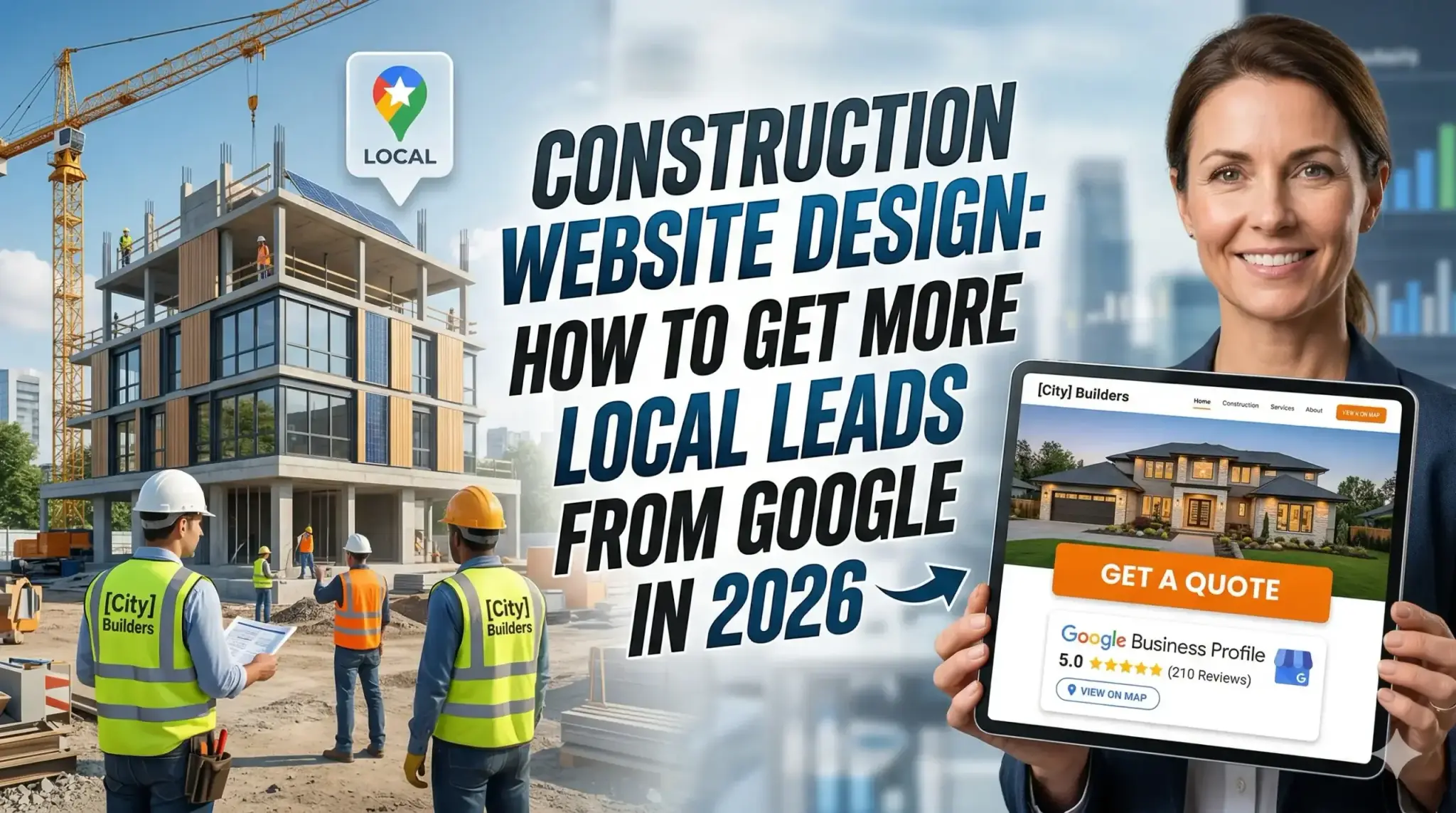
- Integration with Google Business Profile
This tier works well for small-to-mid-sized construction firms that need a professional presence and a solid local SEO foundation.
Tier 3: Performance-Focused ($8,000–$20,000+)
This is where the ROI conversation shifts. A high-performance construction website design at this level is built to rank, convert, and grow with your business.
What separates this tier:
- In-depth competitor and keyword research specific to your market
- Service-area pages built to rank in every city or county you work in
- Conversion-optimized layouts (the right message in the right place at the right time)
- Page speed engineered to pass Google’s Core Web Vitals
- Schema markup so Google understands exactly what your business does and shows it confidently in search results
- Ongoing optimization, not a one-time build and abandon
For a construction company doing $1M+ in revenue, a site in this tier often pays for itself within the first few months of ranking.
The Hidden Cost Nobody Talks About: A Bad Website
The most expensive website isn’t the one that costs $15,000. It’s the $2,000 site that’s been quietly losing you leads for three years.
Do the math: if your average job is worth $8,000 and your site is costing you just two leads per month, that’s $192,000 in missed revenue every year. The website “saved” you $13,000 upfront and cost you six figures in the background.
A slow, unclear, or invisible website isn’t free — it’s just costing you in a way that doesn’t show up on an invoice.
💡 Pro Tip: Your Mobile Site Is Probably Your Biggest Problem
Most construction business owners check their website on a desktop. Most of their potential customers visit on a phone. These are two completely different experiences — and they don’t always match.
A site that looks great on a laptop can be nearly unusable on a phone: tiny text, broken layouts, buttons that are impossible to tap, and a phone number that isn’t clickable. If a visitor has to pinch and zoom to find your number, they won’t call you — they’ll call someone else.
The fix isn’t complicated, but it requires your site to be built mobile-first, not mobile-as-an-afterthought. Ask any agency you’re evaluating to show you a live construction site they’ve built on a phone before you sign anything.
Before & After: What a Real Construction Website Overhaul Looks Like
The situation: A mid-sized general contractor in the Midwest — residential renovations and light commercial builds, 12 employees, solid reputation locally but almost no online presence. Their site was five years old, built by a local print shop that had “started doing websites.” It loaded in over 7 seconds on mobile, had no service-area pages, and buried the contact form on a third-level menu page.
The problem in plain terms: They were ranking on page three for searches in their own city. Competitors who did smaller, lower-quality work were showing up first. The owner knew something was wrong but couldn’t pinpoint it.
What changed: A full rebuild — new architecture, service and location-specific pages, a contact form above the fold on every page, Core Web Vitals passing green, and a Google Business Profile fully optimized and connected.
The result: Within 90 days, they were ranking in the top three for their primary service terms in four neighboring cities. Monthly contact form submissions went from an average of 2–3 to 18–22. One of those leads turned into a $340,000 commercial contract.
The site cost them $11,500. The ROI in the first quarter alone made the conversation irrelevant.
Not sure if your construction website has these issues? Get a free website audit — no obligation, just a clear picture of what’s costing you leads right now.
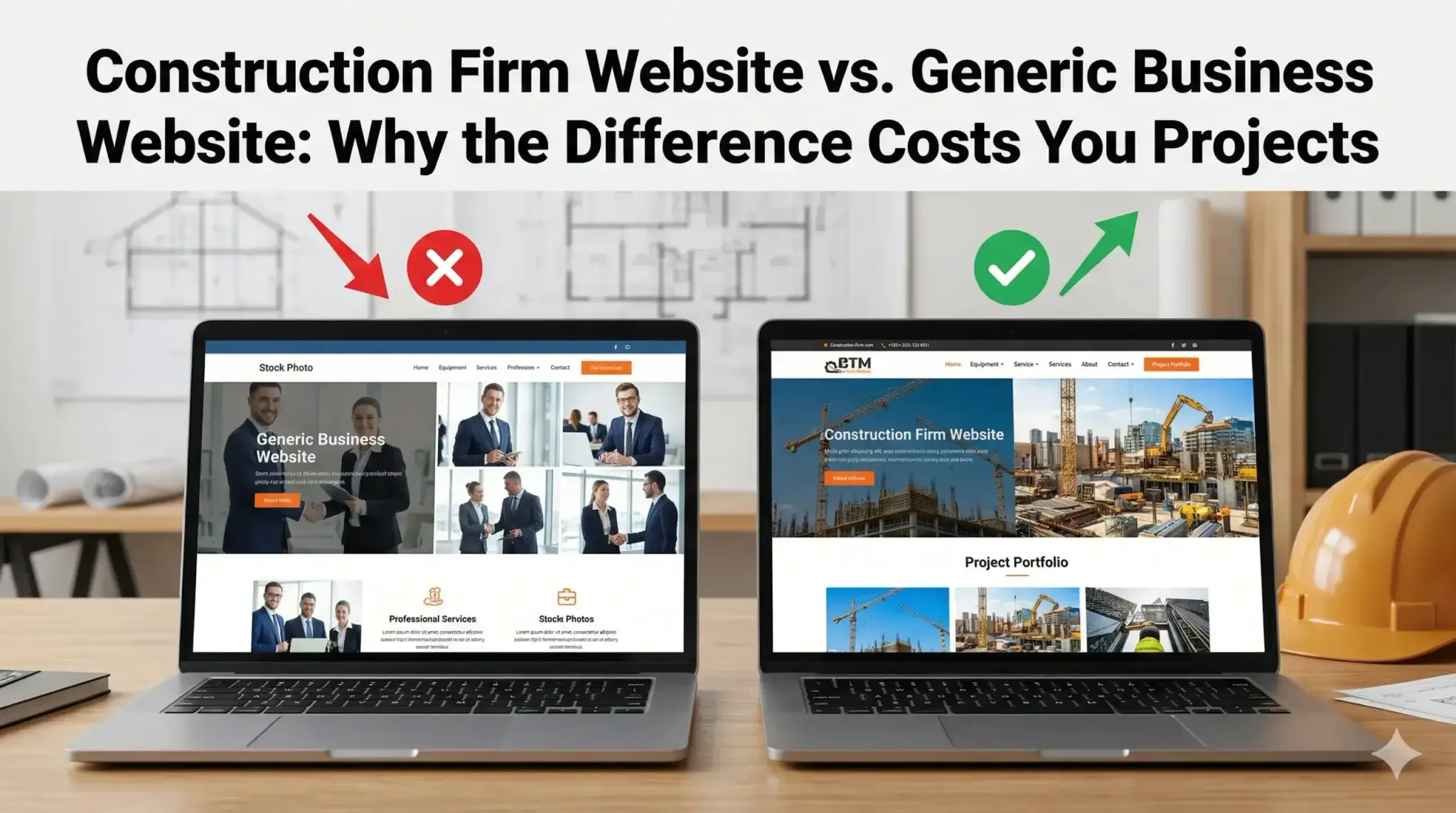
What Makes a Construction Website Different From a Regular Business Website
A plumber and a general contractor both need websites. But what ranks and converts for a plumber won’t necessarily work for a construction firm — and a generic agency that doesn’t understand the difference will build you something in between.
Construction projects are high-ticket and high-consideration. A homeowner doesn’t hire a contractor the same way they order pizza. They research, compare, look at photos, read reviews, and evaluate trust signals over days or weeks. Your website needs to support that decision-making process at every stage.
That means:
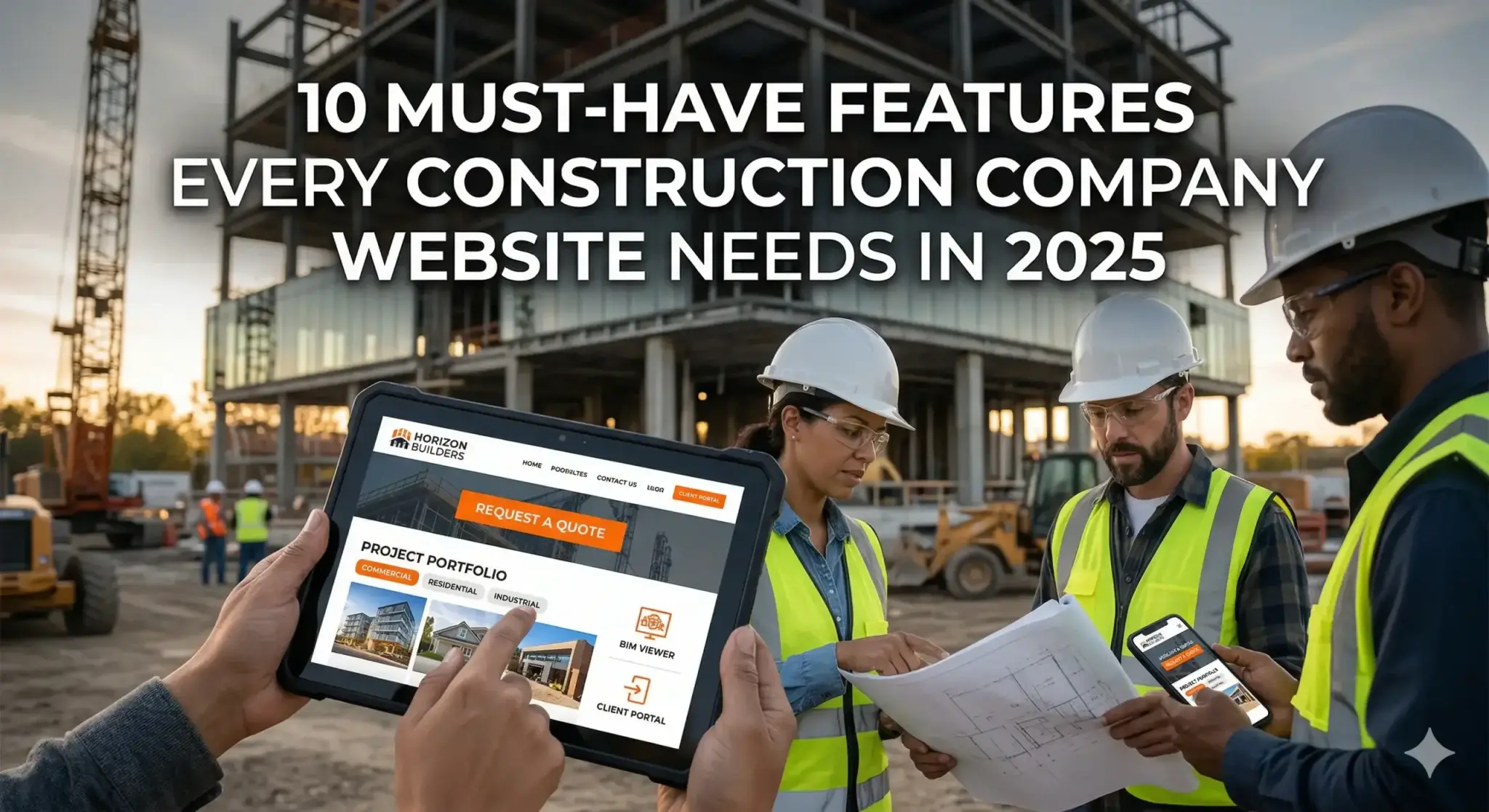
- Portfolio photography matters more — project galleries with real photos (not stock images) build credibility in a way no amount of copy can match
- Licensing and insurance need to be visible — not buried in a footer, but front and center where cautious buyers will look
- Service-specific pages outperform generic “what we do” pages — someone searching “commercial concrete contractor in Denver” needs a page that speaks directly to that, not a general services list
- Testimonials and reviews need to be on-site, not just on Google — syndicated reviews on your own pages help conversion and SEO simultaneously
Websites built for construction businesses account for all of this. A generic template or a generalist agency usually doesn’t.
Your Path to More Leads: 5 Steps to Take Right Now
You don’t need to overhaul everything at once. Here’s a practical sequence that moves the needle:
- Test your site on your phone — pull it up on mobile right now. Can you find your phone number in under five seconds? Can you tap it to call directly? If not, that’s your first fix.
- Google your own services — search “[your service] + [your city]” and see where you land. If you’re not on page one, you’re invisible to most of your potential clients.
- Check your load speed — go to PageSpeed Insights (free tool from Google) and run your URL. Anything under 50 on mobile is hurting you. Anything under 30 is actively costing you leads.
- Count your contact paths — how many ways can someone reach you from your homepage? Phone, form, and chat are the minimum. If your only contact option is a “Contact Us” page three clicks deep, you’re making it too hard.
- Audit your competitors — visit the top three sites ranking above you. What are they doing that you’re not? This is usually the fastest way to identify the gaps.
Once you know what’s broken, fixing it gets a lot simpler.
FAQ: What Construction Business Owners Actually Ask Before Hiring a Web Agency
Why am I not getting calls from my website?
The most common reasons are that your site doesn’t rank (so people aren’t finding it), loads too slowly on mobile (so people leave before they see your number), or doesn’t give visitors a clear reason to call. Usually it’s a combination of all three. A proper audit will tell you exactly which one is doing the most damage.
How do I know if my construction website is actually working?
If you can’t answer “how many leads did my website generate last month?” — it’s not working hard enough. A functioning lead-generation site has Google Analytics or equivalent tracking set up, and you should be able to see contact form submissions, phone call clicks, and traffic sources at a glance. If none of that is in place, you’re flying blind.
How long does it take to see results from a new website?
For a properly built site with solid SEO, you can typically see meaningful movement in rankings within 60–90 days. Full competitive positioning in a mid-sized market usually takes 4–6 months. That said, conversion improvements — more calls from the same traffic — can happen immediately after launch if the site is built right.
What makes a construction website different from a regular business website?
Construction clients take longer to decide, spend more money, and rely heavily on trust signals like portfolio work, licensing, reviews, and project photos. A construction website needs to support that research process — not just look good. It also needs location-specific pages to rank in the cities and counties where you actually work, which most generic web designers overlook entirely.
Do I really need a fast website if my customers are local?
Yes — especially because your customers are local. Local Google searches happen almost entirely on mobile devices, and Google’s ranking algorithm heavily weights page speed and mobile usability. A slow site doesn’t just lose visitors; it ranks lower in the first place, meaning fewer people find you at all. Speed isn’t a technical vanity metric — it’s a direct driver of how many calls you get.
How do I know if I need a new website or just some fixes?
Sometimes a full rebuild is the right move; sometimes targeted improvements get you 80% of the way there for a fraction of the cost. The only way to know is an honest assessment of your current site’s structure, speed, SEO foundation, and conversion setup. Get a free website audit and you’ll have a clear answer — no guesswork, no sales pressure.
Stop Letting Your Website Cost You Work
If you’ve read this far, you already know something about your current site isn’t working the way it should. The question isn’t whether to fix it — it’s how much longer you’re willing to let it bleed leads in the background.
Digital Trace builds high-performance websites specifically for construction businesses across the US — sites that rank in your market, load fast on every device, and turn visitors into phone calls and form submissions.
Book your free website audit today — we’ll show you exactly what’s costing you leads, what it would take to fix it, and what a realistic improvement looks like for your business. No obligation, no sales pitch, no generic report. Just a clear, honest picture of where you stand.
Your competitors are already investing in this. The only question is whether you move first.