Custom Dental Website vs Template: Which One Grows Your Practice Faster?
You paid someone to build your dental practice a website. It looks fine. Maybe even pretty good. But the phone isn’t ringing the way it should — and deep down, you’re not sure if the site is actually doing anything.
Here’s the thing: most dental websites look like websites. Very few of them work like websites. There’s a difference between a site that exists and a site that actively sends you new patients every week — and that difference almost always comes down to whether it was built for your practice or built from a template someone recycled for a hundred other businesses.
This guide breaks down exactly what separates a custom dental clinic web design from a template — not in tech terms, but in terms of calls, booked appointments, and real revenue. By the end, you’ll know which type of site you actually have, what it’s costing you, and what to do about it.
Your Website Looks Fine — So Why Isn’t the Phone Ringing?
Most dental practice owners assume that if the site is live and looks clean, it’s working. That’s like assuming a dental chair is comfortable because it’s white and has armrests.
A website doesn’t generate leads by existing. It generates leads by loading fast, ranking for the right searches in your area, and converting visitors into booked appointments before they bounce. Template sites almost never do all three.
The three things that kill your lead flow:
- Your site loads too slowly — most visitors leave within 3 seconds, before they even see your phone number
- Google can’t figure out what services you offer or where you’re located, so it shows competitors instead
- The site doesn’t answer the questions patients are actually asking before they book
Templates are designed to look good in a browser preview. They’re not designed around how your patients search, what makes them pick one dentist over another, or how Google decides who shows up first.
The Template Trap: What You Got vs. What You Needed
Template websites feel like a smart, affordable move — until you realize they were built for someone else’s business, not yours.
Think of it this way: a template dental website is like buying a pre-written treatment plan and handing it to every new patient who walks through your door. It covers the basics. But it was never designed for them.
Here’s what template sites typically miss:
- Your actual service mix. Do you do implants, Invisalign, cosmetic work, emergency care? A template has generic “Services” pages that don’t rank for any of those specific searches.
- Your location signals. Google needs specific, consistent signals to show your practice to searchers in your city. Templates rarely have this baked in.
- Your conversion flow. Patients need to see trust signals — before/after photos, doctor bios, reviews — before they’ll call. Templates bury these or skip them entirely.
- Mobile performance. Over 70% of dental searches happen on phones. Most templates weren’t built mobile-first — they were desktop sites squeezed into a smaller screen.
The result? A site that looks passable but quietly loses dozens of potential patients every month to the practice down the road with a faster, better-optimized site.
What Custom Dental Clinic Web Design Actually Does Differently
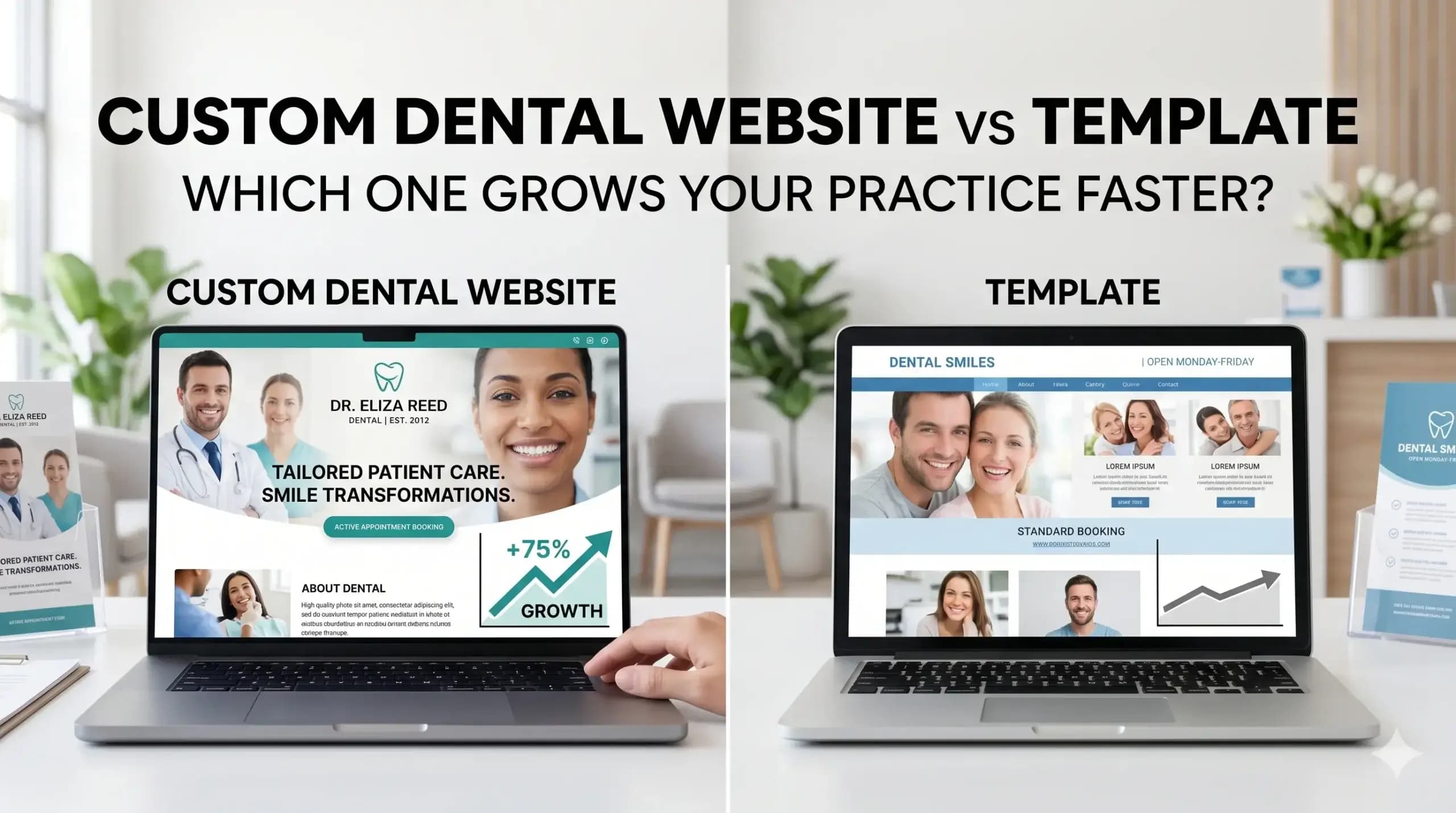
“Custom” doesn’t just mean it looks unique. It means it was engineered — from the ground up — to rank for the searches your patients are making and turn those visitors into calls.
Here’s what that looks like in practice when Digital Trace builds dental clinic websites:
Speed built in from day one. Google measures how fast your site loads and uses it as a ranking factor. More importantly, a slow site costs you patients — someone searching “dentist near me” at 9 PM won’t wait four seconds for your homepage to load. Custom sites are built lean and fast, not loaded down with template bloat.
Local SEO wired into the structure. Every page, heading, image tag, and URL is configured to tell Google exactly what you do and exactly where you do it. Your practice’s name, address, and service area aren’t just on the contact page — they’re signaled throughout the entire site architecture.
Conversion-first layout. The phone number is always visible. Reviews are front and center. Your most-searched services have their own dedicated pages. The path from “I found this site” to “I’m calling to book” is as short as possible.
Content that answers real patient questions. Patients Google things like “does getting a crown hurt” or “how much does Invisalign cost in [city].” A custom site has content built around those searches. A template doesn’t.
💡 Pro Tip
One of the most common mistakes dental practices make: having a single “Services” page that lists everything from cleanings to dental implants in one place. This tanks your Google rankings for every individual service.
Google wants to rank specific, focused pages. If someone searches “dental implants [your city],” a page dedicated entirely to implants — with its own content, FAQ, and location signals — will outrank a generic services list almost every time. The fix: give each major service its own page. It’s one of the highest-ROI changes a dental practice can make to its website.
Real-World Before/After: A Practice That Was Invisible Online
The situation: A family dental practice in suburban Ohio had been open for 11 years. Good reputation in the community, strong word-of-mouth — but their website was a five-year-old template that hadn’t been touched since launch. They were getting maybe 8–10 new patient inquiries per month from their website. Most new patients still came from referrals.
The problem: Their site took over 6 seconds to load on mobile. They had no individual service pages — everything was crammed onto one page. They weren’t appearing in local map results. And their biggest revenue services (implants and cosmetic work) had no dedicated content at all.
What changed: A full custom rebuild — fast-loading, mobile-first, with individual pages for implants, Invisalign, cosmetic dentistry, and emergency dental care. Local SEO was built into every page. A proper Google Business Profile was aligned with the new site structure. Patient reviews were prominently featured.
The result: Within 90 days of launch, web-driven inquiries climbed from 8–10 per month to 35–40. Within six months, the practice had hired a second front desk staff member specifically to handle the increase in new patient calls. Their implant and cosmetic pages now rank on the first page in their metro area for multiple high-value searches.
Not sure if your dental practice website has these issues? Get a free website audit — no obligation, just a clear picture of what’s costing you new patients every month.
Your Path to More Leads: What the Next Steps Actually Look Like
This doesn’t have to be complicated. Here’s how dental practices go from “my website exists” to “my website is my best marketing channel”:
Step 1: Find out what’s broken. Before spending money on anything, get a clear diagnosis. A proper audit will show you how fast your site loads, where you rank (and don’t), what your competitors are doing better, and how many leads you’re likely losing. This is where you start.
Step 2: Prioritize speed and mobile first. If your site takes more than 3 seconds to load on a phone, fix that before anything else. It affects both your Google rankings and how many visitors actually stay to call you.
Step 3: Build dedicated pages for your highest-value services. Implants, cosmetic dentistry, Invisalign, emergency care — each of these deserves its own page targeting the specific searches patients are making. This is where most practices recover the most lost revenue.
Step 4: Align your website with your Google Business Profile. Your name, address, phone number, and service descriptions need to match exactly between your site and your Google listing. Inconsistencies quietly hurt your local rankings.
Step 5: Make sure it’s built to convert, not just look good. Phone number visible at all times. Reviews where visitors can see them immediately. A clear path to book — whether that’s a call, a contact form, or an online booking link. Every page should have a purpose beyond existing.
The dental website design and marketing team at Digital Trace handles all of this — and does it specifically for dental practices, not as a side service.
FAQ: Questions Dental Practice Owners Actually Ask Before Hiring a Web Agency
Why am I not getting calls from my website even though I’m getting some traffic?
Traffic without calls usually means one of two things: the wrong people are finding your site, or the right people are landing on it and leaving before they take action. Either your content isn’t aligned with what local patients are searching, or your site’s layout makes it too hard to find your phone number, see your reviews, or understand why they should choose you over the next result they’re going to click.
How do I know if my dental website is actually working or just sitting there?
A working dental website consistently generates inbound inquiries — calls, form fills, or online booking requests — from people who found you through Google. If you can’t point to a clear number of website-generated leads each month, your site isn’t working. A free audit can tell you exactly what’s happening and where the gaps are.
How long does it take to see results after rebuilding a dental website?
Most practices see meaningful improvement in the first 60–90 days — particularly in site speed, user experience, and how the site looks in local search results. Ranking improvements for competitive terms like “dental implants [city]” typically take 3–6 months of consistent effort. The practices that see the fastest results are the ones that also align their Google Business Profile and local citations at the same time.
What makes a dental website different from a regular business website?
Dental patients make decisions differently. They’re often anxious, price-sensitive, and looking for trust signals before they’ll call a new provider — things like doctor bios with real photos, before/after galleries, patient reviews, and clear explanations of what to expect. A dental website also needs to rank for very specific local searches that generic business sites aren’t built around. The structure, content, and conversion flow all need to be built specifically for how a patient decides to book their first appointment.
Do I really need a fast website if most of my patients are local and found me through word-of-mouth?
Referrals are great — until your referred patient Googles you before calling and your site takes 7 seconds to load, looks outdated, or doesn’t show up at all. Patients validate their decision to call you by looking at your website first. A slow or poorly built site loses a percentage of those warm leads before they ever pick up the phone. And for patients who don’t have a personal referral, you simply don’t exist if you’re not showing up in local search.
How do I know if a web agency actually understands dental practices — or is just taking my money?
Ask them to show you dental practices they’ve built sites for, and ask for specific results — not just design screenshots, but metrics. Inquiries per month before vs. after. Rankings for specific local service terms. If they can’t answer that, they’re treating your practice like any other client. At Digital Trace, dental clinic web design is a focused specialty — you can request a free audit here to see exactly how we’d approach your practice specifically before committing to anything.
Your Practice Is Losing Patients Right Now — Here’s How to Find Out How Many
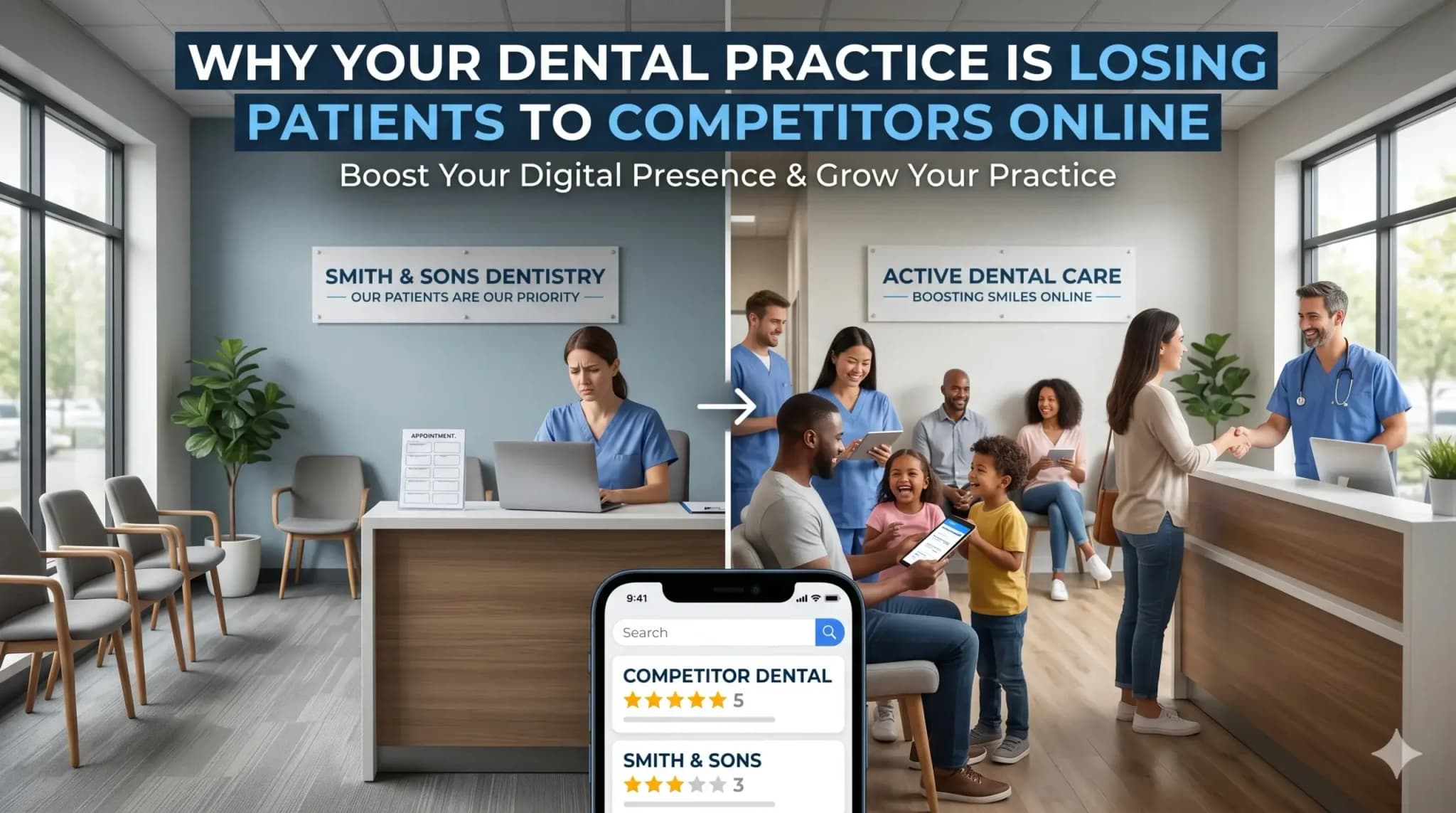
Every week your current website underperforms, you’re losing new patient inquiries to practices that invested in the right dental clinic web design. Not because they’re better dentists — because they’re easier to find and easier to trust online.
The first step costs you nothing. Get your free dental website audit from Digital Trace — we’ll show you exactly how your site is performing, where the gaps are, and what fixing them would likely mean for your new patient numbers. No pressure, no obligation, just a clear picture of what’s actually happening.
Your chair doesn’t fill itself. Let’s make sure your website is doing its job.