How Much Does Dental Clinic Website Design Cost in the US? (Full Breakdown)
You have a website. Patients just aren’t finding it — or if they do, they’re not calling.
That’s the quiet frustration most dental clinic owners live with. You’re not sure if the problem is your site, your marketing budget, or something else entirely. So before spending another dollar, you want a straight answer: what does a dental clinic website actually cost, and is it even worth it?
This breakdown covers exactly that — real price ranges, what drives the cost up or down, and the difference between a website that looks good and one that actually fills your appointment book. By the end, you’ll know what to look for, what to avoid, and how to make sure every dollar you spend works as hard as you do.
Why Most Dental Websites Cost More Than They Should — and Deliver Less
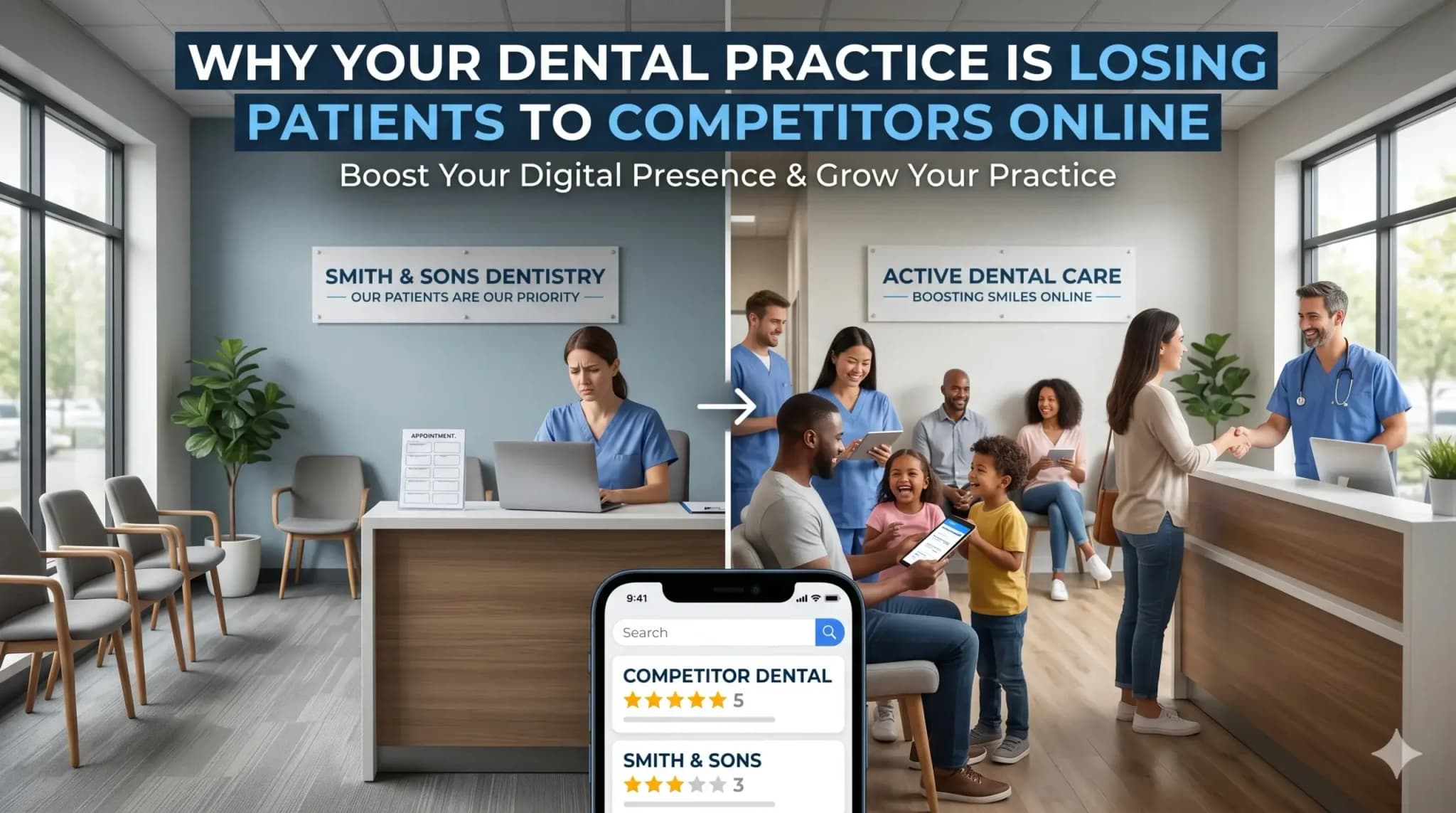
Here’s a pattern that plays out constantly: a dental practice pays a web agency a few thousand dollars for a new site. The site looks clean. It has photos, a services page, a contact form. And then… nothing changes. The phone doesn’t ring more. New-patient appointments stay flat.
The problem isn’t the design. It’s what wasn’t built into the design from the start.
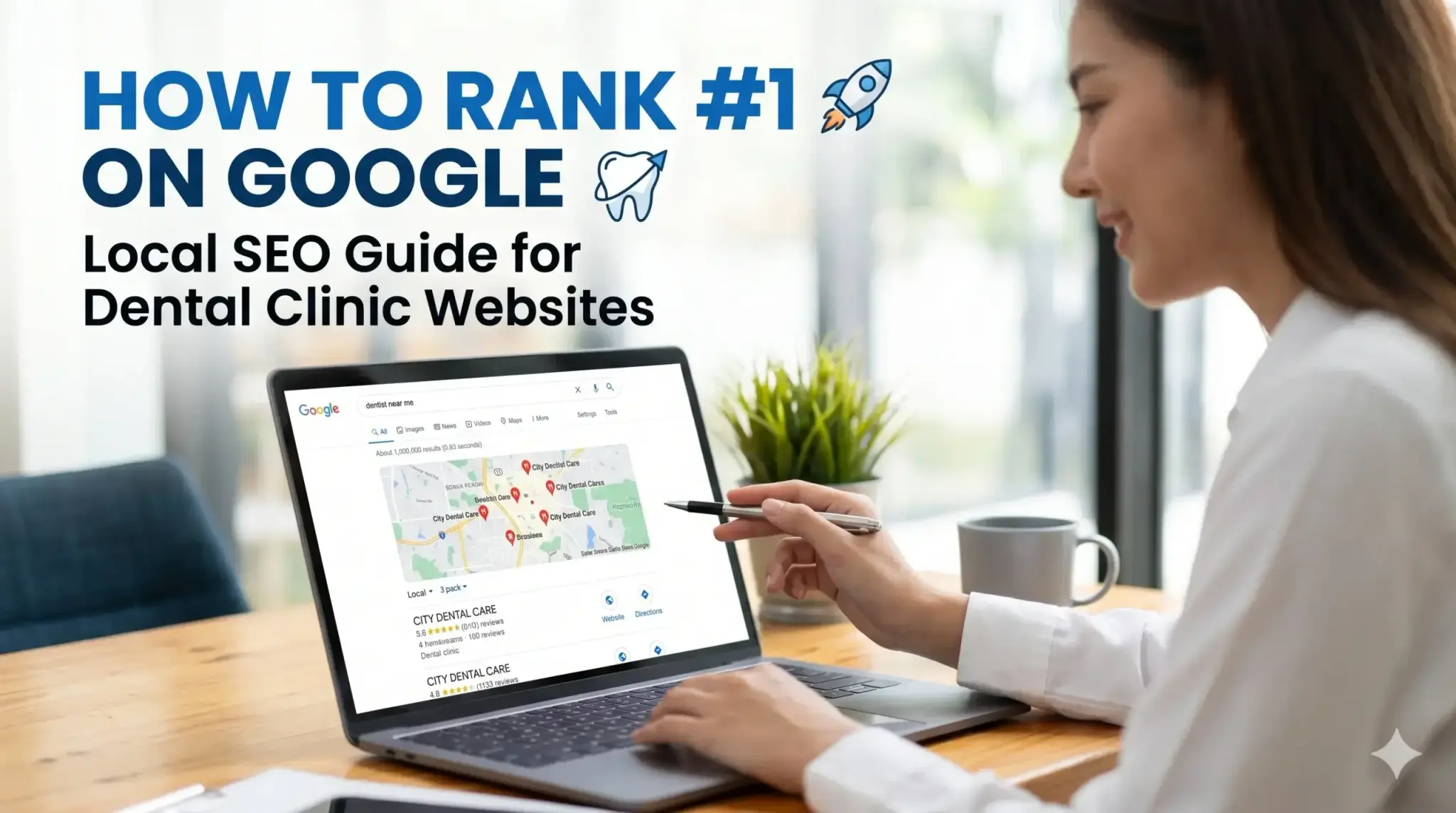
A website that doesn’t rank on Google when someone searches “dentist near me” in your ZIP code is essentially invisible. And a site that loads slowly on a phone — where most local searches happen — loses potential patients before they ever read your name.
The upfront cost matters, but the right cost question is: what will this website actually earn you in new patients?
Dental Clinic Web Design Cost: What You’re Actually Paying For
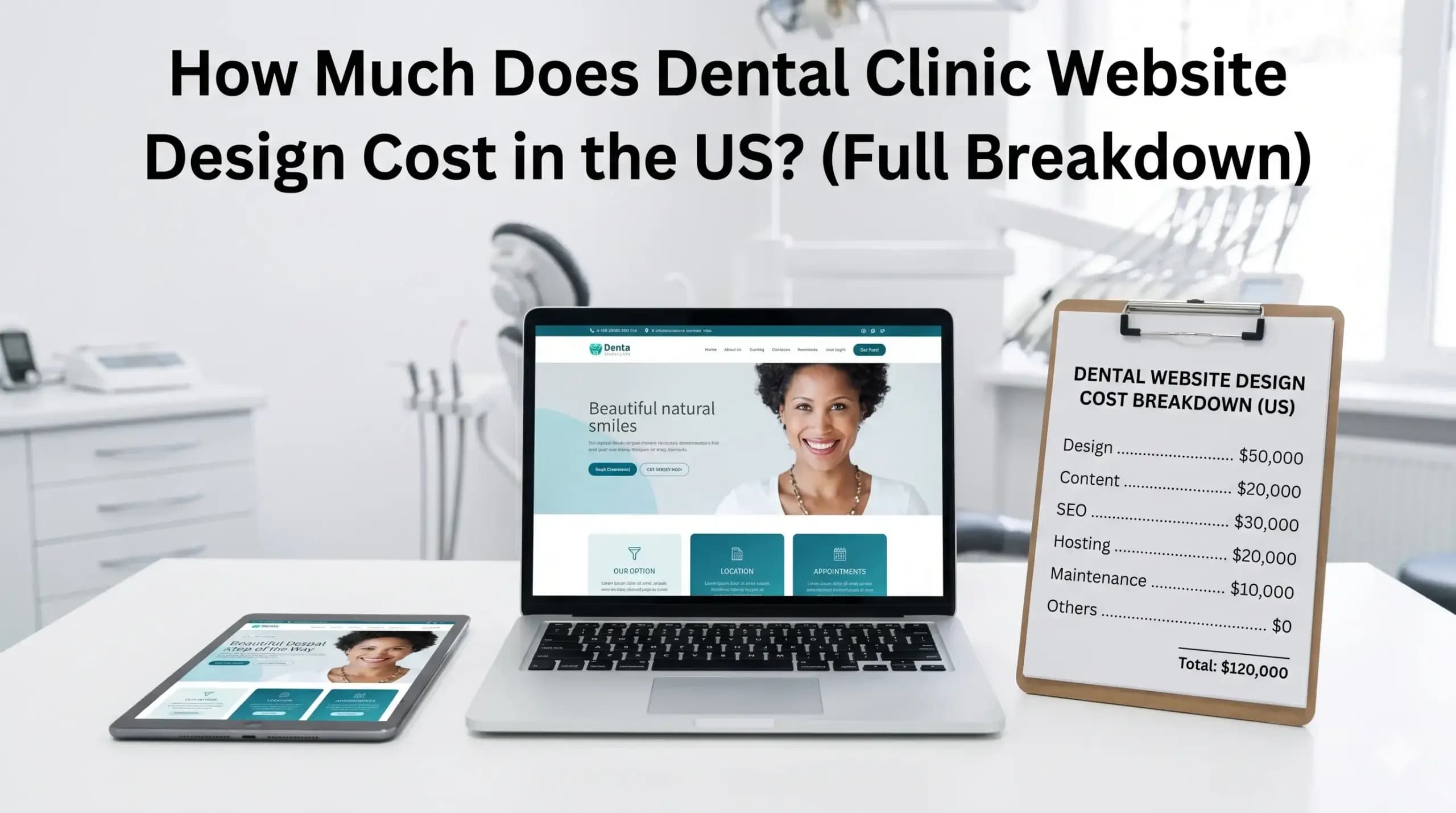
Prices vary widely depending on who builds it and what they include. Here’s an honest breakdown of what’s in the market:
Budget Templates: $500–$2,000
These are pre-built website templates with your logo and photos dropped in. They’re cheap for a reason. They’re not built to rank for local dental searches, they’re not optimized for mobile booking, and they look like dozens of other dental sites Google has already seen.
If you’re a brand-new practice with zero online presence, this might get you something. But it won’t get you a competitive edge.
Mid-Range Custom Websites: $3,000–$8,000
This is where most reputable dental web design companies operate. A good agency at this level will build a site tailored to your practice, your city, and your services. It should include:
- Mobile-first design (because 70%+ of local searches happen on phones)
- Fast load times so patients don’t click away before seeing your number
- Local SEO foundations — so Google knows what you offer and where
- Clear calls-to-action that guide visitors toward booking
The difference between a $3,500 site and a $7,500 site often comes down to depth: how many service pages, how many locations, how much SEO groundwork is laid.
High-End Custom Dental Websites: $8,000–$20,000+
This tier covers large multi-location practices, orthodontic groups, or dental offices investing in a full digital strategy alongside their website — including content marketing, local SEO campaigns, and conversion tracking.
At this level, the website isn’t just a website. It’s a patient acquisition system.
The Hidden Costs That Catch Dental Owners Off Guard
The build price is only part of the story. What gets dental practice owners in trouble is what happens after launch.
Hosting and maintenance: Expect $50–$200/month depending on your provider. Cheaper hosting often means slower load speeds — which directly affects how many patients you reach.
Ongoing SEO: A website that doesn’t stay updated with fresh content, optimized pages, and consistent local signals will gradually fall in rankings. Most dental offices that invest in a new site but skip ongoing SEO see their traffic plateau within 6–12 months.
Reputation and review integration: If your site doesn’t connect to your Google Business Profile or display recent reviews, you’re losing trust signals that convert searchers into callers.
The agencies that quote you a low build cost and then vanish are usually the same ones who leave these gaps open.
💡 Pro Tip
The biggest mistake dental clinics make: launching a new website without fixing the local SEO first.
Your new site can look great and still be invisible. Google needs to understand exactly who you are, where you’re located, and what procedures you offer before it will show you in local results. This means your Google Business Profile, your site’s location pages, and the contact information across the web all need to match — perfectly. A mismatch as small as “Suite 101” vs “Ste 101” can quietly cost you rankings. Before you pay for a redesign, make sure the foundation is solid.
What Makes Dental Website Design Different From a Regular Business Website
Think of it this way: most businesses just need people to find them. Dental clinics need people to find them, trust them immediately, and take action — all before they ever walk through the door.
A patient searching for a dentist at 9pm on their phone is making a high-stakes decision. They’re anxious, they’re comparing three or four practices, and they’re going to call whichever one feels the most credible in the first 15 seconds of landing on your site.
That means websites built for dental clinic businesses need to do things a general template can’t:
- Show real social proof immediately — patient reviews, years in practice, credentials visible above the fold
- Make booking effortless — a phone number and “Book Now” button that work without scrolling
- Signal authority to Google — structured data that tells search engines exactly what procedures you offer and what insurance you accept
- Load in under 2.5 seconds on mobile — every second of delay costs you a portion of the people who would have called
A dental website that checks all these boxes isn’t just a cost. It’s the most consistent new-patient source you can own.
Before & After: What a Real Result Looks Like
Practice: Sunrise Family Dental — a two-dentist general practice in a mid-size Midwest city, competing against three established practices within a two-mile radius.
The Problem: Their existing website was built five years ago by a relative. It wasn’t mobile-friendly, had no local SEO setup, and took nearly 6 seconds to load on a phone. They were getting an average of 4–5 website-generated appointment requests per month. Their Google Business Profile existed but wasn’t connected properly to their site.
What Changed: A full rebuild with a mobile-first design, properly structured service pages (general dentistry, cosmetic, emergency), integrated patient reviews, and a local SEO foundation targeting their city and surrounding suburbs. Their Google Business Profile was synced and optimized.
The Result — 90 Days Later:
- Website load time dropped from 5.8 seconds to 1.9 seconds
- Organic traffic from local searches increased by over 200%
- New-patient appointment requests through the website went from 4–5/month to 22–26/month
- The front desk reported a noticeable shift — more first-time callers mentioning they found the practice “on Google”
The website didn’t change what the dentists did. It changed whether patients could find them and trust them enough to call.
Not sure if your dental website has these issues? Get a free website audit — no obligation, just a clear picture of what’s costing you leads.
Your Path to More New Patients: 5 Steps That Actually Work
Getting your dental clinic website to generate consistent leads doesn’t require a massive overhaul every year. It requires getting the foundation right — once — and then staying consistent.
Step 1: Audit what you have. Before spending anything, find out what’s actually broken. Is it load speed? Local SEO gaps? A checkout flow that confuses patients? A free audit from a dental web design expert will show you exactly where leads are dropping off.
Step 2: Fix the mobile experience first. If your site doesn’t work flawlessly on a phone, nothing else matters. Mobile optimization isn’t a nice-to-have for dental clinics — it’s where your future patients are searching right now.
Step 3: Build location-specific pages. “Dentist in [City]” is how patients search. If your site doesn’t have pages built around your specific location and services, you’re invisible in the results that matter most.
Step 4: Connect your online presence. Your website, Google Business Profile, and listings on directories like Healthgrades and Zocdoc all need to tell the same consistent story. Gaps here confuse search engines and erode patient trust.
Step 5: Track what’s working. A website that doesn’t have conversion tracking set up is like running a reception desk with no appointment book. You need to know which pages are generating calls — so you can do more of what works.
Frequently Asked Questions
Why isn’t my dental website generating calls, even though I have one?
Having a website and having a website that works are two different things. The most common culprits are slow load speed (patients leave before they see your contact info), missing local SEO (Google isn’t showing you for “dentist near me” searches), and weak calls-to-action (visitors aren’t sure what to do next). A quick audit usually reveals which issue is doing the most damage.
How do I know if my dental website is actually performing?
If you can’t answer “how many new-patient calls came from my website this month,” your site isn’t set up to be measured — which means it’s almost certainly underperforming. A properly built dental site tracks calls, form submissions, and what pages drove them. You should be able to see that data any time you want.
How long does it take to see results from a new dental website?
A well-built site with proper local SEO foundations typically starts showing measurable improvements in 60–90 days. Significant traffic and lead increases often come at the 3–6 month mark. Agencies that promise overnight results should raise a flag — sustainable local search growth takes consistent work.
What makes a dental clinic website different from any other healthcare site?
Dental patients are uniquely anxiety-driven and comparison-focused. Your site needs to reduce fear and build trust faster than almost any other healthcare website. That means specific trust signals (credentials, real photos, patient reviews) need to be front and center, and booking needs to be frictionless. A generic healthcare template won’t account for any of that.
Do I really need a fast website if most of my patients are local?
Especially if they’re local. Local patients are searching on their phones, often while they have a toothache or a dental emergency. Google itself uses page speed as a ranking factor for local searches. A site that loads in 4 seconds will consistently rank below a competitor that loads in 1.5 seconds — regardless of which practice is actually better. Speed isn’t optional for dental offices competing in local search.
How much should I budget for a dental website that actually brings in patients?
For a single-location dental practice, a properly built site from a dental-focused agency typically runs $4,000–$8,000. Add $300–$600/month if you want ongoing local SEO to keep rankings growing. If someone quotes you $800 for a “complete dental website,” they’re selling you a template that won’t compete. If you want to see exactly what your current site is missing before committing to anything, book a free website review — no strings attached.
Your Dental Practice Deserves a Website That Works as Hard as You Do
You didn’t build your practice by hoping patients would stumble in. You earned their trust one appointment at a time. Your website should do the same — earning trust from the first second someone lands on it and turning searchers into scheduled patients.
The difference between a dental website that costs money and one that makes money comes down to the details: speed, local SEO, clear calls-to-action, and a design that patients actually trust on first visit.
Digital Trace builds dental clinic websites that are engineered for exactly that — not just to look professional, but to rank, convert, and grow your practice.
Ready to find out what your current website is costing you in missed appointments?
Get your free website audit — we’ll show you exactly what’s holding your site back and what it would take to fix it. No pressure, no jargon, just a clear picture of what’s possible.