How to Rank #1 on Google: Local SEO Guide for Dental Clinic Websites
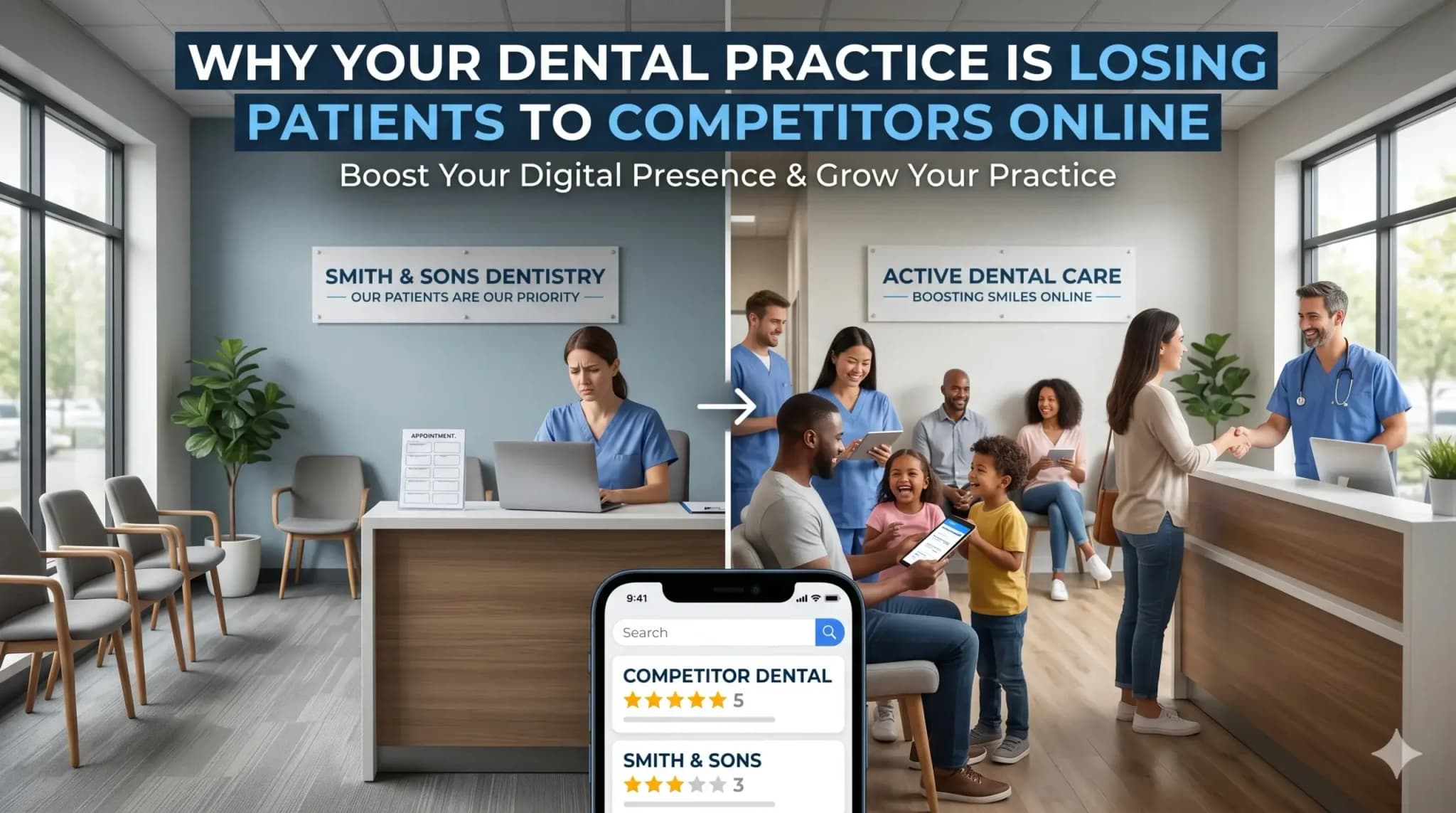
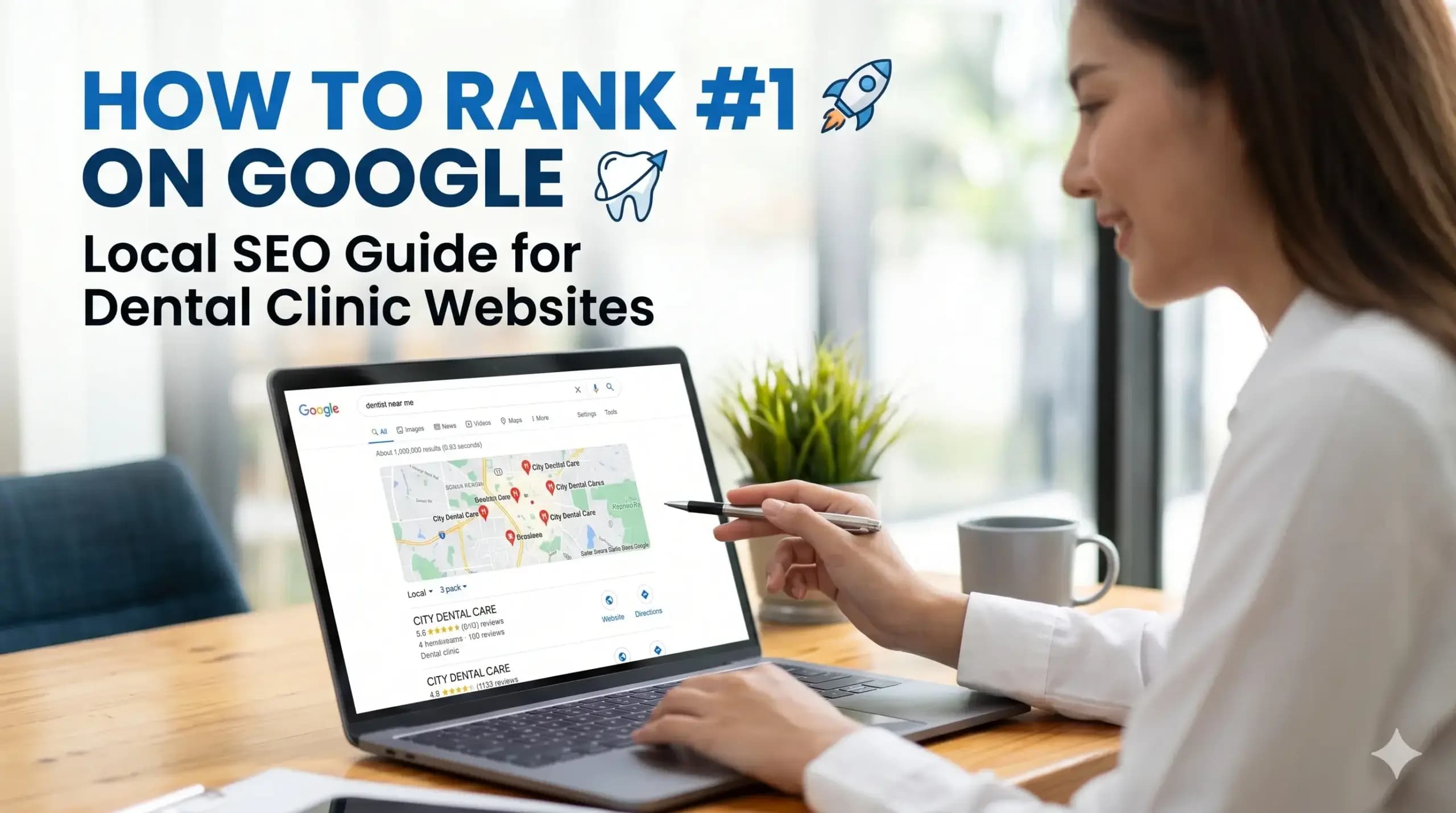
You built a great dental practice. You invested in equipment, trained your team, and earned five-star reviews from real patients. But when someone nearby types “dentist near me” into Google, your competitor shows up — and you don’t.
That’s not a marketing problem. That’s a website problem.
Most dental clinic owners assume their website is just a digital business card — something that exists so they can say they have one. But Google doesn’t rank business cards. It ranks websites that are fast, credible, and built to answer exactly what patients are searching for. If your site isn’t doing those three things, you’re handing new patients to the dentist down the street every single day.
This guide breaks down exactly why dental clinic websites fail to rank — and what a properly built dental clinic website actually does differently. No jargon. No fluff. Just what’s costing you calls.
Why Your Phone Isn’t Ringing (And It’s Not What You Think)
Here’s the situation most dental clinic owners describe: “We have a website. I just don’t think it does much.”
That instinct is usually right — but the reason is almost never what they guess. It’s not because SEO is complicated, or because Google is unpredictable, or because you need to spend a fortune on ads. It’s because your website was built to look good in a demo, not to rank in a real local search.
Think of it this way: a great dental website works like a well-trained front desk coordinator. It greets every visitor with confidence, answers their most pressing questions immediately, and guides them toward booking an appointment. A bad website just hands them a brochure and hopes they call. Most don’t.
The gap between those two experiences is where leads get lost — quietly, every single day.
Problem #1: Google Can’t “Read” Your Practice the Way Patients Can
What you experience: You search for your own practice and it barely shows up, even though you’ve been operating for years.
Why it happens: Google needs structured signals to understand your business — things like your exact services, your service area, your business hours, and patient-facing content that matches what people actually search for. Most dental websites are built with generic templates that don’t send those signals clearly. Google sees a vague healthcare website, not a specific dental clinic serving a specific community.
What it costs you: When Google isn’t confident about your relevance, it doesn’t surface you. That means patients who are actively looking for a dentist in your zip code are finding someone else — someone whose website is better optimized, even if their practice isn’t better.
The fix: A properly built dentist website design includes structured local data (called schema markup) that tells Google precisely who you are, where you serve, what procedures you offer, and that you’re an established, trustworthy practice. It’s a technical layer that most template sites skip entirely.
Problem #2: Your Website Loads Too Slowly — And Patients Leave in 3 Seconds
What you experience: Someone clicks on your website from a Google search, and then… nothing. They bounce.
Why it happens: Large image files, bloated page builders, and cheap hosting can make dental websites painfully slow to load — especially on mobile, which is where most patients are searching. Google tracks this behavior. When it sees that visitors consistently leave your site within seconds of arriving, it interprets that as a signal that your site isn’t helpful. Rankings drop accordingly.
What it costs you: Speed isn’t just a technical issue — it’s a revenue issue. A site that takes five seconds to load can lose more than half its visitors before they even see your phone number. Those are real patients who chose a competitor, not because you’re worse, but because your website was slower.
The fix: Fast-loading, dental office website design built on clean code, optimized images, and reliable hosting. Every second of load time you remove is money back in your practice.
Problem #3: Your Website Talks About You — Not About What Patients Are Searching For
What you experience: Your website has a nice “About Us” page, a services list, and some stock photos of smiling people. But new patient inquiries are flat.
Why it happens: Most dental websites are written like a company brochure — credentials, mission statements, a list of services. But patients don’t search for “reputable dental clinic.” They search for “teeth whitening near me,” “emergency dentist open Saturday,” “affordable braces for kids,” and hundreds of other specific phrases. If your website doesn’t speak that language, it simply won’t appear.
What it costs you: Every service you offer but don’t have a dedicated, well-written page for is a missed opportunity. A patient searching for “Invisalign provider in [your city]” will land on a competitor’s page that’s written specifically for that search — not your generic services page.
The fix: Strategic content built around how patients actually search. That means dedicated pages for your core services, local landing pages for your service areas, and content written to answer the exact questions patients type into Google before they book. This is what separates good dental website design from websites that just look good.
Problem #4: Your Website Isn’t Built for Mobile — And Most Patients Are on Their Phones
What you experience: The website looks fine on your office computer. But on your own phone, the text is tiny, buttons are hard to tap, and the phone number isn’t clickable.
Why it happens: Many dental websites were built years ago when desktop was the primary device — or they were “made mobile-friendly” as an afterthought. There’s a significant difference between a website that technically works on mobile and one that’s designed to convert mobile visitors into booked appointments.
What it costs you: Google now ranks based primarily on the mobile version of your website. If your mobile experience is poor, your rankings suffer — even for patients searching on a desktop. Beyond rankings, a clunky mobile experience destroys trust before a patient ever picks up the phone.
💡 Pro Tip — The “One Thumb Test” Open your dental website on your phone right now. Can you find your phone number and tap it within five seconds using just your thumb? If not, you’re losing mobile patients daily. A proper dental web design makes the phone number, booking button, and core services accessible within one thumb’s reach — no pinching, zooming, or hunting required. This alone can meaningfully increase how many visitors actually call.
What Happens When You Get It Right: A Real-World Example
The Practice: A general dental clinic in the Southwest US — established, well-reviewed, but invisible on Google outside of branded searches.
The Problem: Their website was built by a general web agency several years prior. It had no location-specific content, slow load times on mobile, zero schema markup, and a single generic “Services” page covering everything from cleanings to implants. They were running Google Ads just to get any traffic at all.
What Changed: Digital Trace rebuilt the site with proper dental clinic web design from the ground up — clean architecture, mobile-first layout, service-specific pages, and local schema that told Google exactly what the practice offered and where. Within the first three months, organic traffic tripled. Within six months, they reduced their ad spend by 60% because they no longer needed to pay for traffic their website should have been earning naturally.
The Result: More than 40 new patient inquiries per month from organic search alone — patients who found them, trusted what they saw, and called without needing to be convinced by an ad.
Not sure if your dental clinic website has these same issues? Get a free website audit — no obligation, just a clear picture of what’s costing you new patient leads.
Your Path to More Leads: 5 Steps That Actually Move the Needle
If your dental website isn’t generating consistent leads, here’s where to start:
- Fix your speed first. Run your site through Google’s PageSpeed tool. If you score below 70 on mobile, your rankings are being penalized before anything else matters.
- Create individual pages for your top services. Don’t bury implants, whitening, and Invisalign on one page. Each service deserves its own page written around how patients actually search for it.
- Claim and optimize your Google Business Profile. Make sure your hours, address, phone, and services are complete and match exactly what’s on your website. Inconsistencies confuse Google.
- Add location signals throughout your site. Your city and surrounding neighborhoods should appear naturally in your content, page titles, and metadata — not stuffed in awkwardly, but worked in the way a local business would naturally reference them.
- Have a professional audit what you can’t see. The most costly website problems — missing schema, crawl errors, slow server response, broken internal links — are invisible to the naked eye. A proper audit surfaces all of them.
Frequently Asked Questions
Why am I not getting calls from my website even though I show up on Google?
Showing up and converting are two different things. Your site might rank for your practice name (branded traffic) without ranking for the searches that actually bring new patients — like “dentist accepting new patients near me” or “emergency dental [your city].” Beyond rankings, your site may be losing visitors due to slow load times, a confusing layout, or no clear call-to-action above the fold.
How do I know if my dental website is actually working or just sitting there?
If your website isn’t generating at least several new patient inquiries per month from organic search (not ads, not referrals), it’s not working. A properly built dental office web design should be your highest-ROI marketing asset — not something you have to support with constant ad spend just to get results.
How long does it take to see results from a new dental website?
Most practices see meaningful movement in organic rankings within 60 to 90 days of launching a properly optimized site. Full results — consistent first-page rankings for competitive service terms — typically build over 4 to 6 months. Unlike ads, these results compound over time rather than stopping the moment you stop paying.
What makes a dental clinic website different from a regular business website?
Dental websites need to address a unique patient mindset: people are often anxious, cost-conscious, and comparing multiple options at once. The design, content, and structure need to immediately communicate trust, competence, and accessibility. Generic website templates built for restaurants or law firms don’t account for that — which is why dental practice web design is a specific discipline, not a template swap.
Do I really need a fast website if most of my patients are local and already know me?
Your existing patients aren’t the issue — it’s the new ones you’re not getting. Local patients searching for a dentist they’ve never heard of will make a snap judgment about your practice based on your website in under 10 seconds. A slow, outdated site tells them everything they need to know — even if it’s not true. Speed and design directly affect whether a stranger trusts you enough to call.
How do I know if Digital Trace is the right fit before committing to anything?
Start with a free audit. Digital Trace will review your current website and show you exactly where it’s underperforming — no pitch, no pressure, just a clear breakdown of what’s costing you leads. Book your free website audit here and get a straight answer within days.
Stop Losing Patients to a Website That Isn’t Working
Every week your dental website sits underperforming, a neighboring practice is picking up the patients who should be calling you. Not because they’re better — because their website shows up, loads fast, and earns trust in the first ten seconds.
That’s fixable. And it doesn’t require a massive budget or months of waiting — it requires a website built the right way, by a team that understands dental clinic web design specifically.
Digital Trace builds dental websites that rank, load fast, and convert visitors into booked appointments — not just pretty pages that win awards no one sees.
Get your free website audit now — we’ll show you exactly what’s costing you leads, what it would take to fix it, and what results look like for a practice like yours. No fluff. No obligation. Just clarity.
Digital Trace specializes in dental clinic website design and local SEO for practices across the United States. Our work is built around one metric: new patient leads.