Top 10 Features Every Dental Office Website Must Have in 2026
You just spent thousands of dollars on a new website. It looks clean, has your logo, lists your services, and shows smiling patients. So why isn’t the phone ringing?
Most dental practice owners assume a website that looks good is working. It isn’t — not if it’s missing the right features. Patients searching for a dentist in your area right now are landing on your site, not finding what they need in the first few seconds, and clicking straight to your competitor down the street.
Good dental web design isn’t about aesthetics. It’s about turning website visitors into booked appointments. This guide breaks down the 10 features that separate a dental website that actually drives revenue from one that just takes up space. By the time you finish reading, you’ll know exactly where your site is leaking patients — and what to do about it.
1. A “Book Now” Button Patients Can Actually Find
The problem: Your phone number is buried in the footer, or your “Contact Us” page requires filling out a five-field form before anything happens. Patients decide within seconds whether to stay or leave.
Why it matters: People searching for a dentist are often in pain, anxious, or juggling a packed schedule. They want to book fast. If your call-to-action isn’t visible the moment the page loads — on every page, on every device — they’re gone.
The fix: Every page on your dental website should have a clickable phone number and a visible “Book Appointment” button above the fold (the part of the screen patients see without scrolling). On mobile, that number should tap to call instantly.
2. A Website That Loads in Under 3 Seconds
The problem: Your site loads in 6 seconds. That’s not a technical statistic — that’s the sound of a patient clicking “back” before they ever see your phone number.
Why it happens: Oversized images, bloated code, cheap hosting. Most templated dental websites are stuffed with visual extras that look nice in previews but drag performance down in real use.
The real cost: Search engines factor speed into how they rank your site. A slow website gets pushed further down in results, and the patients who do land on it leave before converting. It’s a double loss.
At Digital Trace, every website built for dental clinic businesses is performance-optimized from the start — not patched afterward.
3. Mobile-First Design (Not Just “Mobile Friendly”)
The problem: Your site looks decent on a desktop. But over 60% of local dental searches happen on a phone, and on a 6-inch screen, your site turns into a confusing mess of tiny text and overlapping buttons.
“Mobile friendly” vs. mobile-first: A mobile-friendly site is a desktop site that’s been squeezed down. A mobile-first site is designed specifically for the way patients actually browse — with thumbs, on small screens, in waiting rooms and parking lots.
What to check: Pull up your site on your phone right now. Can you read the text without zooming? Can you tap the phone number without hitting the wrong link? Is the navigation simple enough to use with one hand? If the answer to any of those is “no,” you’re losing patients every day.
4. Local SEO Built Into the Site — Not Added as an Afterthought
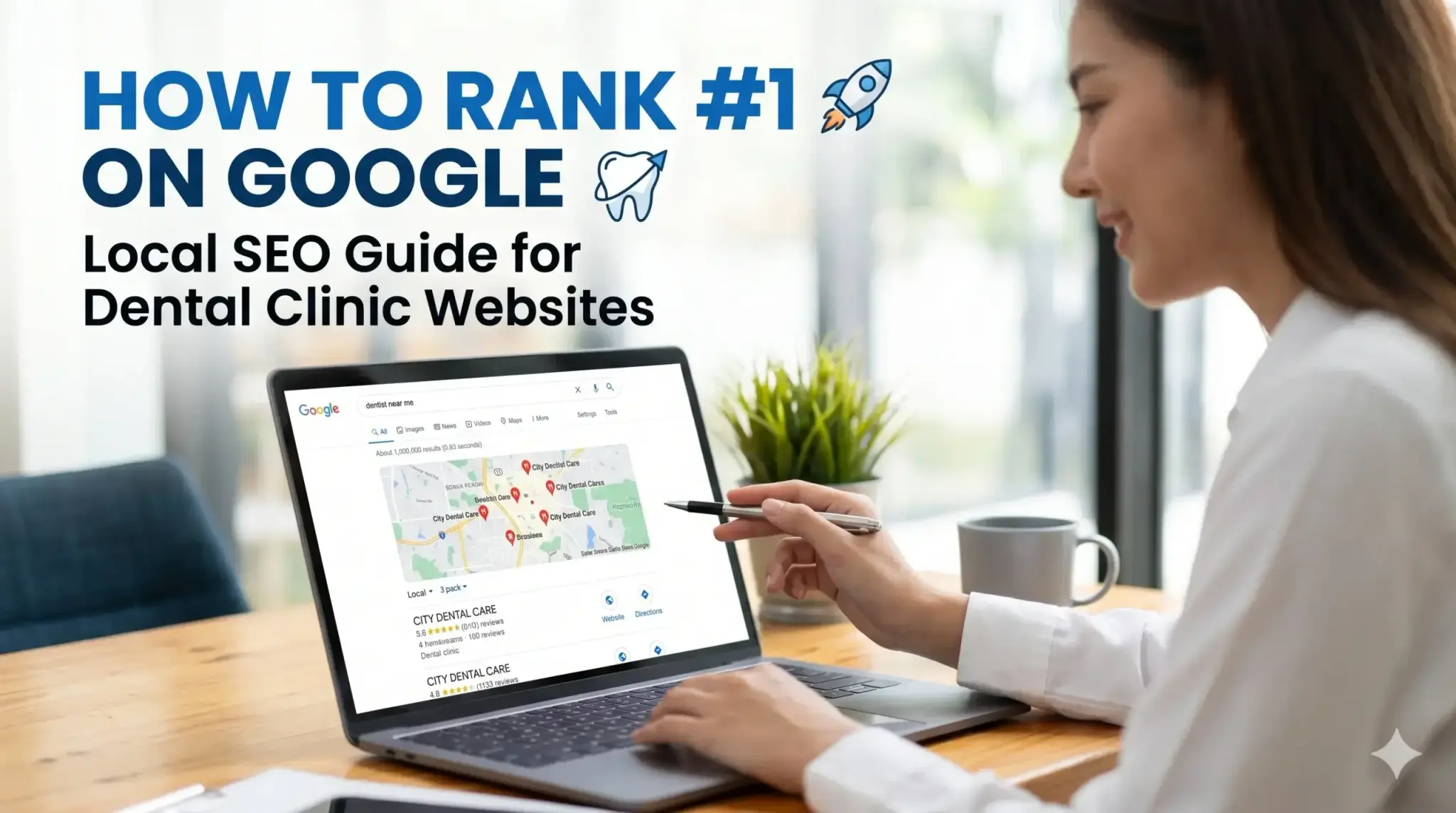
The problem: You’ve got a great practice, but when someone nearby Googles “dentist near me,” your name doesn’t show up. Your competitor three blocks away does.
Why Google can’t find you: Your website doesn’t clearly communicate your location, services, and practice details in a way search engines can read and trust. There’s no technical backbone telling Google, “This is a dental office at this address, serving these patients, offering these treatments.”
The plain-English fix: Your site needs proper local signals — your city name in the right places, your Google Business Profile connected, and structured data (a behind-the-scenes code tag) that tells Google exactly what your practice offers and where you’re located. This is standard in dental practice web design done right.
5. Patient Testimonials and Reviews — Displayed Prominently
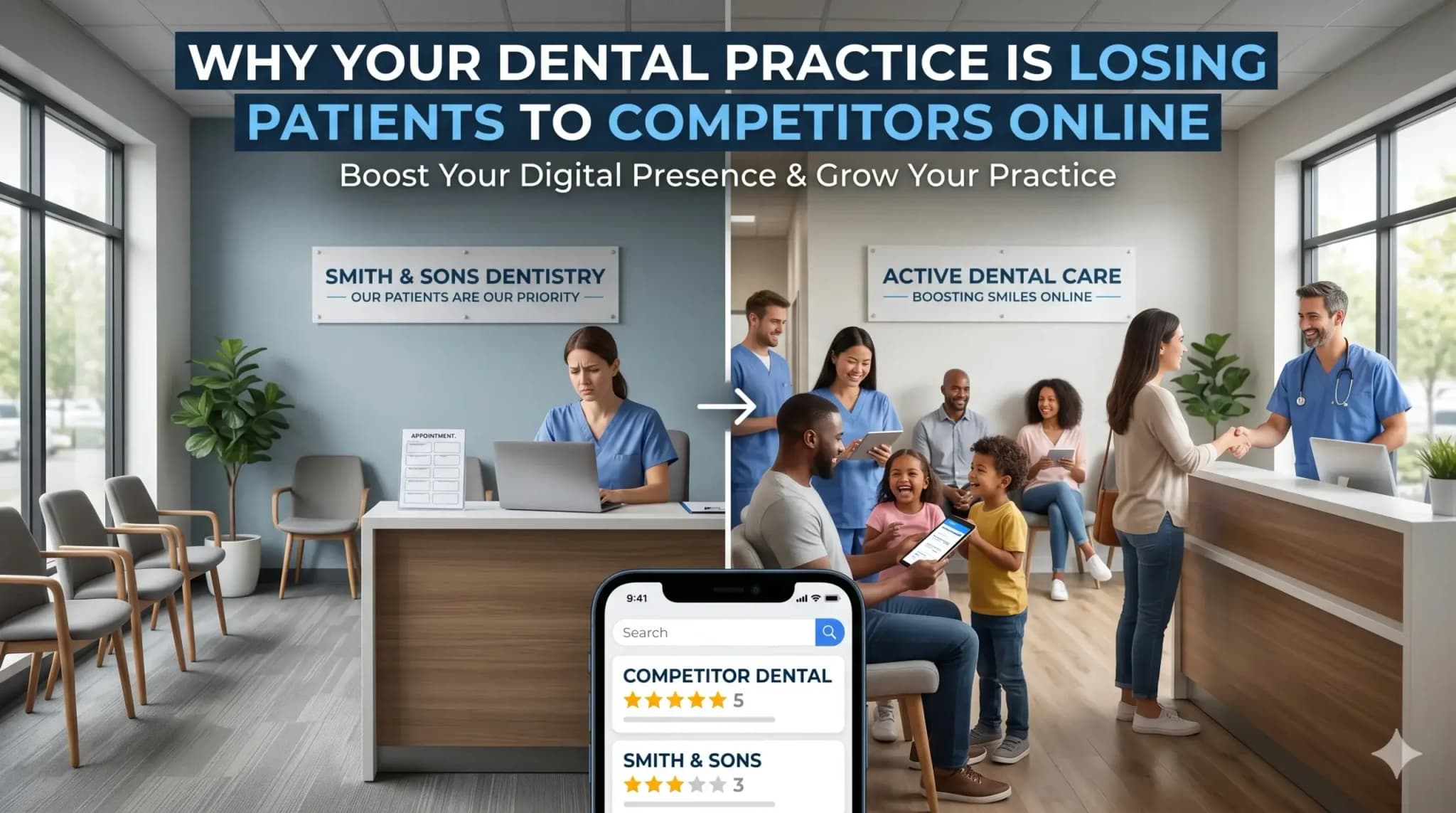
The problem: You have 80 five-star Google reviews. They’re not on your website. A patient lands on your site for the first time and has no social proof that you’re trustworthy.
Think of it this way: Choosing a dentist is like choosing a surgeon — patients are putting their health (and often their fear) in your hands. They need to see that other real people trusted you and had a good experience before they pick up the phone. Your website is your front desk. If it’s cold and gives nothing away, patients walk out.
What works: Real patient quotes with first names, star ratings pulled from Google or other platforms, and before/after photos (with consent). The more specific and human the testimonials, the more they convert.
💡 Pro Tip
The most common mistake dental websites make: Listing services without explaining them in patient language.
Writing “endodontics” instead of “root canal treatment” — or “restorative dentistry” instead of “fillings and crowns” — means patients searching for what they actually need can’t find you. Google matches what people type. If your site uses clinical terms your patients don’t search for, you’re invisible to them. Audit every service page and rewrite it the way a nervous, first-time patient would describe the problem to a friend.
6. An Online Booking System That Actually Works
The problem: Your website says “call us to book.” Patients in 2026 don’t want to call during business hours and wait on hold. They want to book at 10 PM from their couch.
The opportunity: Practices that offer real-time online booking consistently see more appointment requests outside business hours — often 30–40% of their weekly bookings. That’s revenue that would have gone to competitors with a book-now button.
What to look for: Integrate a booking tool that connects directly to your schedule, sends automated confirmations, and allows patients to select their preferred provider, service, and time — all without anyone picking up the phone.
7. A Dedicated Page for Each Core Service
The problem: All your services — cleanings, Invisalign, implants, whitening — are crammed onto one “Services” page. No patient can find what they’re looking for, and Google can’t rank you for any of it.
Why this kills your search rankings: If a patient searches “dental implants [your city],” Google needs a full page dedicated to that topic to feel confident ranking your site for it. One paragraph on a catch-all services page isn’t enough.
The fix: Create individual, detailed pages for every major treatment. Each page should explain the procedure in plain language, answer common patient questions, include before/after results where possible, and have a clear call-to-action to book.
8. HIPAA-Compliant Contact and Intake Forms
The problem: Your contact form uses a generic plugin that stores patient submissions on unencrypted servers. You might not even know this is happening — but if a patient submits their name, date of birth, or insurance information through an unsecured form, you’ve got a compliance problem.
Why it matters beyond legality: Patients who trust you enough to fill out a form online deserve to have that trust protected. A secure, HIPAA-compliant form is also a trust signal — it shows you take patient privacy seriously.
The fix: Work with a dental website design company that knows HIPAA requirements and builds forms that encrypt submissions and don’t store sensitive data in third-party platforms without proper agreements in place.
9. Clear, Human “About Us” and Team Pages
The problem: Your team page has stock photos and two sentences per doctor. Patients click away without feeling any connection.
The truth about dental marketing: People choose their dentist based almost entirely on trust and comfort. Your website is the first handshake. If it feels impersonal or corporate, patients will keep looking until they find a practice that feels human.
What converts: Real photos of your team (not stock). Doctor bios that mention why they got into dentistry, not just their credentials. A practice story that answers “why should I trust you with my family’s teeth?” A short welcome video from the dentist is worth more than a thousand words of polished copy.
10. Analytics and Tracking So You Know What’s Working
The problem: You have no idea how many people visit your site each month, where they come from, which pages they read, or how many of them pick up the phone after.
Why this is costing you money: If you don’t know what’s working, you can’t improve what isn’t. Most dental practices are paying for marketing with no visibility into whether it’s converting. That’s not a marketing strategy — it’s guesswork.
What to set up: At minimum, Google Analytics and call tracking. At best, a dashboard that shows you every month how many leads came from your website, which services they were looking for, and where they dropped off. Good dental web design includes tracking from day one — not bolted on later.
Real-World Result: How One Dental Practice Turned Its Website Into a Lead Machine
Sunrise Family Dental, a mid-sized practice in suburban Ohio, had a website that looked professional but wasn’t generating new patients. They were getting traffic — around 900 visitors per month — but the phone calls weren’t following. Front desk staff reported that many new patients said they’d found the practice online but almost didn’t call because “the website looked old.”
After a full redesign focused on mobile performance, local SEO, individual service pages, and a real online booking system, the results shifted significantly:
- Website load time dropped from 7.2 seconds to 1.8 seconds
- Monthly appointment requests from the website increased by 68% in 90 days
- Google search ranking for “family dentist [city]” moved from page 3 to top 5 of page 1
- Online bookings now account for 44% of all new patient appointments
The practice hadn’t changed anything about the quality of their care. They just stopped making it hard for new patients to find them, trust them, and book.
Not sure if your dental website has these same issues? Get a free website audit — no obligation, just a clear picture of what’s costing you new patients right now.
Your Path to More Leads: 5 Steps to Take Right Now
You don’t need to overhaul everything overnight. Here’s a practical sequence that works:
- Pull up your site on your phone. If you struggle to find the phone number or book button in 10 seconds, your patients do too.
- Google your practice name + your city. Check how your listing looks, whether your hours are correct, and whether reviews are showing.
- Check your page speed. Use Google’s free PageSpeed Insights tool and note your score. Under 50 on mobile is a red flag.
- Count your service pages. If you have one catch-all services page, you’re likely invisible for most of your high-value treatments.
- Get a professional audit. Have an expert review the full picture — technical performance, local SEO, conversion paths, and patient experience — in one sitting.
Frequently Asked Questions
Why am I not getting calls from my website even though I get visitors?
Traffic without calls usually means one of three things: patients can’t find your contact info fast enough, the site doesn’t feel trustworthy enough for them to act, or you’re attracting the wrong visitors because your content isn’t specific to the services you want to book. An audit will pinpoint exactly where the disconnect is.
How do I know if my dental website is actually working?
If you don’t have call tracking and Google Analytics set up, you genuinely don’t know — and most dental practice owners don’t. A working dental website should show you monthly new visitor counts, where they came from, which pages they viewed, and how many called or booked. Book a free audit and we’ll show you what your site’s data looks like right now.
How long does it take to see results from a new dental website?
Local SEO improvements typically start showing measurable changes within 60–90 days of launch. Conversion improvements (more calls per visitor) can happen immediately after a redesign. A realistic timeline for meaningful new patient growth from a properly built site is 3–6 months, with steady gains after that.
What makes a dental clinic website different from a regular business website?
A dental website has to do several things a standard business site doesn’t: communicate trust on a deeply personal level, comply with healthcare privacy standards, rank for hyper-local and treatment-specific searches, and convert anxious patients who are on the fence. General web designers often miss these nuances. Dental-specific design considers all of them from the start.
Do I really need a fast website if my patients are local?
Yes — especially because they’re local. Local searchers are often on mobile, searching in the moment, and comparing multiple practices in minutes. A slow site means they bounce before they see your value. Speed also directly impacts how high you rank in local Google results, so it affects whether patients even land on your site in the first place.
Can’t I just use a cheap template website from a dental marketing company?
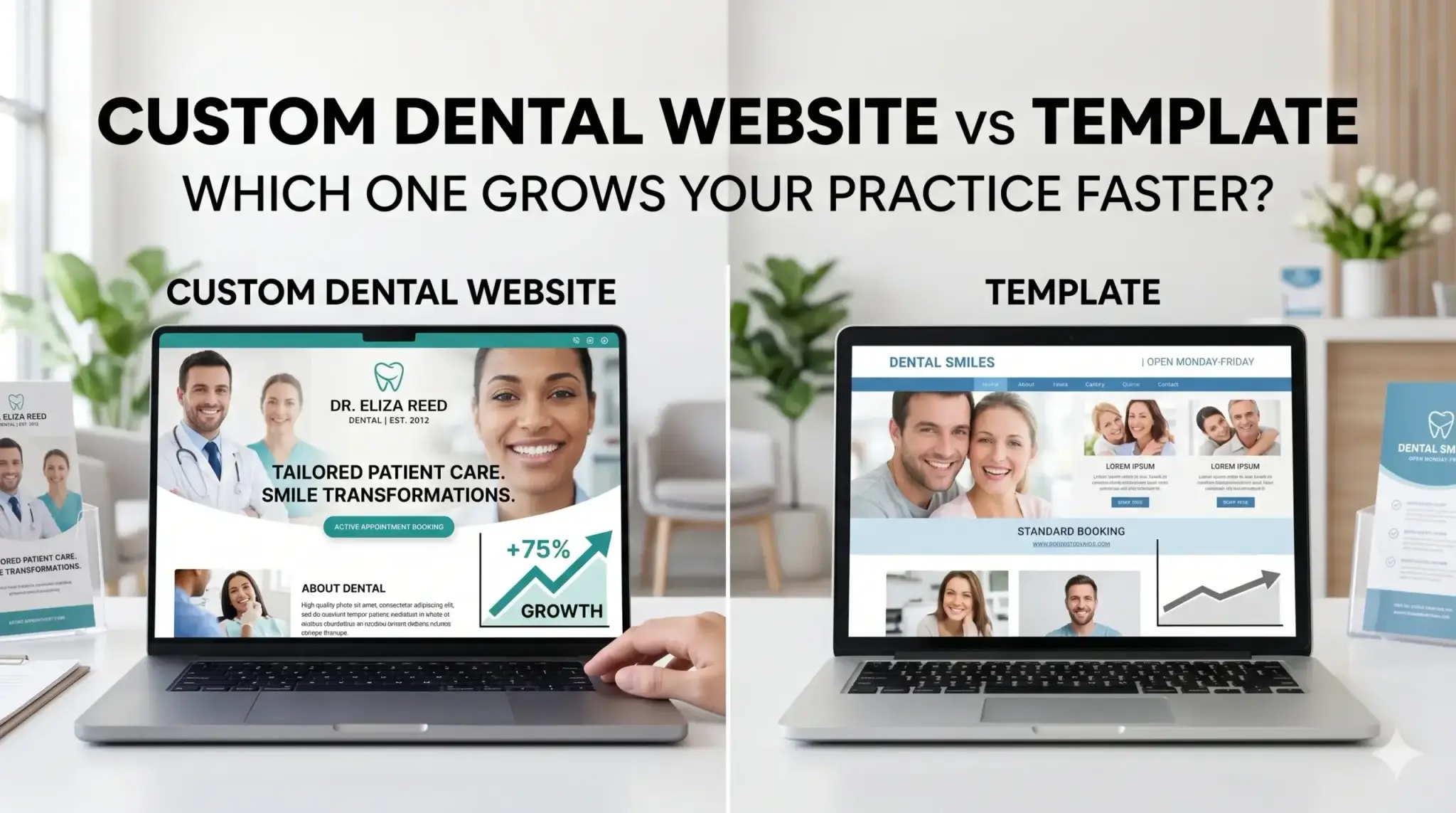
Template sites get you online fast, but they’re built for one goal: selling templates. They’re rarely optimized for your specific location, service mix, or conversion goals. Many also load slowly, have duplicate content across hundreds of similar sites, and give Google no reason to rank yours above the next practice using the same template. Custom dental websites built around your actual patients and market consistently outperform them.
Ready to Find Out What Your Website Is Costing You?
Every week your dental website sits with these problems unfixed, patients who found you online are booking somewhere else. It’s not dramatic — it’s just math.
Digital Trace specializes in building high-converting dental clinic websites for practices across the US. We combine fast, custom design with local SEO, patient-first copywriting, and the technical foundations that turn website visitors into booked appointments.
Get your free website audit now →
No hard sell. No obligation. Just a clear, honest look at what your current site is doing — and what it should be doing instead.