Why Your Dental Practice Is Losing Patients to Competitors Online
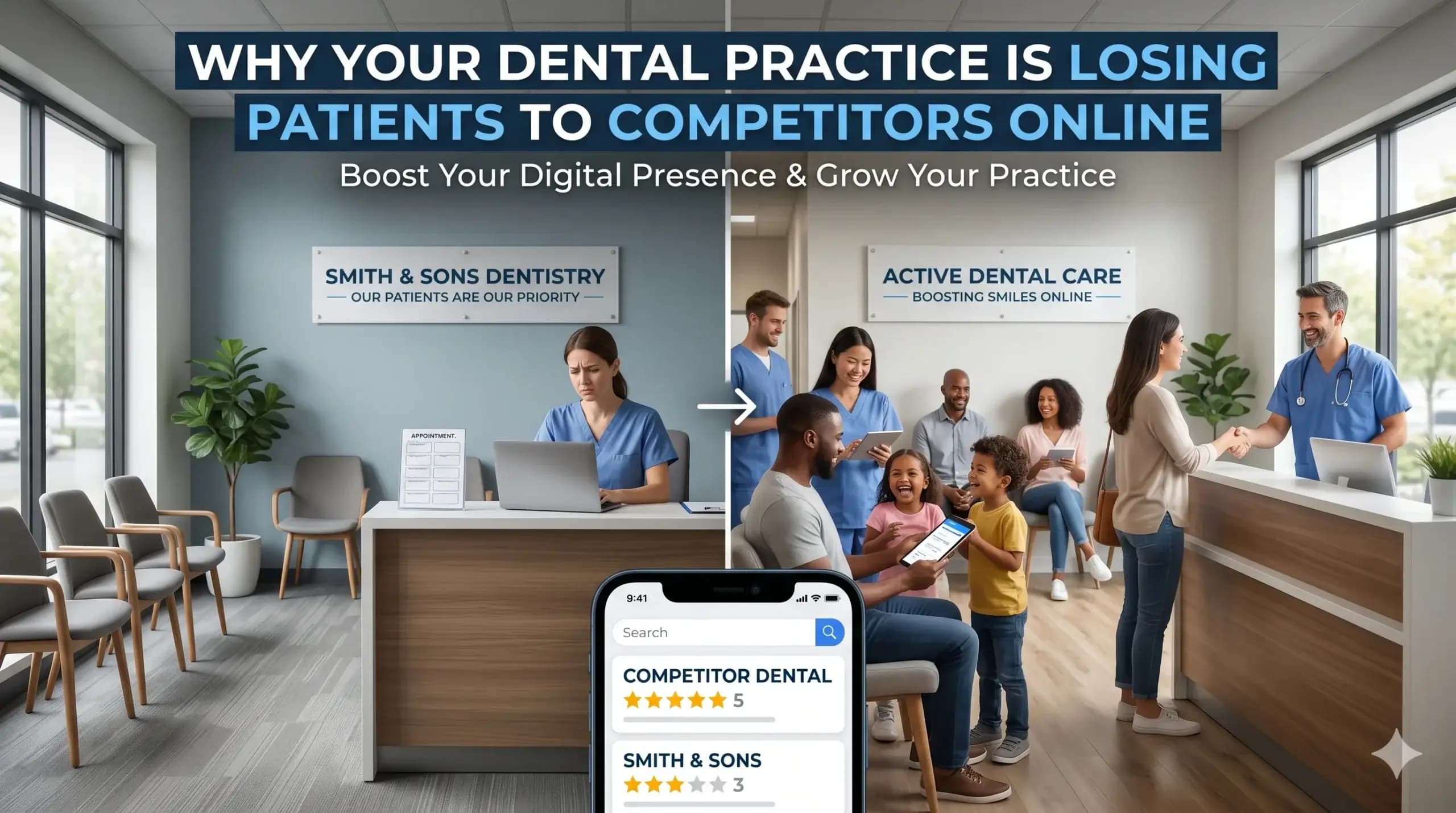
You spent years building a great practice. Your patients love you, your reviews are solid, and your team is trained. But when someone new moves into the neighborhood and searches for a dentist — they’re booking with someone else.
It’s not because your competitor is a better dentist. It’s because their website does something yours doesn’t: it shows up, loads fast, and makes booking feel easy enough to do in 60 seconds from a phone.
Most dental practice owners assume their website is “fine.” It loads. It has their phone number. It lists their services. But “fine” isn’t what wins patients in 2025 — and this article will show you exactly where the gap is, and what to do about it.
Your Website Is Like Your Reception Area — And Right Now, It’s Sending Patients Away
Think about what happens when a new patient walks into your office. If the waiting room is dim, the signage is confusing, and no one greets them within 30 seconds, they’re already second-guessing their choice.
Your website is that first impression for every patient who finds you online — before they ever step through your door.
The difference is: a patient who feels awkward in your waiting room will usually stay. A patient who lands on a slow, cluttered, or confusing website will leave in under 10 seconds — and book with whoever came up next in the search results.
The problem isn’t that you have a website. It’s that your dental web page design may be quietly turning away the patients you worked hard to attract.
Reason #1: You’re Not Showing Up When It Matters Most
A potential patient types “dentist near me” or “family dentist in [your city]” into Google. Your practice doesn’t appear — or it shows up on page two, which almost nobody reaches.
This isn’t random. Google uses dozens of signals to decide which dental practices to show first. One of the biggest? How well your website is structured and how clearly it signals to Google what you do and where you do it.
Many dental websites were built years ago by a general web designer who had no understanding of how Google evaluates dental clinic web design. The result: a site that looks fine to humans, but is essentially invisible to search engines.
What this costs you: Every day you’re not ranking, you’re handing 5, 10, or 20 potential appointment requests to the practice down the street.
What Digital Trace does instead: every dental clinic website design we build is structured from day one to send Google exactly the right signals — your location, your services, your specialties — so you show up when high-intent patients are searching.
Reason #2: Your Site Loads Too Slowly — And Patients Don’t Wait
Here’s something worth knowing: most people browsing for a dentist are doing it on their phone, probably between meetings or while sitting in their car. If your website takes more than three seconds to load, a large portion of those visitors leave before they’ve seen a single word.
The technical term is “page load speed.” The business reality is simpler: slow website = empty appointment slots.
This happens because dental websites often use oversized images, outdated plugins, or cheap hosting that wasn’t designed for performance. No one told the original developer that speed is now a Google ranking factor and a patient conversion factor.
💡 Pro Tip: The single biggest speed killer on most dental websites isn’t the design — it’s uncompressed images. A single hero photo of your practice, left at its original file size, can add 3–5 seconds to your load time. Compress every image before it goes on your site, or use a developer who handles this automatically. Your patients (and Google) will notice the difference.
What Digital Trace does instead: every website we build is optimized for speed at the code level — not just visually. Compressed images, clean hosting, and performance testing before launch are standard, not add-ons.
Reason #3: Visitors Land on Your Site — But Don’t Know What to Do Next
Getting someone to your website is only half the battle. Once they’re there, your site has one job: make it effortless to book an appointment.
Most dental websites fail here. The phone number is buried in a header. The “Book Now” button is missing from mobile. The services page talks about treatments in clinical language that means nothing to a nervous first-time patient.
Think of it this way: a good dental web design works like a well-trained front desk coordinator. It anticipates what a new patient needs, answers their biggest worry (“will this hurt? do you take my insurance?”), and removes every reason they might hesitate before booking.
A website that doesn’t do this isn’t neutral — it’s actively costing you revenue.
Common conversion killers on dental websites:
- No visible phone number or booking button on mobile
- Service pages that use clinical terminology instead of patient-friendly language
- No trust signals (reviews, credentials, before/after photos) above the fold
- Contact forms that ask for too much information upfront
- No clear answer to “do you accept new patients?”
Reason #4: Google Doesn’t Know Enough About Your Practice to Trust It
There’s a simple piece of code that most dental websites are missing — something called structured data (or schema markup). Without it, Google has to guess what kind of business you are, what services you offer, and whether you’re actually local to the patient searching.
With it, Google gets a clear, confident signal: “This is a dental practice in [city], they offer these services, here’s their phone number and hours.”
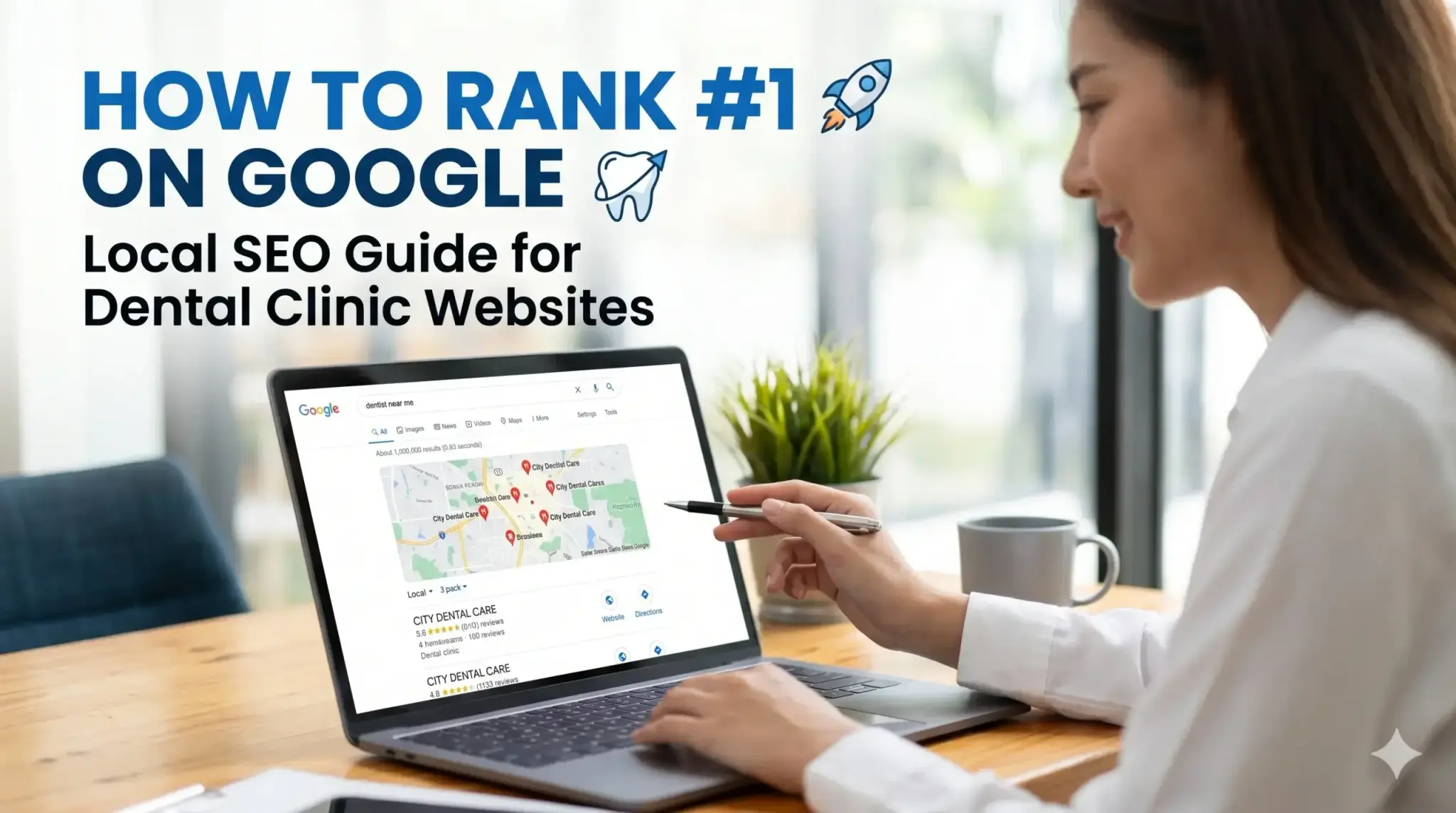
The result? Your practice is more likely to appear in the map pack — the three local results that show up with a map at the top of the search page. That map pack gets a significant share of all clicks for local searches.
Most general web designers don’t implement this. Most dental website design companies that built your site five years ago didn’t prioritize it. And most dental practice owners have never heard of it — until they wonder why their competitor always shows up and they don’t.
Real-World Example: From Invisible to Fully Booked
Consider a general dentistry practice in suburban Ohio — three dentists, solid reviews, established for over a decade. Their website was built in 2018. It looked professional enough, but it was loading in over six seconds on mobile, had no local schema markup, and their main services page had no booking button.
They were getting traffic — but almost none of it was converting into calls.
After a full rebuild focused on dental practice web design — speed optimization, mobile-first layout, structured data, and conversion-focused service pages — the results were measurable within 90 days:
- Mobile load time dropped from 6.4 seconds to under 1.5 seconds
- Organic search visibility for local keywords increased substantially
- Online appointment requests more than doubled compared to the same period the prior year
- The front desk reported a noticeable drop in “how did you hear about us?” answers involving word of mouth — new patients were increasingly coming from Google
The practice hadn’t changed. Their team, their services, their reputation — all the same. What changed was that their website finally reflected the quality of the practice behind it.
Not sure if your website has these issues? Get a free website audit — no obligation, just a clear picture of what’s costing you leads.
Your Path to More Patients: 5 Steps That Actually Move the Needle
You don’t need to understand web development to fix this. Here’s the path forward in plain terms:
1. Find out where you stand. Start with an honest look at your current website. How fast does it load on a phone? Does it appear in the local map pack for your key services? Is the booking process simple? A free audit answers all of this in minutes.
2. Fix your speed first. Page speed affects both your Google ranking and whether visitors stay long enough to book. This is often the fastest win — and it doesn’t require redesigning your whole site.
3. Make your site work for patients on mobile. More than half of dental searches happen on smartphones. If your website isn’t built mobile-first, you’re losing patients to competitors whose sites are.
4. Add clear, low-friction calls to action. Every page of your website should make it obvious how to book, call, or ask a question. If a visitor has to search for your phone number, you’ve already lost them.
5. Work with a dental-specific web design team. A general web designer can build a good-looking site. A team that specializes in custom dental websites understands patient psychology, local SEO, and the conversion triggers specific to dental practices — and builds all of that in from the start.
Frequently Asked Questions
Why am I not getting calls from my website even though I have one?
Having a website and having a website that generates calls are two completely different things. Most dental websites were built to look good, not to rank on Google or convert visitors into booked appointments. If your site loads slowly, isn’t optimized for local search, or makes it hard to book on a phone, you’ll get traffic but no calls.
How do I know if my dental website is actually working for my practice?
The easiest test: call your own office number from Google Maps, then look at how many appointment requests you’re getting through your website compared to that foot traffic. If the gap is large, your site isn’t converting. A free website audit will give you a specific breakdown of what’s broken and what to fix first.
How long does it take to see results after a new dental website launches?
Most practices start seeing measurable improvements in local search visibility within 60–90 days of launching a properly built site. Speed and conversion improvements are often immediate — patients who were leaving without calling will start booking once the friction is removed.
What makes a dental website different from a regular business website?
Patients choosing a dentist are making a trust-sensitive decision — they’re anxious, they’re comparing options, and they need specific reassurance before they’ll book. Good dental web page design addresses that psychology directly: it shows credentials, answers common patient fears, highlights insurance acceptance, and makes booking feel simple and safe. A generic business website template doesn’t account for any of that.
Do I really need a fast website if my patients are mostly local anyway?
Yes — and this is one of the most common misconceptions. Google uses page speed as a ranking factor for local search specifically. A slow site can drop you out of the local map pack entirely, meaning local patients searching right now may never even see you. Speed isn’t a luxury feature; it’s table stakes for local dental SEO.
I’ve been burned by a web agency before. How is this different?
That’s a fair concern, and it’s common in this industry. The difference comes down to specialization and transparency. Digital Trace builds websites specifically for dental practices — not restaurants, law firms, and everyone else. Before any work starts, a free audit gives you a clear, honest picture of exactly what’s wrong with your current site — no vague promises, no hidden upsells.
Stop Letting Your Website Cost You Patients
Every week your website sits the way it is, it’s not neutral — it’s actively sending potential patients to your competitors. The good news is these problems are fixable, and the fixes are measurable.
If you’re a dental practice owner in the US wondering why your phone isn’t ringing the way it should be, the answer is almost certainly in your website.
Get your free website audit today — we’ll look at your site, show you exactly what’s costing you leads, and give you a clear picture of what a better-performing dental web page design could do for your practice. No risk. No obligation. Just answers.