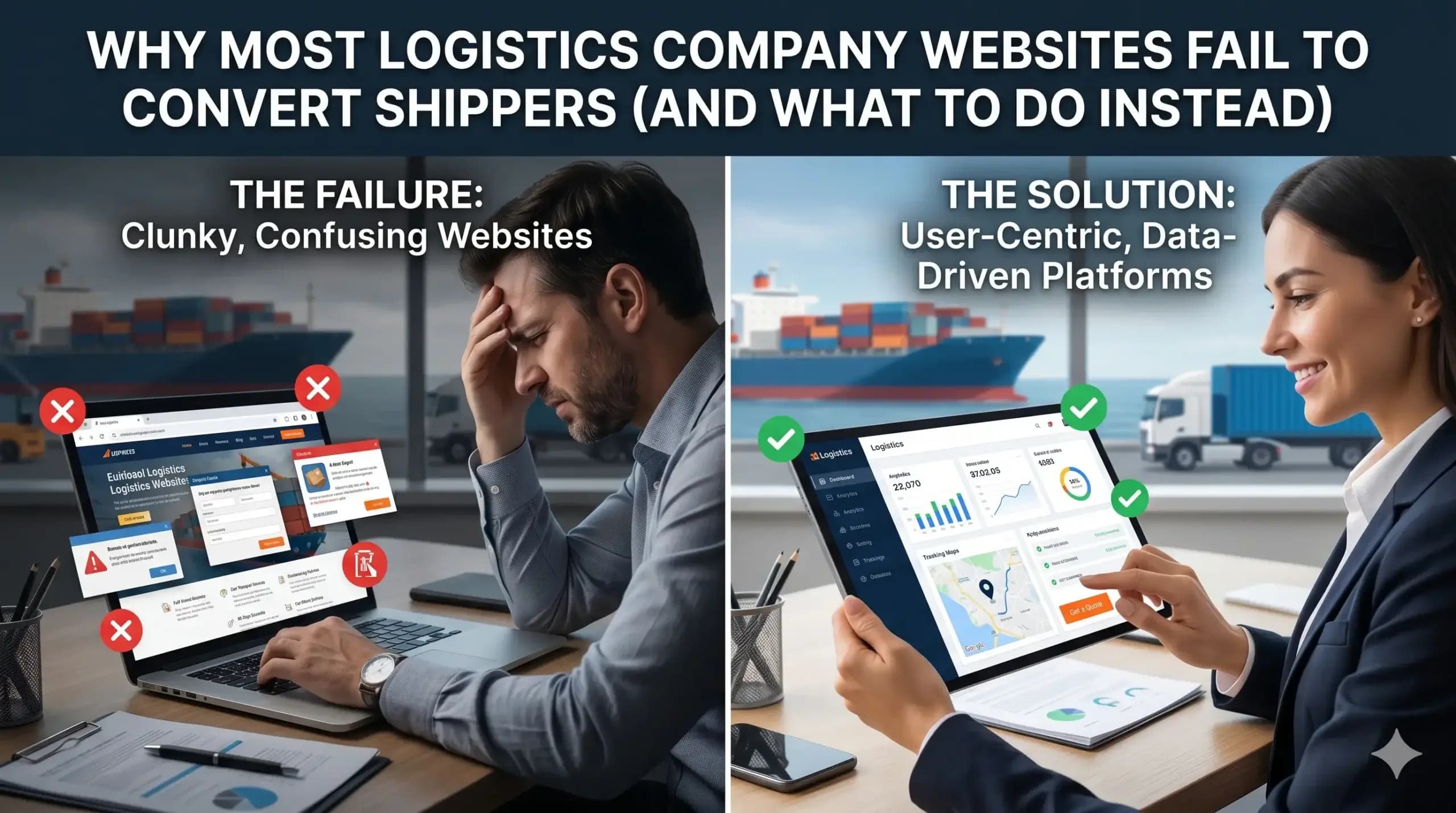
Why Most Logistics Company Websites Fail to Convert Shippers (And What to Do Instead)
You’ve got trucks moving freight, drivers on the road, and dispatch working the phones — but your website? It’s sitting there quietly, doing nothing. No quote requests coming in. No new shipper inquiries. Just a page your cousin built five years ago that you’d rather not think about.
Here’s what most logistics company owners assume: “My website just needs more traffic.” So they talk to an SEO guy, maybe run some Google Ads, and wonder why the phone still doesn’t ring.
The traffic isn’t always the problem. The website itself is.
Shippers searching for freight partners are making fast decisions. If your site doesn’t immediately answer their questions, earn their trust, and give them a clear next step — they’re gone. In the time it took you to read this paragraph, a potential customer just clicked over to your competitor.
This post breaks down exactly why most logistics websites lose business before they even have a chance — and what a properly built site actually looks like.
Your Website Loads Slowly — And Shippers Are Already Gone
Think of your website like a freight terminal. If a shipper pulls up to drop off a load and stands around for 10 minutes before anyone acknowledges them, they’re leaving and calling someone else. That’s exactly what a slow website does.
Most logistics websites are bloated with heavy images, outdated code, and hosting plans that weren’t designed for business performance. The result: your site takes 5, 6, sometimes 8 seconds to load.
Studies consistently show that most visitors leave within the first 3 seconds if a page hasn’t loaded. That’s not just a bounce — that’s a shipper who needed a freight partner, landed on your site, and left before they even saw your phone number.
The fix isn’t complicated, but it does require intentional website design for logistics companies — not a generic template off the shelf.
What Digital Trace does instead: Every site we build is optimized for speed from the ground up. Compressed images, lean code, enterprise-grade hosting. Your site loads fast on a phone, on a desktop, on any connection — because shippers aren’t always at a desk.
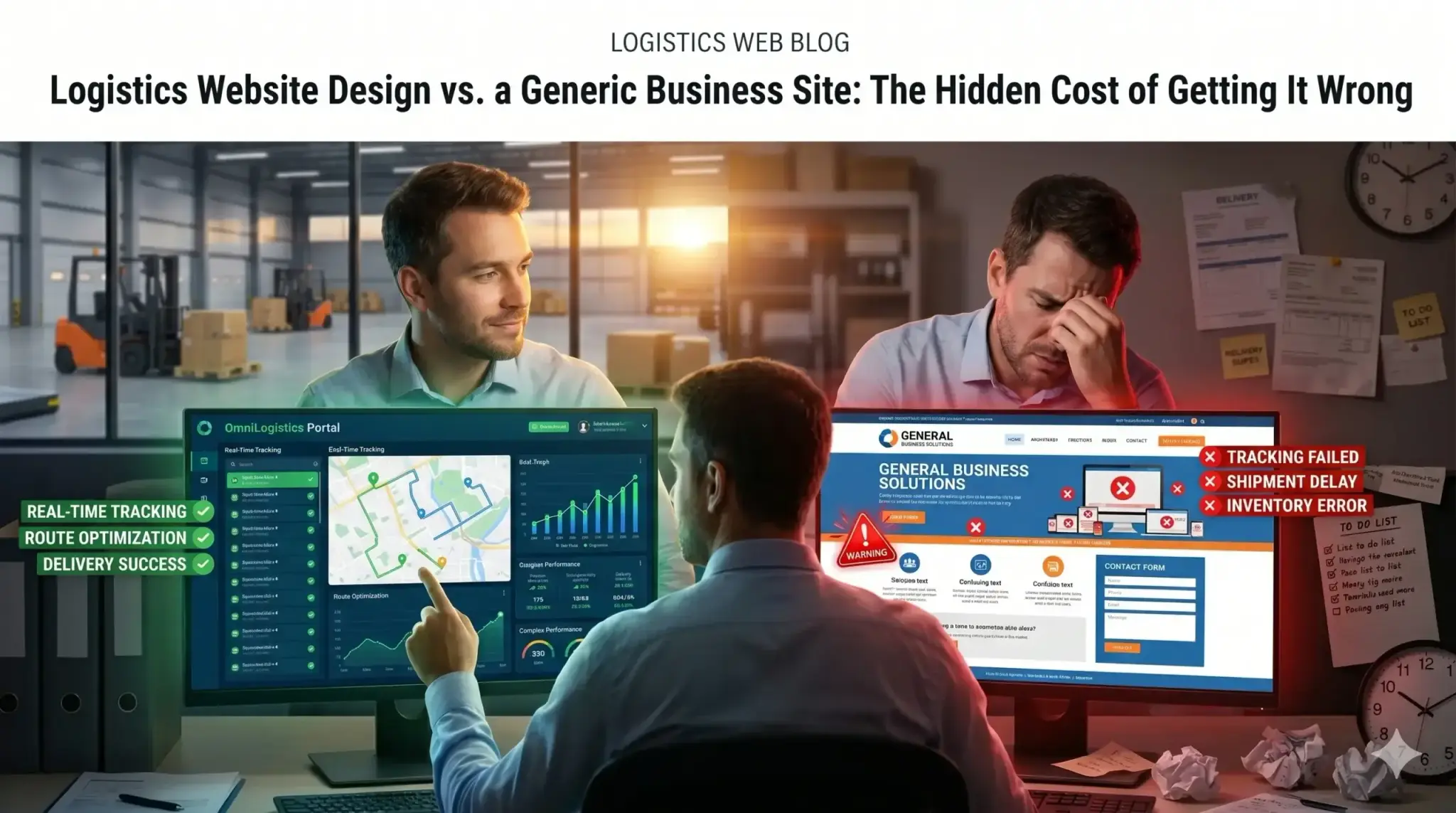
Your Homepage Talks About You — Not About What Shippers Need
Here’s the trap most logistics companies fall into: the homepage opens with “Welcome to [Company Name]. We are a family-owned freight brokerage serving the continental US since 2003.”
The shipper doesn’t care yet. They’re not looking for your company story. They’re looking for the answer to one question: Can these people solve my problem?
If your homepage doesn’t answer that in the first 5 seconds, your visitor leaves. It’s that simple.
Your website needs to lead with the shipper’s pain, not your credentials. What lanes do you cover? What freight types do you handle? What does working with you actually look like? Get to that immediately.
What Digital Trace does instead: We structure logistics websites with the shipper’s decision process in mind. Your most critical information — service areas, freight types, contact options — is front and center, before anyone has to scroll. Your story gets told, but at the right moment, after trust is already building.
There’s No Clear Next Step — So Visitors Do Nothing
Imagine a shipper lands on your site, reads through your services, thinks “okay, this looks solid” — and then has no idea what to do next. Is there a form? Should they call? Email? Do they need to create an account?
Confusion kills conversions. When a visitor isn’t sure what action to take, they default to the easiest one: they leave.
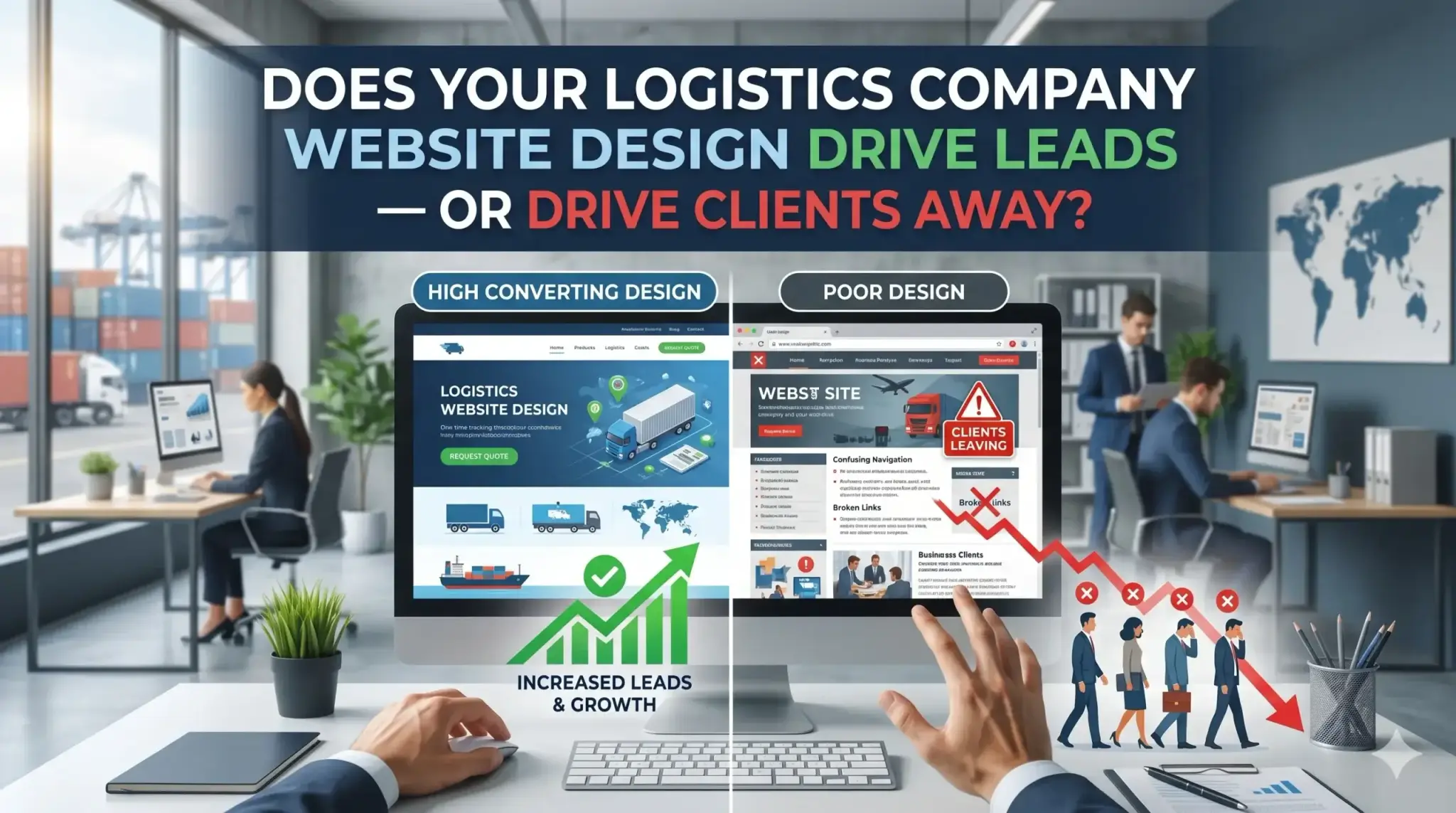
This is one of the most common problems in logistics website design, and it’s completely fixable. Every page on your site should have one clear, obvious call to action. Not five options competing for attention. One.
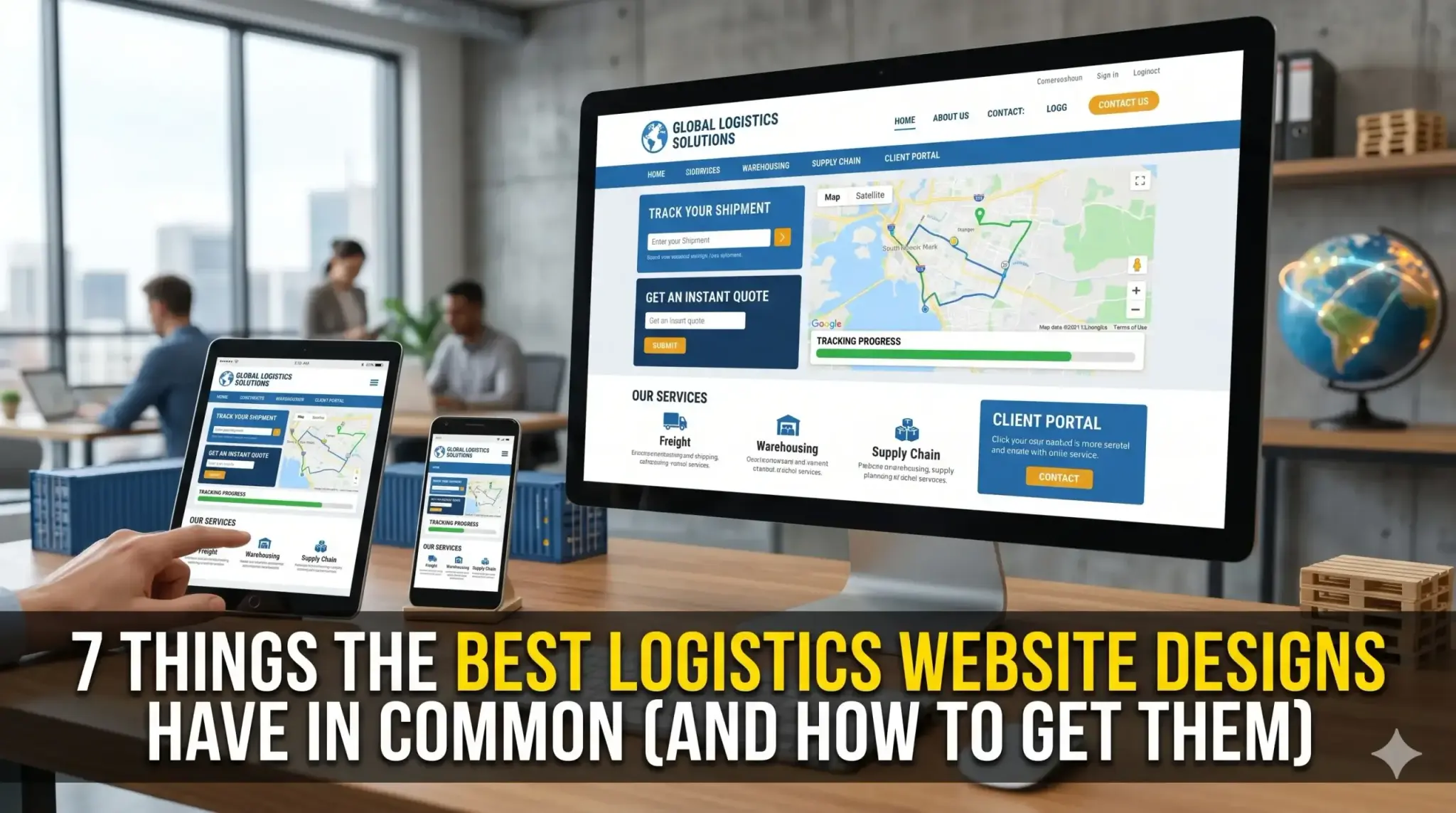
What Digital Trace does instead: We design every page with deliberate conversion paths. A shipper lands, they get the information they need, and the next step — whether that’s requesting a quote, filling out a contact form, or calling your dispatch line — is unmissable. No second-guessing required.
Google Doesn’t Know Enough About Your Business to Show It
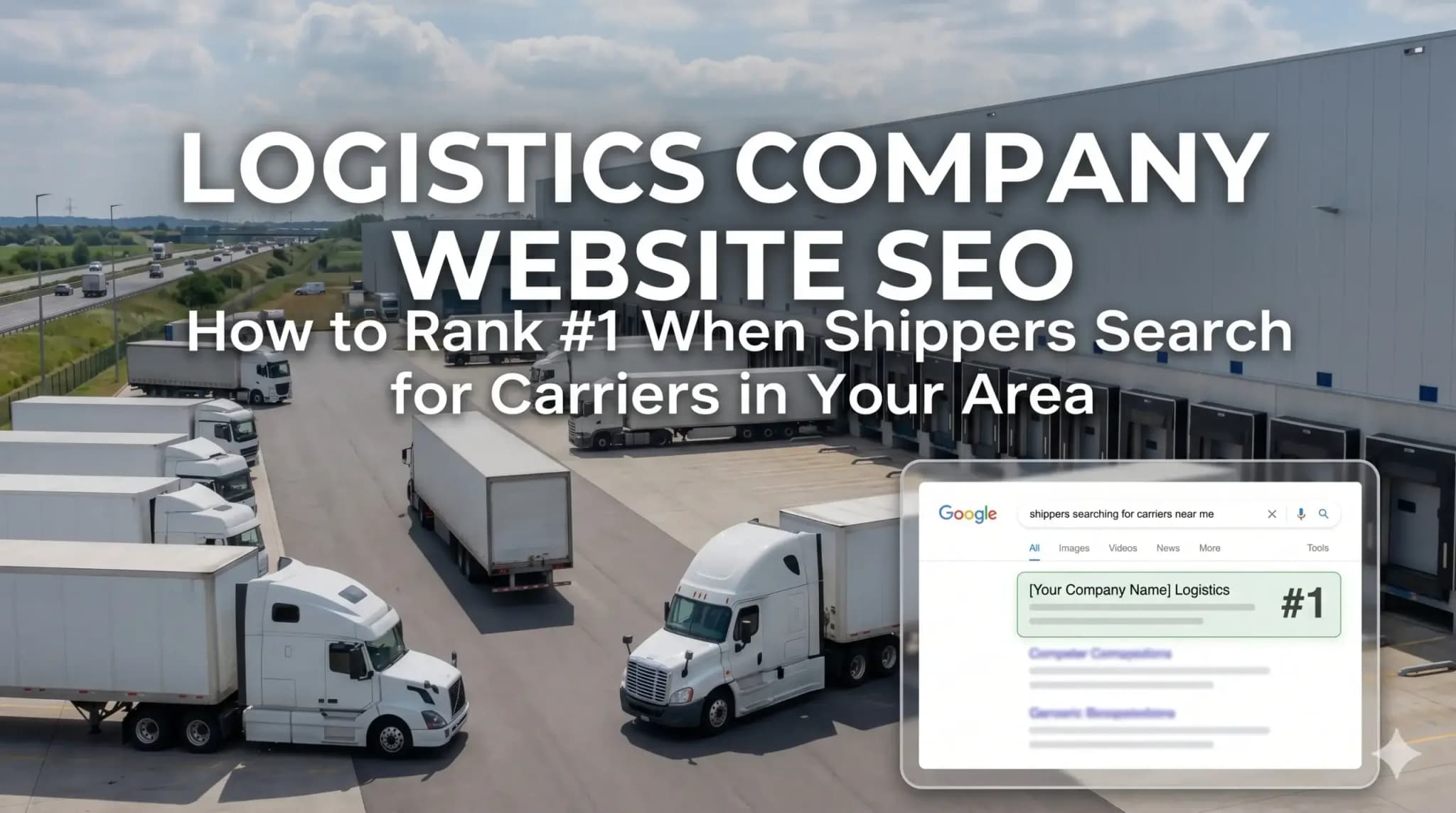
You might have a decent-looking website but still be invisible in search results. Here’s why: Google doesn’t just scan your site — it looks for specific signals to understand what your business does, where it operates, and whether it’s trustworthy enough to show to searchers.
If those signals aren’t there, Google hedges. Your competitor who has them shows up. You don’t.
This isn’t about stuffing keywords everywhere. It’s about structure — the technical signals behind your pages that tell Google exactly what freight services you offer, what regions you cover, and that your business is legitimate and established.
💡 Pro Tip: One of the most overlooked fixes in logistics website development is adding structured data (also called schema markup) to your site. Without it, Google treats your site like an unlabeled freight shipment — it may know it exists, but it’s not confident enough to put it front and center. Adding proper business and service schema is a straightforward fix that helps search engines confidently match your site to the right shipper searches.
What Digital Trace does instead: We build every logistics site with proper technical foundations — structured data, clean site architecture, and on-page optimization that tells Google exactly who you are and where you serve. The result is a site that earns visibility without you needing to become an SEO expert.
Your Site Doesn’t Work on a Phone — And That’s Where Shippers Are
Logistics is a mobile industry. Shippers are checking options from a job site. Fleet managers are researching freight partners from a tablet. Decisions get made on phones, not just desktops.
If your website isn’t built to work smoothly on mobile — small text, buttons that don’t tap right, forms that are impossible to fill out with your thumbs — you’re turning away a massive portion of potential business.
A site that’s hard to navigate on a phone isn’t just annoying. It signals to the visitor (consciously or not) that your operation might not be up to date either.
What Digital Trace does instead: Every logistics website we build is designed mobile-first. That means the phone experience is engineered first, and the desktop version grows from there. Click-to-call buttons, easy quote request forms, fast load times on cellular — all of it.
Real-World Example: A Mid-Size Freight Broker in the Midwest
A regional freight brokerage — running 12 lanes across the Midwest with a solid book of shipper accounts — came to us because their inbound leads had flatlined. They were doing fine on referrals but wanted to grow. Their website was five years old, built on an outdated template, and hadn’t been touched since launch.
The problems we found:
- Site loaded in 6.8 seconds on mobile
- Homepage led with a company history paragraph
- No quote request form — just a general contact email buried in the footer
- Zero structured data; Google had no clear picture of their service area or freight types
- Not one clear call to action on any page
What changed: We rebuilt the site from scratch — fast-loading, mobile-optimized, with a homepage structured around shipper needs. We added a prominent “Request a Quote” form above the fold, clear lane and freight-type information, and full structured data implementation.
The result: Within 90 days of launch, inbound quote requests increased from near-zero to an average of 18 per month. Organic search impressions tripled. The owner told us the site now “works harder than our best salesperson.”
Not sure if your logistics website has these same issues? Get a free website audit — no obligation, just a clear picture of what’s costing you leads.
Your Path to More Leads: 5 Steps That Actually Work
You don’t need to become a web developer to fix your site. You just need to know what needs fixing and work with people who know the logistics space.
- Start with an honest look at your current site. Pull it up on your phone and pretend you’re a shipper who’s never heard of your company. Is the value clear in the first 5 seconds? If not, that’s your biggest problem.
- Fix your speed. A slow site is actively costing you business right now. Speed optimization alone can make a measurable difference in how long visitors stay and whether they take action.
- Rewrite your homepage around your shipper’s needs. Lead with what you do, who you serve, and what lanes or freight types you cover. Move your company story to the About page.
- Add one strong call to action to every page. A quote request form, a phone number, a scheduling link — pick one and make it obvious. Don’t make shippers hunt for it.
- Work with someone who understands logistics, not just websites. Generic web agencies build generic websites. A logistics website needs to speak the language of shippers — and be structured to convert them.
Frequently Asked Questions
Why am I not getting calls from my logistics website?
The most common reason is a mismatch between what shippers are looking for and what your site shows them. If your homepage doesn’t quickly communicate what freight services you offer and what to do next, most visitors leave without acting. Speed, mobile usability, and a clear call to action are the three things we look at first.
How do I know if my logistics website is actually working?
If you’re not tracking where your calls and quote requests are coming from, you genuinely don’t know. A working website produces a consistent, measurable stream of inbound inquiries. If you haven’t gotten a lead from your site in the last 30 days, it’s not working. Book a free website audit and we’ll show you exactly where the gaps are.
How long does it take to see results from a new logistics website?
Realistic timelines vary, but most clients see meaningful improvement in inbound traffic and lead quality within 60–90 days of a new site launch — especially when SEO foundations are built in from day one. A redesign isn’t a magic switch; it’s a business asset that compounds over time.
What makes a logistics website different from a regular business website?
Shippers have very specific decision criteria: what freight types you handle, what lanes you cover, your capacity and reliability, and how easy it is to get a quote. A generic business website doesn’t address any of that. A logistics-specific website is structured around those exact questions — so shippers find answers fast and trust you enough to reach out.
Do I need a new website, or can my current one just be fixed?
It depends on the foundation. Some sites can be significantly improved with targeted fixes — speed optimization, new content, better calls to action. Others are built on outdated platforms that make meaningful improvement nearly impossible. The audit process is how we figure out which situation you’re in before recommending anything.
I’ve paid for web design before and didn’t see results. Why would this be different?
That’s the most common thing we hear — and it’s a fair question. Most agencies build sites that look good but aren’t designed to convert. They optimize for aesthetics, not for the specific behavior of shippers who are comparing freight partners. The difference is in the strategy behind the build, not just the design itself.
Stop Leaving Money on the Table
Your competitors are showing up in search results. Shippers are landing on their sites, getting their questions answered, and sending quote requests. Meanwhile, your website sits there looking like a parked truck with no driver.
The good news: this is a solvable problem, and solving it doesn’t require months of guesswork.
Digital Trace specializes in website design and development for logistics companies — built to rank in search, load fast, and turn shipper visits into actual business conversations.
We’ll take a close look at your site, identify what’s costing you leads right now, and give you a clear picture of what a higher-performing site would look like — with no obligation and no sales pressure. Just real answers about your real website.