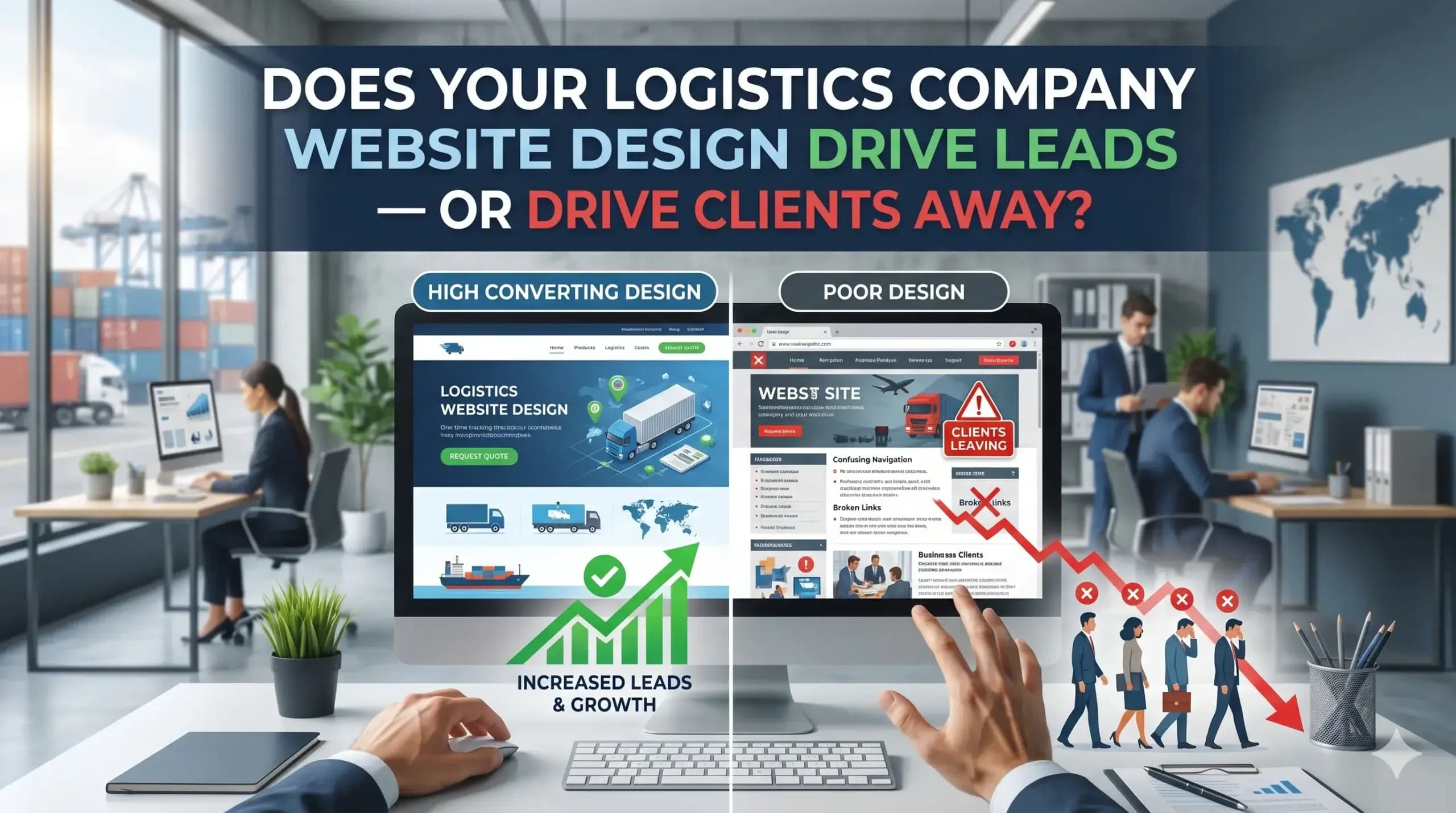
Does Your Logistics Company Website Design Drive Leads — or Drive Clients Away?
You built a solid logistics operation. You deliver on time, your drivers are reliable, and your clients trust you. But when a new shipper or supply chain manager searches for a freight partner online — they land on your website, spend about eight seconds looking around, and call your competitor instead.
That’s not bad luck. That’s a website working against you.
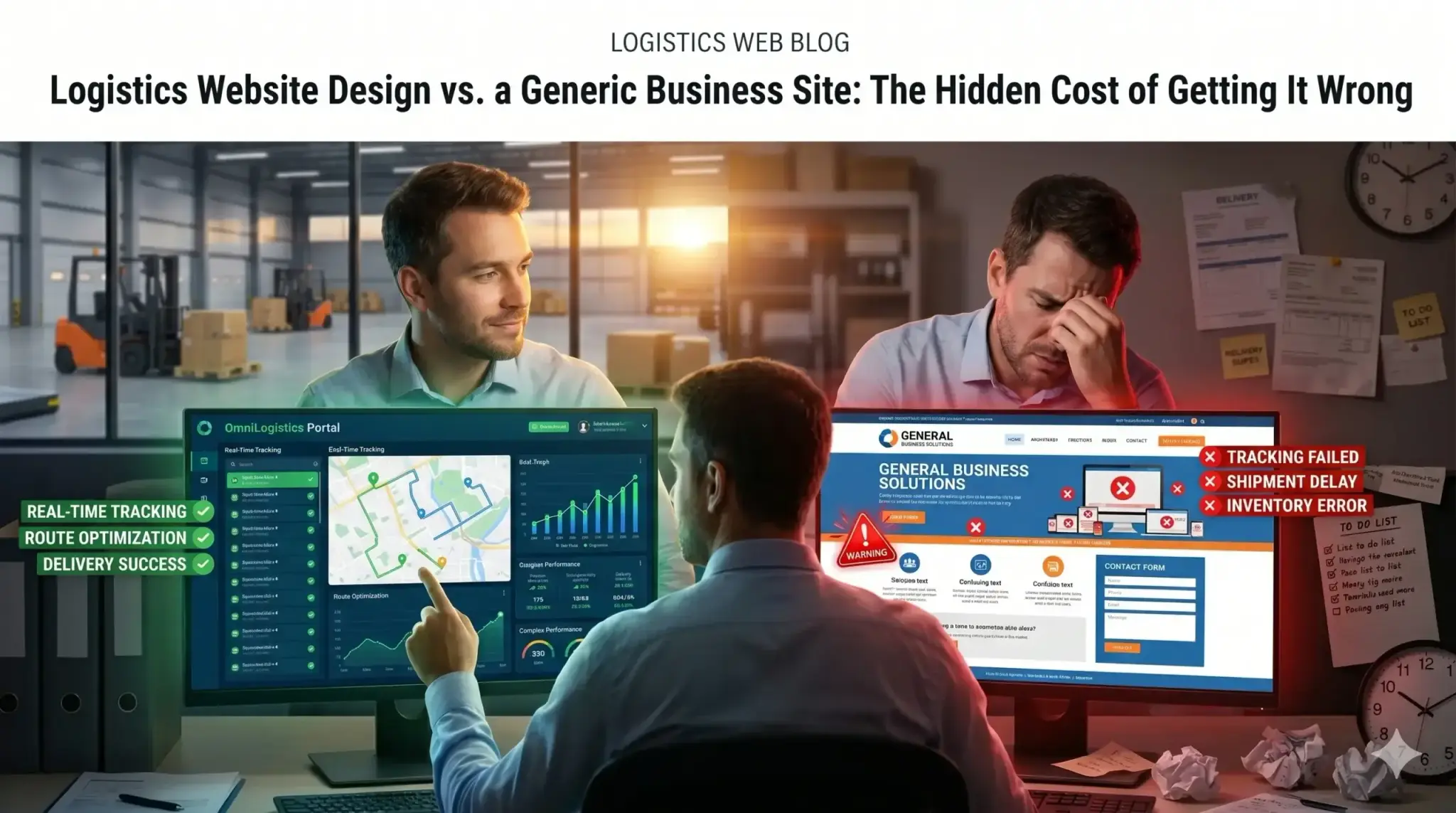
Most logistics business owners assume their website just needs to “look professional.” But a professional-looking website and a lead-generating website are two completely different things. One sits there. The other works like a 24/7 sales rep — qualifying prospects, building trust, and getting your phone to ring.
This post breaks down exactly why most logistics company websites lose leads before they even get a chance to compete — and what the ones that actually convert look like.
Your Website Is Loading Too Slowly — and Losing Clients Before They See Your Phone Number
Picture this: a procurement manager at a mid-size manufacturer needs to find a new LTL carrier. She Googles, clicks your site, and nothing happens for four seconds. She hits the back button and calls your competitor.
That’s not hypothetical — it happens dozens of times a week on slow logistics websites.
Why it happens: Most logistics websites are built on bloated templates with uncompressed images, too many plugins, and no performance optimization. Every extra second of load time isn’t just annoying — it’s a conversion killer.
The real cost: Studies consistently show that a site taking more than three seconds to load loses more than half its visitors. In logistics, where clients are comparing multiple vendors in a single session, you don’t get a second chance.
What to do instead: Your site needs to be technically optimized from the ground up — compressed images, clean code, fast hosting, and a build that prioritizes speed on mobile and desktop alike. Websites built for logistics businesses by Digital Trace are engineered for speed first, because that’s where most operators are silently bleeding leads.
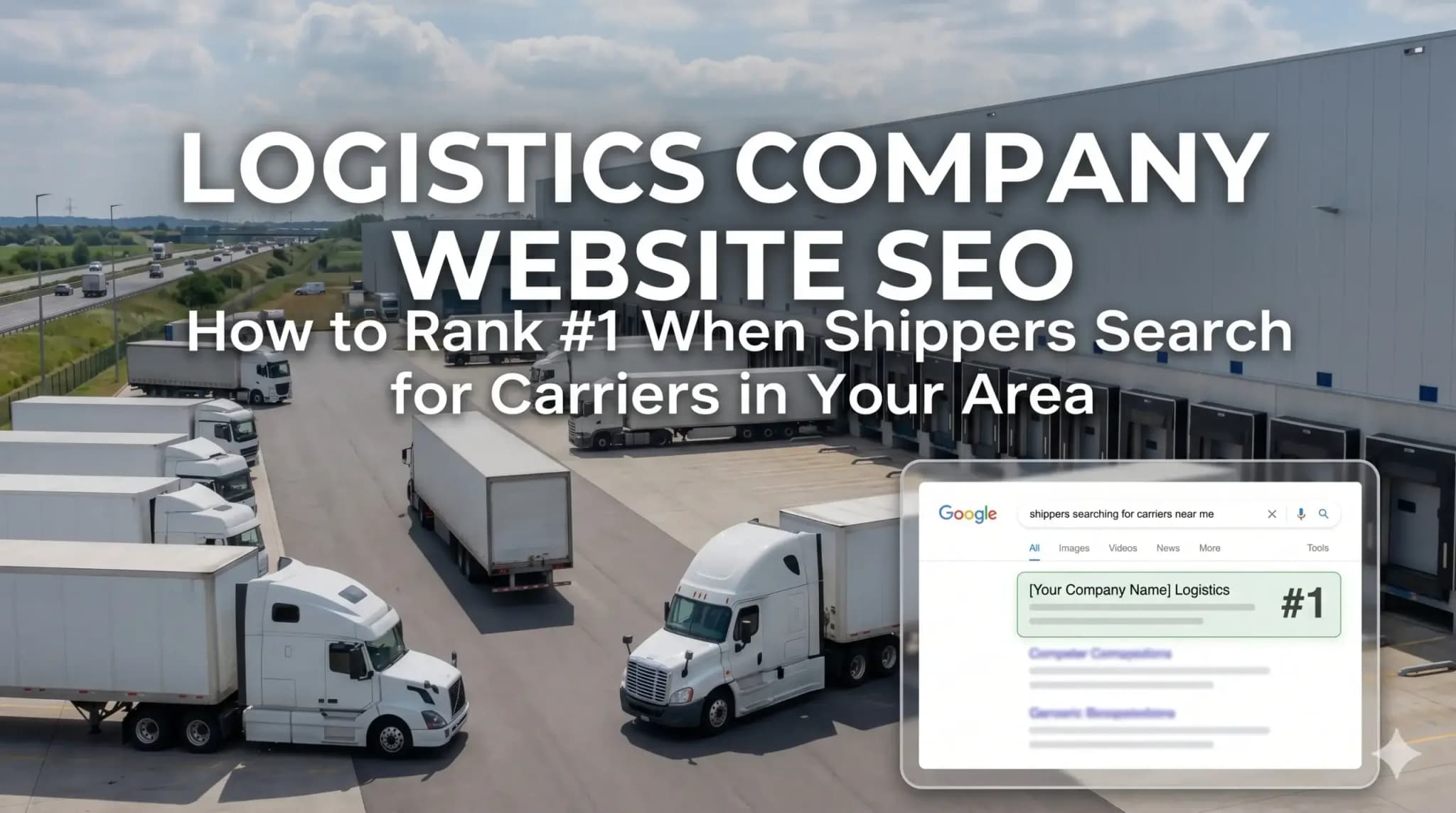
You’re Not Showing Up When Local Shippers Search for You
Your competitor down the road runs a scrappier operation than you. Their trucks are older, their rates aren’t lower — but they’re showing up on the first page of Google when shippers search for freight carriers, and you’re not. How?
Their website is doing the work yours isn’t.
Why it happens: Google needs clear signals to understand what your business does, where you operate, what lanes you cover, and who you serve. If your website has a generic homepage, vague service descriptions, and no location-specific content, Google doesn’t have enough to go on — so it doesn’t rank you with confidence.
The real cost: Think about how many shippers search for “logistics company [your city]” or “freight carrier [your state]” every month. Every one of those searches you don’t show up for is a potential client that never knew you existed.
What to do instead: Your site needs dedicated service pages built around the specific lanes, regions, and freight types you handle — written in a way Google understands and shippers trust. This isn’t about stuffing keywords. It’s about being clear about what you do and who you serve.
Your Website Looks Like It Was Built for Someone Else’s Business
Here’s a quick test: remove your logo from your homepage. Could it belong to any other logistics company in America?
If the answer is yes, that’s a problem.
Why it happens: Most logistics websites are built from generic templates with stock photos of semi-trucks and warehouses that no one in the industry finds interesting. There’s no personality, no proof of expertise, and nothing that separates you from 10,000 other operators.
The real cost: When a shipper can’t tell what makes you different in the first few seconds, they default to whoever they’ve heard of — or whoever they find first. Generic = forgettable. Forgettable = calls your competitor.
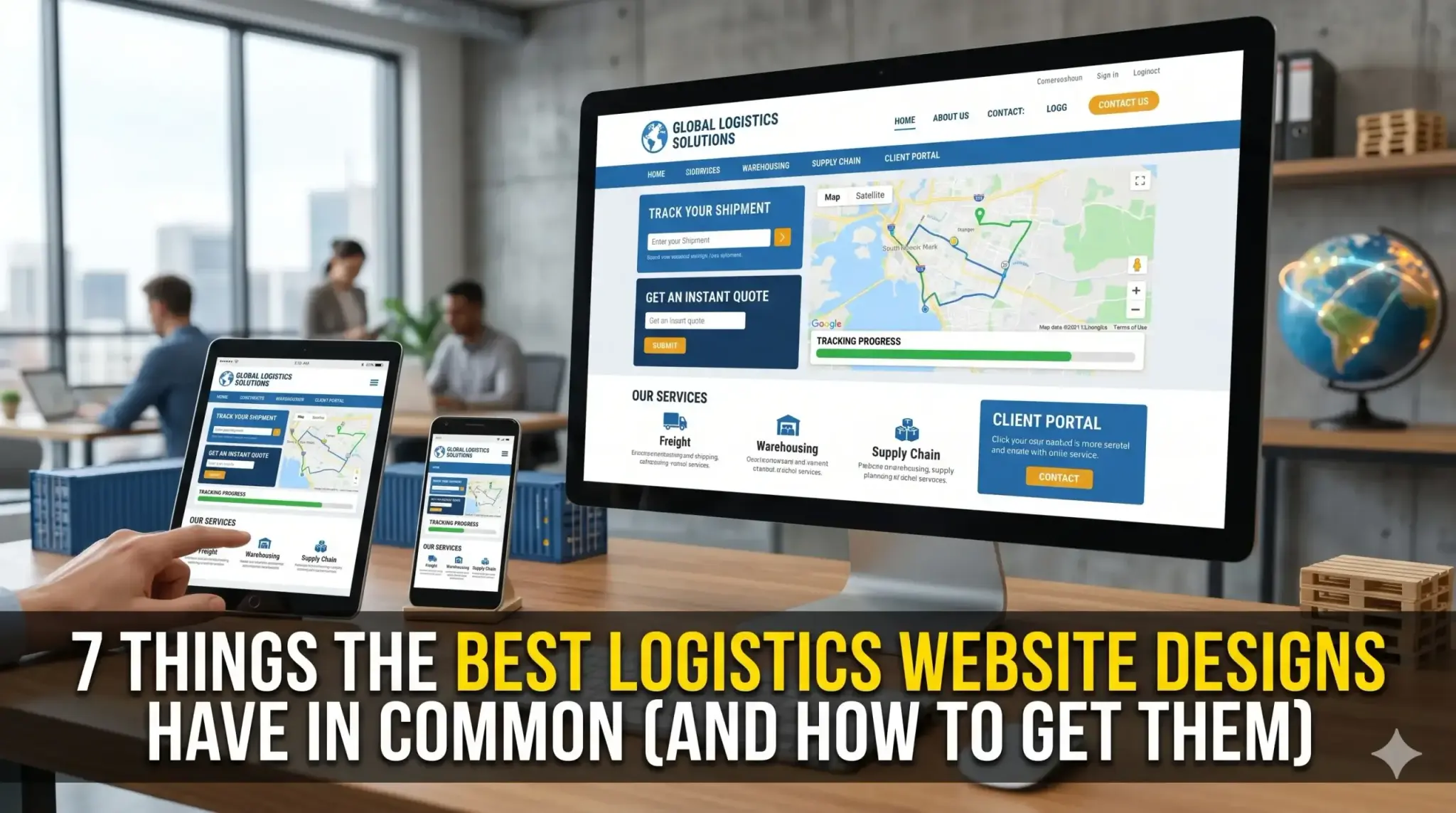
What to do instead: Your website should reflect exactly what kind of logistics company you are. Are you specialized in cold chain? Oversized freight? Last-mile retail delivery? That needs to be front and center — not buried in a “Services” page no one scrolls to. Think of your website like your dispatch board: every piece of information should be where it belongs, visible at a glance, and serving a purpose.
Visitors Don’t Know What to Do Next — So They Leave
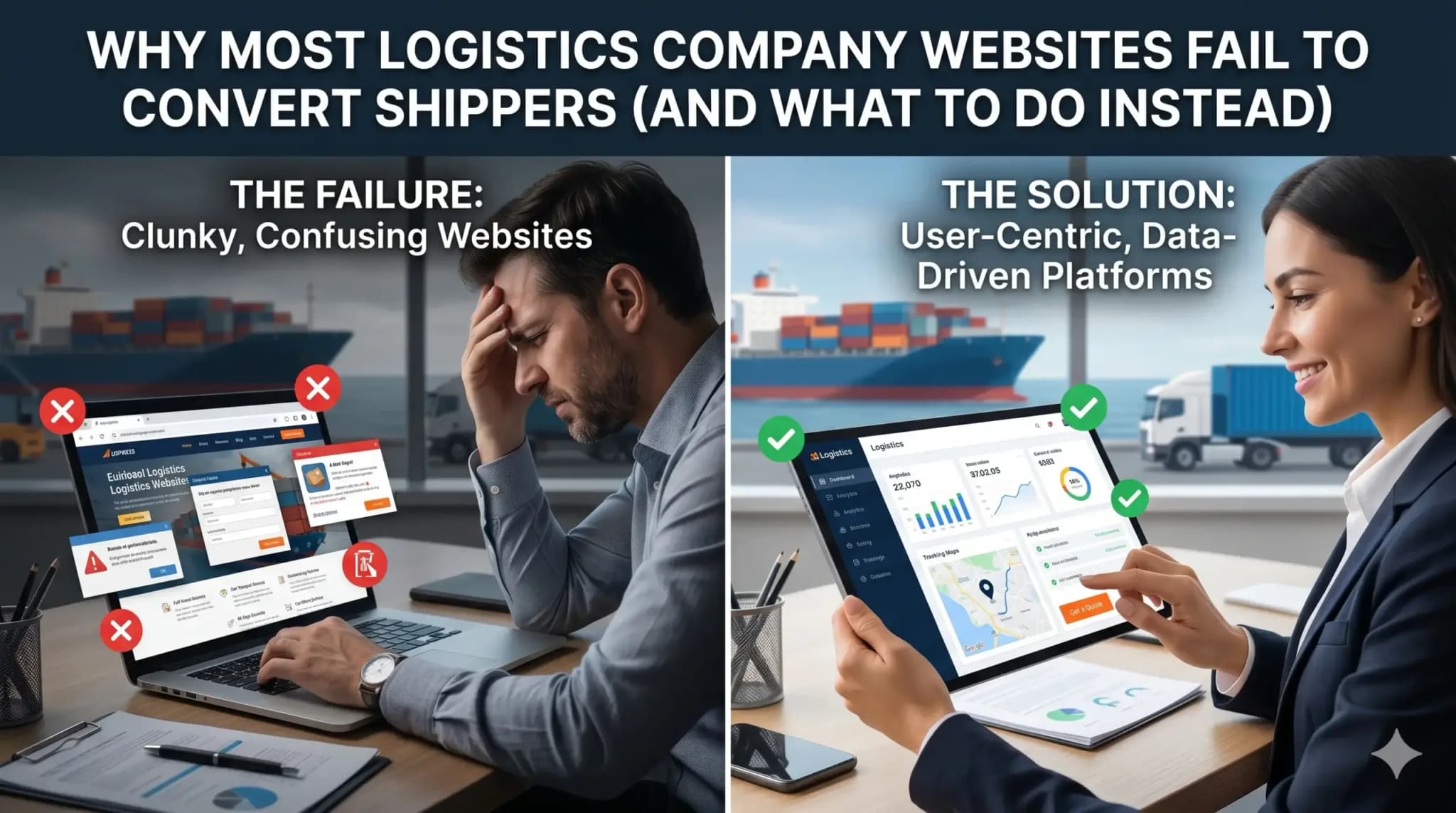
This is one of the most common and most expensive mistakes on logistics websites. A potential client lands on your site, reads a bit, and then… nothing. No clear way to get a quote. No reason to call. No obvious next step.
Why it happens: Most logistics websites were designed to inform, not to convert. There’s an “About Us” page, a list of services, maybe a contact form buried at the bottom. But there’s no clear path from “I’m interested” to “I’m ready to talk.”
The real cost: Every visitor who leaves without contacting you is a lead you paid for — through SEO, word of mouth, or your reputation — and lost for free.
What to do instead: Every page on your site should have one clear call to action. For logistics companies, that usually means making it dead simple to request a quote, get a rate, or schedule a call. The friction between “I’m interested” and “I reached out” should be as close to zero as possible.
💡 Pro Tip: One of the biggest hidden mistakes on logistics websites is having a contact form that goes to a general email inbox — and then takes 48+ hours to get a response (or never gets one at all). That’s not a design problem — it’s a follow-up problem that kills conversions. A fast, well-designed website still fails if no one responds quickly. The best logistics websites route leads directly to whoever responds fastest and include an auto-reply so prospects know their request was received.
Real-World Results: From Invisible to In-Demand
The situation: A regional dry van carrier based in the Midwest had been in business for 11 years. Their website was built in 2017, hadn’t been touched since, and was loading in over six seconds on mobile. They were getting traffic — but almost none of it was converting. They were losing to newer carriers with slicker websites, even on lanes they’d covered reliably for years.
What changed: Digital Trace rebuilt their site from scratch with a focus on three things: mobile speed (down to under two seconds), clear service pages for each of their primary lanes, and a prominent, easy-to-use quote request form on every page.
The result: Within 90 days, their inbound quote requests increased by over 60%. Their Google visibility for freight-related searches in their region improved substantially, and they landed two new shipper accounts — both of which mentioned finding them online as the reason they called.
Their operation didn’t change. Their website finally started working for them.
Not sure if your logistics website has these issues? Get a free website audit — no obligation, just a clear picture of what’s costing you leads.
Your Path to More Leads: A Simple 5-Step Roadmap
You don’t need a marketing degree to fix this. Here’s how the process works:
- Audit your current site — Find out where you’re losing visitors, how fast your site loads, and whether Google can actually understand what you do. A free audit from Digital Trace gives you this in plain English.
- Fix your speed and mobile experience — If your site takes more than three seconds to load on a phone, that’s your first fix. Most shippers are searching from mobile at some point in their buying process.
- Create pages that match how shippers search — Build dedicated pages for your lanes, freight types, and service areas. Generic service pages don’t rank. Specific ones do.
- Make your next step obvious — Every page should make it easy for a prospect to request a quote or pick up the phone. Remove every barrier between interest and action.
- Track what’s working — Know which pages are driving calls, which aren’t, and why. The best logistics websites get better over time because they’re monitored and adjusted — not just built and forgotten.
Frequently Asked Questions
Why am I not getting any calls from my website?
The most common reasons are slow load speed, weak visibility on Google, or no clear call to action on your pages. Visitors might be finding your site — but something is stopping them from picking up the phone. A free audit will show you exactly which of these is happening on your site.
How do I know if my logistics website is actually working?
If you can’t answer “how many leads did my website generate this month,” your site probably isn’t being tracked properly — or isn’t generating any. A working logistics website has measurable inbound activity: form submissions, calls traced to the site, or quote requests. If you’re not seeing any of that, something is wrong.
What makes a logistics website different from a regular business website?
Shippers and supply chain managers evaluate vendors differently than most consumers. They want to know your lanes, your capacity, your reliability track record, and how fast they can get a quote. A logistics website needs to answer those specific questions fast — before the visitor bounces and calls someone else. See how Digital Trace builds logistics websites differently.
How long does it take to see results from a new website?
For technical fixes — speed improvements, better mobile experience, cleaner design — you can see an immediate improvement in how long visitors stay and whether they take action. For SEO improvements like Google rankings, expect meaningful movement within 60–120 days depending on your competition and region.
Do I really need a fast website if most of my clients come from referrals?
Yes — because referrals still check your website before they call. Even a warm referral will Google your company name to look at your site before deciding whether to reach out. If what they find looks outdated, slow, or confusing, it creates doubt. Your website is either confirming the referral’s decision or giving them a reason to hesitate.
How much does a logistics company website cost to build?
It varies based on the size of your operation and what you need. What’s more useful to think about is what a broken website is costing you. If your site is losing even two or three shipper accounts per year that would have converted otherwise, the cost of a new site pays for itself quickly. Start with a free audit to understand your current gap before making any decisions.
Stop Letting Your Website Cost You Clients
Your website is either your best sales tool or your quietest liability. For most logistics companies operating in the US right now, it’s the latter — and the owners don’t even know it.
The good news: the problems are fixable. And most of them don’t require a complete overhaul — just the right diagnosis and the right team to act on it.
Digital Trace specializes in website design and development for logistics companies — built for speed, search visibility, and converting the right kind of clients. Not pretty-for-pretty’s-sake. Built to perform.
Find out exactly what your logistics website is costing you — claim your free website audit here. No obligation. No sales pitch. Just a clear, honest look at what’s working and what isn’t — so you can decide what to do next.