How to Choose the Right Orthodontist Web Design Agency in the US (Without Getting Burned)
You spent thousands on a website. It looks decent enough. But the phone isn’t ringing the way it should, and when you search your own practice on Google, you’re nowhere to be found — yet somehow your competitor down the street always shows up first.
Most orthodontists assume this is just “how it is.” It’s not. The problem isn’t your location, your prices, or your reputation. In most cases, the culprit is a website that was built to look good in a portfolio screenshot — not to actually win you patients.
Choosing the wrong web design agency is one of the most expensive mistakes an orthodontist can make. This guide walks you through exactly what to look for, what red flags to avoid, and how to find an agency that treats your website as a patient-generating machine — not a digital checkbox.
Why Most Orthodontist Websites Quietly Lose Patients Every Day
Here’s something nobody tells you: a website that isn’t actively winning you patients is actively costing you them.
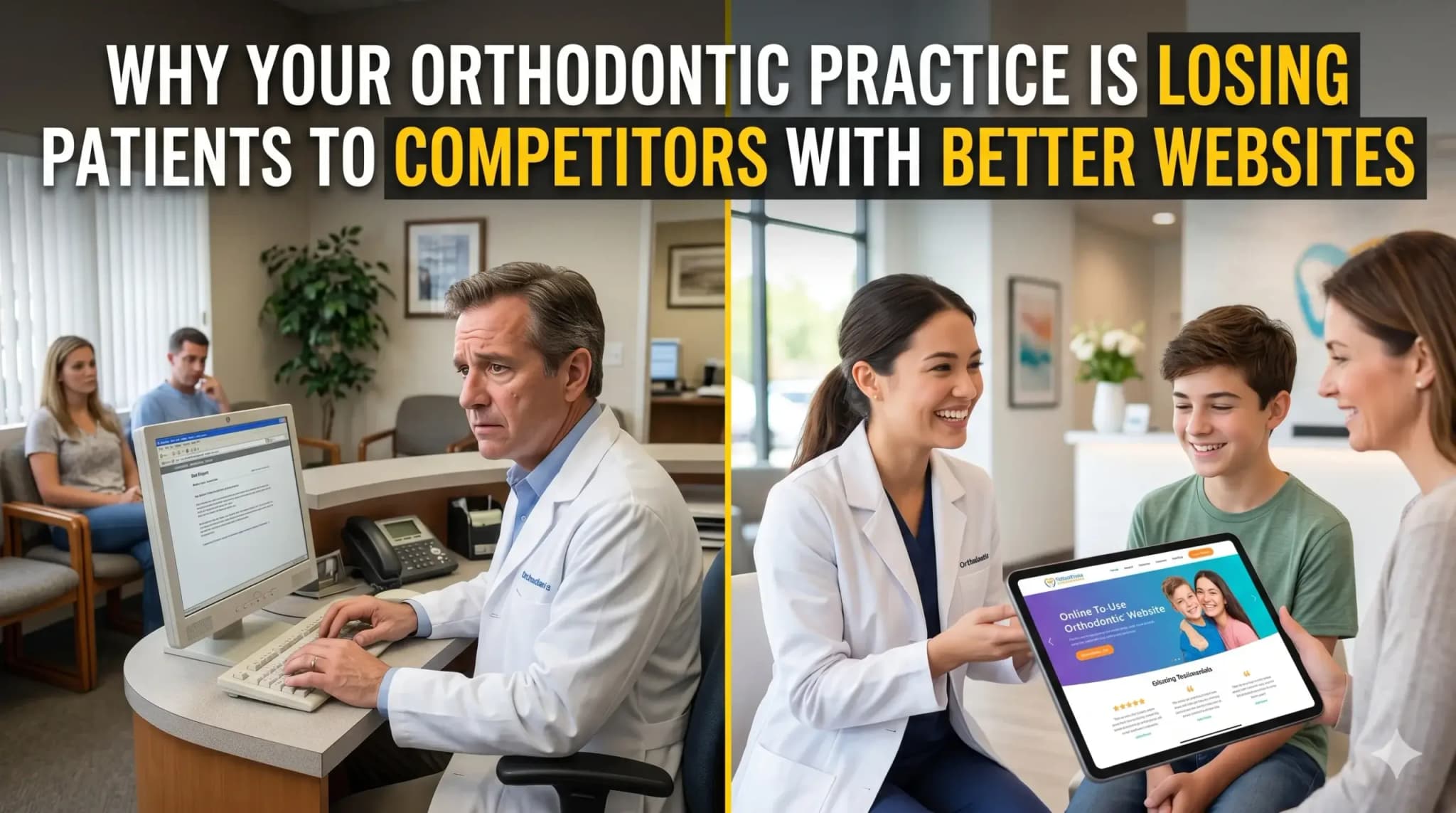
Think of your website like your front reception desk. If someone walks in and the desk is cluttered, the staff is slow to respond, and nobody can tell them what to do next — they walk out. That’s exactly what happens on thousands of orthodontic sites every single day. Visitors land, feel confused or unimpressed, and book with whoever showed up next in their search.
The most common culprits:
- No clear “next step.” A visitor lands on your homepage and doesn’t immediately see how to book a consultation. They shouldn’t have to hunt for it.
- Slow load times. Most people are browsing on their phones between school pickups and work meetings. If your site takes more than 3 seconds to load, more than half of those visitors are already gone — before they’ve even seen your phone number.
- Generic content. If your website could belong to any orthodontist in any city, Google has no strong reason to show it to people in your city.
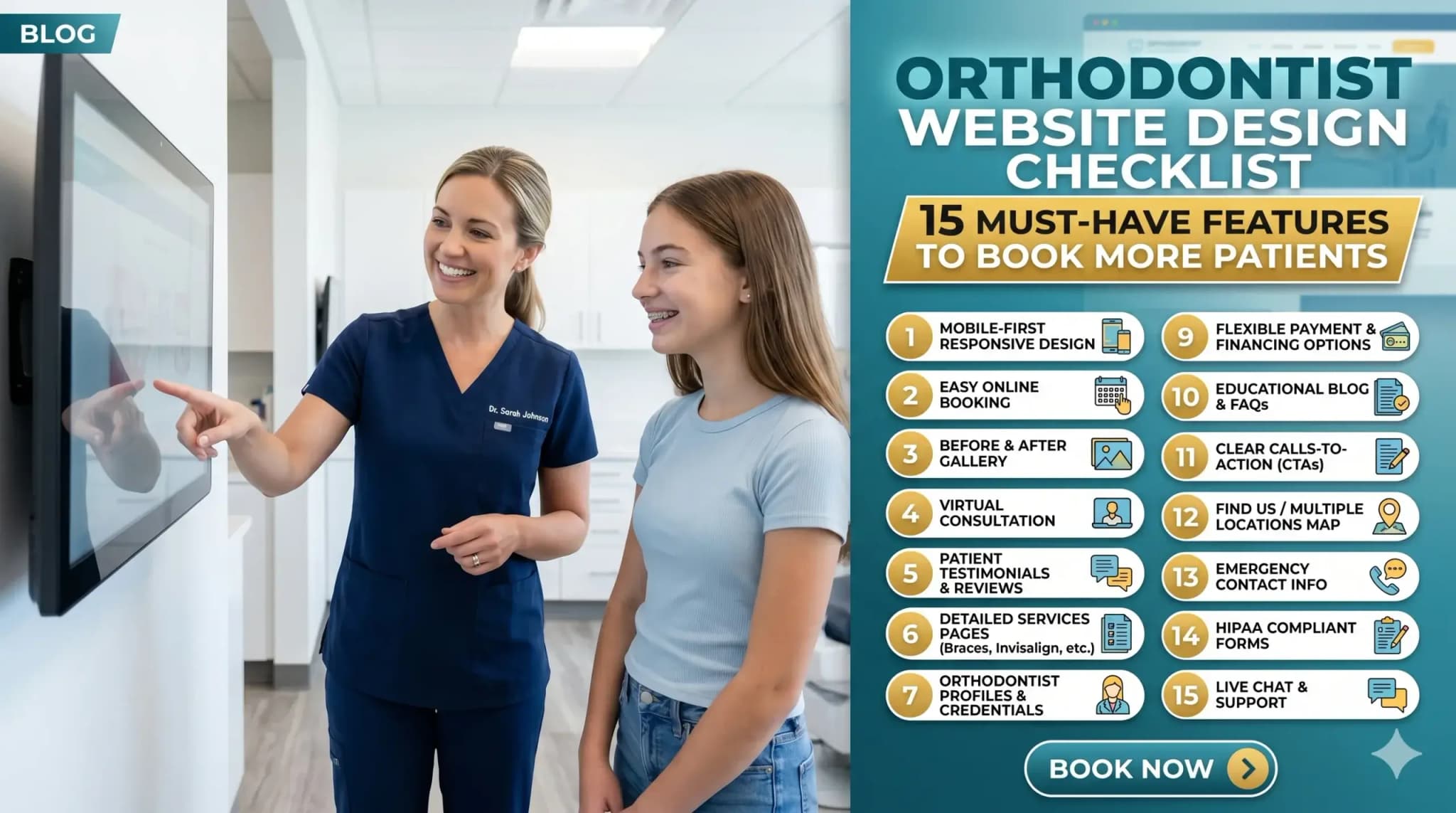
- No trust signals. Before a parent books their child’s first ortho consultation, they want to see reviews, before/after photos, staff bios, and proof that you’re the real deal.
A website that’s missing any of these isn’t just underperforming — it’s handing patients directly to your competitors.
What “Good Design” Actually Means for an Orthodontic Practice
A lot of agencies will show you a beautiful mockup and call it done. But for an orthodontic clinic, good design has nothing to do with aesthetics and everything to do with what happens after someone lands on your page.
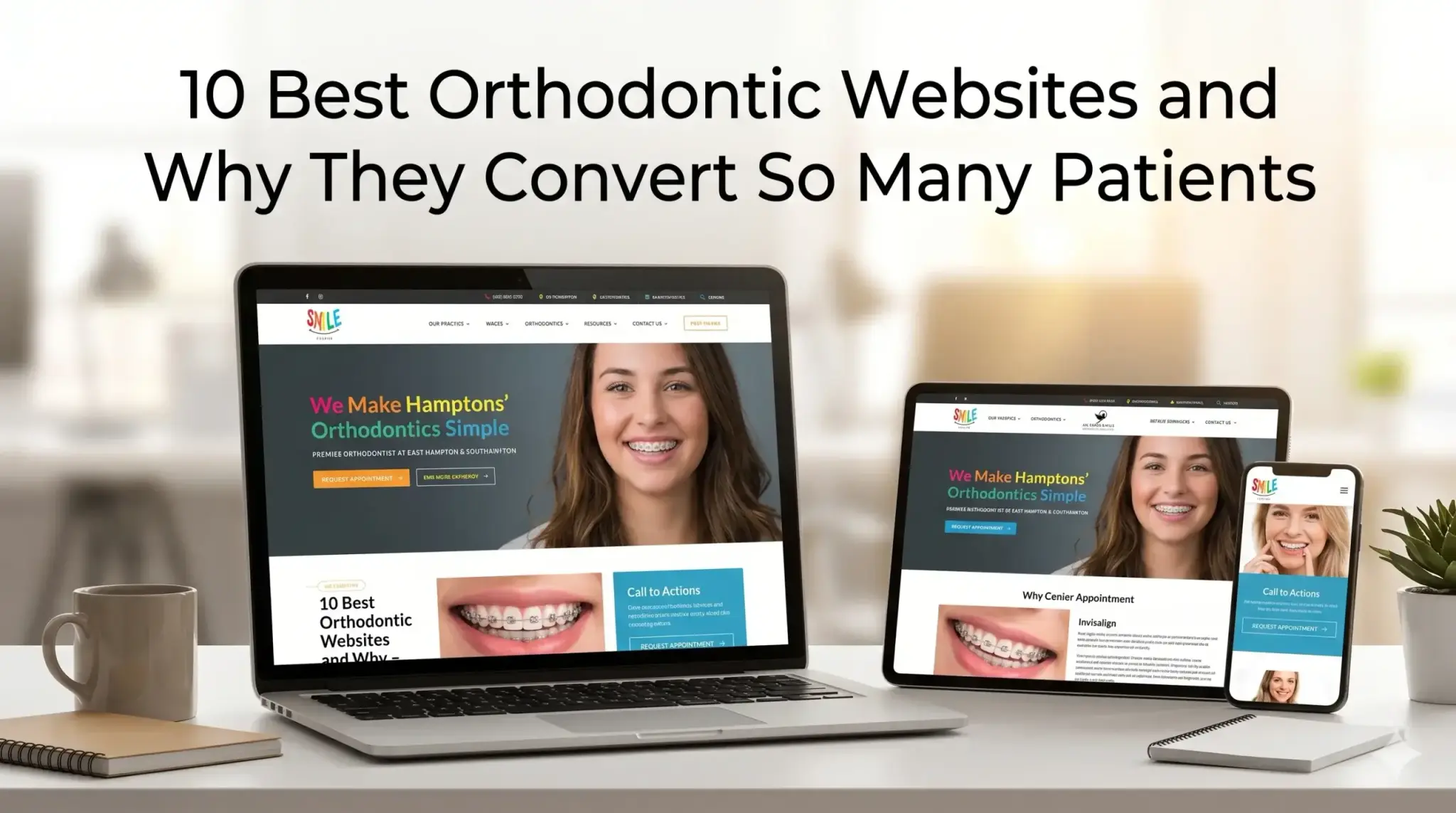
Does it load fast on a phone? The majority of people searching for an orthodontist are doing it on a mobile device. A site that looks great on a desktop but loads slowly or breaks on mobile is failing most of your potential patients.
Does it make the next step obvious? Every page on your site should point visitors toward one clear action — booking a free consultation, calling your office, or at minimum, filling out a contact form. If someone has to scroll and think, you’ve already lost their attention.
Does it speak to your specific patients? Parents of teens searching for braces have different concerns than adults looking into Invisalign. A high-performing orthodontic website speaks directly to those worries — cost, treatment length, what to expect — and answers them before the patient even has to ask.
When Digital Trace builds websites for orthodontist practices, every design decision is made with one question in mind: will this bring in more consultations? That’s the only metric that matters.
The Hidden Reason Your Website Doesn’t Show Up on Google
Your website might look perfectly fine. But if it’s not showing up when someone in your city searches “orthodontist near me” or “braces for kids [your city],” there’s likely a technical problem hiding underneath the surface.
Google needs to understand your business before it will confidently send people to you. If your site is missing the right signals — things like proper location information, fast performance, correct page structure, and content that matches what people are actually searching for — Google treats your site like a stranger it doesn’t quite trust yet.
The most common issues we find when auditing orthodontic websites:
- No Google Business Profile connection. Your website and your Google listing aren’t talking to each other, which weakens your local search presence.
- Missing location signals. If Google can’t clearly confirm where your practice is and who you serve, it won’t rank you confidently for local searches.
- Thin or copied content. Many orthodontic websites use template text that’s nearly identical to hundreds of other practices. Google deprioritizes content it’s seen before.
- Pages that load too slowly. Speed is a direct ranking factor. A slow site doesn’t just lose visitors — it loses ranking positions too.
None of this is your fault. Most agencies don’t explain any of this when they hand over a finished site. They deliver the design and disappear.
💡 Pro Tip: The “3-Second Test” Most Orthodontists Never Run
Pull out your phone right now. Open a browser you don’t normally use (so it’s not cached), and search your practice name. Then tap your website.
Count to three.
If you’re still looking at a loading screen — or if the first thing you see is a giant banner image with no immediate call to action — you’ve just experienced what most of your potential patients experience before they leave and call someone else.
The fix isn’t always a total redesign. Sometimes it’s optimizing your images, consolidating your code, and restructuring your homepage content so the most important information (your location, your services, and how to book) appears immediately. A quick technical audit can reveal exactly what’s slowing you down.
What a Real Turnaround Looks Like: Before and After
A two-location orthodontic practice in the Southeast had a website they’d invested in three years prior. It looked professional — clean design, nice photos, branded colors. But new patient inquiries had plateaued, and they were watching a newer competitor down the road consistently outrank them on Google.
The problems uncovered:
- The website took 7+ seconds to load on mobile
- There was no dedicated page for Invisalign (one of their highest-value services), so they weren’t ranking for it at all
- The homepage had no clear call-to-action above the fold — visitors had to scroll past a large banner image before they could find the “Book a Consultation” button
- Their Google Business Profile wasn’t linked to the website correctly, weakening their local rankings
What changed:
The site was rebuilt with mobile performance as the priority. Dedicated service pages were created for Invisalign, braces for teens, and early orthodontic treatment. The homepage was restructured so the first thing every visitor sees is the practice name, their two locations, and a prominent button to book a free consultation. Local SEO signals were properly connected.
The result: Within 90 days, organic search traffic had more than doubled. New patient consultation requests from the website went from roughly 8 per month to over 30 — without spending a dollar more on ads.
Not sure if your website has any of these issues? Get a free website audit — no obligation, just a clear picture of what’s costing you leads.
What to Ask Before You Hire a Web Design Agency
Not all web agencies are the same. Some are generalists who build websites for everyone from plumbers to pet stores. Others specialize in healthcare. Very few genuinely understand the orthodontic industry — the patient journey, the competitive landscape, and what actually drives someone to book a consultation.
Before you sign any contract, ask these questions:
- Have you built websites specifically for orthodontic practices before? Ask to see examples. If they show you dental sites, that’s not the same thing.
- How do you measure success? If the answer is anything other than “leads and new patient inquiries,” be cautious.
- Who owns the website after it’s built? Some agencies lock you into their platform so you can’t leave without losing everything. Make sure you own your domain and your site files outright.
- What happens after launch? A website needs ongoing maintenance, speed optimization, and content updates to keep ranking. Ask what’s included.
- Can you explain how you’ll help us rank locally? If they start talking in jargon without connecting it to actual patient volume, that’s a red flag.
The right agency won’t just build you a site — they’ll treat your practice like a business partner and measure their own success by yours.
Your Path to More Patients: 5 Steps to Getting Your Website Right
Step 1: Audit what you have. Before spending anything on a new site, understand what’s actually broken about your current one. Speed, local SEO, mobile experience, and conversion rate are the four areas that matter most. A proper audit takes 30–60 minutes and can save you from making the same mistakes in a new build.
Step 2: Get clear on who your best patients are. Are you trying to attract more teen braces patients? Adults interested in Invisalign? Both? Your website should be built around their specific questions and concerns — not around what you think sounds professional.
Step 3: Make sure your site loads fast on mobile. This is non-negotiable. If your site takes more than 3 seconds to load on a phone, fix that before anything else.
Step 4: Build or rebuild with local SEO built in. Your website needs to clearly signal where you are, who you serve, and what services you offer — in a way that Google can read and trust. This isn’t an afterthought; it needs to be built into the foundation.
Step 5: Work with an agency that understands orthodontics specifically. Learn how Digital Trace builds orthodontist websites that are designed from the ground up to attract and convert local patients — not just to look nice in a portfolio.
Frequently Asked Questions
Why am I not getting calls from my website even though I’m getting traffic?
Traffic without calls usually means one of two things: the people landing on your site aren’t the right patients (a targeting problem), or they are the right patients but the site doesn’t give them a clear reason to call (a conversion problem). Most orthodontic sites suffer from the second issue — there’s no prominent phone number, no clear next step, and no sense of urgency to book now versus later.
How do I know if my orthodontic website is actually working?
If you can’t point to a specific number of consultation requests that came directly from your website each month, your site isn’t working — it’s just existing. A working orthodontic website has clear tracking set up so you know exactly how many people visited, where they came from, and how many contacted you. If your current agency never set that up, that’s a problem worth fixing immediately.
How long does it take to see results from a new orthodontic website?
For technical fixes and speed improvements, some results — like improved rankings for branded searches — can show up within weeks. For broader local SEO gains, most orthodontic practices start seeing meaningful increases in organic inquiries within 60–90 days of a proper rebuild. Paid ads can bridge the gap if you need results faster.
What makes an orthodontic website different from a regular healthcare website?
Orthodontic patients have a very specific decision process — they’re comparing treatment options (braces vs. Invisalign), comparing practices, and often waiting for the right offer or reason to commit. A generic healthcare website doesn’t address any of that. A well-built orthodontic site speaks directly to those comparisons, highlights financing options, shows real patient results, and makes booking a free consultation feel completely risk-free.
Do I really need a fast website if most of my patients are local?
Yes — especially because your patients are local. Local patients are searching on their phones, often in the moment. Google also prioritizes fast-loading sites in local search results. A slow site doesn’t just frustrate visitors; it actively pushes you down in the rankings, handing those local searches to a competitor who invested in performance.
How do I know if my current agency is doing a good job?
Ask them for a monthly report that shows new patient inquiries from organic search — not just “traffic” or “impressions.” If they can’t show you that number, or if it’s been flat for more than three months, it’s time for a second opinion. Get a free website audit from Digital Trace and get a clear, honest picture of where you stand.
Ready to Stop Losing Patients to Your Website?
Every month your website underperforms is a month of consultations that went to your competitor instead of you. The good news is that most of the problems holding orthodontic websites back are fixable — and finding them starts with a single, honest audit.
Digital Trace specializes in building high-converting orthodontic websites for practices across the US. No fluff, no lock-in, no generic templates. Just a website that works as hard as you do.
Get your free website audit today — we’ll show you exactly where you’re losing patients and what it would take to fix it. No pressure, no jargon, no obligation.