Why Your Orthodontic Practice Is Losing Patients to Competitors With Better Websites
You’re a skilled orthodontist. Your results speak for themselves. Patients who walk through your door leave with straighter teeth and bigger smiles — so why isn’t your phone ringing the way it should be?
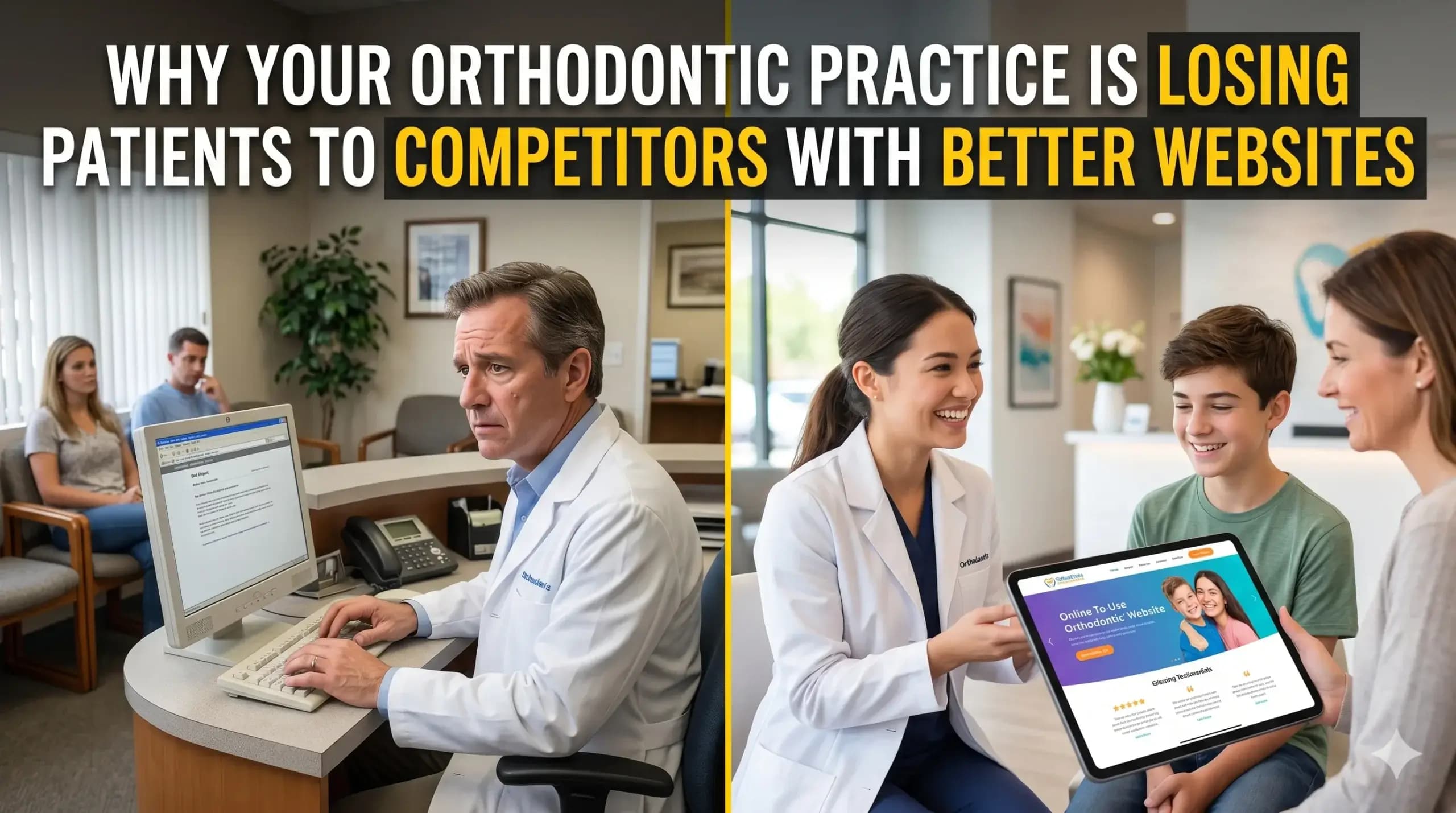
Here’s what most orthodontists don’t realize: the moment a potential patient searches “orthodontist near me,” they’re already comparing you to every other practice in their area. Before they’ve read a single review, before they’ve called anyone — they’ve already formed an opinion based entirely on your website. If that site looks outdated, loads slowly, or doesn’t make it obvious how to book a consultation, they’re gone. And they’re booking with your competitor down the street.
This isn’t about having a “pretty” website. It’s about having orthodontic website design that actually works — one that turns curious visitors into booked consultations. This article breaks down exactly where practices like yours are losing patients online, and what the best orthodontic websites do differently.
Your Website Is Your Front Desk — And Right Now, It’s Turning People Away
Think about what happens when someone calls your practice and gets a busy signal five times in a row. They hang up and call the next orthodontist on the list. That’s precisely what a slow, confusing, or outdated website does — except it happens silently, dozens of times a day, without you ever knowing.
Most patients searching for an orthodontist will decide within seconds whether to stay on your site or go back and click on a competitor. If your homepage takes more than three seconds to load, a significant portion of those visitors leave before they’ve even seen your phone number.
The technical term is “page speed,” but the business reality is simpler: slow sites cost you patients. Every. Single. Day.
What Digital Trace does instead: Every orthodontist website design we build is engineered for speed from the ground up — not as an afterthought. That means faster load times on phones, tablets, and desktops, so the first impression patients get is a practice that feels modern and trustworthy.
Most Orthodontic Websites Are Built for the Doctor, Not the Patient
This is the mistake almost every practice makes. The website talks about the doctor’s credentials, their certifications, their awards. And while those things matter, they’re not the first thing a worried parent wants to see at 9pm when their teenager just had a wire pop loose.
Patients searching for orthodontic care are asking a handful of very specific questions:
- Do you treat kids and adults, or just one?
- What does Invisalign cost, roughly?
- How do I book my first appointment?
- Are you taking new patients?
If a visitor has to hunt around your site to find any of those answers, you’ve already lost them. The best orthodontic websites answer those questions immediately — above the fold, on the homepage, without making anyone click three times to find a phone number.
The fix: Great web design for orthodontists starts with understanding the patient journey, not just the practice’s story. Your site should guide a first-time visitor from “I’m curious” to “I’m booking” in as few steps as possible.
Your Website Is Invisible on Google — and You Don’t Know It
Here’s a scenario that plays out constantly: an orthodontist invests in a beautiful website, pays a designer a few thousand dollars, and then… nothing changes. The phone doesn’t ring any more than before. The site looks great. So what went wrong?
Looking good and ranking on Google are two completely different things. A site can be visually stunning and still be completely invisible to search engines.
Google looks at dozens of factors when deciding which orthodontist to show in search results. Among the most important:
- Whether your site is optimized for mobile — over 70% of searches happen on phones, and Google ranks mobile-first
- Whether Google understands what your practice offers — there’s a layer of behind-the-scenes information that tells Google you’re an orthodontist in a specific city, not just a generic healthcare website
- Whether other reputable sites link back to yours — this tells Google your practice is established and trustworthy
Without these pieces in place, your site is like a beautiful office with no sign outside and no address listed anywhere. Patients can’t find you even when they’re actively looking.
💡 Pro Tip: The “Invisible Practice” Problem
One of the most common and costly issues we see on orthodontic websites is missing local business schema — a small piece of code that tells Google exactly who you are, where you’re located, what you offer, and how to reach you. Without it, Google has to guess. And when Google guesses wrong (or not at all), your practice doesn’t show up in the local results map, even for patients searching in your own zip code. This isn’t a huge technical project — it’s a relatively simple fix that can make a significant difference in how often your practice appears in local searches.
The “Braces Before and After” Problem: Your Content Isn’t Doing Enough
Many orthodontists rely almost entirely on before-and-after photos to sell their services. And while transformation photos are powerful, they’re not enough on their own. Prospective patients also want to understand the process — what it’s like to be a patient at your specific practice.
When your website has thin, vague content — generic paragraphs that could describe any orthodontist anywhere — Google treats your site as interchangeable with every other practice. There’s no reason to rank you above someone else.
The practices with the best orthodontic websites go deeper. They have individual pages for Invisalign, traditional braces, retainers, and early treatment for kids. Each page speaks to a specific patient concern. That structure tells Google: this practice is an authority. Show them first.
Real Results: What Happens When You Fix the Foundation
Consider a two-doctor orthodontic group in the Southeast. They had a website built six years ago by a generalist designer who did nice work — but it wasn’t built for patient acquisition. The site was slow on mobile, had no local schema, and lumped all their services onto a single page. They were showing up on page two and three of Google for their most important search terms, while a newer solo-practice competitor had jumped to the top of local results.
After working with Digital Trace on a full orthodontic website redesign, they saw mobile load times drop by more than half. Individual service pages were built for each treatment type. Local schema was implemented correctly. Within four months, they moved from page two to top-five rankings for their core local searches — and the number of new patient consultation requests coming through the website more than doubled compared to the prior quarter.
No ad spend increased. No big marketing campaigns. Just a website that finally worked the way it was supposed to.
Not sure if your website has these issues? Get a free website audit — no obligation, just a clear picture of what’s costing you leads.
What the Best Orthodontic Websites Actually Have in Common
After building and auditing websites for orthodontic practices across the US, the pattern is consistent. The practices generating the most new patient inquiries online share these traits:
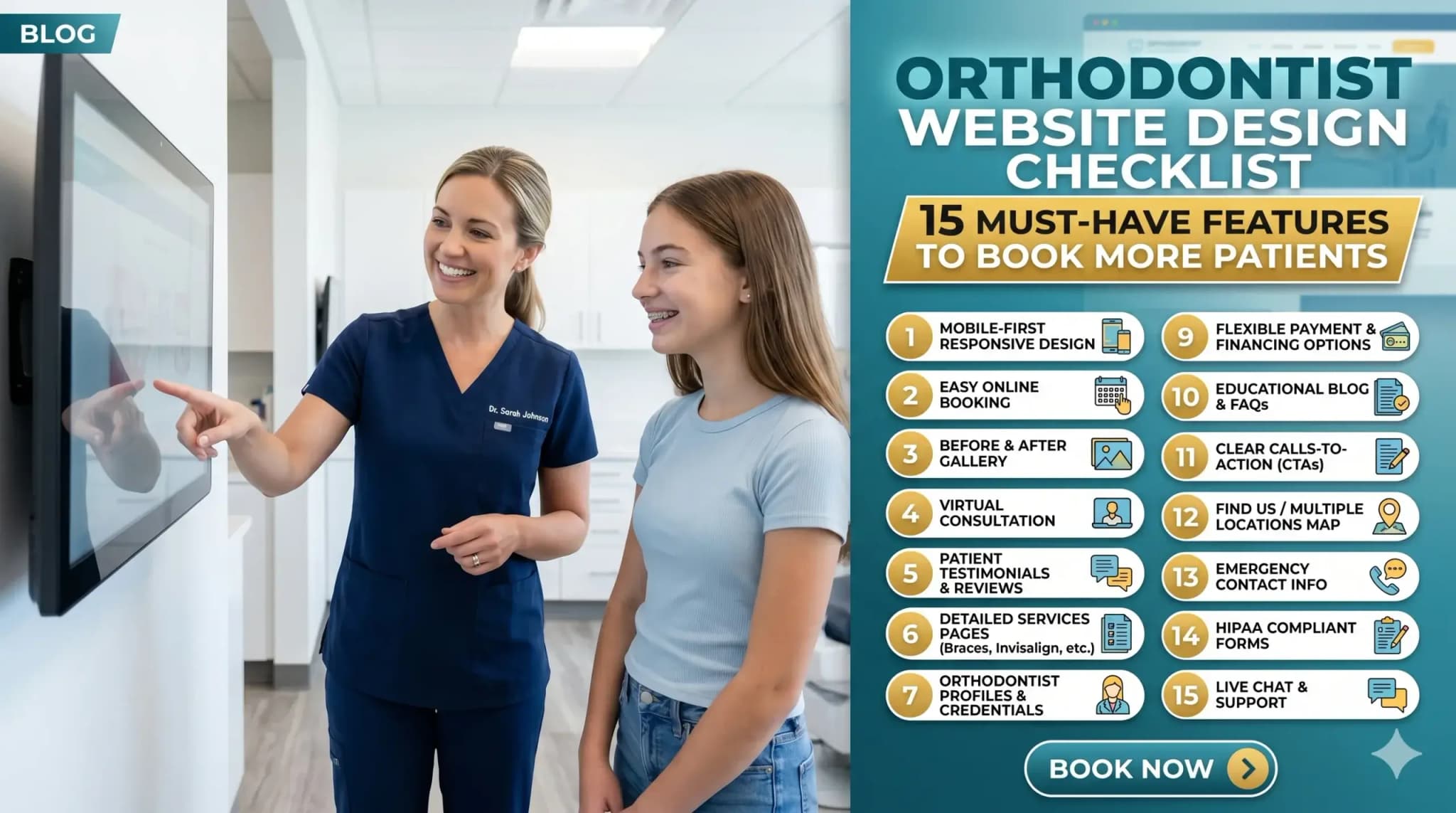
- A clear, prominent call-to-action on every page — “Book a Free Consultation” isn’t buried at the bottom; it’s visible immediately
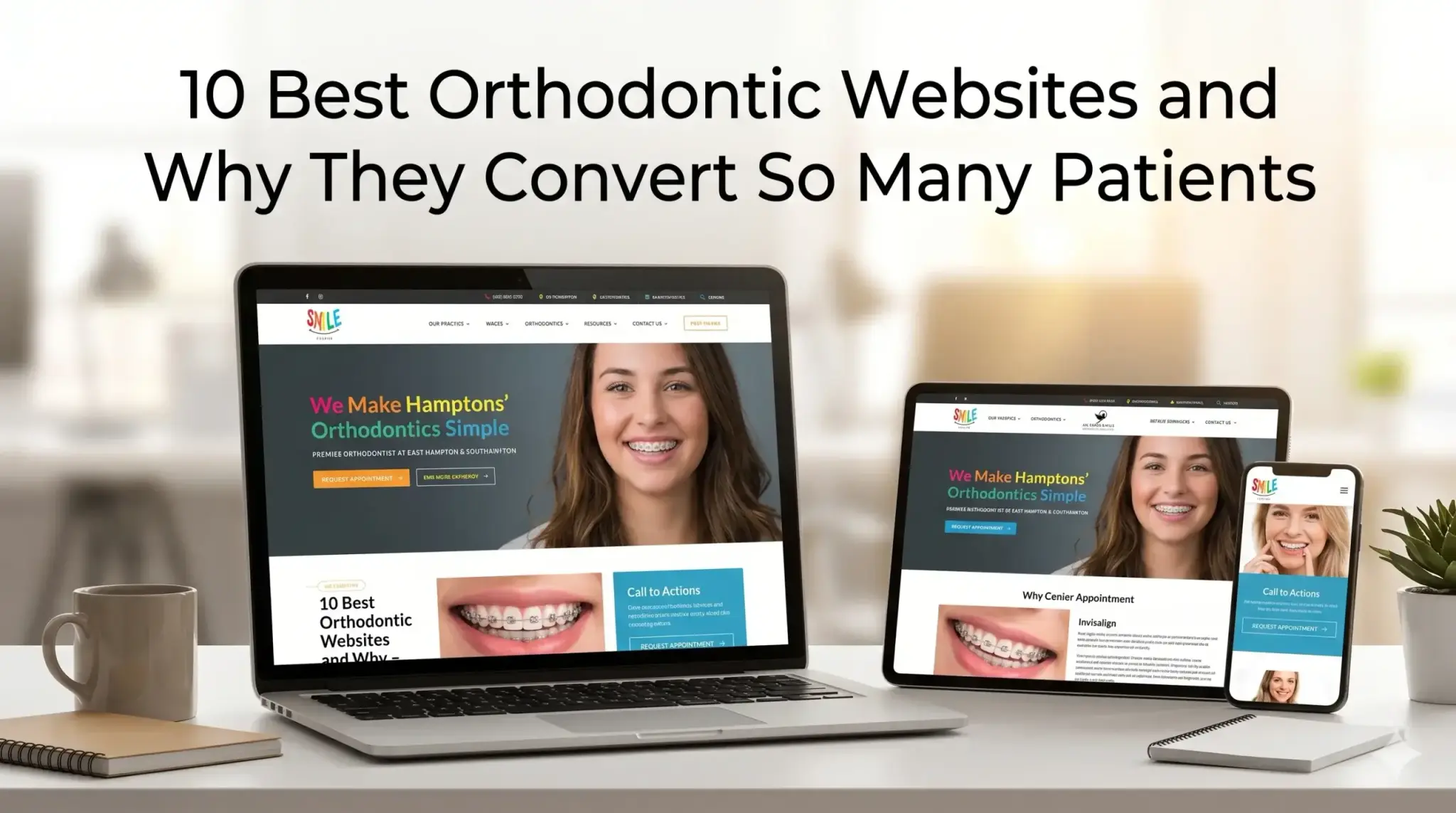
- Mobile-first design — the site looks and works perfectly on a phone screen, not just a desktop
- Dedicated pages for each treatment — Invisalign, traditional braces, pediatric ortho, adult ortho, and retainers all have their own pages
- Fast load times across all devices — under two seconds is the target
- Real patient testimonials and photos — not just stock images and generic praise
- A simple, friction-free contact experience — short form, visible phone number, and if possible, online scheduling
None of these are revolutionary. But getting all of them right at the same time, optimized for both patients and search engines, is where most practices fall short.
Your Path to More Patients Online
If you’re reading this and recognizing your own practice in what’s described above, here’s a practical path forward:
Step 1: Audit what you have. Don’t assume your current site is fine just because it looks okay to you. Test your mobile load speed (Google’s PageSpeed Insights is free). Open your site on your own phone and try to book an appointment as if you’d never been there before.
Step 2: Identify the gaps. Are your services broken out into individual pages? Does your site show up when you search your city + “orthodontist”? Is your phone number visible without scrolling?
Step 3: Fix the technical foundation first. Speed, mobile performance, and local SEO signals need to be correct before anything else you do will work properly.
Step 4: Build content that answers patient questions. Detailed, specific pages about each treatment type will outperform a single generic “Services” page every time.
Step 5: Get a professional review from someone who specializes in orthodontic clinic website design. A generalist agency may build you a beautiful site that does nothing for your rankings or lead flow. An agency that understands your industry will know what orthodontic patients are actually searching for — and build toward those results.
Frequently Asked Questions
Why am I not getting calls from my website even though it looks good?
A good-looking website and a high-performing website are two different things. If your site isn’t optimized for search engines, doesn’t load quickly on mobile, or doesn’t have clear calls-to-action, visitors may land on it and leave before they ever pick up the phone. Design is what patients see — performance is what brings them there and keeps them engaged.
How do I know if my orthodontic website is actually working?
If you’re not tracking where your new patient inquiries are coming from, you genuinely don’t know. A working website will show up in local Google search results, load quickly on phones, and generate consistent consultation requests through your contact form or direct calls. If you can’t say for certain that your site is doing those three things, a free website audit will tell you exactly where you stand.
How long does it take to see results from a new orthodontic website?
It depends on what’s being fixed and how competitive your local market is. Technical fixes like speed improvements can show results quickly. SEO improvements — better rankings, more organic traffic — typically take three to six months to build meaningfully. The practices that see the fastest results are the ones that address design, speed, and SEO together rather than treating them as separate projects.
What makes an orthodontic website different from a regular business website?
Orthodontic patients have very specific concerns and a longer decision cycle than most consumers. They’re comparing multiple practices, looking at before-and-after results, trying to understand costs and financing, and often making the decision for their child, not just themselves. A website built for orthodontists needs to address those specific trust factors, present treatment options clearly, and make the path to booking a consultation as easy as possible — none of which a generic template site does well.
Do I really need a fast website if most of my patients are local?
Yes — especially because most of your patients are local. The majority of local searches happen on mobile phones, often while people are on the go. Google actively ranks faster sites higher in local search results, which means a slow site hurts both your user experience and your visibility to the exact patients you’re trying to reach.
I’ve worked with agencies before and didn’t see results. Why would this be different?
That’s the most common frustration we hear. Most agencies that offer “website design” are generalists — they build sites for restaurants, law firms, and orthodontists alike using the same template approach. The difference with orthodontist-specific design is that the structure, content, and SEO strategy are built around what orthodontic patients actually search for and what motivates them to book. If you’ve been burned before, start with a free audit — no pitch, just an honest look at what your current site is doing and what it isn’t.
Ready to Find Out What Your Website Is Really Costing You?
Most orthodontic practices have no idea how many patients they’re losing online every week — not because they’re failing at their craft, but because their website isn’t built to compete. The practices pulling in consistent new patient inquiries from Google aren’t doing anything extraordinary. They have websites that work: fast, clear, mobile-optimized, and visible in local search.
Digital Trace specializes in orthodontic website design for practices across the US. We find what’s broken, fix what’s costing you leads, and build sites that actually convert visitors into consultations.
Get your free website audit today — no obligation, no pressure. Just a straight answer about where your website stands and what it would take to make it work harder for your practice.