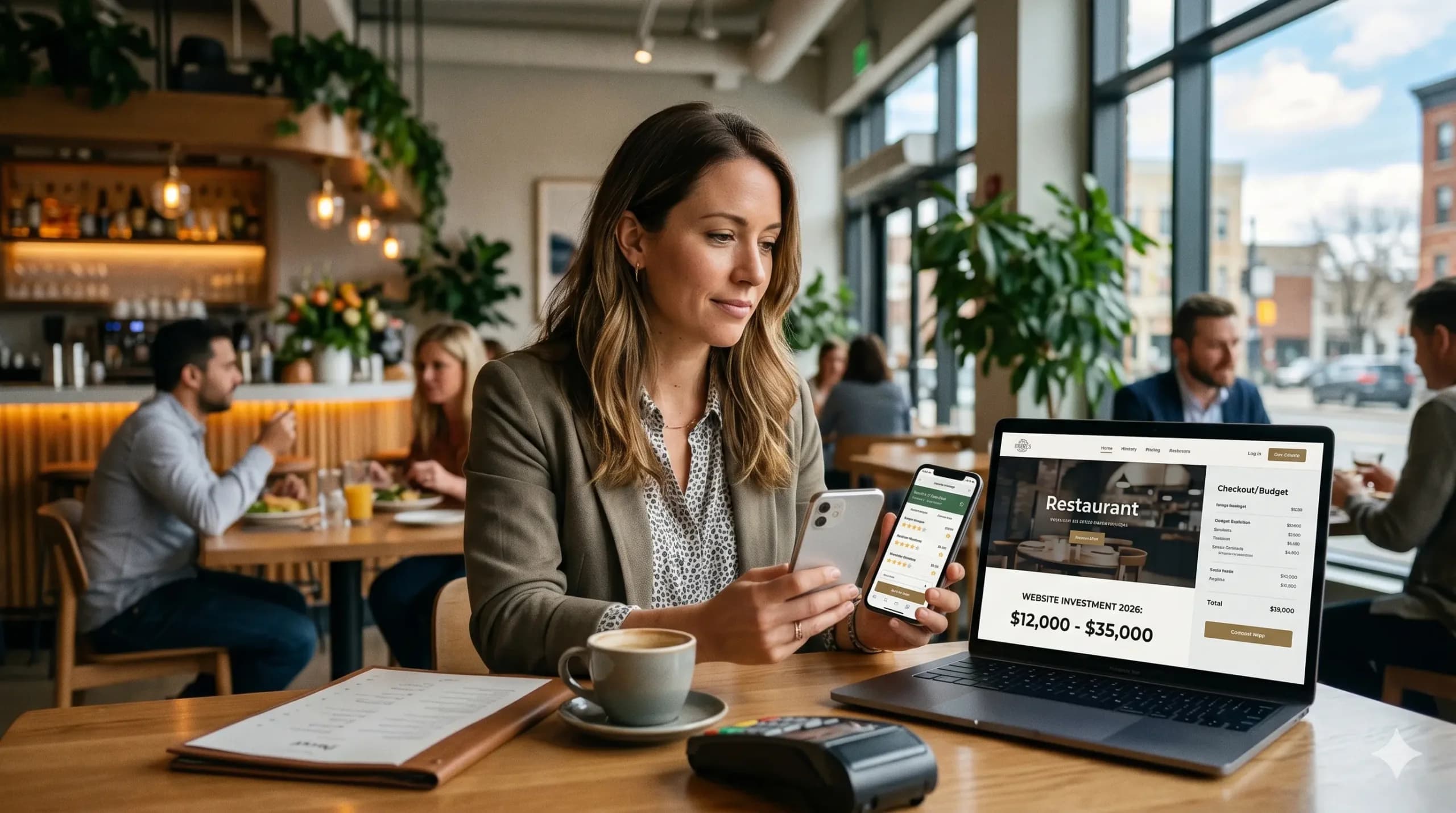
How Much Does a Restaurant Website Cost in 2026? (And Why It’s Your Best Investment)
You’ve got a great restaurant. The food is good, regulars love you, and your Google reviews aren’t bad. But your phone isn’t ringing the way it should be — and when you look at your website, something feels off. You just can’t put your finger on what.
Here’s what’s actually happening: people are finding you online, landing on your site, and leaving before they ever scroll down to your phone number or menu. Not because your food looks bad. Because your site isn’t doing its job.
Most restaurant owners think of a website like a framed photo on the wall — something nice to have, set it and forget it. The restaurants getting consistent reservations and takeout orders treat their website like their best server: always on, always presenting well, always moving guests toward a decision.
This guide breaks down what a restaurant website actually costs in 2026, what you get at each price point, and — more importantly — what a high-performing restaurant homepage design looks like when it’s built to bring in real revenue.
Why Most Restaurant Websites Cost More Than You Think (Just Not In The Way You Expect)
The upfront price of a restaurant website ranges widely — anywhere from $500 on a freelance platform to $10,000+ from a full-service agency. But the number that actually matters isn’t what you pay to build the site. It’s what you lose every month when the site doesn’t work.
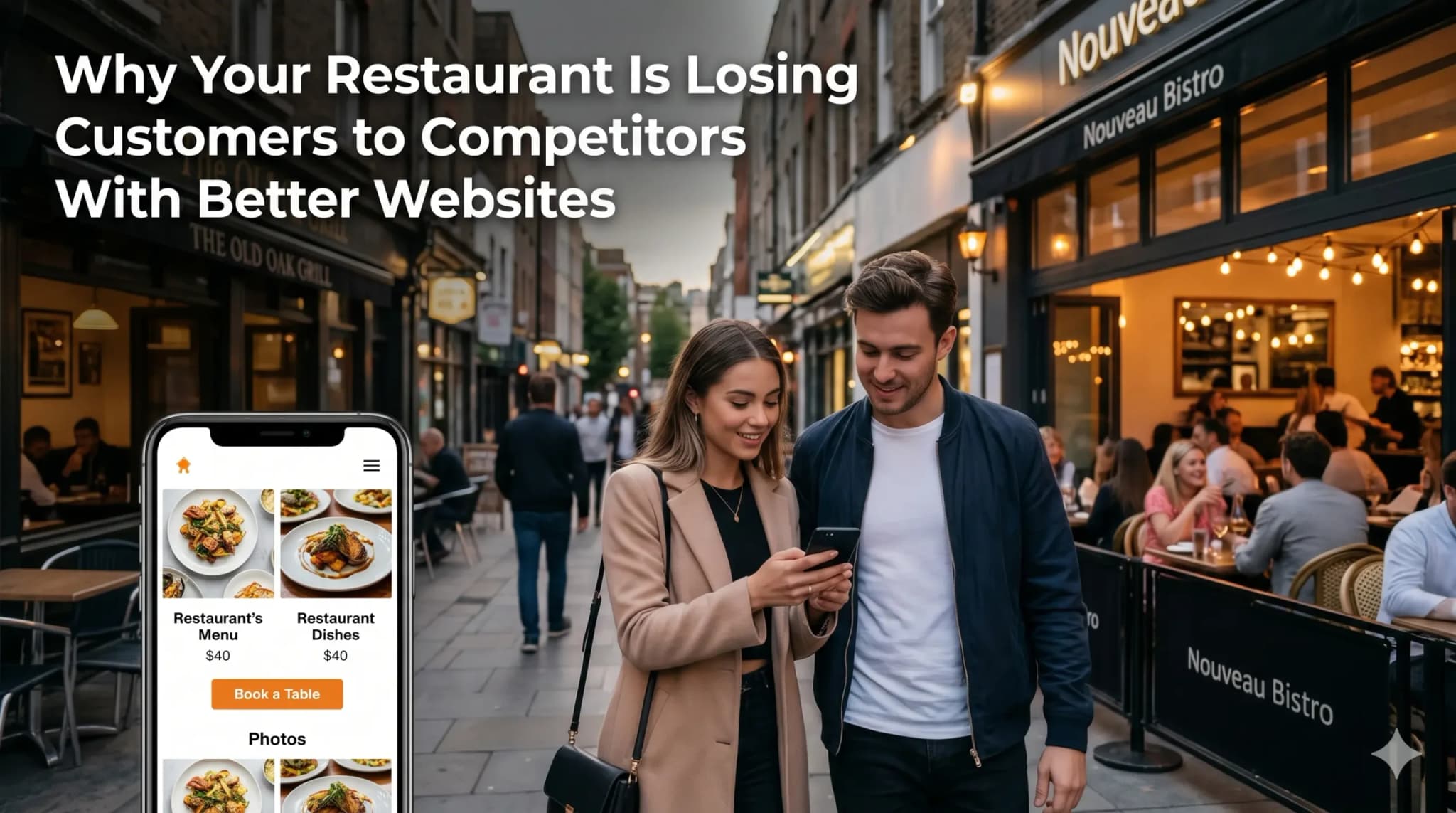
Think about it this way: if your website gets 800 visitors a month and only 1% of them call or reserve a table, you’re getting 8 leads. If the site were converting at 3% — which is realistic for a well-designed restaurant site — you’d be getting 24. That’s 16 missed opportunities every single month, often worth hundreds to thousands in revenue.
A cheap website that looks “fine” but converts poorly isn’t saving you money. It’s quietly costing you customers while you’re busy in the kitchen.
What You Actually Get at Each Price Point
Understanding the tiers helps you make a smart decision — not just the cheapest one.
$500–$1,500 — DIY or Entry-Level Freelancer
- A basic template with your name and address dropped in
- Usually no mobile optimization (more on why that kills you below)
- No online ordering integration, no local SEO setup, no speed optimization
- Fine for a placeholder. Not fine if you want it to do any work for you.
$2,000–$5,000 — Mid-Range Web Designer
- A more custom look and feel
- May include basic menu layout and a contact form
- Results vary wildly depending on the designer’s experience with restaurants
- Often missing the performance and conversion strategy that turns visitors into guests
$5,000–$12,000+ — Specialist Restaurant Web Design Agency
- Custom design built around how restaurant customers actually behave online
- Mobile-first builds (because 70%+ of food searches happen on a phone)
- Integrated online ordering, reservation systems, and local SEO structure
- Speed-optimized so your site loads before someone gives up and calls your competitor
The agencies in the top tier — like Digital Trace, which specializes in websites built specifically for restaurants — focus on one thing above the design: results. That means calls, reservations, and online orders. Not just a site that looks nice in a mockup.
The Real Reason Your Website Isn’t Bringing in Customers
Your Site Loads Too Slowly
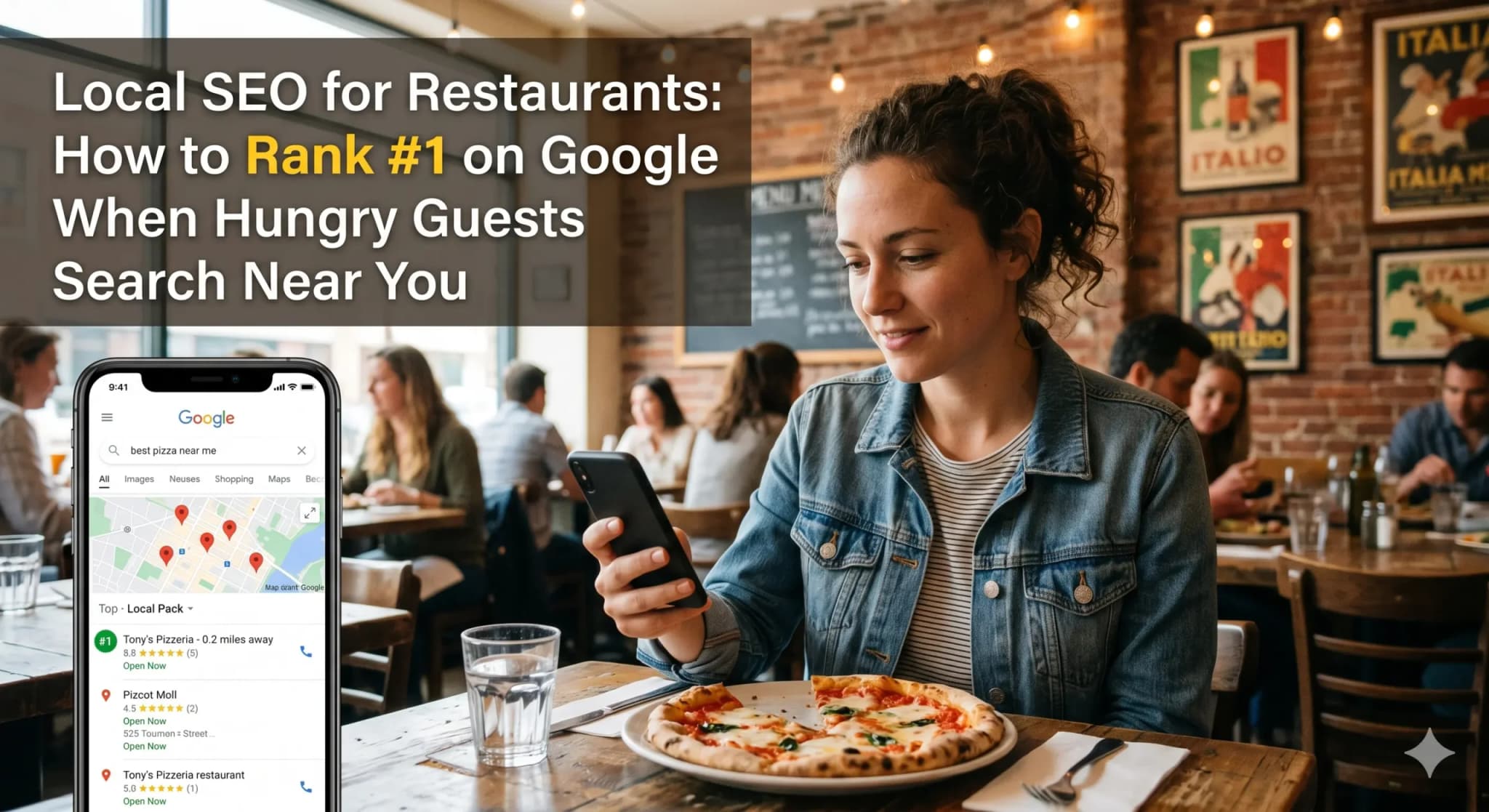
When someone types “best tacos near me” at 6:45 PM on a Friday night, they’re hungry and they’re deciding fast. If your site takes more than 3 seconds to load, a large portion of those visitors are gone before they even see your menu.
Slow-loading sites happen because of bloated image files, bad hosting, or templates that weren’t built with performance in mind. The fix is technical — but the impact is 100% a business problem. Fewer people see your menu means fewer people walk through your door.
Your Menu Is Hard to Find or Read
Your menu is the #1 reason someone visits your restaurant website. If it’s buried two clicks deep, uploaded as a PDF that doesn’t load on mobile, or styled in a font that’s impossible to read on a phone screen — you’ve lost them.
A strong restaurant homepage design puts the menu front and center, loads instantly, and works perfectly on every device. That’s not a design preference. It’s what converts browsers into bookings.
Google Doesn’t Know Enough About You to Trust You
There’s a layer of behind-the-scenes information that tells Google: “This is a real restaurant, serving this cuisine, in this neighborhood, open these hours.” Without it — what’s called structured data or schema markup — Google is less confident about surfacing your business in local search results.
You don’t need to understand how it works. You just need to know that your competitors who show up above you probably have it, and you probably don’t.
💡 Pro Tip: Your Menu PDF Is Killing Your Mobile Traffic
Uploading your menu as a PDF feels like the easy solution — and it is, for you. But for a hungry customer on a phone at dinner time, a PDF is a frustrating extra step that often doesn’t even load properly. The fix is a properly coded HTML menu page on your website. It loads instantly, works on every device, and Google can actually read and rank it. If your current site has a PDF menu, that’s one of the first things worth fixing.
Before & After: What a Better Website Actually Changes
The Situation: A family-owned Italian restaurant in Austin, Texas had been in business for 11 years. Great reputation locally, solid foot traffic on weekends. But their website was built in 2018 by a cousin who’d moved on, and it hadn’t been touched since. The menu was a PDF. The site took 7+ seconds to load on mobile. There was no online reservation option. Their Google Business Profile wasn’t linked correctly to the site.
What Changed: Digital Trace rebuilt the site from scratch — mobile-first design, HTML menu with high-quality food photography, integrated OpenTable reservation widget, local SEO structure, and a load time under 1.5 seconds.
The Result: Within 90 days, their site’s click-to-call rate doubled. Online reservation requests increased by over 60% month-over-month. They started appearing in the top 3 local results for “Italian restaurant Austin” — a search they’d never ranked for before.
The restaurant didn’t change its food, its staff, or its prices. They changed what happened when someone found them online.
Not sure if your restaurant site has these same issues? Get a free website audit — no obligation, just a clear picture of what’s costing you reservations and orders.
What Makes a Restaurant Website Actually Work in 2026
The best restaurant websites aren’t just pretty. They’re engineered around a simple question: What does a hungry person need to see in the first 5 seconds to decide to visit or order?
Here’s what that looks like in practice:
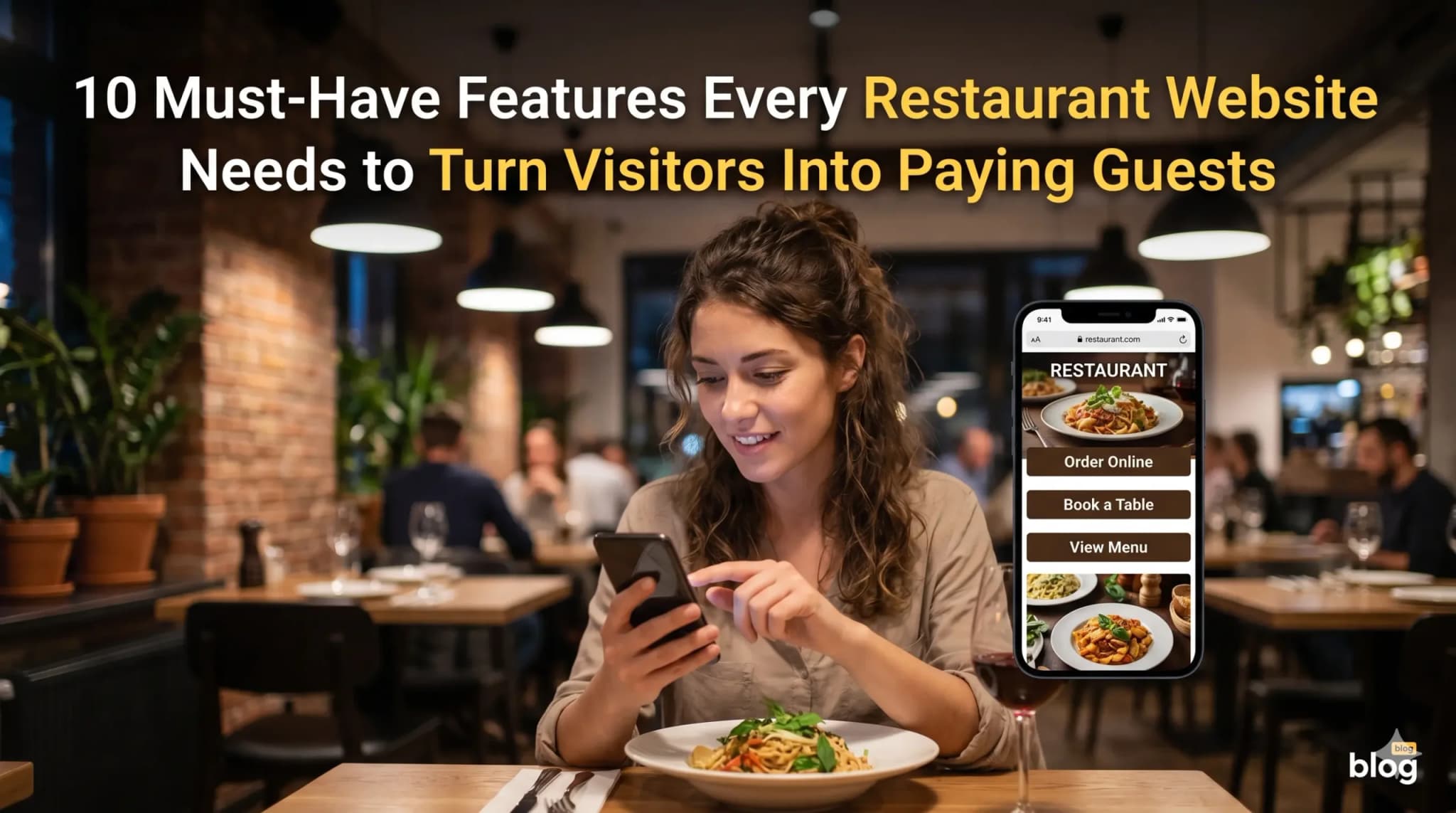
- A clear, compelling headline — not “Welcome to Our Restaurant.” Something that tells them exactly what you are and why it’s worth their time.
- A high-quality hero image or short video — of your actual food, not stock photos
- Your phone number visible immediately — not buried in a footer
- Your hours and location above the fold — before any scrolling required
- A one-click path to your menu — no PDFs, no extra steps
- A reservation or order button that works flawlessly on mobile
- Social proof — recent Google reviews or press mentions, pulled in automatically
This is what good restaurant website design delivers — not just aesthetics, but a clear path from “I found you” to “I’m coming in tonight.”
Your Path to More Leads: 5 Steps That Actually Move the Needle
You don’t need to understand web design to take action. Here’s what the process looks like when you work with a specialist:
- Audit your current site — Find out where visitors are dropping off and what’s breaking on mobile. (You can start this today with a free website audit.)
- Fix your mobile experience first — Most restaurant searches happen on phones. If your site isn’t built mobile-first, everything else is secondary.
- Replace your PDF menu with a real menu page — This single change can meaningfully improve both your user experience and your Google visibility.
- Add local SEO structure — Get your site speaking Google’s language so it surfaces your restaurant for the right searches in your neighborhood.
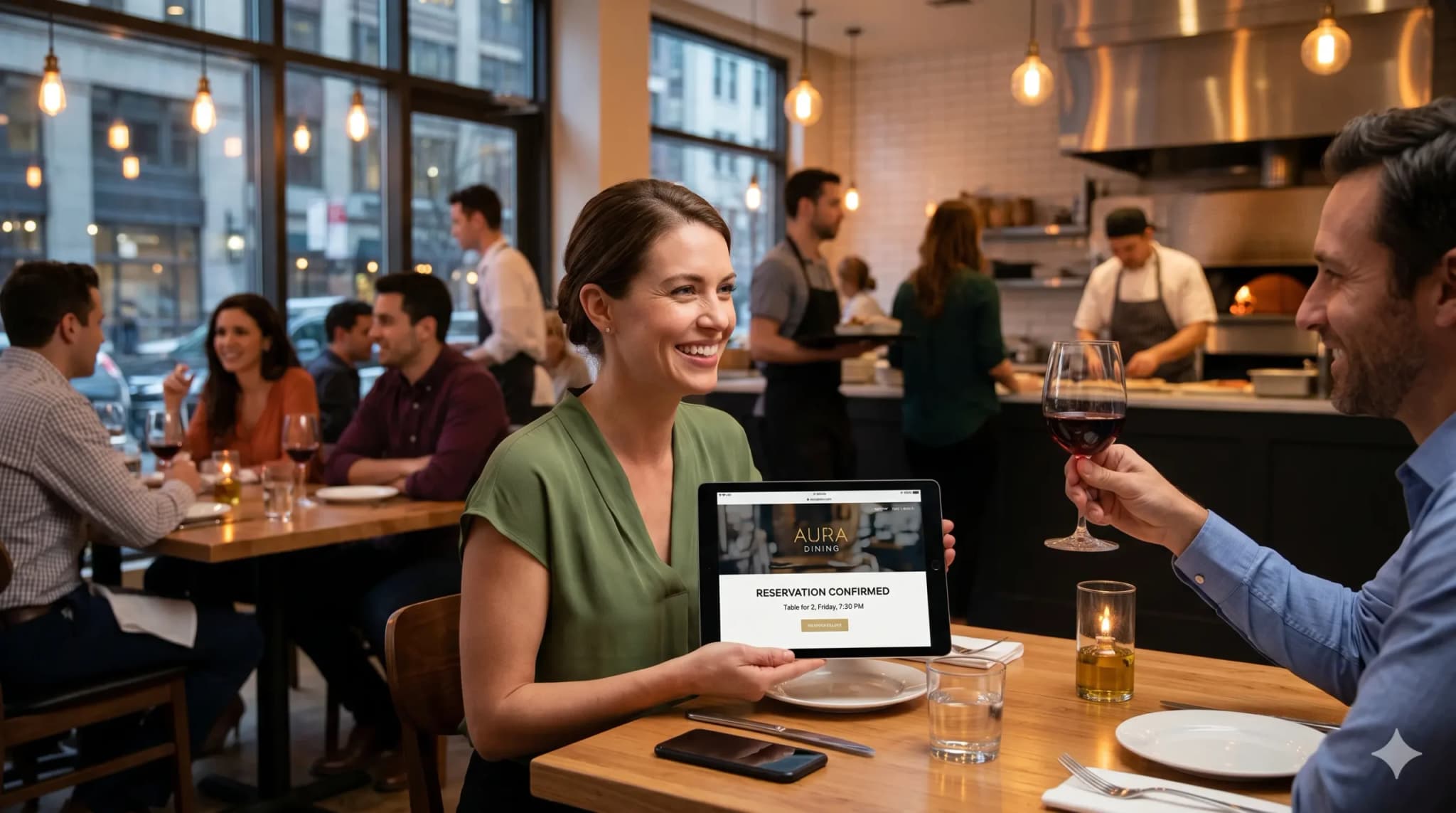
- Connect your reservation and ordering tools — Remove every possible barrier between “I want to eat there” and “I just booked a table.”
Each of these steps is something Digital Trace handles end-to-end — so you can stay focused on running your restaurant while the website does its job.
FAQ: What Restaurant Owners Actually Ask Before Hiring a Web Agency
Why am I not getting calls from my website even though I have one?
Having a website and having a working website are two different things. The most common culprits are slow load speed, a poor mobile experience, no clear call-to-action, and missing local SEO signals. Most restaurant websites have at least two or three of these issues — often all of them.
How do I know if my restaurant website is actually working?
If you can’t tell you how many people visited your site last month, how many clicked your phone number, or how many clicked to your menu — your site isn’t set up to be measured, which means it’s not being managed. A working restaurant website has tracking in place so you know exactly what’s happening and what to improve.
How long does it take to see results from a new restaurant website?
Most restaurants see meaningful changes in local search visibility within 60–90 days of launching a properly built, optimized site. Immediate improvements — like higher click-to-call rates and more online orders — often happen within the first few weeks once the user experience issues are fixed.
What makes a restaurant website different from a regular business website?
Restaurant customers make fast, emotional decisions. They’re hungry, they’re looking on their phone, and they decide in seconds. A restaurant website needs to load instantly, show mouth-watering food imagery, surface your hours and menu immediately, and make reserving or ordering completely frictionless. Most general web designers don’t build for that specific behavior — restaurant-specialist designers do.
Do I really need a fast website if my customers are mostly local?
Yes — especially if they’re local. Local customers searching for “restaurants near me” are choosing between you and three competitors in the same moment. If your site loads in 6 seconds and a competitor’s loads in 1.5 seconds, they’re gone before you had a chance. Speed isn’t a luxury for high-traffic national sites. It’s a basic requirement for any restaurant that wants to win local searches.
I’ve been burned by a web agency before. How is this different?
That’s one of the most common things restaurant owners tell us. The difference comes down to specialization and accountability. Generic agencies build generic websites. Digital Trace focuses specifically on restaurant website development — which means the work is measured against one standard: are you getting more reservations, calls, and orders? Request a free audit and we’ll show you exactly what your current site is and isn’t doing before you make any decisions.
Your Restaurant Deserves a Website That Works As Hard As You Do
You’re putting everything into your food, your team, and your guests’ experience. Your website should be doing the same thing for you — 24 hours a day, 7 days a week, for every person who searches for a place to eat in your area.
Right now, somewhere between dozens and hundreds of potential customers are finding your restaurant online every month. The question is: what happens next? Are they calling you, booking a table, placing an order — or are they clicking away to someone else?
Find out exactly what your website is costing you with a free, no-obligation audit from Digital Trace. We’ll review your site, show you what’s working and what isn’t, and give you a clear picture of what a high-performing restaurant website could do for your business.
No pressure. No jargon. Just honest answers.