Why Your Restaurant Is Losing Customers to Competitors With Better Websites
You put real effort into your food, your staff, and your dining room. But every night, people in your area open Google, search for somewhere to eat, click on your competitor’s website — and book a table there instead of yours.
It’s not because their food is better. It’s because their website is.
Most restaurant owners assume their website is “fine.” It exists. It has a menu. It has an address. But “fine” isn’t doing any work for you — it’s actively sending customers somewhere else. Poor restaurant web page design is one of the most expensive, invisible problems in the industry, and almost nobody realizes it until they do the math.
This post breaks down exactly what’s happening, why it’s happening, and what you can do about it.
Your Website Is the New Curb Appeal — And Right Now It May Look Closed
Think about what happens before a guest sets foot in your door. They don’t walk past and peek in the window anymore. They search on their phone, scan results in 10 seconds, and make a judgment before they’ve seen a single plate of food.
Your website is the first impression. If it looks outdated, loads slowly, or makes it hard to find your hours, that potential customer is already clicking on the restaurant down the street.
A badly designed restaurant site is like having a dark, unmarked entrance on a busy block — even if everything inside is outstanding, people aren’t going to risk it.
Here’s what’s costing you:
- A homepage that doesn’t show your food, your vibe, or your story in the first five seconds
- A menu buried three clicks deep — or worse, a PDF that won’t load on mobile
- No visible phone number or “Reserve a Table” button above the fold
- Photos that were taken in bad lighting in 2019
Every one of these issues costs you real reservations.
Why Your Phone Isn’t Ringing From Google
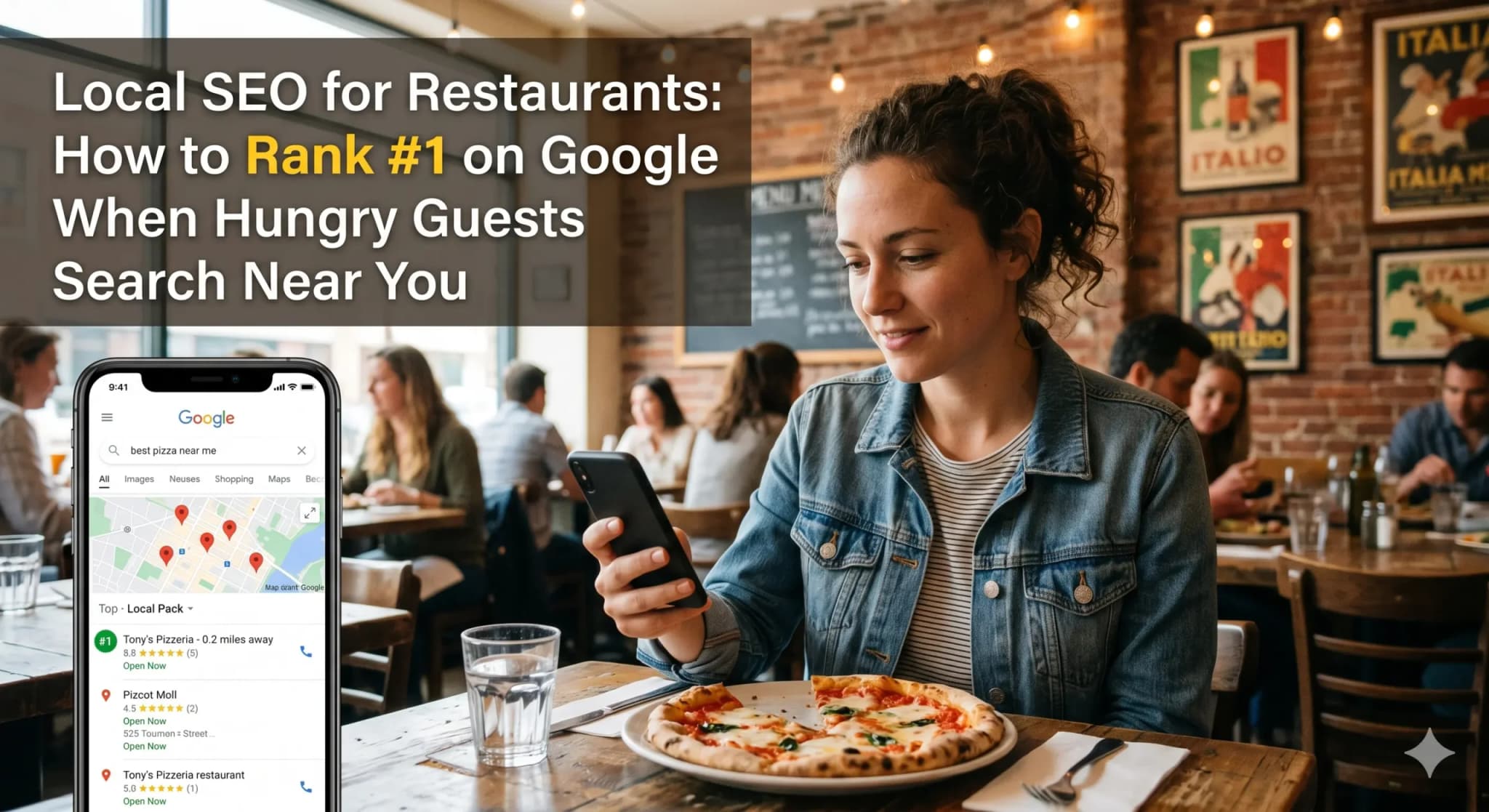
When someone searches “Italian restaurant near me” or “best brunch spots in [your city],” Google has to decide which restaurants to show. The decision isn’t random — it’s based on signals Google reads from your website.
If your site is slow, outdated, or missing key information, Google quietly deprioritizes it. You won’t get a warning. You just won’t show up.
The technical term is “local SEO,” but the plain-English version is: Google doesn’t trust your website enough to recommend your restaurant to people searching nearby.
Common reasons this happens:
- Your site takes more than 3 seconds to load (most people leave before it finishes)
- Google can’t confirm your address, hours, and category from your site
- Your site isn’t mobile-optimized — and most restaurant searches happen on phones
- You have no recent, indexed content signaling that your business is active
This is fixable. But it requires more than a fresh coat of paint on the homepage.
The 3-Second Test Your Website Is Probably Failing
There’s a simple test every restaurant website should pass: a stranger should be able to look at your homepage for three seconds and know exactly what you serve, where you are, and how to book or order.
Pull up your own site right now. Can someone tell in three seconds:
- What type of food you serve?
- Whether you’re open tonight?
- How to make a reservation or place an order?
If the answer to any of those is “no” or “maybe,” you’re losing customers every single day.
The best restaurant website design solves this with intention — the right photo at the top, a clear headline, visible CTAs, and a menu that’s actually readable on a phone. It’s not about being flashy. It’s about being instantly clear.
💡 Pro Tip: One of the most common mistakes restaurant owners make is uploading their menu as a PDF. It looks like an easy solution, but PDFs don’t load reliably on mobile, can’t be read by Google, and are often impossible to zoom without zooming the whole page. Replace your PDF menu with a properly formatted HTML menu page — it’s easier for customers to use and dramatically better for your search rankings.
What a Competitor With a Great Website Is Doing That You Aren’t
You’ve probably noticed a restaurant in your area that seems to always be busy — even if your food is just as good (or better). Chances are, their website is doing a lot of heavy lifting you don’t see.
Here’s what a well-built restaurant site actually does:
- Loads in under 2 seconds — so customers don’t bounce before they see your menu
- Shows your best dishes visually — high-quality photos that make people hungry before they’ve read a word
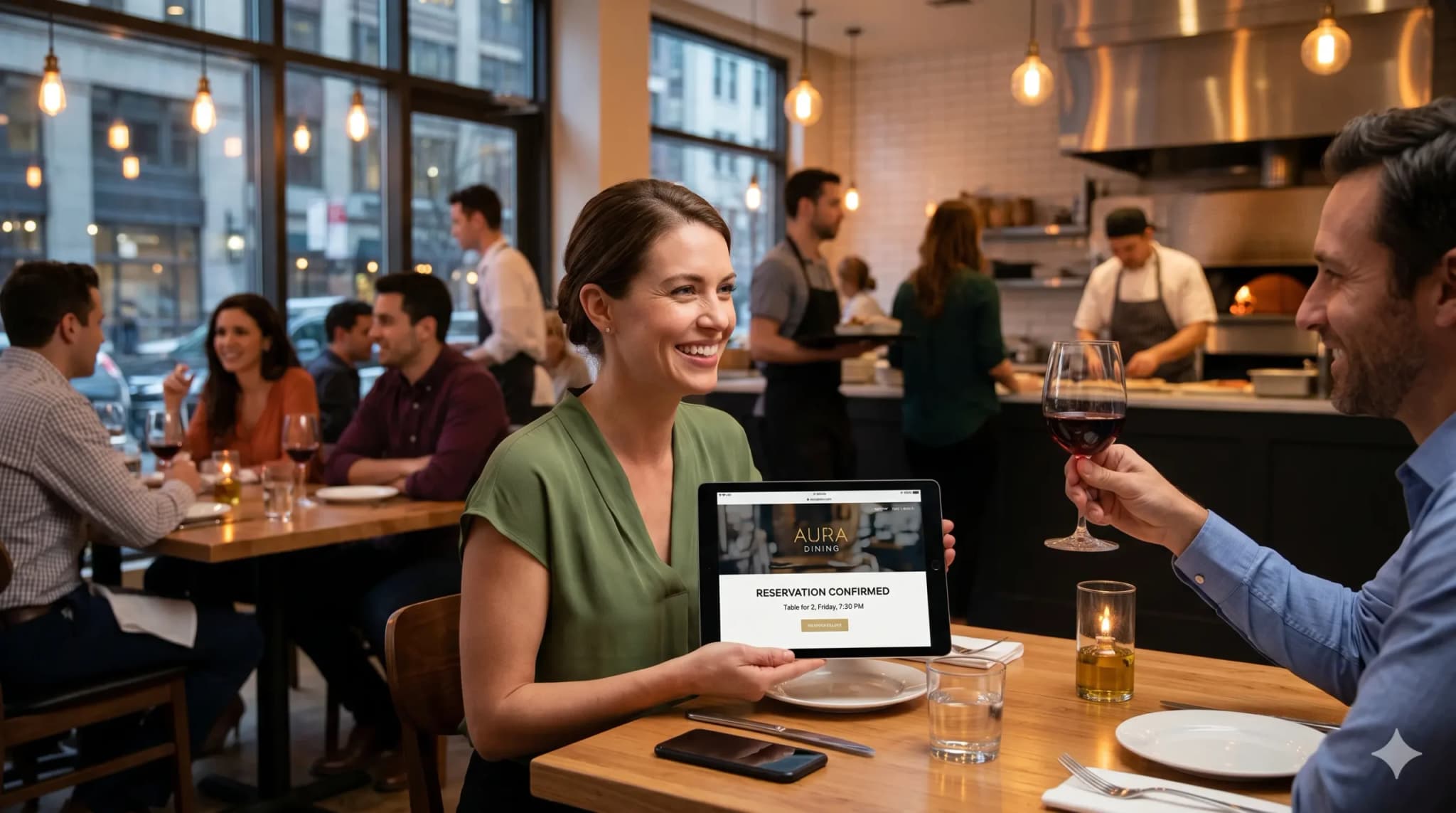
- Makes reservations frictionless — OpenTable, Resy, or even a simple call button integrated directly on the homepage
- Ranks for local searches — because the site is structured in a way Google can read and trust
- Converts on mobile — because more than 70% of restaurant searches happen on a phone
The gap between a site that “exists” and one that actually wins you business is exactly where Digital Trace builds restaurants websites. Their team focuses specifically on what drives reservations and orders — not just what looks good in a portfolio screenshot.
Real Results: What Happens When You Fix the Website
The Scenario: A mid-size Italian restaurant in Chicago had been open for six years. Good reviews on Yelp, solid regulars, but the owner noticed weeknight covers were dropping. He assumed it was competition from a new spot two blocks away.
When Digital Trace ran an audit, the picture became clear fast:
- The site took 7+ seconds to load on mobile
- The menu was a PDF last updated in 2022
- There was no visible reservation button on the homepage
- Google couldn’t read the restaurant’s address and hours from the site structure
- The homepage photo was a generic stock image of pasta — not their actual food
What changed: A redesigned site with fast hosting, a mobile-first layout, proper local SEO structure, updated photography, and an integrated reservation flow.
The result: Within 90 days, the restaurant was ranking on the first page for three high-intent local searches. Weeknight reservations increased by 40%. The owner also noticed fewer calls asking “are you still open?” — because the hours were now clearly visible without digging.
The food didn’t change. The kitchen didn’t change. The website did.
Not sure if your restaurant’s website has these issues? Get a free website audit — no obligation, just a clear picture of what’s costing you reservations and revenue.
Your Path to More Customers: 5 Steps That Actually Move the Needle
You don’t need to understand code to understand what a better website does for your business. Here’s the straightforward path:
- Audit your current site honestly. Load it on your phone — not your desktop. Is it fast? Is it clear? Is it easy to find your menu and make a reservation? If you’re hesitating on any of those, that’s your answer.
- Fix the mobile experience first. More than 70% of people searching for restaurants are on their phones. If your site is frustrating on mobile, you’re losing the majority of potential customers before they even see your menu.
- Replace that PDF menu. Build a real, readable, searchable menu page. Your customers will thank you, and Google will too.
- Add a clear, prominent CTA. Every page of your site — especially the homepage — should have a visible “Reserve a Table,” “Order Online,” or “Call Us” button. Make it impossible to miss.
- Work with a team that understands restaurants, not just websites. Generic web design agencies build generic websites. A restaurant website development company that specializes in the food industry knows what drives covers, what kills conversions, and what Google actually needs to rank you locally.
Frequently Asked Questions
Why am I not getting calls or reservations from my website?
The most common reason is visibility — your site isn’t showing up when people search for restaurants like yours nearby. The second reason is friction — people land on your site but can’t quickly find your menu, hours, or a way to book. Both problems are fixable, but they require changes beyond just updating your homepage photo.
How do I know if my restaurant website is actually working for me?
If you can’t answer “how many reservations came from my website this month,” your site isn’t working hard enough. A functioning restaurant site should be traceable — you should be able to see how many people visited, how many clicked your reservation button, and which searches brought them there. If you don’t have that visibility, start with a free audit to see exactly where your site stands.
How long does it take to see results from a new or redesigned website?
Most restaurants see measurable improvements in search visibility within 60–90 days of launching a properly built site. Conversion improvements — more calls, more reservations — often show up faster because they don’t depend on Google catching up. The key is that the work needs to be done right from the start.
What makes a restaurant website different from a regular small business website?
Restaurants have unique conversion goals — a reservation, a phone call, an online order — and unique content needs, like a readable menu, photography that creates appetite, and hours that are immediately visible. A site built for a law firm or a plumber won’t serve a restaurant’s customers. The structure, the design priorities, and the local SEO strategy all need to be built with the dining experience in mind.
Do I really need a fast website if my customers are local anyway?
Yes — especially because they’re local. Local customers are searching on their phones while they’re already out, often deciding where to eat in the next 30–60 minutes. A site that takes five seconds to load on a mobile connection will lose that customer to a faster competitor before your homepage even appears. Speed isn’t a luxury. For restaurants, it’s a reservation.
What if I already paid for a website — do I have to start over?
Not always. Many restaurant sites have a solid foundation but need targeted improvements: faster hosting, a rebuilt menu page, a better mobile layout, or basic local SEO fixes. A proper audit will tell you what’s actually broken and what’s working so you only fix what needs to be fixed. That’s exactly what Digital Trace’s free audit is designed to show you.
Stop Guessing — Find Out Exactly What Your Website Is Costing You
Every week your restaurant site has these problems is another week of reservations going to the competitor down the street. The good news: this is one of the most fixable problems in your business.
Digital Trace specializes in building high-performing websites for restaurants across the US — designed to rank locally, convert on mobile, and drive the reservations and orders that keep your dining room full.
There’s no guesswork, no long-term commitment to start, and no obligation. Just a clear, honest look at what’s working, what isn’t, and what it would take to fix it.
Get your free restaurant website audit →
Find out exactly where you’re losing customers — and what it’ll take to get them back.