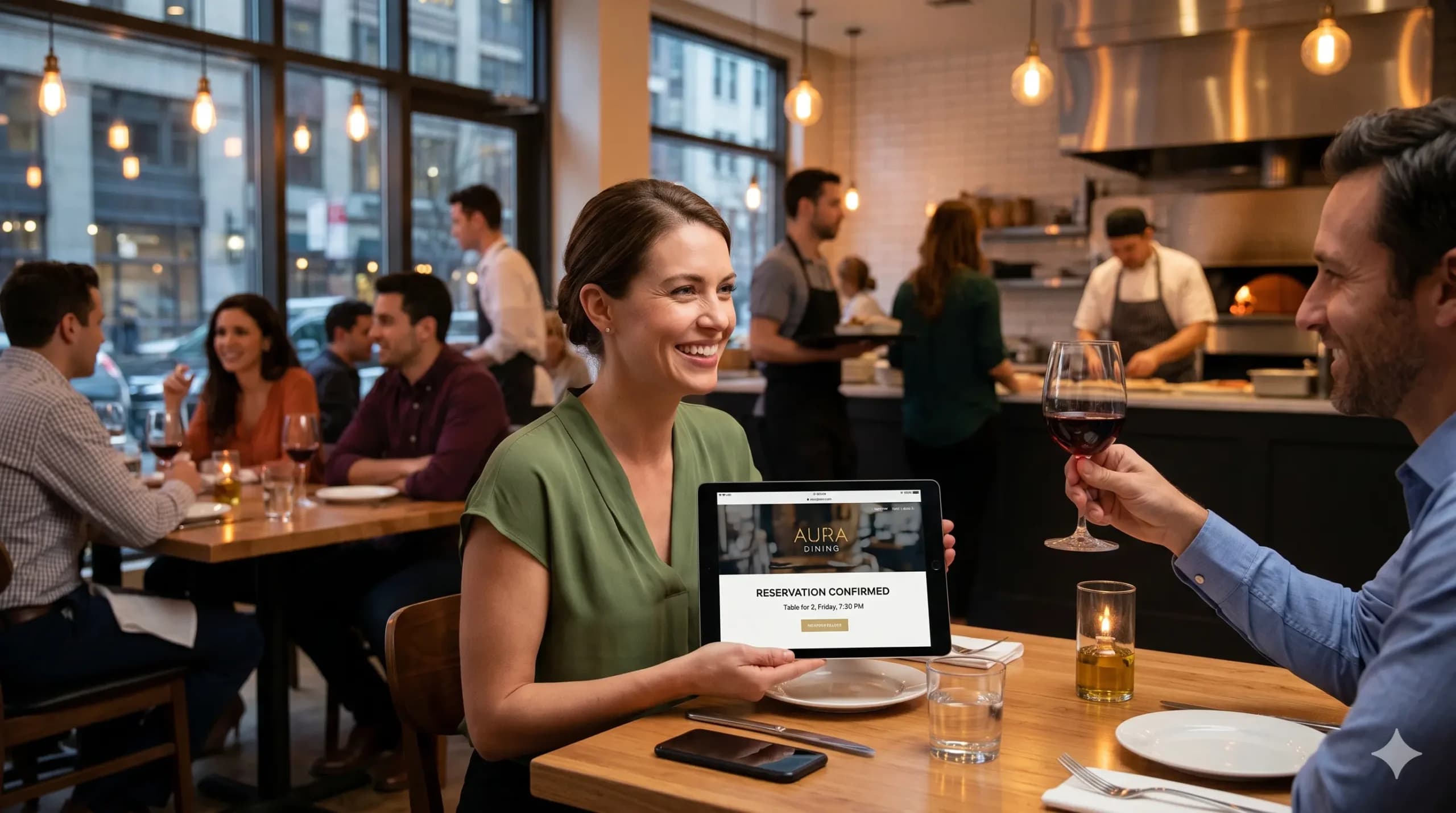
How a Professional Restaurant Website Design Can Increase Your Reservations by 40%
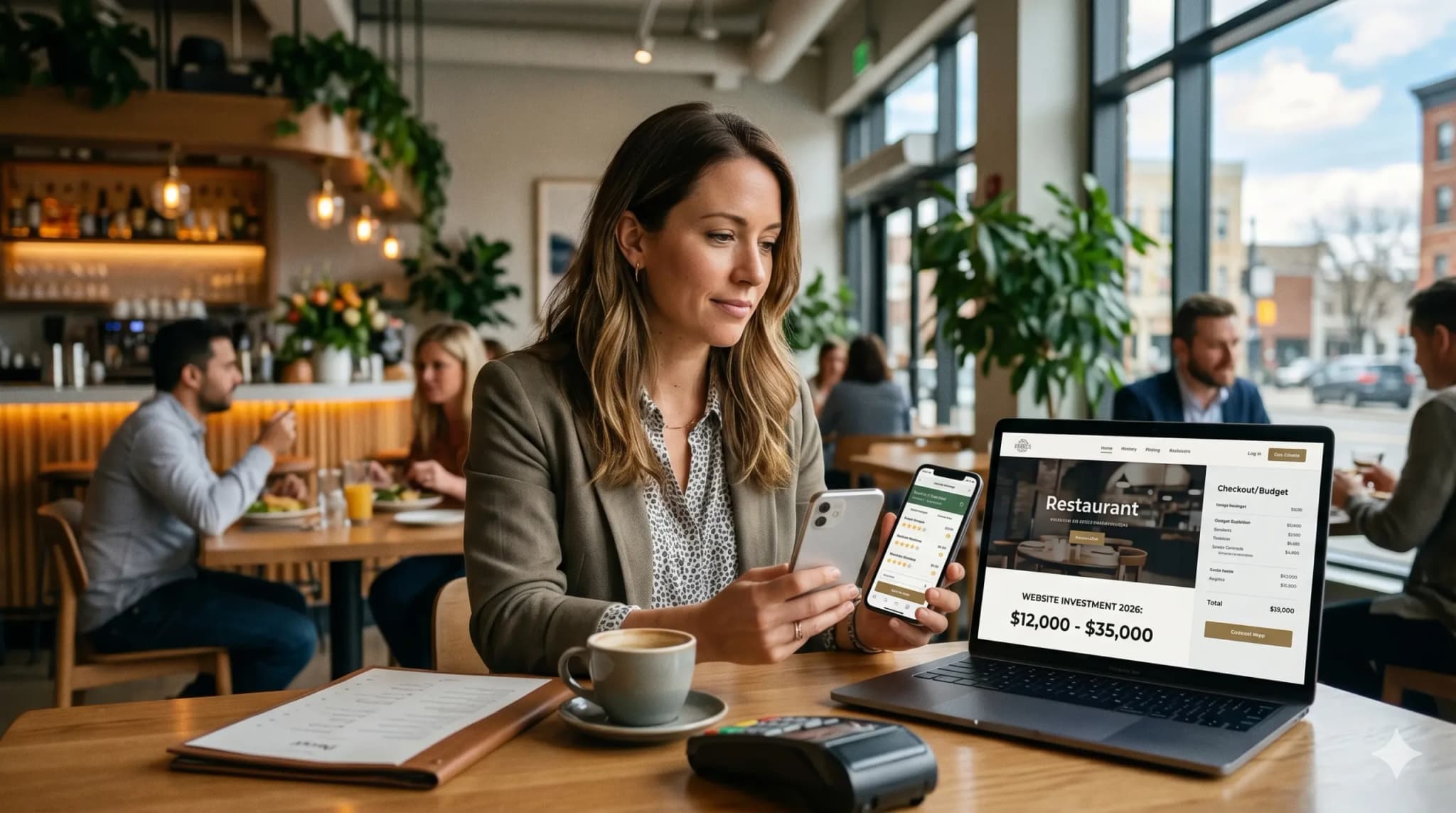
Your dining room is packed on Saturday nights. But on Tuesday? Crickets. And your website — the one you paid someone to build three years ago — isn’t helping. Potential customers are searching for restaurants like yours right now, landing on your site, and leaving without making a reservation. Not because your food isn’t good. Because your website didn’t give them a reason to stay.
Most restaurant owners assume their website is “fine.” It has a menu, a phone number, some photos. But “fine” doesn’t fill tables. And the gap between a website that exists and a website that actually drives reservations is costing you thousands of dollars a month — money you’re not even seeing leave.
This article breaks down exactly what a high-performing restaurant website looks like, what most restaurant sites get wrong, and how fixing these issues can realistically increase your reservations by 40% or more.
Your Website Is Your Host Stand — And Right Now, Nobody’s There
Think about what happens when a guest walks into your restaurant. Someone greets them, sets the tone, and makes them feel welcome before they’ve even sat down. Your website should do the exact same job for every person who finds you online.
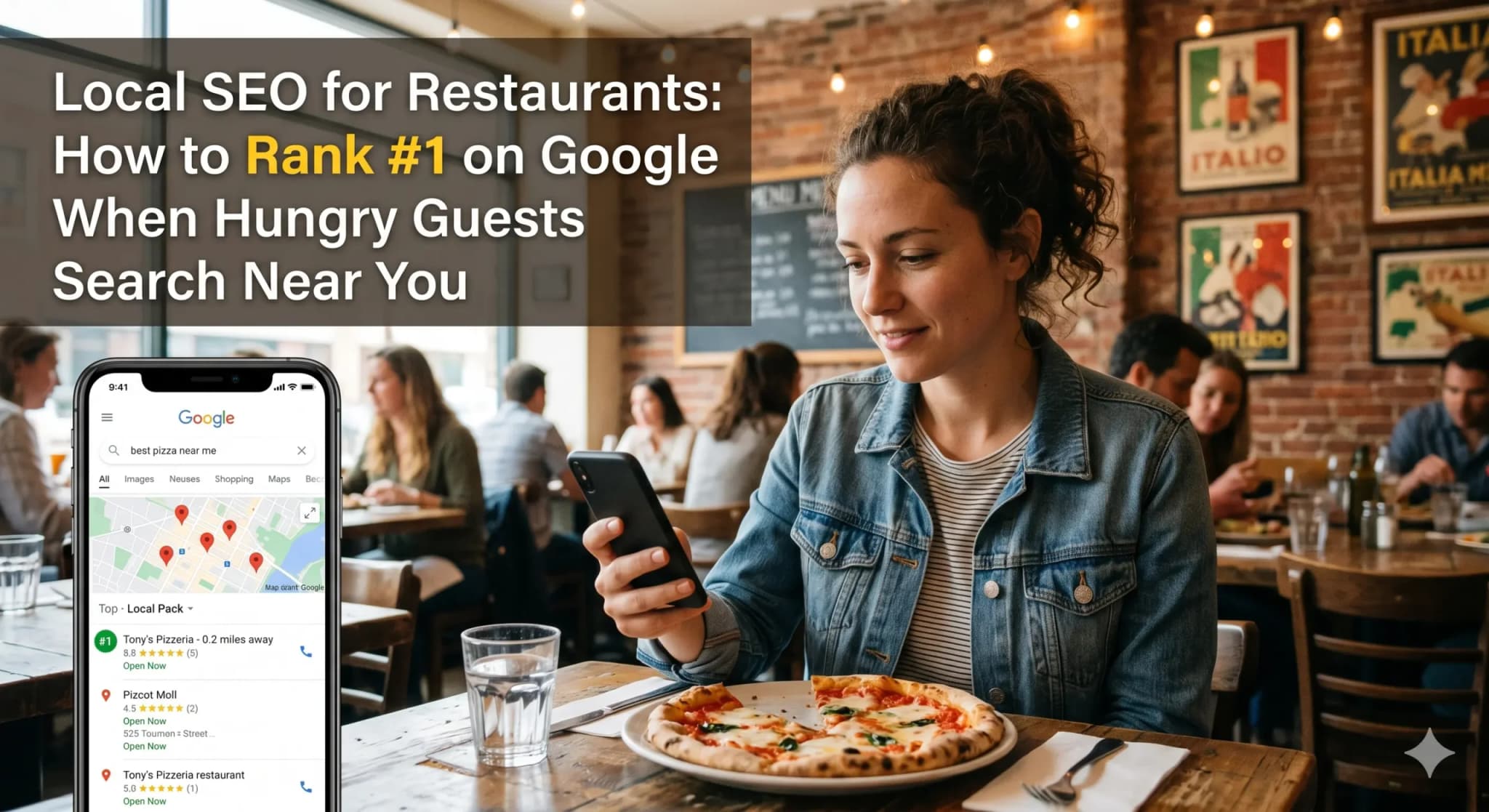
When someone searches “Italian restaurant near me” at 6:30 PM on a Friday, they’re hungry and ready to book. They’ll spend about 10 seconds on your site before deciding to stay or bounce. If your homepage doesn’t immediately show them what you serve, where you’re located, and how to make a reservation — they’re gone.
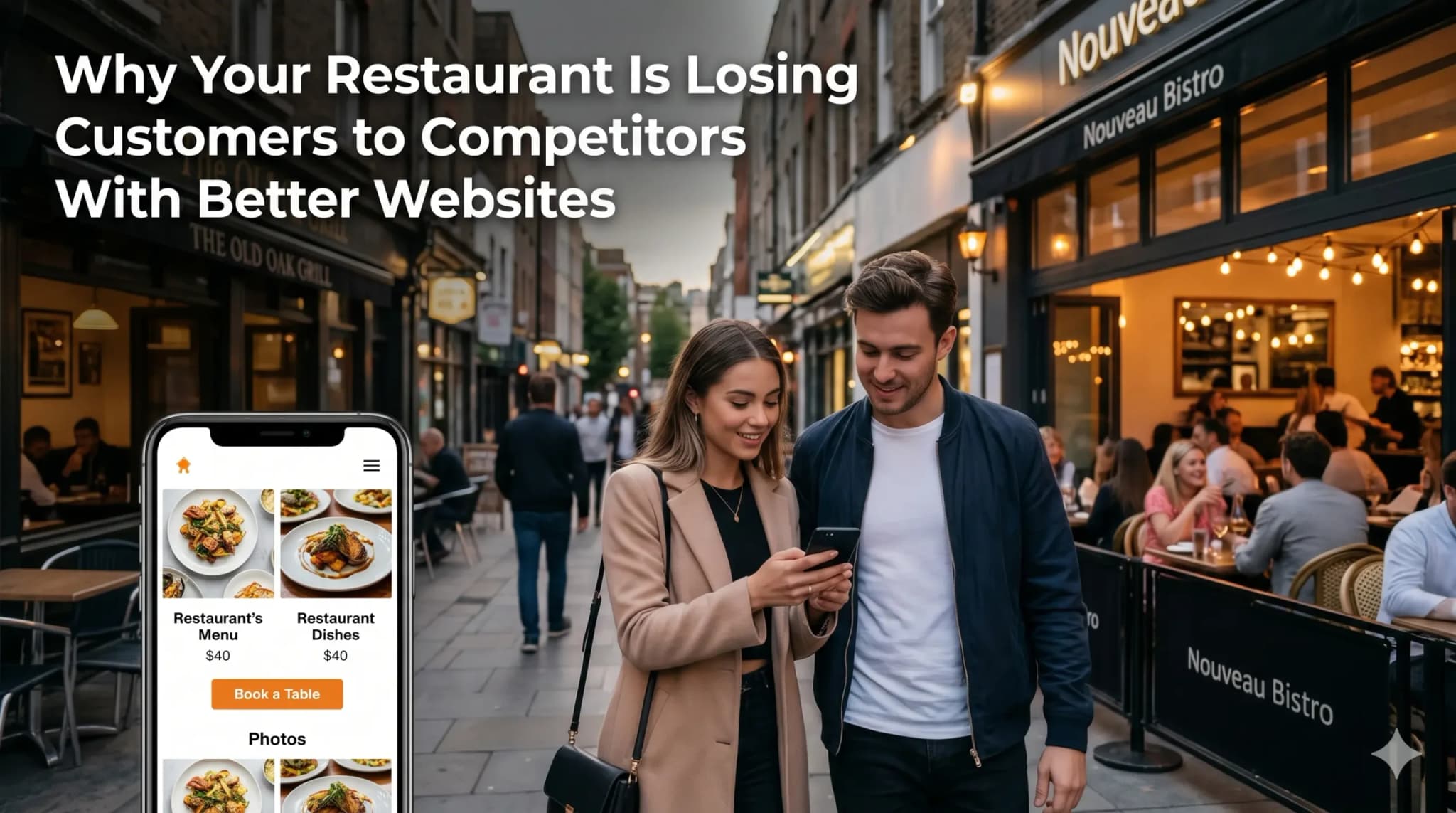
Most restaurant websites fail this moment completely. The hero image is a stock photo of food that doesn’t look like your dishes. The menu is buried three clicks deep. The reservation button, if it exists at all, blends into the background. That visitor just became a customer for the restaurant down the street.
Slow Loading = Empty Tables
Here’s the uncomfortable truth: if your website takes more than 3 seconds to load on a phone, most people have already left. Not frustrated — just gone.
The majority of restaurant searches happen on mobile devices, by people standing on a sidewalk or sitting at a bar trying to decide where to eat next. Your site needs to load fast and look perfect on a 6-inch screen. If it doesn’t, Google knows it — and ranks you lower because of it.
A slow, clunky mobile experience is like having your host stand blocked by a pile of chairs. People can see the restaurant exists, but getting in feels like too much work.
What a proper restaurant website does differently:
- Loads completely in under 2 seconds on mobile
- Displays your menu, hours, and phone number without any scrolling
- Has a tap-to-call button that works the first time, every time
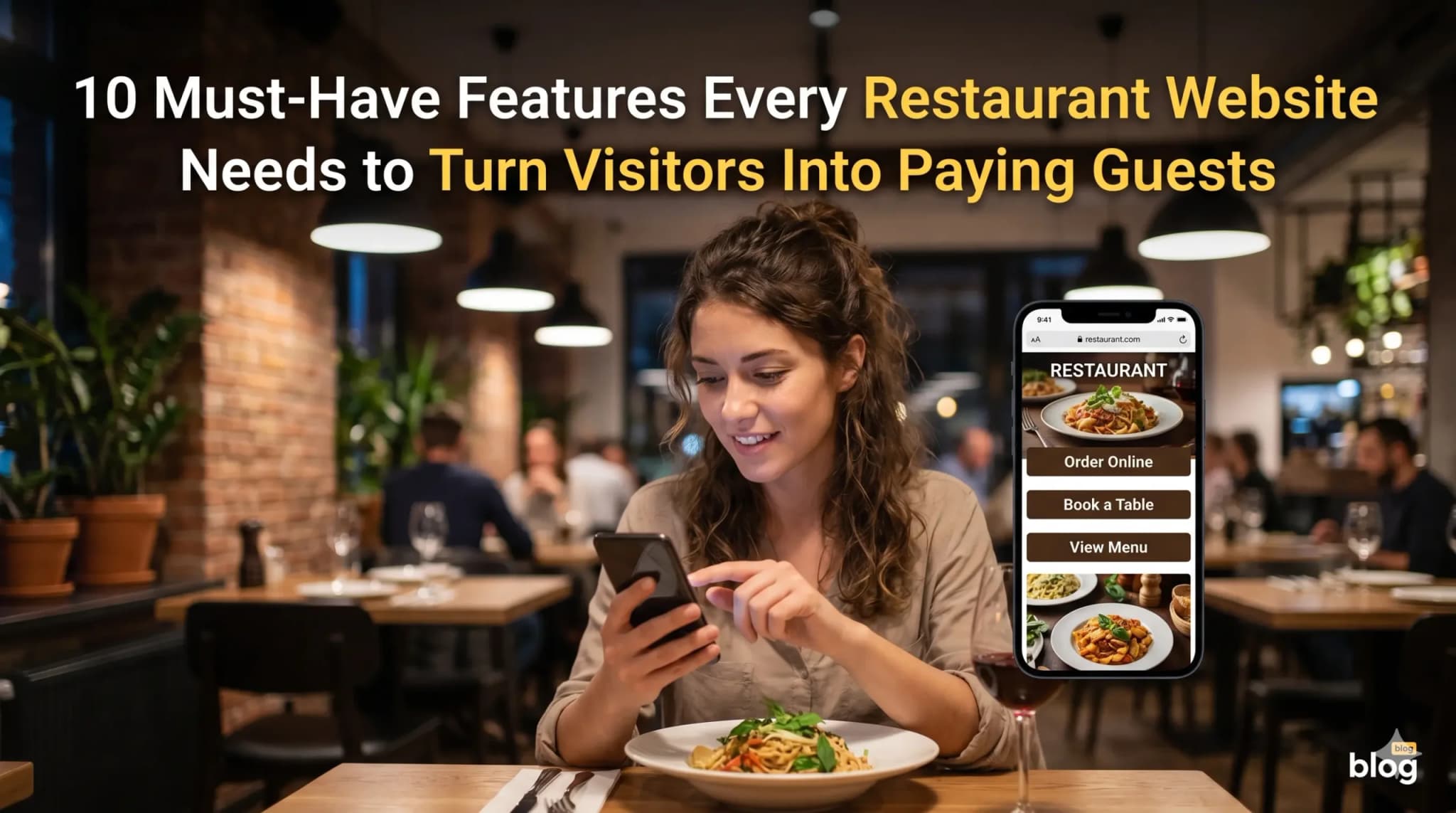
- Shows a reservation or order link within the first screen
At Digital Trace, every restaurant website development project starts with a mobile-first audit. Because if the phone experience isn’t flawless, nothing else matters.
Your Menu Is Probably Killing Your Reservations
This is the most common and most expensive mistake in restaurant web design: the PDF menu.
You know the one. Someone clicks “Menu,” and a PDF opens — or worse, tries to open and fails on mobile. The text is tiny. The layout is sideways. The prices are from two years ago. The visitor gives up and goes to Yelp instead.
A properly designed restaurant menu page is one of the highest-converting elements on your entire site. Done right, it makes people hungry before they even arrive. Done wrong, it’s a conversion killer.
What a well-built restaurant menu page includes:
- Clean, readable categories with clear pricing
- Food photography (even simple, well-lit phone photos beat a PDF)
- Dietary labels (GF, vegan, spicy) that people search for
- A direct path from menu to reservation or online order
When Google can read your menu properly — because it’s built in actual web text, not locked inside a PDF — your restaurant starts showing up for searches like “best vegan pasta near me” or “gluten-free brunch Chicago.” That’s free, ongoing traffic you’re currently missing.
💡 Pro Tip: Your Address Needs to Be More Than Just Text
One of the most common issues we find in restaurant websites is a missing or incomplete Google Business Profile connection. Your address might be on your site, but if Google can’t confirm it matches your Maps listing and structured business data, you’re losing visibility in local “near me” searches. The fix is straightforward: your site needs what’s called local schema markup — a small piece of code that tells Google your name, address, hours, and cuisine type with complete confidence. Most restaurant owners have never heard of it. Most restaurant websites don’t have it. Getting it set up correctly can meaningfully improve how often you appear in Google’s local results.
Great Food Photography Isn’t a Luxury — It’s Revenue
When someone lands on your website, they eat with their eyes first. If your homepage shows blurry photos, stock images, or no food at all, you’ve already lost the emotional connection that turns a browser into a customer.
Restaurants with professional or even well-composed photography on their websites see significantly higher engagement — people stay longer, click more, and are more likely to make a reservation. It’s not vanity. It’s conversion.
You don’t always need a full professional shoot. Good lighting, a clean background, and a modern phone camera can produce homepage-worthy images. The key is using your food, your space, and your atmosphere — not something generic.
The best restaurant web designers know how to present your photography in a way that feels upscale regardless of budget. The layout, the sizing, the way images load — all of it affects how premium your restaurant feels before a guest has ever tasted a bite.
What Happened When One Restaurant Fixed These Problems
A family-owned Mexican restaurant in Austin, Texas was doing well by word of mouth but struggling to fill weekday reservations. Their website was four years old, loaded slowly on phones, had a PDF menu that barely worked on mobile, and had no online reservation option — just a phone number.
They weren’t appearing in local searches for “Mexican food Austin” despite being one of the highest-rated spots in their neighborhood. Their Google Business Profile wasn’t properly linked to the site, and their homepage had stock photography instead of their actual food.
After a complete website rebuild focused on mobile speed, a proper digital menu, integrated OpenTable reservations, and local schema markup, the results came in over 90 days:
- Organic website traffic increased by 68%
- Online reservation requests went from near zero to accounting for 35% of all bookings
- Weekday covers increased by over 40%
- Their Google Maps ranking for relevant searches jumped from page 2 to the top 5
The food didn’t change. The restaurant didn’t change. The website did.
Not sure if your restaurant website has these issues? Get a free website audit — no obligation, just a clear picture of what’s costing you reservations.
Your Path to More Reservations
You don’t need to understand web development to fix your restaurant’s online presence. Here’s how the process works in plain terms:
Step 1: Find out what’s actually broken. A proper audit shows you exactly which parts of your site are costing you leads — speed, mobile experience, menu design, local search visibility. Most restaurant owners are surprised by what they find.
Step 2: Fix the mobile experience first. Since most of your visitors are on phones, this has the fastest impact. Speed, tap-to-call, and a visible reservation link are non-negotiable.
Step 3: Build a real menu page. Replace any PDF menus with a properly coded, Google-readable menu that showcases your food and ranks for specific searches.
Step 4: Add photography that sells the experience. Even a curated set of 10–15 strong images makes a measurable difference in how long people stay on your site and whether they book.
Step 5: Connect your site to local search signals. Schema markup, Google Business Profile alignment, and consistent location data across the web all work together to get you in front of hungry, nearby customers.
The team at Digital Trace handles all of this as part of their restaurant website design and development services — so you can focus on running your restaurant, not chasing down web developers.
FAQ: Real Questions Restaurant Owners Ask Before Hiring a Web Agency
Why am I not getting calls from my website even though people are visiting it?
Traffic without calls usually means your site has a conversion problem, not a visibility problem. Visitors are arriving but leaving without taking action — often because the phone number isn’t easy to find on mobile, there’s no clear call-to-action, or the site loads so slowly they gave up before seeing anything. A site visit that doesn’t result in a call or reservation is revenue that walked out the door.
How do I know if my restaurant website is actually working?
If you can’t answer “how many reservations came from my website last month,” your site isn’t tracking what matters. A working restaurant website gives you clear data: where visitors come from, what they click, and whether they convert. Without that, you’re flying blind. Most restaurant owners we talk to have no idea their site is underperforming until they see the numbers side by side.
How long does it take to see results from a new restaurant website?
Most restaurants see meaningful changes within 60–90 days of launching a properly built site. Local SEO improvements — like appearing in Google Maps searches — can show movement in as little as 30 days. Reservation volume typically increases within the first month as the mobile and speed issues get resolved. Results compound over time as Google builds more trust in your site.
What makes a restaurant website different from a regular business website?
Restaurant websites have to do something most business sites don’t: make someone hungry and move them to act within about 10 seconds. That means food photography front and center, a menu that’s immediately accessible, reservation capability that doesn’t require a phone call, and location/hours visible without scrolling. A generic business template doesn’t account for any of that — which is why restaurant-specific design matters.
Do I really need a fast website if my customers are mostly local and find me on Google Maps?
Yes — because Google Maps rankings are directly influenced by your website’s quality and speed. A slow, poorly structured site signals to Google that your business may not be reliable, which pushes your Maps listing lower in local results. The people finding you on Maps clicked through from a search result that your website helped earn. Take the website out of the equation and your Maps visibility suffers with it.
How do I know if the agency I hire actually understands restaurants?
Ask them to show you restaurant websites they’ve built — not just pretty designs, but results. Did reservations increase? Did local search rankings improve? An agency that understands restaurants knows that a beautiful homepage means nothing if the menu is hard to navigate on a phone or if the site doesn’t appear in “near me” searches. Get a free website audit from Digital Trace and see exactly what a restaurant-specific review looks like before committing to anything.
Ready to Fill More Tables?
Your restaurant’s website should be your hardest-working front-of-house employee — available 24/7, making a great first impression, and turning curious searchers into confirmed reservations.
If you’re not sure whether your current site is doing that job, the answer is probably no. Most restaurant websites are quietly losing bookings every single day through problems that are entirely fixable.
Digital Trace specializes in building fast, conversion-focused websites for independent and growing restaurants across the US. The process starts with a free, no-obligation audit that shows you exactly what’s costing you leads right now — no jargon, no pressure, just a clear picture of where you stand and what’s possible.
Claim your free restaurant website audit →
There’s no risk and no commitment. Just real answers abo