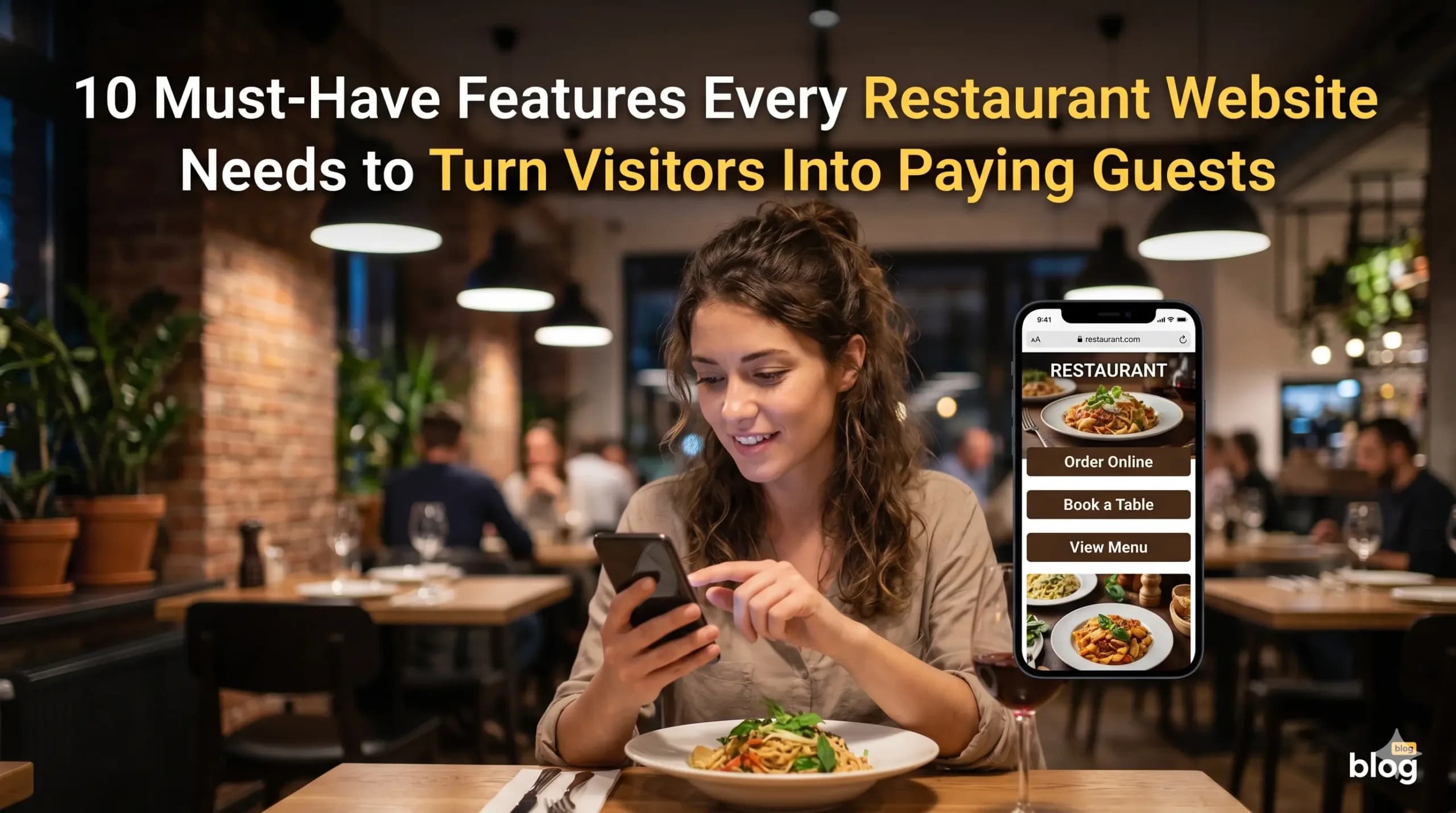
10 Must-Have Features Every Restaurant Website Needs to Turn Visitors Into Paying Guests
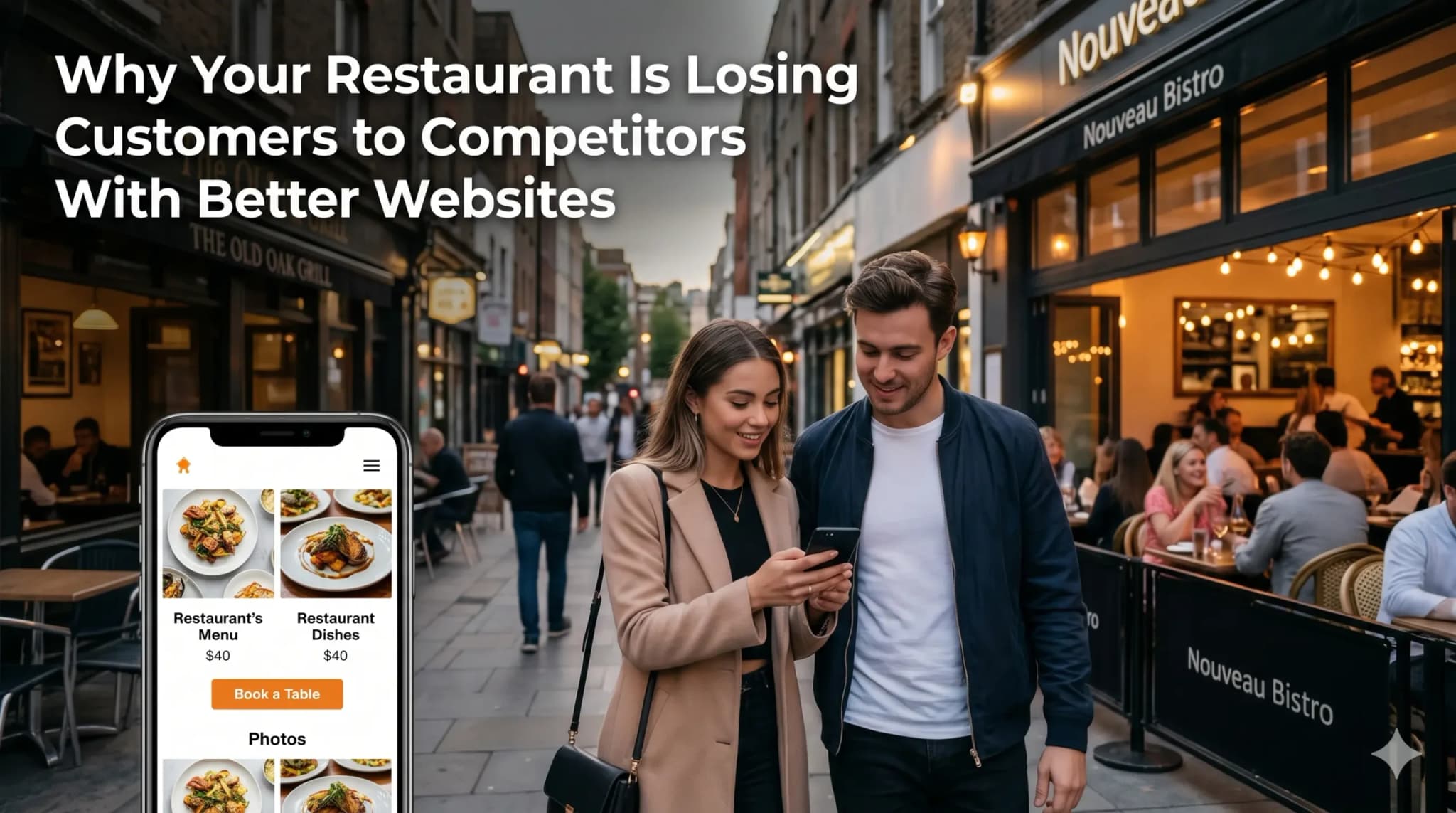
Picture this: someone searches “best Italian restaurant near me” on a Friday night. Your restaurant shows up. They click your website. Within eight seconds, they’ve hit the back button and booked a table at your competitor.
That’s not a hypothetical — it’s happening to restaurants across the US every single day. Most owners assume the problem is their marketing budget or their Google ranking. The real problem is almost always the website itself.
A restaurant website isn’t just a digital menu card. It’s the first impression you make before a single plate hits the table — and if it’s slow, confusing, or missing the right information, hungry visitors will close the tab faster than a bad Yelp review spreads.
The good news? The fixes are specific and proven. Here are the 10 features that separate a restaurant website that fills seats from one that quietly drives customers away.
1. A Homepage That Answers the Three Questions Guests Ask First
When someone lands on your site, they have three questions: What kind of food is this? Where are you? Are you open right now? If your homepage doesn’t answer all three in the first scroll, you’ve already lost them.
Most restaurant homepages bury this information. A beautiful hero image with no location, vague taglines like “A dining experience like no other,” and a navigation menu that requires three clicks to find your hours — all of this kills conversions before they start.
A well-built restaurant homepage design puts your cuisine type, neighborhood or city, and hours (or an “Open Now” indicator) front and center. No hunting required.
2. A Menu That’s Actually Usable on a Phone
Here’s the most common mistake in restaurant web page design: a PDF menu.
PDFs don’t load well on mobile. They’re impossible to zoom and scroll without frustration. Google can’t read them. And when you update your menu, guests are left looking at outdated pricing and dishes you no longer serve.
Your menu needs to be built as actual web content — organized by category, readable on any screen, and easy to update. If a guest has to pinch-and-zoom to read what a dish costs, they’re already annoyed before they’ve ordered.
Over 70% of restaurant website traffic comes from smartphones. A mobile-unfriendly menu isn’t just a design problem — it’s a revenue problem.
3. A Clear, One-Tap Reservation or Booking System
Every extra step between “I want to eat there” and “I have a reservation” is a step where you lose someone.
If your reservation process requires guests to call during business hours, fill out a contact form, or navigate to a third-party site that doesn’t match your branding, you’re creating friction that sends diners somewhere easier.
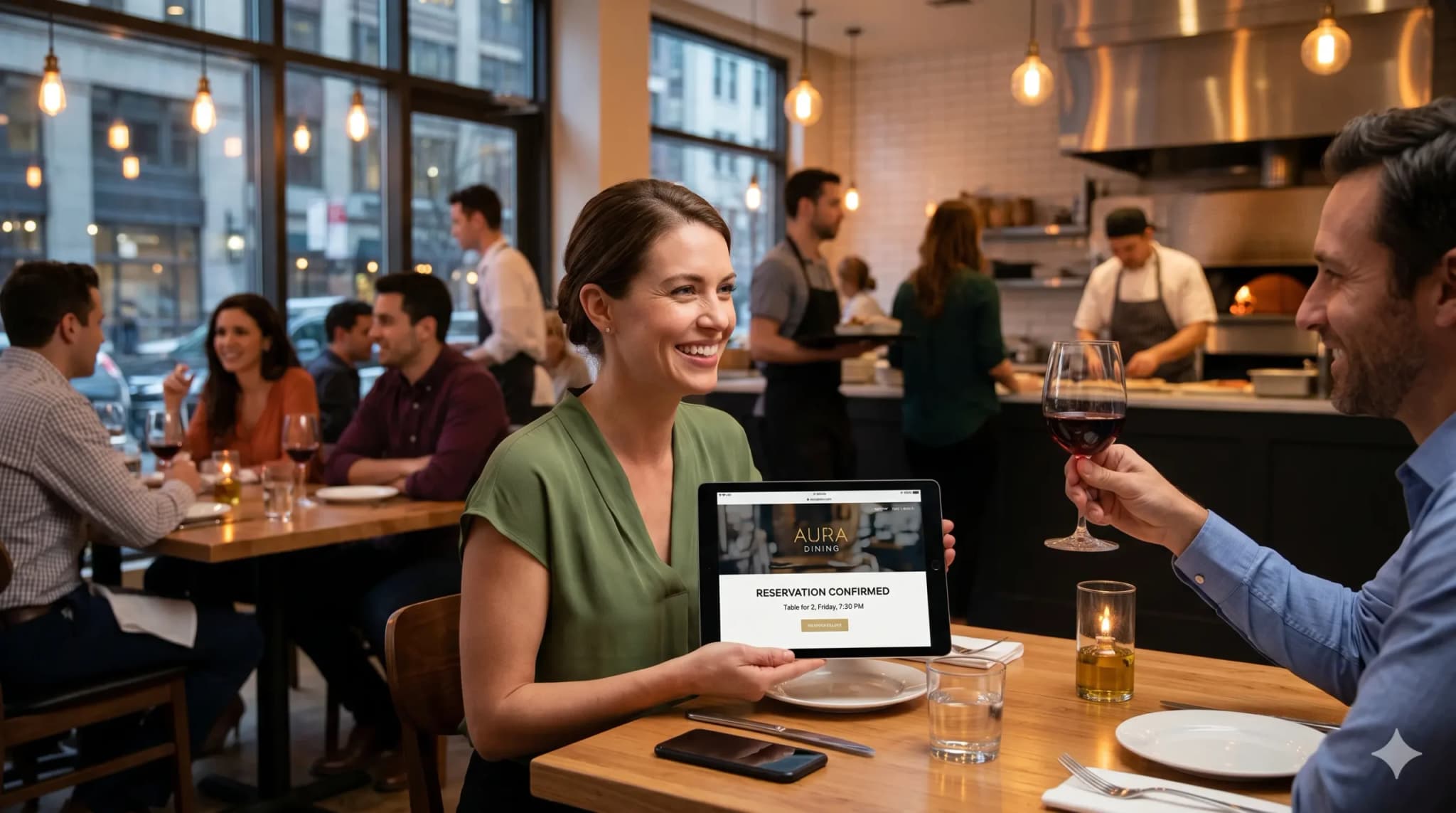
The best restaurant web design integrates booking directly into the site — visible on the homepage, easy to complete in under a minute, and optimized for mobile. Whether you use OpenTable, Resy, or a direct system, the button needs to be impossible to miss.
4. A Site That Loads in Under Three Seconds
Think about your busiest Friday night. Now imagine that every guest who walked through your door turned around and left before being seated — simply because the wait was too long.
That’s what a slow website does. Studies consistently show that most mobile users leave a site that takes longer than three seconds to load. They don’t wait. They leave, and they go to a competitor who was faster.
Slow websites happen for a few common reasons: oversized images, cheap hosting, and websites built on bloated templates not optimized for performance. A properly built restaurant site compresses images without sacrificing quality, uses fast hosting, and is built with speed as a priority — not an afterthought.
At Digital Trace, every restaurant website we build is performance-tested before it goes live.
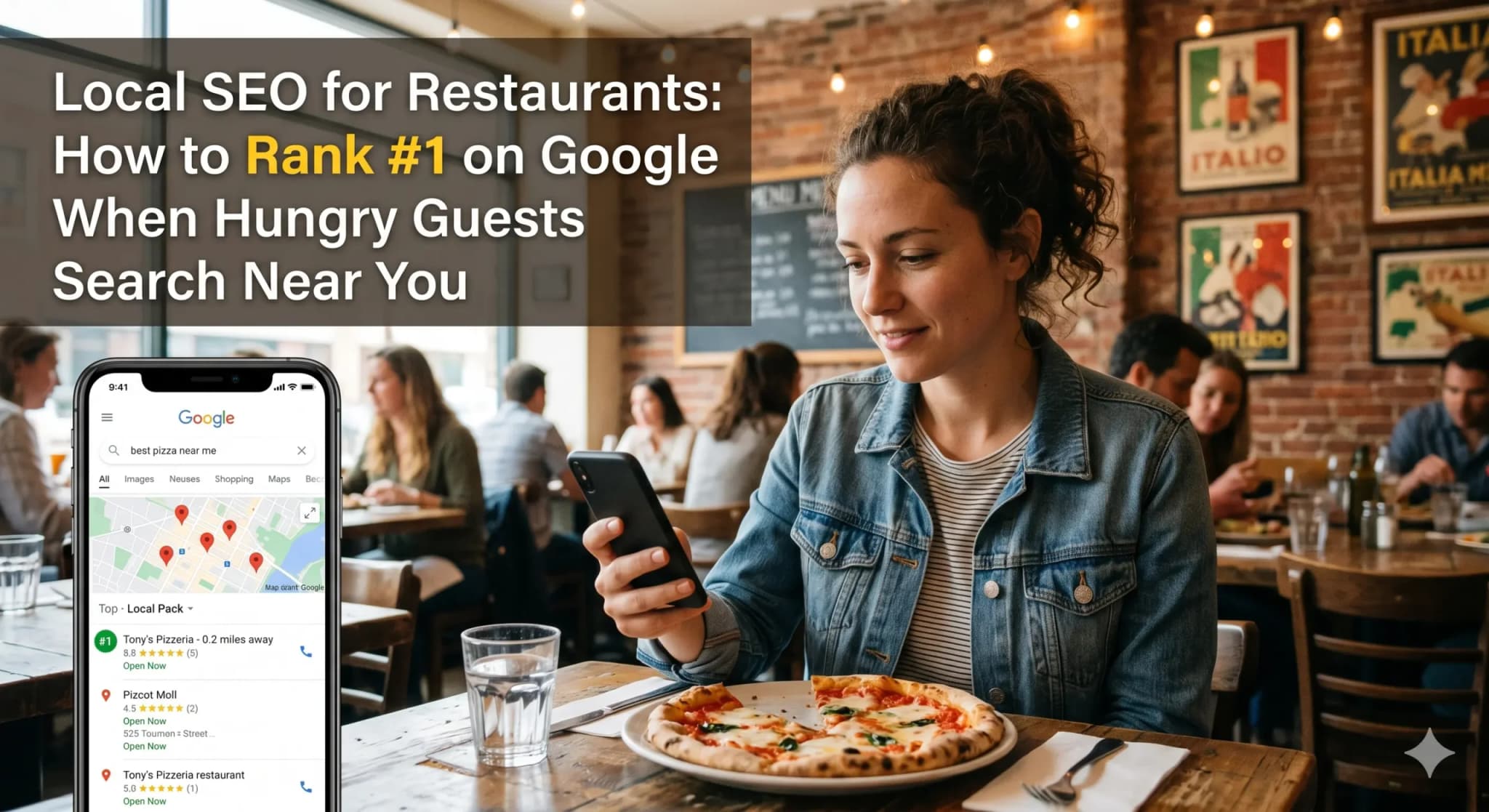
5. Location Details That Work With Google, Not Against It
You can’t afford for Google to be confused about where you are.
Many restaurant websites have location information buried in the footer, formatted inconsistently, or missing entirely from the backend code. When that happens, Google has a harder time connecting your site to local search results — meaning someone searching “dinner spots in [your city]” may never see you.
The fix involves something called structured data markup — a layer of code that tells Google your exact address, hours, cuisine type, and phone number in a format it can read with confidence. It’s invisible to visitors but critical for search visibility.
This is one of the first things a good restaurant web design agency checks and corrects.
💡 Pro Tip
The #1 reason restaurants don’t show up in local searches has nothing to do with their Google Business Profile.
Most restaurant owners spend time optimizing their Google Business Profile and ignore what’s happening on the website itself. But Google cross-references your site and your GBP. If your website has inconsistent NAP data (Name, Address, Phone) — different formats in different places — it quietly undermines your local search rankings. Make sure every mention of your contact info across your entire website is formatted identically.
6. Professional Food Photography That Makes People Hungry
A restaurant’s website is the only marketing that lets you make someone literally crave your food before they’ve tried it. But only if your photos are good.
Stock photos of generic pasta dishes and salads actively hurt you. They signal that you’re not confident enough in your own food to show it. Guests notice.
High-quality food photography doesn’t have to cost a fortune, but it has to be real. If professional photography isn’t in the budget yet, even well-lit smartphone photos of your actual dishes outperform generic stock images. The food should look like something worth making a reservation for.
7. Your Hours, Phone Number, and Address — Everywhere
This sounds obvious, but it’s one of the most common failures in restaurant site design.
Guests often arrive on an inner page — a blog post, a menu page, a photo gallery — not your homepage. If your contact information only lives in one place, anyone who lands elsewhere has to go hunting for it.
Your phone number, address, and hours should appear in the header or top navigation, the footer, and on a dedicated Contact or Find Us page. Bonus: make your phone number a clickable link on mobile. One tap, and they’re calling you.
8. Social Proof Built Into the Site
Your four-star Yelp rating is doing you a lot of good — but only if people see it while they’re still on your website.
External review sites like Yelp and TripAdvisor pull visitors away from your site to a platform where your competitors are listed right beside you. Integrating curated reviews, star ratings, or press mentions directly into your website keeps that trust-building moment on your turf.
A section featuring recent reviews, local press features, or awards accomplishes something no amount of marketing copy can: it shows real people chose you and came back.
9. An Email Capture That Builds Your Guest List
Social media algorithms change. Ad costs go up. But an email list is yours permanently.
A restaurant that collects emails — even just offering something simple like “Join our list for exclusive specials and event announcements” — is building a direct line to repeat customers. That list becomes one of your most valuable marketing assets over time.
Most restaurant websites have no email capture at all. Adding one takes a day to implement and can generate hundreds of returning visitors per year.
10. A Site That Converts — Not Just One That Looks Good
This is the one most agencies miss.
A beautiful restaurant website that doesn’t guide visitors toward a clear action — making a reservation, calling, or signing up for your email list — is just an expensive brochure. Every page needs a purpose, and every visit should end with the guest taking a step closer to sitting down at one of your tables.
Conversion-focused restaurant web design means every element of the site — the layout, the calls to action, the navigation, the load speed — is working together toward one goal: turning website visitors into paying guests.
Before & After: How a New Jersey Bistro Filled Its Dining Room on Weeknights
La Cucina Moderna was a well-reviewed Italian bistro in suburban New Jersey. The food was excellent, reviews were strong, and the owner had loyal regulars — but weeknight covers were consistently low.
The website was four years old. The menu was a PDF. The homepage took over six seconds to load on mobile. There was no online reservation system — just a phone number.
After a full website rebuild focused on performance, mobile usability, and a direct OpenTable integration, the results shifted noticeably within 90 days. Mobile traffic converted to reservations at nearly three times the previous rate. Weeknight bookings increased by roughly 40%. And the owner stopped fielding voicemails from guests who’d given up trying to book over the phone.
The restaurant didn’t change its food, its prices, or its location. It changed what happened when someone landed on its website.
Not sure whether your restaurant website is costing you covers? Get a free website audit — no obligation, just a clear picture of what’s costing you leads.
Your Path to More Covers and Fewer Empty Tables
The changes that make the biggest difference aren’t complicated. Here’s where to start:
- Open your site on your phone — if it loads slowly, is hard to read, or doesn’t have a clear reservation button, that’s your first fix.
- Check your menu — if it’s a PDF, getting it rebuilt as web content should be a priority.
- Search your own restaurant on Google — look at what a new guest sees. Does your address, phone, and hours show up correctly in local results?
- Read your website like a stranger would — is it immediately clear what kind of food you serve, where you are, and how to book?
- Talk to a restaurant web design team that understands the industry — not a generalist who builds websites for everyone from dentists to dog groomers. A specialist understands what drives restaurant reservations and what kills them.
The team at Digital Trace focuses specifically on restaurant website development and design — building sites that perform, not just sites that look good in a portfolio.
Frequently Asked Questions
Why am I not getting reservations from my website even though I have decent traffic?
Traffic and conversions are two separate problems. A site can receive thousands of visitors a month and convert almost none of them if the booking process is buried, the site loads slowly on mobile, or there’s no clear call to action. Getting traffic is step one — getting that traffic to act is what actually fills seats.
How do I know if my restaurant website is actually working or just sitting there?
The clearest sign: look at whether visitors are completing reservations, calling, or clicking your contact information. If you have Google Analytics set up, check your bounce rate and average session duration. High bounce rates (people leaving quickly) on your homepage usually mean something isn’t working — either the load speed, the content, or the lack of a clear next step. If you’re not sure, a free website audit can show you exactly where the drop-offs are happening.
How long does it take to see results after launching a new restaurant website?
Most restaurants see measurable improvements in conversion rates within 30 to 60 days of launching a properly built site. Improvements in local search rankings typically follow over 60 to 90 days as Google indexes and evaluates the new site. The results compound over time — a faster, better-structured site earns more trust from Google the longer it’s live.
What makes a restaurant website different from a regular business website?
Restaurants have a very short window to create appetite and urgency in a potential guest. The design decisions, the way the menu is presented, the speed of the booking flow, and the photography all work together in a way that’s specific to food and hospitality. A generalist web designer can build a technically functional site — but a restaurant web design agency that understands the industry knows which features actually drive reservations versus which ones just look impressive in a demo.
Do I really need a fast website if most of my customers are local and find me on Google Maps?
Yes — because Google Maps and your website are linked. A slow or poorly built website affects how confidently Google ranks your business in local search, including Maps results. Beyond rankings, a local customer who clicks through from Maps to your website and hits a slow, confusing page will close it and call the competitor listed right below you. Speed and usability are non-negotiable regardless of where your traffic comes from.
I’ve worked with web agencies before and didn’t see results. Why would this be different?
Most restaurant owners who’ve been burned by agencies got a site that looked good in a presentation but wasn’t built to convert. Aesthetics and conversion are not the same thing. The difference is in whether the agency measures success by how the site looks or by how many reservations it generates. Every site Digital Trace builds for restaurants is evaluated on business outcomes — not just design awards.
Ready to Find Out What Your Website Is Costing You?
Your restaurant is doing the hard work — great food, great service, a dining room worth showing off. Your website should be doing the same for you online, 24 hours a day.
A slow site, a buried phone number, a PDF menu, a booking process that requires a phone call — each one of these is a guest who went somewhere else. And most owners have no idea how many that adds up to.
Get your free restaurant website audit from Digital Trace. We’ll show you exactly what’s working, what’s not, and what it would take to turn your site into your best-performing front-of-house asset. No obligation. No sales pressure. Just a clear, honest look at what’s costing you covers.