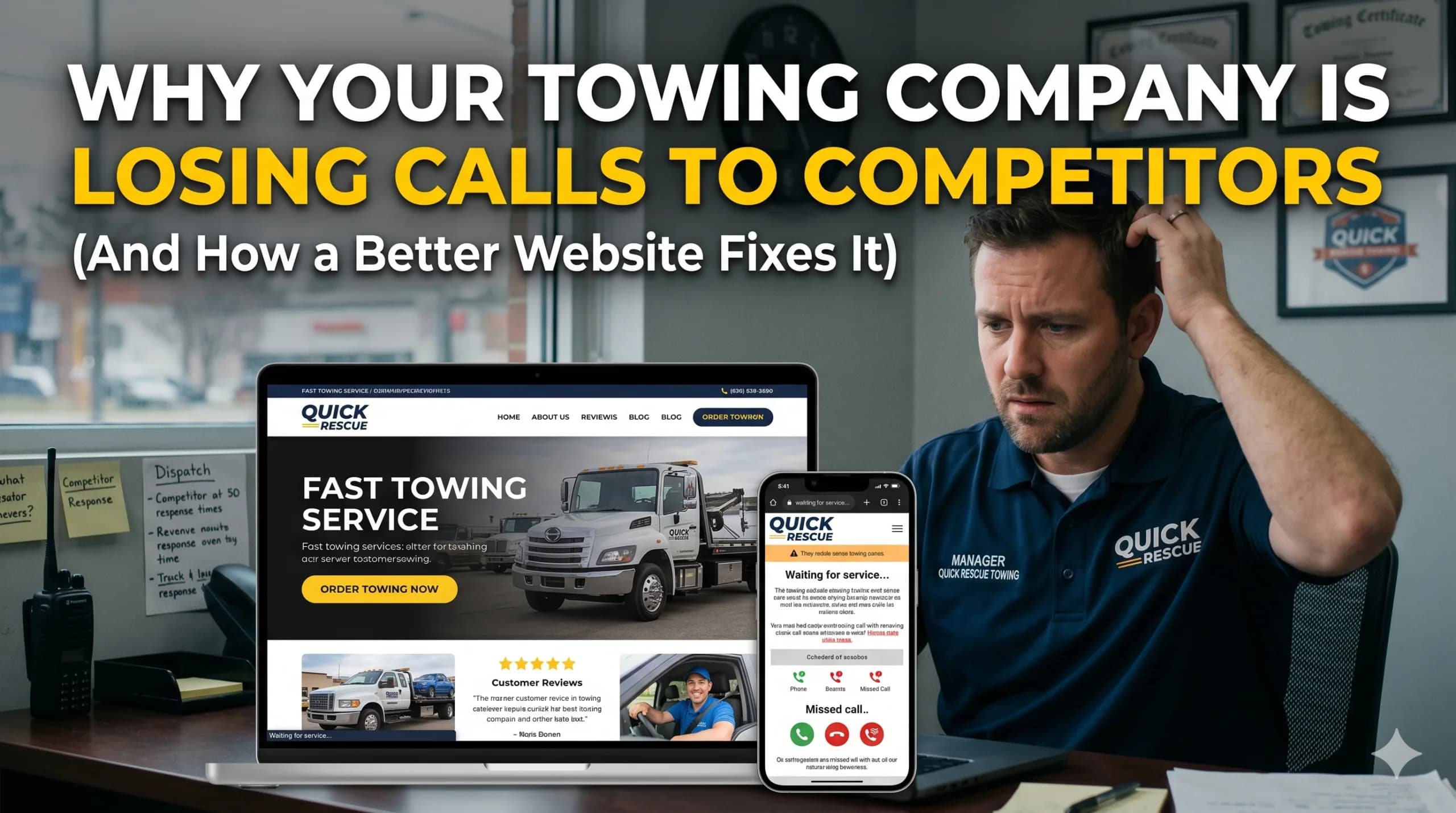
Why Your Towing Company Is Losing Calls to Competitors (And How a Better Website Fixes It)
You answered every dispatch last night. Your drivers showed up on time. Your rates are fair. But somehow, your competitor three towns over is busier than you — and you can’t figure out why.
Here’s what most towing company owners don’t realize: the calls you’re losing aren’t going to the guy with better trucks or lower prices. They’re going to the company with a better website. Not flashier. Not fancier. Just one that works the way a driver in distress actually behaves — pulling out their phone, searching “tow truck near me,” and calling the first number they trust.
If your website isn’t built to win that moment, you lose the job. Every time.
This post breaks down exactly why that happens and what a proper towing website design does to fix it.
Your Phone Isn’t Ringing Because Google Can’t Find You
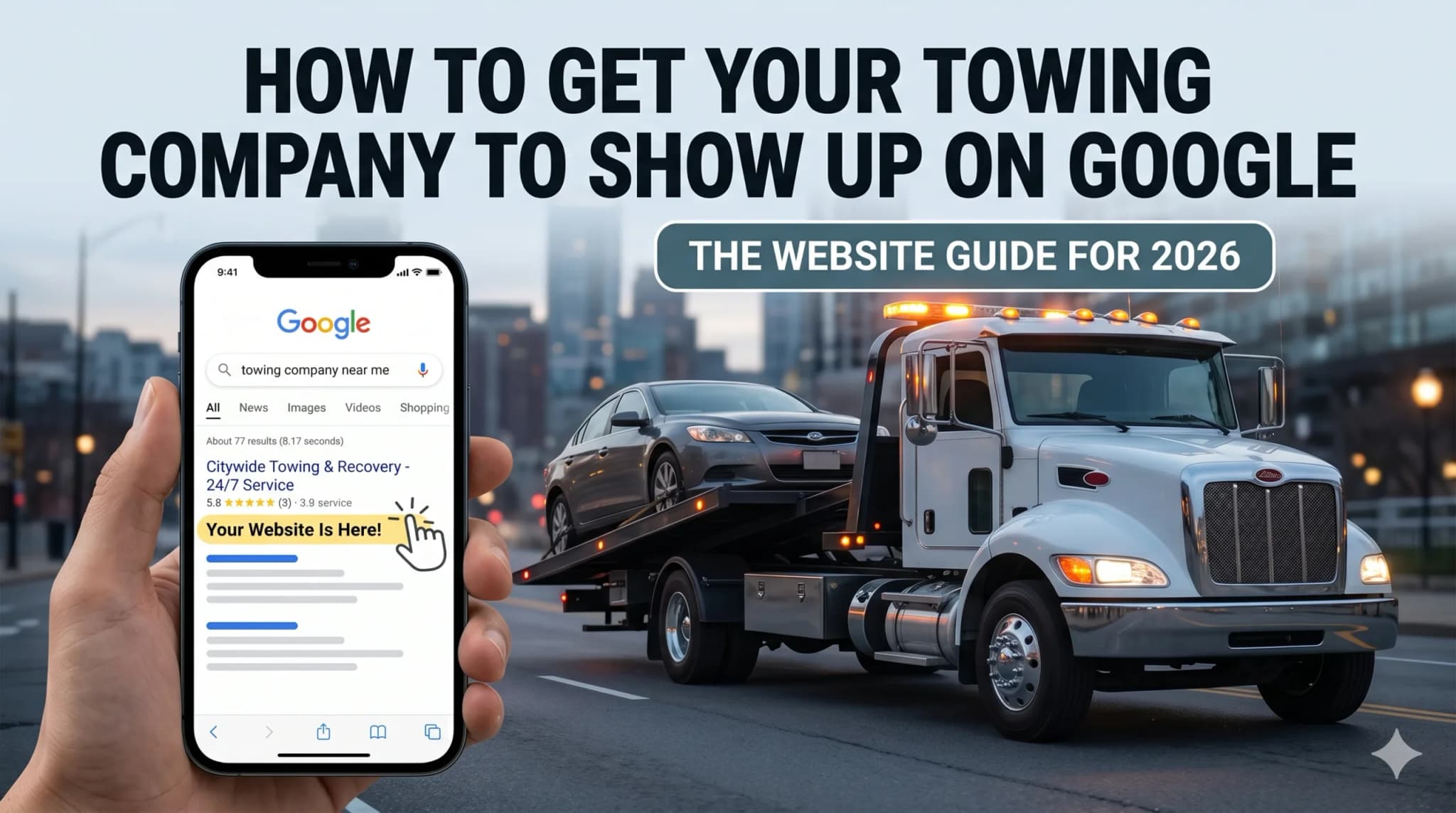
Most people stranded on the side of the road aren’t scrolling through pages of results. They tap the first two or three options and call. If your towing company website isn’t showing up at the top of local search results, you’re invisible — even if you’ve been in business for 20 years.
Why does this happen? Google looks at dozens of signals to decide who to show first — things like how fast your site loads, whether it’s optimized for mobile, and whether Google can clearly understand what services you offer and where. If your site is missing these signals, Google shows your competitor instead.
The fix isn’t magic. It’s building your towing service website so that Google can read it clearly and confidently serve it to the right people at the right moment.
Your Website Loads Too Slowly — And Callers Don’t Wait
Think about the last time a customer called you. They were stressed. Their car was dead on the shoulder, it was late, maybe raining. They pulled out their phone, found your site, and then… waited three seconds for it to load.
Most people don’t wait. Studies consistently show that a significant portion of mobile users abandon a site within the first few seconds if it hasn’t loaded. That’s not an SEO statistic — that’s a call you never got.
The technical reason is usually oversized images, outdated code, or cheap hosting that can’t handle traffic spikes. A properly built tow truck website is lean, fast, and loads instantly on a phone — because that’s what your customers are using when they need you most.
Your Phone Number Is Buried — And That Costs You Leads
Here’s a test: pull up your website on your phone right now. How many times do you have to scroll or tap before you can call someone?
If the answer is more than zero, you’re losing business. A person who just hit a deer on the highway at 11pm doesn’t want to navigate your site. They want to see your number immediately and tap it.
Most towing company websites are built like online brochures — they look nice on a desktop and tell the story of the business. But a towing website needs to work more like a dispatcher: get the right information to the right person instantly, and make it stupid-easy to take action.
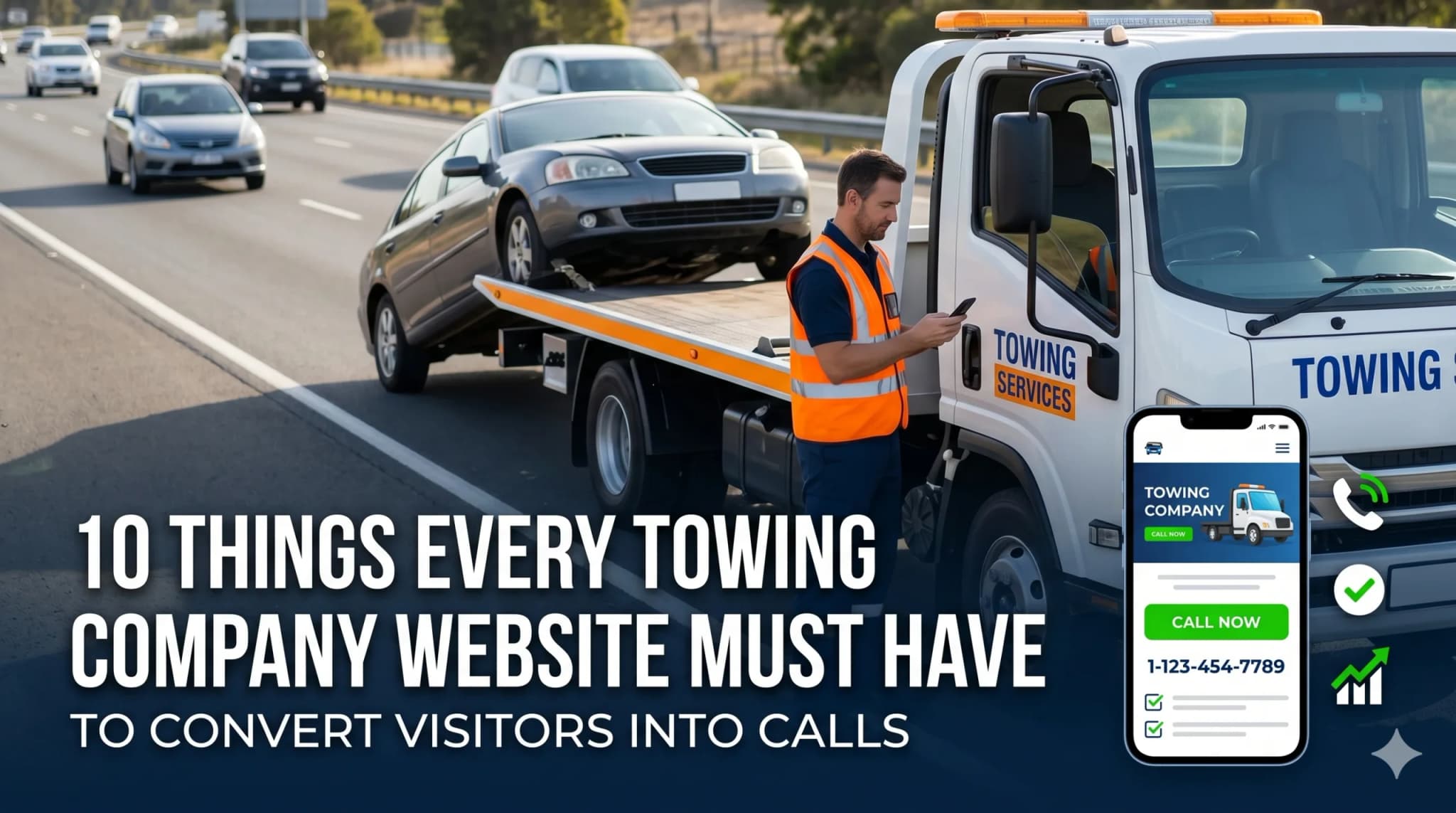
Every page of your site should have a large, tap-to-call button visible without scrolling. This single change alone has helped towing companies increase call conversions noticeably.
Google Doesn’t Know Enough About Your Business to Trust It
You may have heard the term “SEO” tossed around — but here’s what it actually means for a towing company:
Google is trying to answer this question for every search: “Which business in this area actually does this service, is still operating, and is worth sending my users to?”
If your towing service website design doesn’t give Google clear signals — your service area, the types of towing you offer, your address, your hours, your reviews — Google answers that question with your competitor’s name instead.
There’s a behind-the-scenes layer of code (called schema markup) that tells Google exactly who you are and what you do. Most generic websites skip it entirely. When it’s in place, your listing becomes more informative in search results — more details, more trust, more clicks, more calls.
💡 Pro Tip: Don’t Let a Generic Website Template Cost You Customers
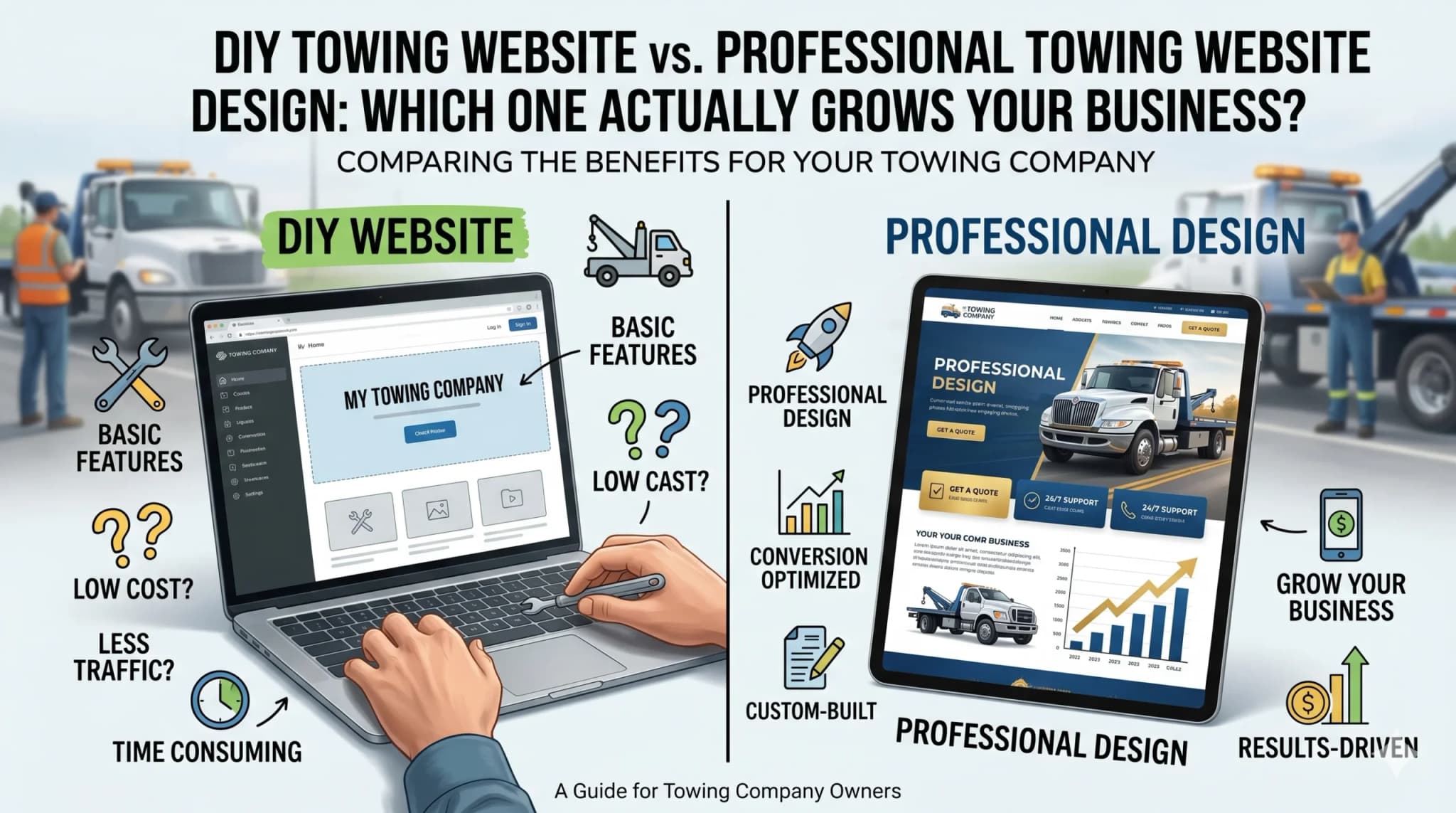
One of the most common mistakes towing companies make is launching a site built from a generic small business template. These templates aren’t built with towing in mind. They don’t prioritize the tap-to-call button above the fold. They don’t have service-area pages that tell Google you cover specific towns and highways. They don’t load fast on mobile networks where signal is weak — exactly where your customers are when they need you most.
The fix: make sure your site was built with the way towing customers actually search and call in mind — not just how it looks on a desktop.
Real-World Example: Before and After
A towing company in the Southwest was getting consistent referrals from their existing customers but almost zero calls from Google searches. Their site had been built years ago by a family member — it looked okay, but it loaded in over six seconds on mobile, had no tap-to-call button above the fold, and covered only their main city with no mention of the surrounding towns they serviced daily.
After a proper towing website rebuild — including mobile speed optimization, a persistent click-to-call button on every page, and dedicated service-area pages for each town they covered — the results shifted within a few months. Their Google visibility for local searches expanded significantly, and inbound calls from new customers more than doubled compared to the prior period. The owner described it as “finally getting credit for work we were already doing.”
That’s what purpose-built towing company website design actually does: it stops letting good work go unnoticed.
Not sure if your towing website has these issues? Get a free website audit — no obligation, just a clear picture of what’s costing you leads.
Your Path to More Calls Starts Here
Getting your website working the way it should isn’t complicated — but it does require doing the right things in the right order:
- Speed check — Find out how fast your site actually loads on mobile. If it’s over three seconds, callers are leaving before they see your number.
- Call-to-action audit — Is your phone number visible and tappable without scrolling on every single page?
- Local visibility review — Does your site clearly tell Google what towns and highways you serve, not just your main city?
- Content check — Do you have pages covering your core services (flatbed, long-distance, roadside, heavy-duty)? Google ranks pages, not businesses.
- Trust signals — Are reviews, years in business, and licensing clearly visible? People call who they trust, even in an emergency.
If you can’t confidently say yes to all five, there are leads leaving your site every day. Websites built for towing services businesses by Digital Trace are built around every one of these factors — because a site that doesn’t convert isn’t really a website, it’s just an expense.
Frequently Asked Questions
Why am I not getting calls from my website even though I’m listed on Google?
Being listed and being found are two different things. If your site isn’t optimized for local search — including your service area, fast load times, and proper on-page signals — Google may not be ranking you high enough for people to see you. Most towing calls go to the first two or three results. If you’re not there, you’re not getting the call.
How do I know if my towing website is actually working?
The simplest test: search “tow truck” plus your city on your phone. If you’re not showing up in the top results or the local map pack, your site isn’t working hard enough. Beyond that, a proper audit will show exactly how many visitors come, how many take action, and where they drop off.
How long does it take to see results from a new towing website?
Most towing companies working with Digital Trace start seeing measurable improvements in local search visibility within 60 to 90 days. Call volume from new customers typically picks up in that same window. SEO isn’t instant, but the improvements compound — meaning your site keeps getting stronger over time, not weaker.
What makes a towing website different from a regular business website?
Towing customers are almost always on mobile, usually stressed, and making split-second decisions. A towing website needs to load fast on a weak signal, put the phone number front and center immediately, cover every town in your service area, and build instant credibility. A generic business site isn’t built for any of that. How Digital Trace builds towing service websites is specifically designed around how towing customers actually behave.
Do I really need a fast website if my customers are local?
Yes — especially because they’re local. Your customers are searching from the side of the road, in a parking lot, or on a slow highway connection. If your site takes five seconds to load on a 4G signal, they’ve already called someone else. Local doesn’t mean patient.
I’ve been burned by marketing agencies before. How is this different?
That’s a fair concern. Digital Trace starts with a free audit — no pitch, no contract, no pressure. You’ll see exactly what’s working and what isn’t on your current site before spending a dollar. Book your free audit here and make your own call from there.
Stop Leaving Calls on the Table
Every day your towing website has these issues is another day your competitor gets the call instead of you. The driver on the side of I-40 at 2am isn’t loyal to anyone — they’re calling whoever shows up first and looks trustworthy.
A purpose-built towing website design doesn’t just look better. It loads faster, ranks higher, and turns visitors into calls. That’s what Digital Trace builds — sites that work as hard as you do.
Get your free website audit today — find out exactly what’s costing you calls and what it would take to fix it. No jargon, no obligation, just a clear, honest look at your site and a path to more business.